
Welcome to Modern Agriculture!

Growing Hops Hydroponically
Helle gardeners, are you planning for growing hops hydroponically? Well, we help you here. Hops are the flower of the Humulus Lupulus plant and belong to the Cannabaceae family. The hop plant has a long history of cultivation and is mainly grown for the production of dried or pelleted Hop flowers or cones which are used to add bitterness, flavor, and aromatics to beer. Hops are the flowers are also called seed cones of the hop plant. Different varieties of hops are grown by farmers around the world, with different growing procedures.
The hop plant is a perennial plant, so it grows back every year without having to replant. The hop plant is a hardy perennial plant and it will grow vines annually from the rootstock. These vines will grow up to about 25 feet each season and die back after the harvest. Under good conditions, each Hop vine will produce about 1/2 to 2 pounds of dried flowers. It is easier than you think to grow fantastic, flavorful Hops in your home. Hops flowers are responsible for the bitter, zesty, and citric flavors in your beer, with different types being used for different kinds of beer. Now, let us get into the details of growing hops hydroponically or without soil.
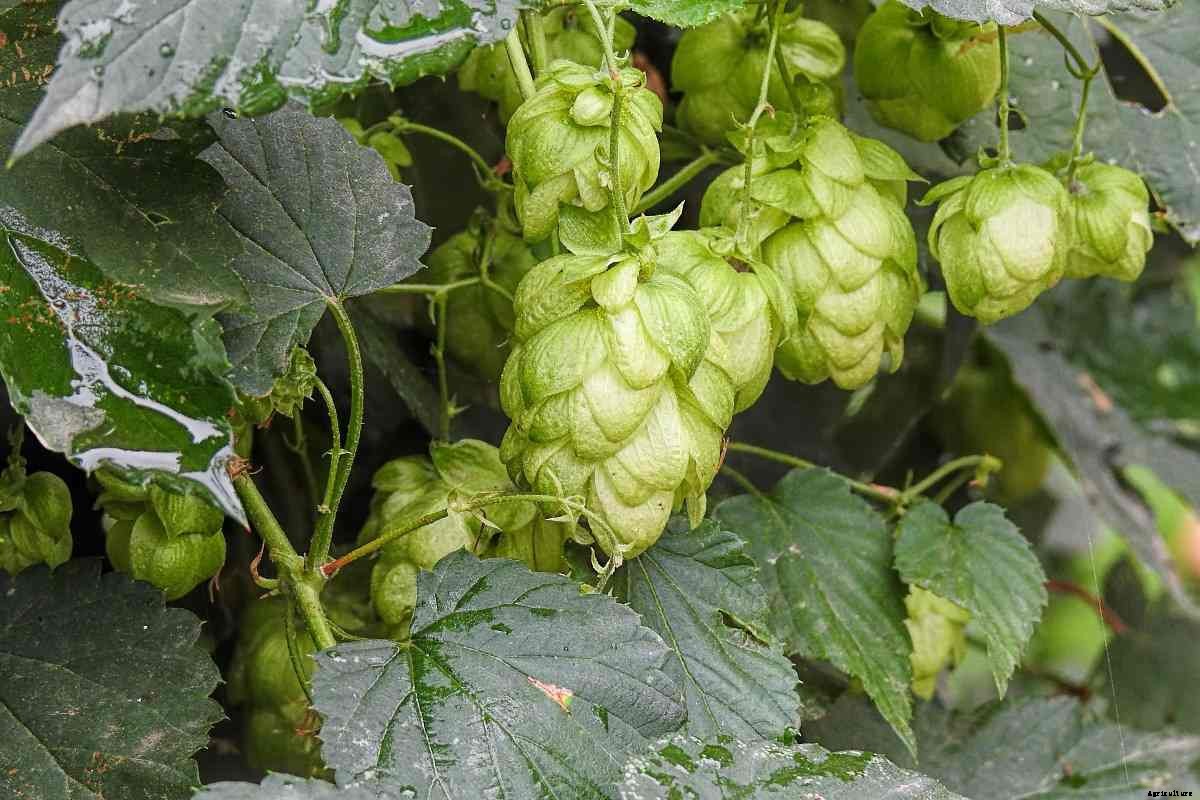
The hydroponics method is a soilless growing system in which the cultivation of plants takes place in an aquatic-based environment. While the concept of growing plants without soil seems contrary to a plant’s nutritional needs, plants can grow exceedingly well in soilless growing systems. To thrive, hydroponic plants need water and nutrients, which are traditionally absorbed from the soil they are grown in.
Hydroponic systems use nutrient solutions to feed plants and use other substrates to provide support for plant roots. Also, some hydroponic systems require no substrates at all. There are many different methods of hydroponic gardening, ranging from small hydroponic systems like indoor systems to large hydroponics like complex commercial systems.
Protection – As with growing any hydroponic indoor crop, the incidence of pests and disease is reduced when you have more control of the growing environment. Hops plants prefer temperatures between 5 and 23°C, so it’s also easier to maintain a longer growing season when growing in a controlled environment.
Nutrition – Generally, Hops plants are notorious Nitrogen and Potassium hogs. If growing Hops hydroponically, you can give the plant the exact nutrients it needs, exactly when it needs it. This isn’t as easy with traditional soil growing, in which the plants have to wait for slow-release nutrients to become available.
Resin/Essential Oil Production – Terpene hydrocarbons like myrcene, humulene and caryophyllene, represent 80 to 90% of the total essential oils in Hops. Myrcene is responsible for the pungent smell of fresh Hops and many hydroponic nutrients are formulated to increase the essential oil/resin production in plants. It is a terpene in Hops and they have been shown to respond well to nutrient lines formulated in this manner.
Easy Setup – The hydroponic setup for growing Hops is as gathering a few products from a hydroponic retailer or online store.
Beginner Hydroponic System – If you don’t already have a hydroponic system, start with an inexpensive system that is very easy to use. The system must be able to easily fit into a corner of your garage or a small closet.
There are hundreds of varieties of Hops, but they can be separated into mainly two categories. They are bittering and aroma. Bittering Hops are added earlier in the brewing process and are used for antibacterial properties and also for the bitter flavor. But Hops aren’t only bitter in flavor. Aroma Hops are also used to add all sorts of other flavors. Some varieties are citrusy, some are piney, some are earthy, some are dank and musty, and some are very fruity.
There are many modern commercial varieties of Hops bred for specific uses. Popular Hops varieties include Cascade, Chinook, Columbus, Magnum, and Centennial, each with different compositional qualities. Cascade and Chinook are suitable Hops varieties for small-scale hydroponic production. The Cascade variety is the most widely utilized by craft brewers in the US and is used in the production of several types of ale and some lagers. With a high alpha acid content (4.5-6%) and pleasant citrus-like aromatic quality, Cascade variety is a general-purpose Hop variety well suited to hydroponic production.
In case if you miss this: Growing Carrots In Greenhouse.
Before entering into hydroponics, you must be aware of conditions required for growing hops hydroponically.
Hop rhizome – A rhizome is the main part of the Hop plant that grows beneath the surface. A Hop rhizome looks like a grapevine and is used to start new Hops plants.
Lighting – An HID (high-intensity discharge) kit, including a ballast, reflector, hanging hardware, and bulbs, can be the least expensive initial startup for a beginning indoor grower. For example, a low-priced 400 watts grow to the light kit would suitable for growing 1 to 2 Hops plants to the blooming stage.
Nutrients – If you want to get the most flavorful Hops to consider using a nutrient line designed to create good crop yields that have the strongest and most flavorful oils and resins. These nutrients lines will cost more than some of the other products available but they will help make that bitter, tangy, wonderful flavor you want out of great homebrew.
Support – Since it’s a climber, your Hops plant is going to need some form of support. Steel stakes or bamboo or will give the Hops plant structural stability.
Generally, growing Hops hydroponically is one-way growers are changing traditional Hop production. Hydroponics garden offers many benefits to help satiate the thirsty beer market. Hops are a delicate crop, grown in specific regions and climates. The seasonal limits of conventional farming allow farmers to produce one crop per year. With hydroponic growing methods, annual Hops production can be increased dramatically. Whether the plants are grown in a greenhouse or using indoor lighting, Hops can now be grown perpetually.
Another major advantage of hydroponics is being able to precisely dial in the nutrients your Hops plants are receiving. Like every plant, Hops have a unique nutrient requirement profile for hydroponics. Hydroponics allows growers to select the nutrients their plants receive, deliver the exact quantities required, and feed the plant more frequently. The result is faster, heartier plant growth rates. The feeding regimen can be optimized and systematized and allows the production to be scaled up or down as necessary.
If you want to grow Hops in a hydroponic environment, there are several factors to consider. The major factors are given below;
Well, now let us see the step-by-step process of growing hops hydroponically.
The hop plant is a vigorous, climbing, herbaceous perennial plant and benefit from the controlled nutrition of hydroponic systems. Hops produce separate male and female plants, with only the female plants producing cones, thus Hop propagation is carried out vegetative to ensure only female plants are grown. If male flowers are present in a Hop crop, the pollination of the female flowers can result in seeds that are undesirable for brewing beer. Once planted into warm conditions, rhizomes establish quickly and also produce several young shoots.
Also, from established plants Hop cuttings can be taken that will produce roots readily at leaf nodes. At certain times of the year, young potted Hop plants are obtainable for purchase. Once begun the growth, the Hops produce long, climbing shoots termed called bines that develop short, stiff hairs along the stem surface, allowing the bine to cling and climb upwards (vines use tendrils or other means to cling to surfaces). Hydroponically growing Hops are well-suited to grown on training systems similar to those used for tomato and cucumber crops. Tomahook tomato support systems overhead wires with strings or trellis can be used to support Hops and plants will readily climb and cling with no assistance. Since Hop bines produce to considerable length and height, for indoor and greenhouse production the “lean and lower” system of training and commonly used for commercial tomato crops appears to work well. Hop bines increase in height, the supporting string is detached and lowered along the floor or lower levels of the cropping area as necessary.
Hops are best grown in a drip-irrigated system with at least 2 gallons of a free-draining growing substrate like perlite or coarser grade coconut fiber. Hydroponic nutrients initially start with a high-quality, general-purpose vegetative formulation at an EC level of 1.8–2.2 with a high ratio of nitrogen to potassium. During the later stages of plant growth, this can be switched to a flowering/fruiting formation with higher potassium and phosphorus levels, as well as gradually increasing the EC level during the cone production stage to keep high levels of essential oils and compounds that constitute the quality of the flowers.
Hops are a warm-season crop and require light of similar intensity to tomato, cucumber, and pepper crops. Good airflow is essential around the lower levels of the plant where high humidity can promote disease. Under ideal hydroponic conditions, Hop bines are relatively problem-free. Early detection and ongoing control are advisable as mites can cause crop damage. Occasionally, powdery mildew disease may be a concern in some Hops plant varieties, particularly where airflow is insufficient around a dense canopy.
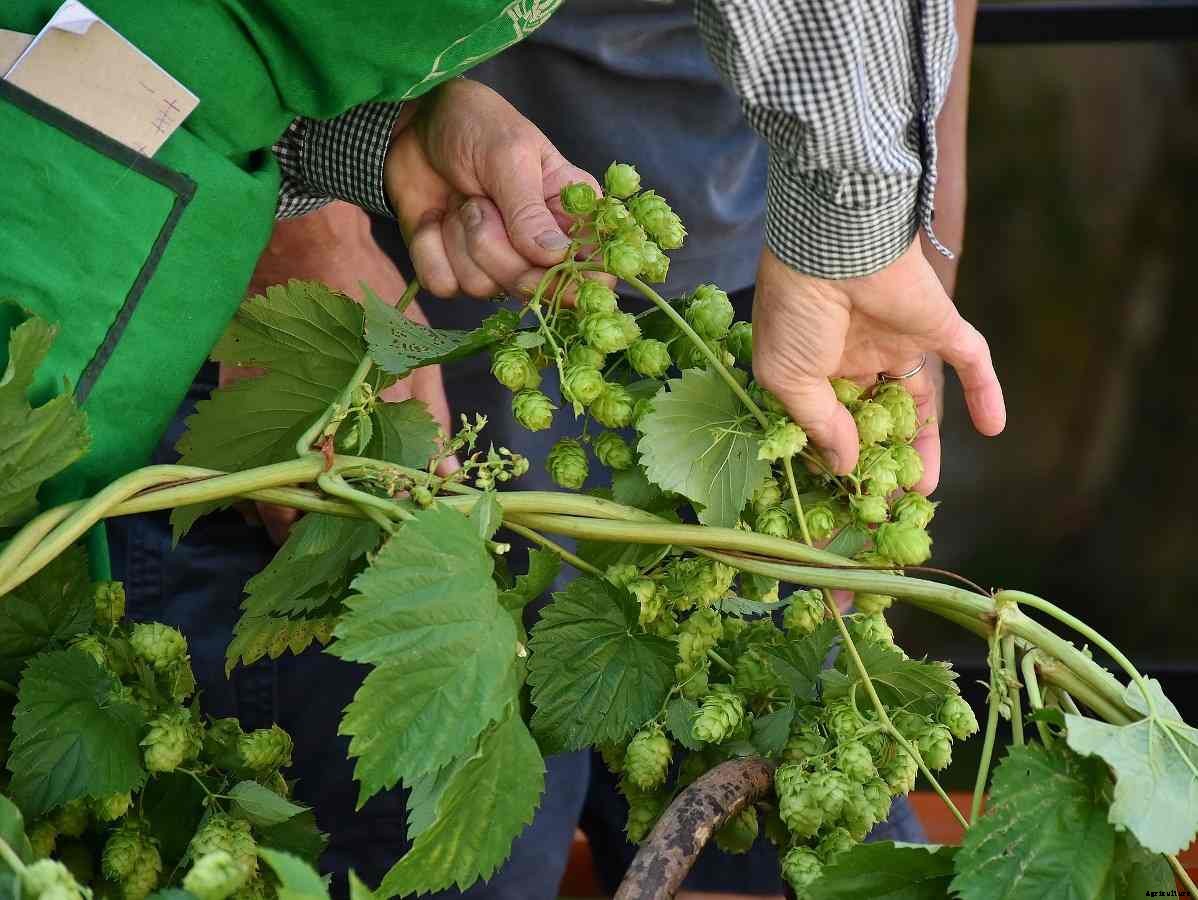
The harvest season for outdoor-grown Hops is short and occurs once a year. Whereas, hydroponic Hop crop experiments suggest 3 to 5 crops per year of fresh cones can be possible with the use of climate control under protected cultivation. With successional planting, it can be possible to supply high-quality fresh crops throughout the year by using hydroponics. Then, there have been reports that with the controlled nutrition in hydroponics, Hops with higher concentrations of essential oils, aromatic compounds, beta acids, and flavonoids can be formed as well as larger, heavier cones and a higher overall crop yield.
Under good growing conditions, Hops cones will develop along the bines in succession and ripen at slightly different times. For this reason, hand-harvesting ripe Hops cones from the bines and leaving immature ones to develop further can be carried out on a small scale. Determining harvest ripeness can take some practice, but mature cones will appear plump, full-sized, soft and dry, lightweight, slightly paler or yellow in color, and will have developed a high level of fragrance.
For larger scale Hop crops, all the bines can be cut back and removed at harvest for easier cone removal leaving 3 to 4 feet at the base of the plant for regrowth. Once harvested, the fresh cones can be used immediately, shelf life is relatively short, and the quality can decline rapidly under warm conditions. Fresh Hops cones can be stored in the refrigerator for a few days but are best used within 24 hours. Most fresh Hops, once removed from the vines, are dried to maintain quality. On a small scale production, this can be done by laying the cones in a cool, dry place, out of direct light for several days until fully dried. Then, these can be stored in vacuum-sealed bags either under refrigeration or in the freezer before use.
That’s all folks about growing hops hydroponically. Wish you good luck!


