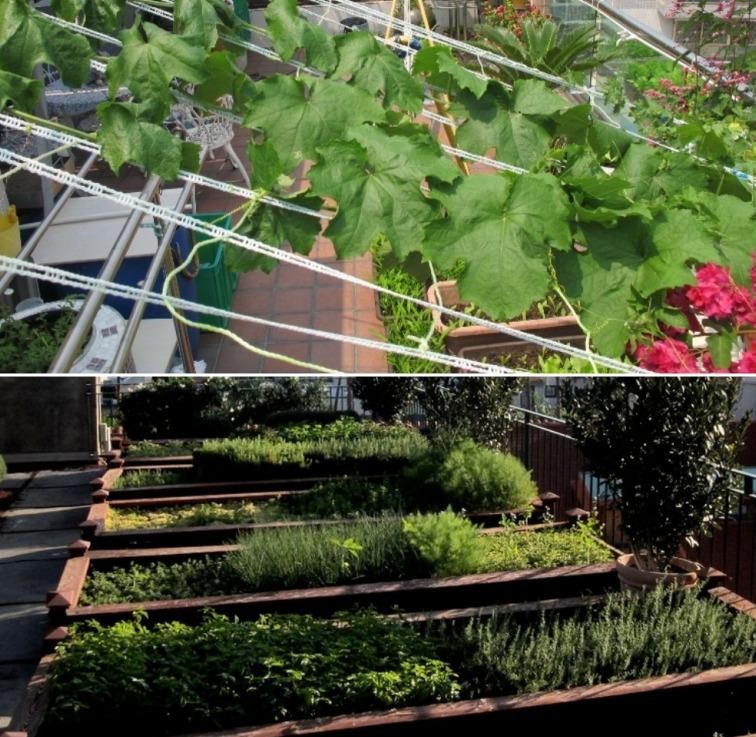
Rooftop Vegetable Gardening Design, Layout in India
Introduction: Hell gardeners, today we discus the information of Rooftop vegetable gardening ideas along with designing and layout. The Rooftop garden is also known as terrace garden or balcony garden. Rooftop vegetable gardens are a beautiful and environmentally-friendly addition to urban homes. If you live in an apartment or a house with no yard, Rooftop gardens can let you growing ornamental trees, vegetables, flowers, and even edible plants. A Rooftop garden is a garden on the roof of a building.
A guide to Rooftop vegetable gardening design, layout
Rooftop gardens are man-made green spaces on the highest levels of industrial, commercial, and residential structures. They can be designed to grow to produce, provide play space, give shade and shelter, or be there as a living, green area.
Soil requirement for Rooftop vegetable gardening
Soil that is properly conditioned and nourished is the key to growing strong and healthy vegetable plants. Chemically treated soil will not only seep into the food system, but it can also harm and destroy beneficial bacteria, worms and other microbes in the soil.
Discover a good source from where you can buy soil. Most nurseries sell well-nourished soil which is a mix of soil, vermicompost and compost coir but that may be expensive. If you want a cheaper option, you can buy some ingredients, create your compost and does the soil mix yourself.
Sun requirement for Rooftop vegetable gardening
Depending on the plant, Rooftop garden will need as much as 6 to 8 hours of sunlight a day. Note sunlight patterns over 1 or 2 weeks to make sure the roof’s sunlight isn’t obscured by other buildings.
Try monitoring the sun in the morning, midday, and evening so you have an accurate sense of how exposure changed throughout the day.
Select vegetables for rooftop gardening
Ideal crops for rooftop gardening must be durable, and capable of resisting wind and other potentially inclement conditions.
Plants with thin, ‘crisp’ stems must be avoided.
The potentially intense wind and sunlight will create stronger plants a better candidate for rooftop gardens. Plant seedlings with these qualities will be more likely to survive the first year.
Root vegetables, including carrots, beets, and turnips are well-suited due to the absence of a thin central stem and their moderately low growth.
A thick root helps to anchor the plants into the ground, providing resistance to wind.
Low growing greens, including lettuce and spinach, are well-suited to rooftop growing, as are some varieties of climbing beans which can withstand consistent exposure to wind.
For best results, vegetables grown on rooftops must be started in flats or similar containers under screens or netting that will prevent soil from drying out.
Amend growing medium with plenty of water high-quality organic constituents, for example, compost; and spread a thin layer of mulch around plants upon transplanting.
This measure will help to retain moisture. Ideally, starts must be transplanted into larger containers on cloudy or slightly overcast days to prevent sun and heat shock.
Some of the vegetable plants grown in Rooftop garden are;
The wind is usually stronger on the rooftop than on ground level, particularly if your building is several stories high. Too much wind can greatly damage or even kill vegetable plants. Structural windbreakers (like trellises) could be necessary if you notice strong winds on your roof.
You can monitor wind exposure with a weather vane, with an anemometer, or by standing on the roof and experiencing the weather for yourself. Because wind can dry out the soil, your vegetable plants will need frequent watering.
Plant your seeds
Once the soil is ready for use, you can start planting the seeds. You can plant seeds in a seedling tray and then transplant them to the container or plant them directly. If you use a seeding tray, you want to fill it with the potting mixture, plant the seed about an inch deep in each of the sockets and sprinkle them with water. After 5 or 6 leaves spring out or the plant is about 3 to 4 inches in height, you can transplant each plant to a pot.
During the transplanting procedure, avoid exposing the root of the sapling to direct sunlight because the roots will dry up and die. Do the transplantation in a shady area of the house or the evening timings.
Create raised beds
If your roof supports, make raised beds adjacent to the walls is a good idea. You can add wooden raised beds or the ones that are prepared from metal. If you like, you can construct the concrete raised beds would be a great size and you can even grow tall shrubs and small trees & with the regular maintenance, pruning, and root trimming in every few years can control the plants.
For these raised beds ensure you use waterproofing membrane & lay thick root barriers that can block roots and prevent damage to the roof. One more idea is to create slightly elevated raised beds from the surface that way the raised beds do not touch the surface & roots of the plants may not be able to penetrate.
Waterrequirement for Rooftop vegetable gardening
Rooftop gardens require access to water whether from a hose bib, faucet, or watering cans carried to the garden. Consider the effort required to keep vegetable crops watered when you locate containers.
Make sure you regularly water your vegetable plants, even those that are drought-resistant.
Rooftops should have a slight fall so that rainwater and irrigation can drain away. Check the gradient of the surface before locating containers; water will seep from pots and containers and should flow to a drain. Rooftops must have secured waterproof membranes. Protection that has not been pierced or compromised so that water does not puddle and drip into the building. Rainwater could be collected in barrels, but be sure the structure can bear the added weight.
You may also like the Profitable Hydroponic Crops.
Design of Rooftop vegetable gardening
The main benefit of rooftop gardening is the lack of common pests on a rooftop, such as a deer and rabbits.
The containers used in the rooftop garden of all sizes, shapes, whether of plastic, ceramic, metal or mud can be used.
The roof loading capacity is how much weight roof structure can support. This will include plants, plant containers, furniture, equipment, and weather loads like snow.
The easiest and most personal approach to Rooftop vegetable gardening is the use of containers and raised beds. You can make any style of rooftop garden with container grown plants, from a few simple herb plants to a formal, elegant potager. Containers are perfect for rooftop vegetable gardens because they are light, portable, flexible and affordable.
When it comes to Rooftop garden design, ensure you keep the diversity in the size of the plants. A few large plants, shrubs, and small trees, ground covers, annuals should be there. Also, buy containers of different sizes this will provide a great look for your Rooftop garden.
If your roof supports, creating raised beds adjacent to the walls is a very good idea. Add wooden raised beds or the ones that are made from metal.
For these raised beds ensure you can use waterproofing membrane and lay a thick root barrier that can block roots and prevent damage to the roof.
Fertilize vegetable plants regularly with good quality organic fertilizer. With some research and experience, you’ll be able to find out which type of fertilizer you must feed to specific vegetables.
Water vegetable plants regularly and deeply. Prune vegetable plants to maintain them in good shape and healthy growth. Look out for suckers, particularly in tomatoes and pinch them off immediately if found one.
For the vegetables, it is always good to produce them on the Southern or Western face, so the plants will have enough sun and can thrive easily. But too much sun is not good either. If you live in a warm tropical climate and the sun is too strong, it is advisable to give afternoon shade to plants.
Whether the vegetables growing in raised beds or a pot, certain care is required. Planters or pots are best for Rooftop garden. Get a pot from the market or search your home to obtain any containers and recycle it. Cover the drainage hole at the bottom with stones so that there is space for the water to flow but no soil is discharged. Mix soil, compost, sand, and vermin-compost in equal quantities and fill the pot. Wet the soil and sow the seed or sapling and watch it bloom.
Generally, the growing media used for Rooftop garden can be a combination of soil, coir pith, and farmyard manure in the ratio of 1:1:1. Coir pith has to be treated with water and vermicompost and should be kept covered for about 10 days. Fill the produce bags with sand at the bottom, then with coir pith mixed with vermicompost and soil.
Carefully spread a polythene sheet or tarpaulin sheets over the growing areas to avoid water seepage through the ceiling. Or maintain the containers at elevated heights from ground level. Moreover, take care that excess water gets drained without stagnation at the roof.
The shade is a very important factor that decides the plant growth and its survival in a rooftop garden. It is advisable to use two layers of shade nets for different seasons. One layer of the shade net must be permanent and the other layer should be removable periodically to use it for different seasons. There is an easy way. Plan location of plants such that, it remains in shade at least during afternoon time.
Watering should be done in the early morning or the evenings after 4 p.m. In hot summers you can water it twice a day, in other seasons, water the plants when you feel the soil is dry.
Pest and diseases in Rooftop vegetable gardening
To control pests and diseases in Rooftop garden, it is always advisable to use Bio-fertilizers like Azospirillum, and Bio-control agents like Pseudomonas, etc and the plants can be sprayed with Neem oil to control sucking pests which is a major problem in rooftop gardening. Mix Neem oil in 10 liters of water and adds 10g of soap mixture and spray over affected vegetable plants. Spray made out of ginger, garlic and chili paste diluted in water are very effective for pest control.
You may be interested in Broccoli Farming in Polyhouse for Profits.