
Welcome to Modern Agriculture!

Introduction: Hello Gardeners today we are here with a great content of Landscape Gardening Ideas, Design, Techniques. A beautiful landscape garden is a vital part of your home and community. A well-planned landscape garden can save your money by reducing energy consumption. In India, the landscape gardening design is a developing subject and as such offers much scope for improvement. The landscape is an aesthetic branch of horticulture which deals with the application of garden forms, different styles, methods, and materials to develop the landscape. The area around your home is a very important part of your living environment. Attractively and functionally landscaped, it can add to the enjoyment of your home.
Landscaping can increase property value, invite wildlife into your yard and conserve energy. Successful landscaping does not just happen and it requires careful planning and some knowledge of landscape design.
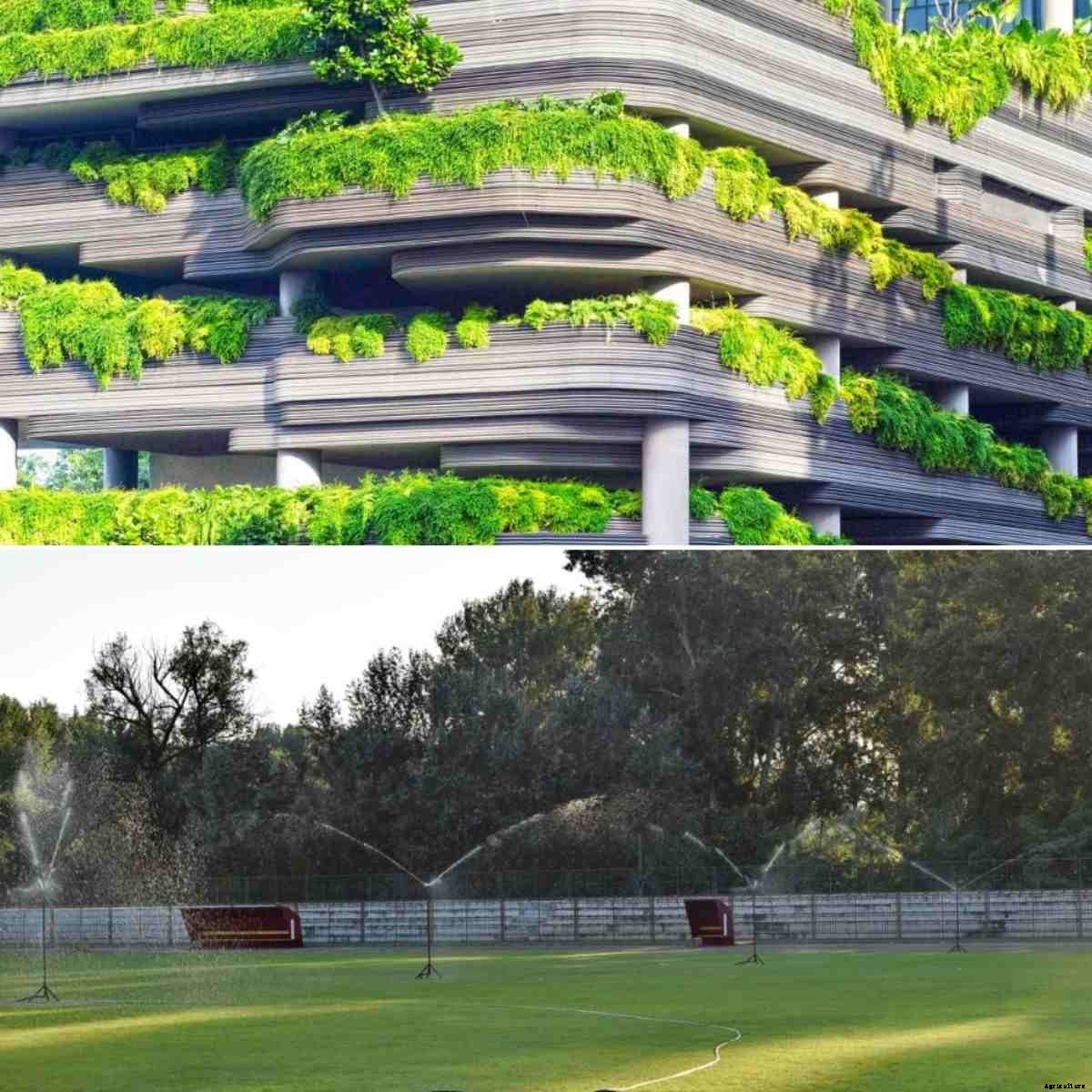
General principles of landscaping are given below;
You should not miss the Growing Ornamental Grasses.
Different landscaping ideas are given below;
One of the easiest methods to add some interest to your home’s front yard is to plant a colorful border of flowering plants to enliven your entryway. In this landscaping garden idea, a mixture of annual and perennial flowers such as hydrangeas and petunias are used for a pop of color while a few evergreen bushes ensure year-round greenery. What makes this particular landscape design so appealing is the use of window boxes. This is a great process to add instant beauty to any home but is especially useful for guest homes, show homes, or houses that are on the market.
You cannot think that you have enough room for a water feature in your yard, but with a little creativity, you can add a small fountain virtually anywhere. This small nook between the front door and the garage creates the use of otherwise underutilized space for a pondless fountain. A small pump inside the glazed pot keeps the water circulating in the pot. If you have a shaded corner where plants struggle to grow, a small fountain creates a great alternative to a rock garden or weeds. This is also well-suited to homeowners who like the sounds made by a water feature but do not want to care for a pond or large fountain.
Hedge your bets by incorporating a classic and classy boxwood hedge along the entry path. Although simple and monochromatic, the tightly leaved branches of boxwood shrubs can be simply shaped into any number of designs. Left small and round as shown in this garden idea, or clipped into a short rectangular hedge, they help guide the eye to the front door of a house, and subtly encourage visitors to use the pathway instead of walking on the grass.
Add lovely, eye-catching layers to the yard with elevated planters and hanging baskets. This strategy forms visual interest with minimal effort. Adding elevated planters and hanging baskets creates a sea of beautiful color from high to low, and the visual effect gives the impression of waves of blossoms rising and falling all across your front yard. If you want to make an immersive escape, this is a foolproof way to get started. Also, plants love the good drainage and aeration that raised planters to provide.
You may also like the Suitable Plants for Vertical Gardening.
Another process to make the most of your yard landscape is by planting lovely rambling vines. Clematis is one of the showiest vines we have, and it would look great in your landscape. It offers blossoms of blue, purple, red, pink, or white color. We recommend growing this versatile vine on a fence, on a trellis, or in a container or a pot. Or, for a more laissez-faire gardening style, let them ramble and scramble over shrubs and perennials.
By mixing different flower varieties that bloom during different seasons, you can ensure a constant display of colors throughout the entire year. In this example, evergreen bushes are interspersed with spring and summer flowers as well as annual greenery to make a lush cottage garden.
By carefully sculpting the landscape and select the right plants and materials, you can hide an unattractive driveway. Start by creating a slightly raised land of lawn in the center of the drive. After that, add a low boxwood hedge toward the back of the island with roses, annuals, and perennials rising above the hedge in the front. Blend a different variety of colors, textures, and heights for a great look.
Planters are a great way to enliven a specific area of the yard, and a hollowed log or stump is a great alternative to concrete. And, you probably already have a stump your yard you can use for this kind of display. While a log planter looks great in many yards, it will truly look at a home garden in a rustic cottage garden.
The area beneath mature shade trees can be challenging to accurately landscape. Most annual plants are sun-loving and don’t do well in the near-constant shade of established trees. However, there are several varieties of annual as well as many groundcovers that can thrive in this environment. Sweet alyssum, coleus, begonias, and pansies are all able to enjoy this type of shaded ground.
You may be interested in Growing Lucky Plants at Home.
The easiest way to transform the look of your home landscape is blooming. Blossoming flowers, shrubs, and trees create an incredible impact across a yard, and you can add color in just one lasting step. For major impact, select Chinese snowball, which we think is one of spring’s showiest shrubs. White flower clusters that produce 6 to 8 inches across festoon its branches in late spring. It’s a thrill to behold.
Three things to consider in selecting plants for landscape are, in the order you should consider them plant hardiness, site conditions, and visual and functional suitability for your landscape design. All plants need specific growing conditions. The site conditions will determine what plants will grow well there and these include soils, sunlight, wind, topography, and pollution.
Soils in the garden vary greatly in acidity, drainage, and fertility. Sandy soils are generally well-drained, while clay soils may become water-logged. Some plants do well in both situations. Use the soil information from soil test results and site analysis in selecting plants. It’s better to choose plants for your soil than to try to change the soil. Garden plants vary in their sunlight requirements. As you evaluate alternative landscape designs, consider shade patterns formed by buildings and neighboring plants.
Some evergreen trees and shrubs will not tolerate the drying produce of winter winds. Some of the plants have adapted to cooler northern slopes, while others do better with hot, dry, south-facing exposure. Be aware of possible air and soil pollution when selecting garden plants. De-icing salt damages several plants, either as a soil contaminant or as a spray created by traffic or snow plowing.
Several factors affect the making of suitable landscape design for a particular site. Some of the important factors affecting landscape design are given below;
Site – This is a very important factor and according to the site, a suitable design is made. In formal style gardening, the garden site is selected according to plan. The topography of the site affects the design.
Views – Distant views of mountains, hills, woods, and valley, etc. are preferred from the place of the garden.
Climate – The climate of a particular garden place affects the selection of plant material accordingly. Ideally, suitable plant material according to climate should be selected.
Soil – According to the characteristics of soil types, suitable plants must be selected.
Common landscaping materials are given below;
Some of the advantages of a landscape garden are given below;
You may be interested in Annual and Perennial Difference.

