Growing Mung Beans, Planting, Care, Harvesting Guide
Growing Mung beans – A step by step guide
About Mung beans:
Growing of mung beans is a very easy method and one can easily adapt the steps to grow in their home garden. The seeds of mung bean are the ones which will be sprouted for using them in a fresh way or canned. These are rich in the content of proteins. They have almost 25 to 28% of the protein in them. They are also rich in the content of phosphorus, calcium and other types of vitamins. For the people who are residing in the regions where there is less amount of animal protein, mung beans are a very good source of protein content.
Mung beans belong to the family of legumes and they are almost related to cowpea and adzuki. These are the annuals which grow very well in the warmer climates. These will grow either upright or they will grow as vines too. The blossoms which are in the pale yellow color will come up as clusters of at least 15 at the top.
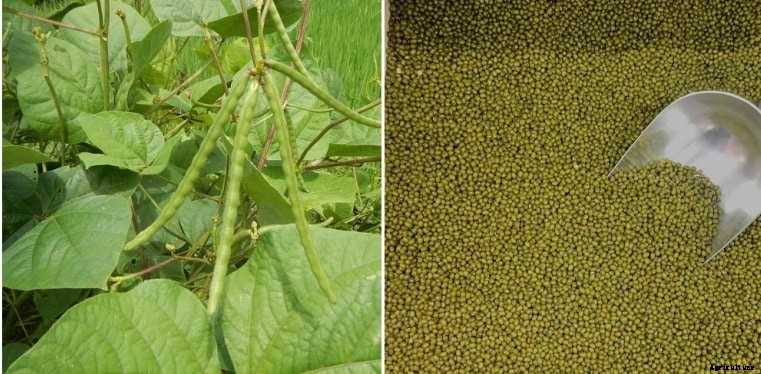
When the pods reach the stage of maturity, they will be fuzzy and at a length of 5 inches. Each pod will consist of a maximum of 15 seeds and the color of the pods vary between black to yellowish-brown. Seeds will change in color like brown, yellow, green and also black. Mung beans will also undergo self-pollination.
The growth of Mung beans has been taking place in India since ancient times. These are still grown in Africa, Southeast Asia, Australia, and South America. This mung bean has hot many types of names and they are as green gram, look dou, lutou, golden gram, chop suey bean, orud, moyashimamae.
In the United States, mung beans will be termed as Chickasaw peas. These days, a maximum of 20 million pounds of mung beans are being consumed every year in the United States and almost 3/4th of the beans which are produced are imported. Mung beans can be used as a dry bean, fresh or canned or even sprouted. These can also be used as a green manure crop and also as a cattle forage. The beans which are chosen for sprouting should always be of very good quality. Basically, the seeds which are large, green and shiny are chosen. The seeds which do not meet the standards of sprouting are used for the purpose of livestock.
Growing Mung beans in the garden:
You may also read Growing Japalpenos from Seeds.
When you are growing mung beans, you will need to always use similar cultural practices which are used for growing green bush beans.
But you will need to keep aside the pods and let them live on the bush for allowing the beans to get dried.
Required climatic conditions for Mung beans: Mung beans are the crops which prefer warm climatic conditions and they will take at least three to four months to reach the stage of maturity. Mung beans are the ones which can be grown in outdoor locations or indoor locations. Before sowing seeds, you will need to start with the preparation of bed.
Requires soil conditions for the growth of Mung bean: Mung beans are the ones love to grow in the soil which is fertile, loamy and sandy. The soil should be well-drained. The pH of the soil should be between 6 and 7.
Below are the Mung bean plant growth stages:
Preparation of soil for the growth of Mung bean:
The soil should be tilled to remove the weeds, clods and large rocks and the soil has to be amended with 2 inches of compost which is worked in.
Plantation of mung bean seeds:
The seeds have to be planted when the soil is at a temperature of 18°C.
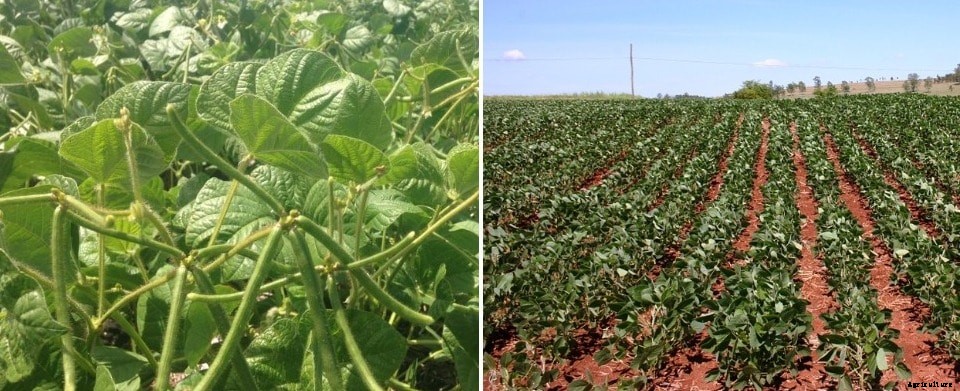
The seeds have to be sown at a depth of one inch and at a distance of 2 inches from each other and when in rows, they have to be placed at a distance of 35 inches from each other.
Care and maintenance:
The area should be kept free from weeds must make sure that you are not at all disturbing the roots while cleaning the area for weeds. Proper care must be taken while removing the weeds.
The mung bean plants have to be fertilized with the food which has less content of nitrogen.
For instance, you can prefer a fertilizer with an N-P-K ratio of 5-10-10.
Harvesting of Mung bean:
The formation of beans will begin when the mung bean plant height of at least 18 inches and the pods will continue to become darker as they start maturing.
Once the bean plants have reached the stage of maturity, the entire plant has to be pulled up and should be hung overhead in a shed or even a garage.
A clean paper or fabric has to be placed below the bean plants to catch hold of any pods which have become dry and fall.
The pods will not get matured all at a time, so make sure that you are harvesting the mung bean plant when a minimum of 60% of the pods are matured.
The seeds have to be dried completely by placing them on a newspaper and spreading them to allow enough air for them to get dried. If you see any moisture which is left over at the time of storage, the beans get destroyed.
You may also be interested to read Growing Tomatoes from Seeds.
Storage of Mung beans:
The beans which are dried completely can be stored in a tight-fitting glass canister for many numbers of years. You can also go with freezing the seed as it is the best option and will also decrease the possibility of insect infestation.
Facts about Mung beans:
Mung beans will take about 2-3 days to grow. You can see them growing rapidly on a daily basis.
Mung beans are considered to be a very good option for experiments as the seeds of mung beans are small and they grow even in places which are compact. Growing mung beans experiment can be done to know the variations in soil, you can make use of various quantities of water, fertilizer, and sunlight. This is done for the observation of how factors like water, sunlight, and fertilizer will affect the growth of plants.
Mung beans will take about 3-4 months to grow or reach the stage of maturity. Mung beans can be grown both in the indoor and outdoor locations. Before sowing the seed, you will need to prepare the bed.
Mung beans are the plants which have deep roots and also love to live in warm and dry climates. So they will grow best when you water them three to five times deeply at the time of growing. If you see that the soil is moist at the plantation time, you can avoid first watering until 15 days after plantation.
The best range of temperature for the growth of mung beans is between 28°C to 30°C. That means the crop is generally grown at the time of summer which would be warm and also dry. The plantation of seed can be done when the temperature is at least 18°C.