
Welcome to Modern Agriculture!

Today the topic is about container tomato gardening.From your dining table to your beauty recipes, tomato is an omnipresent and most widely used ingredient in our everyday life. In culinary art tomato is used as a key ingredient in every recipe all over the world be it your salad or dip, tomato adds flavor to your food in every way. This makes tomato most desirable crop, whenever a person thinks of stepping in the field of gardening the preference is ‘tomato’ because tomato plants are responsive and easy to maintain.
But what if you don’t have any backyard space to grow red juicy tomatoes???
No need to worry tomato is a versatile crop and you can grow plenty of tomato in containers or in pots as well. All you need is to read this article as today we will talk of all aspects of growing tomato in containers. Growing tomato plants in containers also eliminate the need for an extensive in ground exercises like weeding and constantly worrying about any disease or insect infestation. So let’s get started.
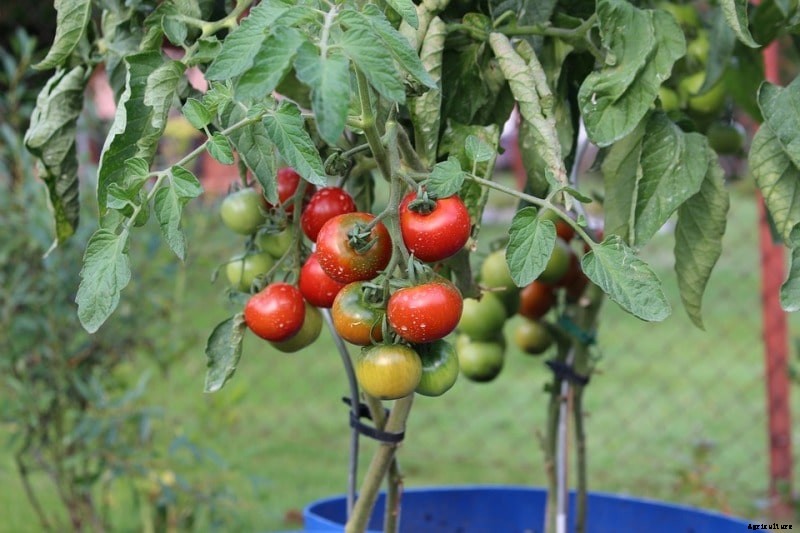
Tomato is botanically known as Lycopersicon esculentum also called Solanum lycopersicum which belongs to the nightshade family Solanaceae. It is an edible vegetable, often red colored, berry of the plant is called tomato. The species is known to be originated in western South America and domestication is thought to have occurred in Central America. The word tomato has its original roots from word tomato that gave rise to the Spanish word ‘tomato’ from which the English word tomato was derived. A very well known fruit, tomatoes are widely grown throughout the world is an erect or spreading annual plant varying in size from 30cm to 2 meters or more. If you want to grow tomatoes at home, you must be aware of container tomato gardening. Most of the tomato types are suitable for container tomato gardening.
Read: Identifying Organic Foods.
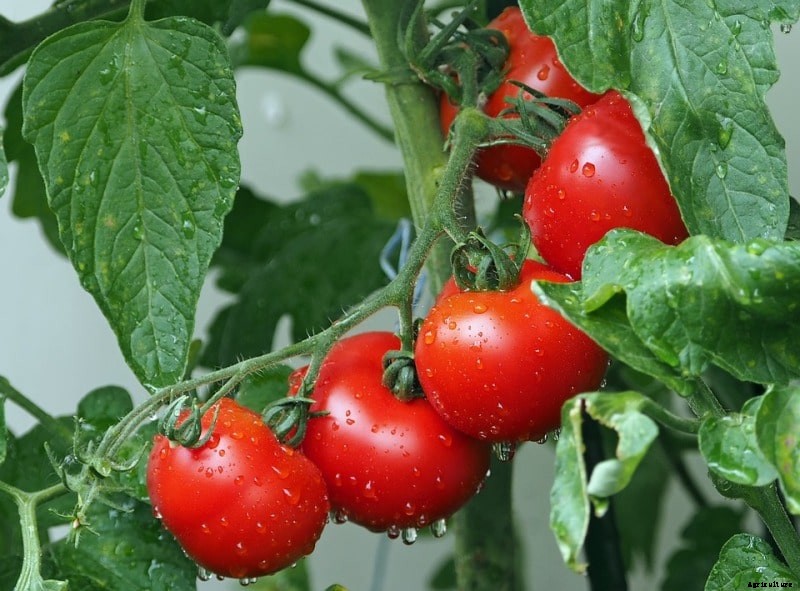
There are hundreds of tomato varieties varying in size, color and growth pattern. From marble-sized grape or cherry tomatoes to juicy salad, tomatoes have different sizes. Their color also ranges from deep crimson to orange, yellow, green, purple, and even chocolate.
Determinate Tomatoes are the bushy type that grows 2-3 feet (60-90cm) tall, and then the buds at the ends of all the branches form flowers instead of leaves. They flower all at once, set and ripen their fruit, then die.
Indeterminate Tomatoes are vining types that need caging or staking for support when loaded with fruit, they continue their vegetative growth and along with fruit setting until frost kills them. They’re generally last longer than the determinate tomatoes, and produce larger crops over a longer period.
If you’re growing tomatoes for the first time or growing tomatoes in containers, Cherry Tomatoes are a good option to start. Cherry and grape tomatoes are small, usually less than the size of 2.5cm, and they grow in large clusters. Cherry tomato plants bear small sized fruit which means they’re more appropriate if you’re growing tomatoes in containers. They tend to have better disease resistance than the larger tomato varieties, and they’re more tolerant to drought stress and poor soil.
Read: Garden Soil pH Testing Guide.
Salad Tomatoes form bear fruit with a size of 5-7.5cm (in diameter), they are perfect for slicing on sandwiches or chopping into salads. They’re usually a little tarter and juicier than cherry tomatoes with some acid to balance their sweetness. Some may have undertones of tropical fruits. Salad tomatoes make a great, quick tomato sauce and are more preferred for everyday usage. To meet the demand more work has been done to get quality variety with high yield potential as a result salad tomatoes have more cultivars than any other type of tomato.
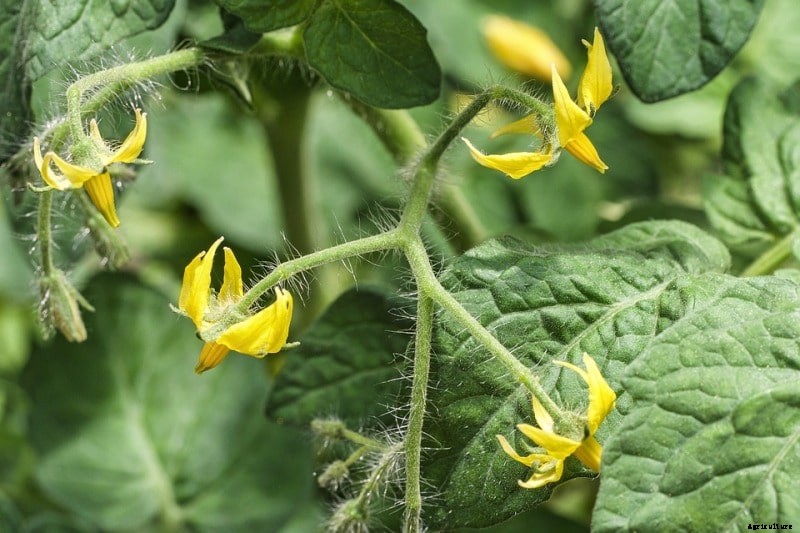
Beefsteak Tomatoes generate large and heavy fruits. These are the big, thick, meaty tomatoes that are so appreciated for sandwiches and it is one of the main reasons for growing these tomatoes in western countries. Some varieties of beefsteak tomatoes may reach size about 6” (15cm) in diameter. Beefsteak tomatoes need a longer growing season and high-temperature demand than the smaller varieties, so they may not be suitable for short-summer or cool-summer gardens and not for raising them in containers.
Roma (Paste) Tomatoes are the dense Italian plum tomatoes with sweet, firm flesh, high pectin content which makes its coat thick; it doesn’t have not much juiciness and contains less seed. It is the perfect sauce tomato since it thickens naturally and needs less cooking time to evaporate off the excess moisture. Their low moisture content gives them extended fresh storage time or shelf life, and they’re great for drying or topping pizzas.
Heirloom tomatoes are often open-pollinated, which means that they are pollinated naturally, by agencies like birds, insects, wind, or human activity they reproduce true to form from the saved seeds. Heirloom tomatoes have high potential and variability because their DNA hasn’t been manipulated. They are known for superior flavor under local optimum conditions, and their seeds have been passed down through ancestors and saved for generations. These juicy, thin-skinned beauties can’t be shipped long distances due to less shelf life. These heirloom tomatoes can be grown easily at home in containers.
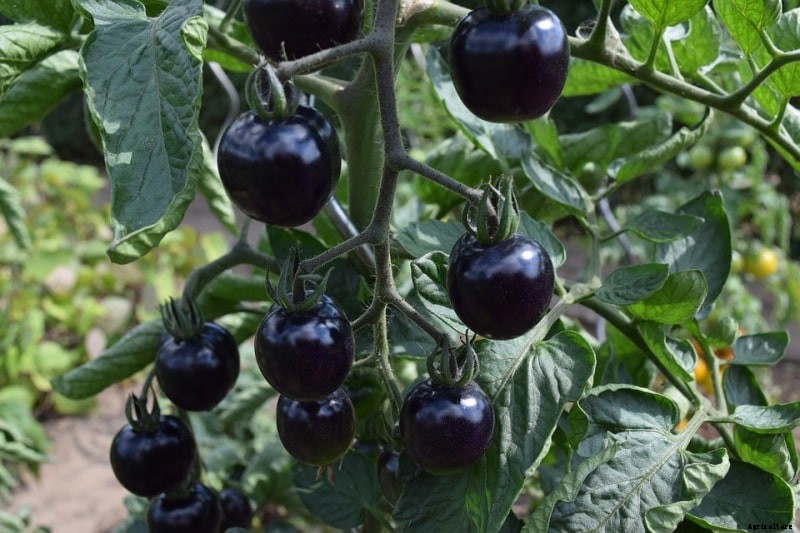
Heirloom Cherry Tomatoes:
These are the modern world tomatoes developed by crossing two different varieties of tomatoes with an objective to develop new combination with high quality, high yield characteristics, disease resistance, ease of harvesting and longer shelf life. Hybrid varieties are most widely used tomatoes.
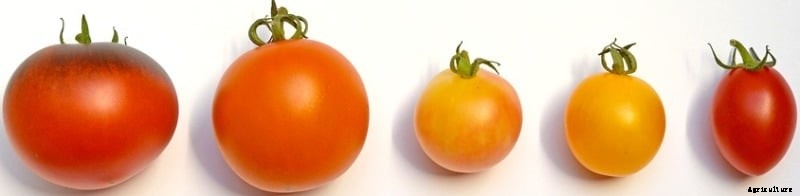
This determinate type tomato plant produces compact sized sweet cherry tomatoes only in duration of 50 days.
A determinate hybrid that produces tennis ball sized fruit within 70 days.
This perennial favorite is common in nurseries. Shows disease resistance with a compact and Produces small fruits within 54 days.
Bred for short-season gardening, this determinate plant in 58 days the plants offers fruit for harvesting.
This determinate plant has a strong stem so you can get away with little or no staking or caging. Takes only 68 days to harvest.
This variety has a compact yellow cherry tomato which produces fruit within 56 days.
Read: How to Grow Carrots in Pots.
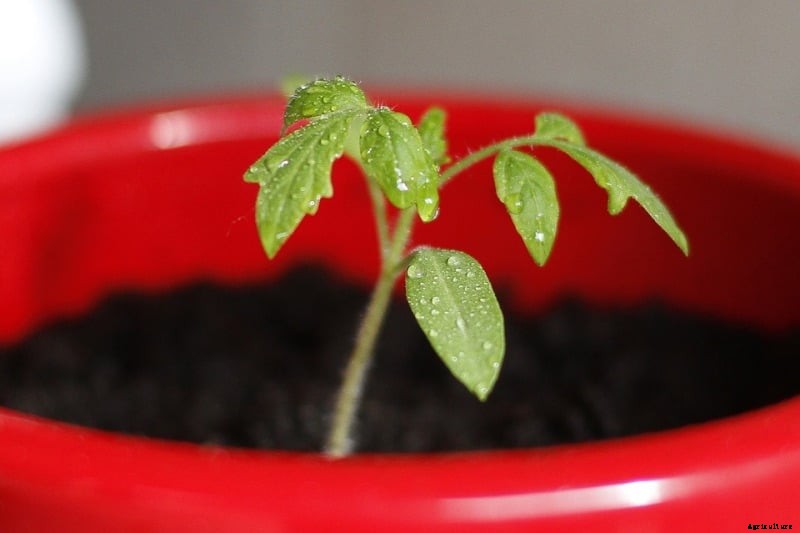
The first and foremost point to be noted down is you should have a proper place for keeping your tomato plant container which receives at least 6-8 hours of sunlight. All types of tomatoes can be easily grown in containers but you must select variety according to your requirement and climatic adaptability rest plants need an appropriate container, climate, and soil and moisture availability to thrive.
To cultivate tomatoes in pot or container you must be alert and careful when choosing the container as it works as a sole reservoir from which your plant will fulfill all its needs.
The tomato plant has a deep root system so your container must be of 25 cm deep at least with 4- to 5-gallon capacity.
The size of the container also varies with the type of tomato plants bushy tomato plants require smaller container than the vine indeterminate tomatoes.
If your area has hot summers, then it is advised to use non-porous containers such as plastic or glazed ceramic to cut down the water loss from pot surface.
Wood containers are another option but they may face termite attack.
Clay pots are porous and allow water to evaporate from the soil through the surface of the pot hence, tomato plants in them need more frequent watering than those in non-porous containers.
Each container needs at least four drainage holes at the bottom; you can drill additional holes if necessary.
To speed down the rate of evaporation you can use light-colored containers that will capture less heat.
Good drainage and healthy roots go together for ensuring proper drainage without washing off all your soil you can line up the bottom of the container with any tray or saucer with the net.
Give your plants a fine start by using clean containers. Before planting, clean all parts of the container with soap and water, and rinse them well with water.
The next tasks are to disinfect them with a solution that is one part household bleach and nine parts water and to rinse them thoroughly with water.
Instead of usual garden soil, it is recommended to use a mix of potting soil that contains vermiculite or perlite and fill your container up to 6 to 8 inches.
Cut a layer of mesh window screen to fit the interior bottom of each pot or container, and put the screen in place before adding the soilless potting mix so that the mix doesn’t seep out out the pot’s drainage holes.
The potting mix must be light and well drained so that it provides proper aeration and moisture to the developing plants.
You can always enrich your soil with balanced organic fertilizers to uplift the fertility gradient.
It is the most important step in container gardening, you have two options when growing tomatoes either sowing the seeds directly into the container or fetching seedlings from the nursery and then transplanting it into the container. You can also raise tomato seedling yourself with the help of a growing tray.
Tomato plants grown in containers are more exposed to environmental conditions than the inground tomatoes because they’re not bordered by as much insulating growing medium. Your container tomato plants’ potting mix should be watered every day and during summers twice per day, particularly if the containers are in full sunlight or are clay pots. Windy conditions also call for more frequent watering. Water each container’s potting mix unless you see water coming out the container’s bottom drainage holes. Conversely, tomatoes’ potting mix shouldn’t be constantly kept wet, which promotes root rot. If the moist potting mix clings to your finger or a wooden pencil after you inserted it into the top 2 inches of a tomato plant’s potting mix and removed it, then the potting mix doesn’t require watering.
As soon as your tomato plants attain a height of 2 to 3 inches they need to be supported. For the determinate of bushy tomato varieties you can use tomato cage or stakes for indeterminate varieties you can use string trellis, tall stake or strong cages you can make a web-like structure with nylon net or simple thread for support.
When you observe excessive vegetative growth in your tomato plants such as condition where tomato leaves or branches growing too close starts blocking sunlight and air you can trim such branches to encourage proper interception of light and hence high yield.
Always be alert and consistently monitor your containers. Keep a check on your plant’s health, look for any larvae and other insects, and be watchful about for the signs and symptoms of any disease.
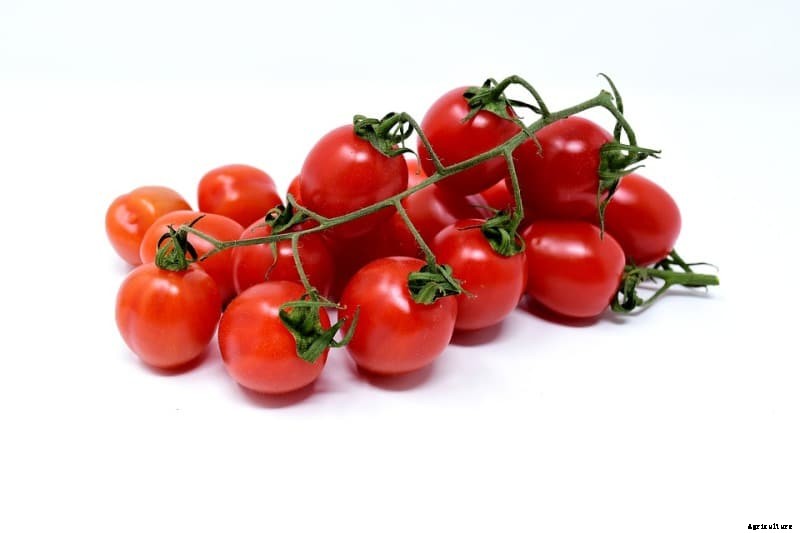
Tomatoes can be harvested based upon the maturity duration of the variety used rest basic thumb rule is harvest tomato when they easily come off from the vine with a simple twist. After harvesting wash off fresh juicy tomatoes can store them at room temperature indoors (65°-70°F) or in a shady place outside, for longer duration you can store them in refrigerator wholly or even in its pulpy form.
That’s all folks about tomato container gardening.
Read: How To Conserve Soil Moisture.


