Welcome to Modern Agriculture!

The Khejri tree is native to arid regions (dry and sand soil type) of West Asia and the Indian subcontinent, including Afghanistan, Bahrain, Iran, Oman, Saudi Arabia, the United Arab Emirates, and Yemen. Since its introduction, it has become naturalized in parts of Southeast Asia, including Indonesia.
It is the national tree of the United Arab Emirates, where it is known as Ghaf, and it is the state tree of Rajasthan in India. Among the longest-lived Ghaf trees is the ‘Tree of Life’ in Bahrain, which is over 400 years old and grows in the desert without any known source of water.
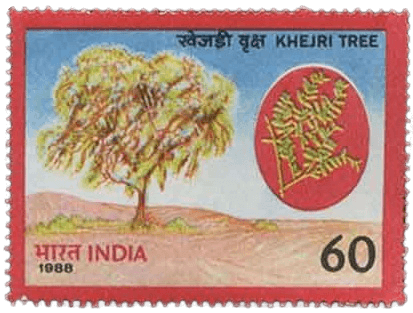
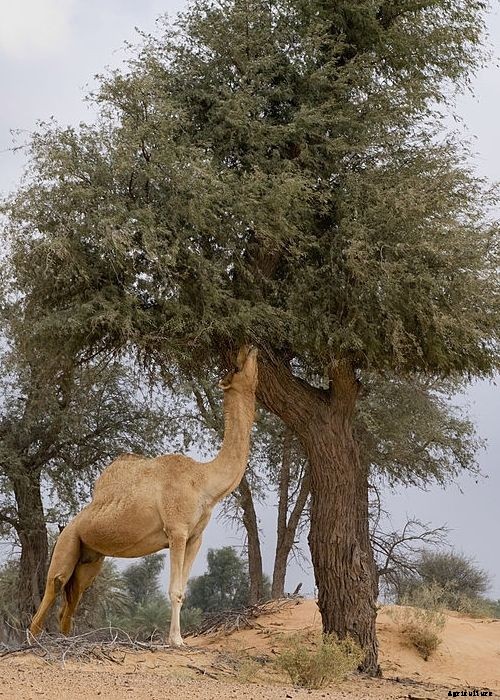
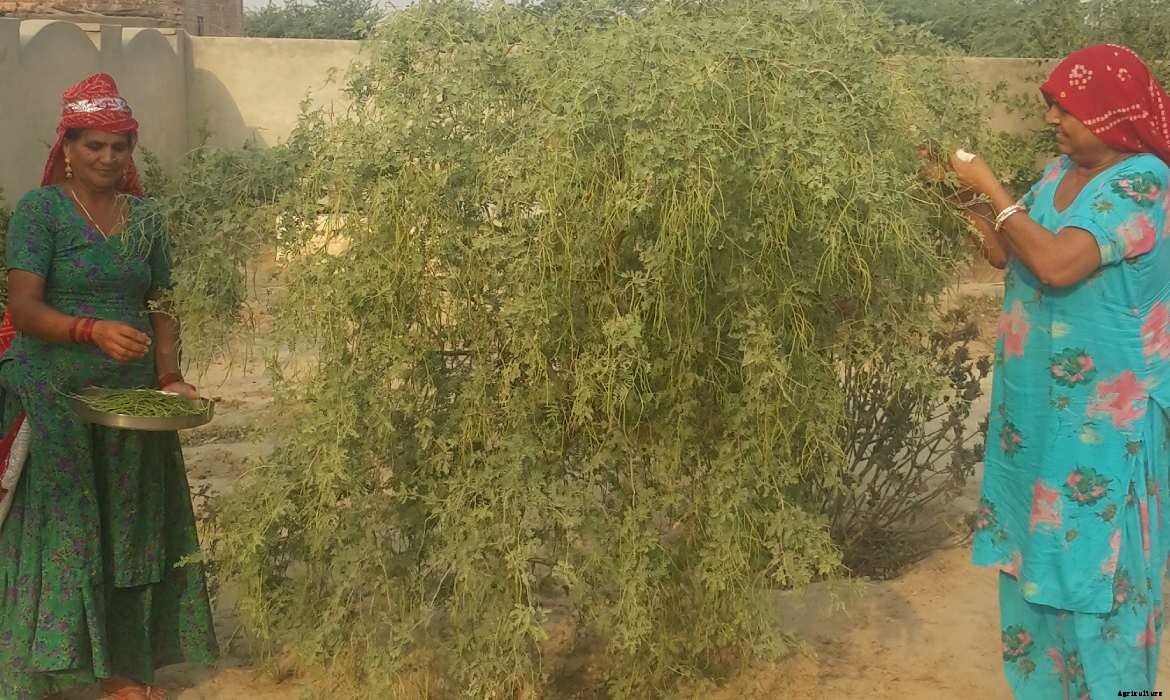
The khejri tree is a major component of the vegetation system and one of the main sources of feed, timber and fuel. The pods of this tree are used as a vegetable. It improves soil fertility since it is a legume. This tree is well adapted to the arid conditions and is resistant to the adverse effects of climate change and animal browsing.
Class : Dicotyledons
Subclass : Polypetalae
Series : Calyciflorae
Order : Rosales
Family : Fabaceae
Prosopis cineraria
The oldest name for this species is mimosa cineraria Linn. Sp. PI. 517, 1753. Later the tree was considered under the genus Prosopis and renamed as Prosopis spicigora Linn. mant. 68, 1767; F1.Brit. _India 2: 288, 1878.
In the end, as per the code of Botanical Nomenclature, Macbride (1919) validated the tree under the genus Prosopis and species cineraria and again renamed it Prosopis cineraria (Linn.) Macbridc (reference Contrib. Gay. Herb. n.s. LIX, 16 (1919).
Hindi and Indian local languages: Khejadi tree, Shami tree, Sami tree, Banni tree, Safed Kikar, Sual tree, Agnigarbha, Jant, Janti, Sangri, Chhonkara, Jand, Kandi, Banni, Vanni, Perumbe, Kiribanni, Kiru banni, Parambai,
Arabic: Ghaf tree
Telugu : Jammi chettu
English : Spunge tree
Other : Mimosa suma, Acacia suma
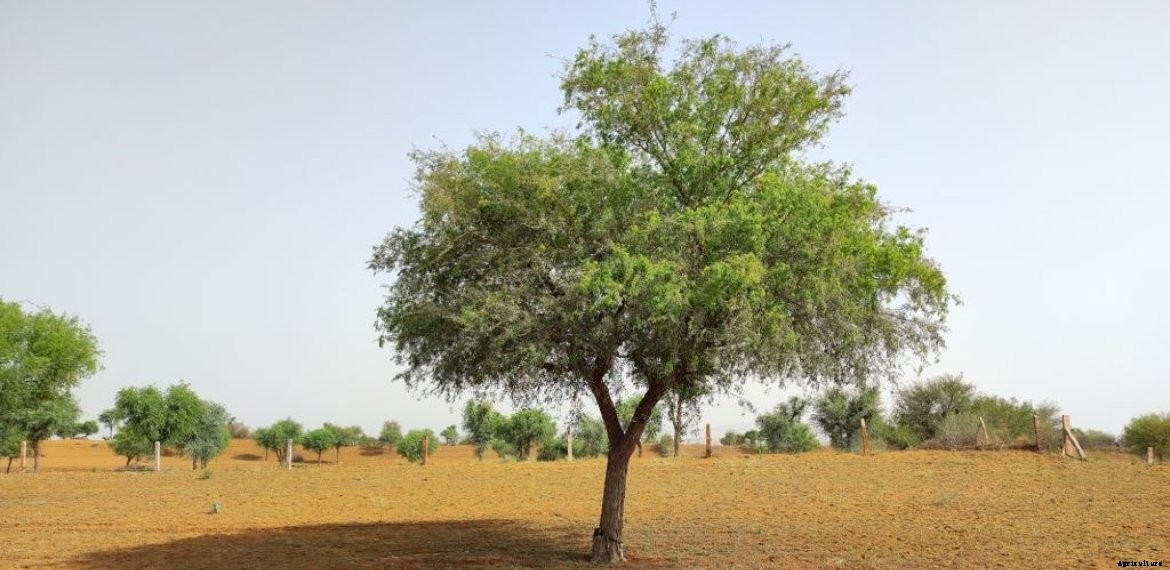
Its pretty simple to identify a Khejri tree. Khejri tree is a medium-sized thorny, irregularly branching, evergreen tree with a thin open crown and slender branches armed along the internodes with conical or curving prickles on a wide base. It can grow up to 6.5 m tall.
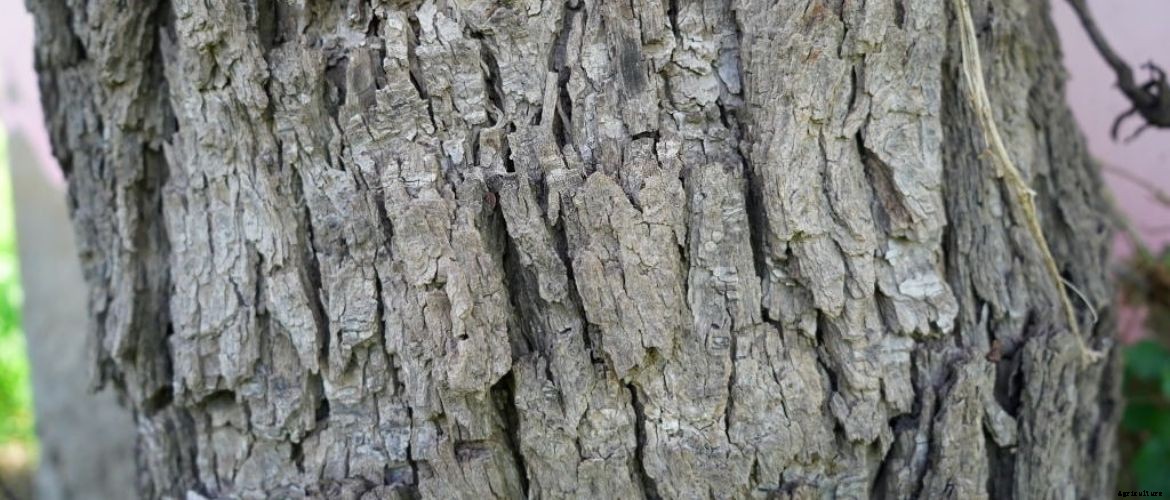
The inequitable bole can have a diameter of up to 30 cm. The tree can reach deep water tables because of its extensive root system, hence enabling it to access water which other plants can not.
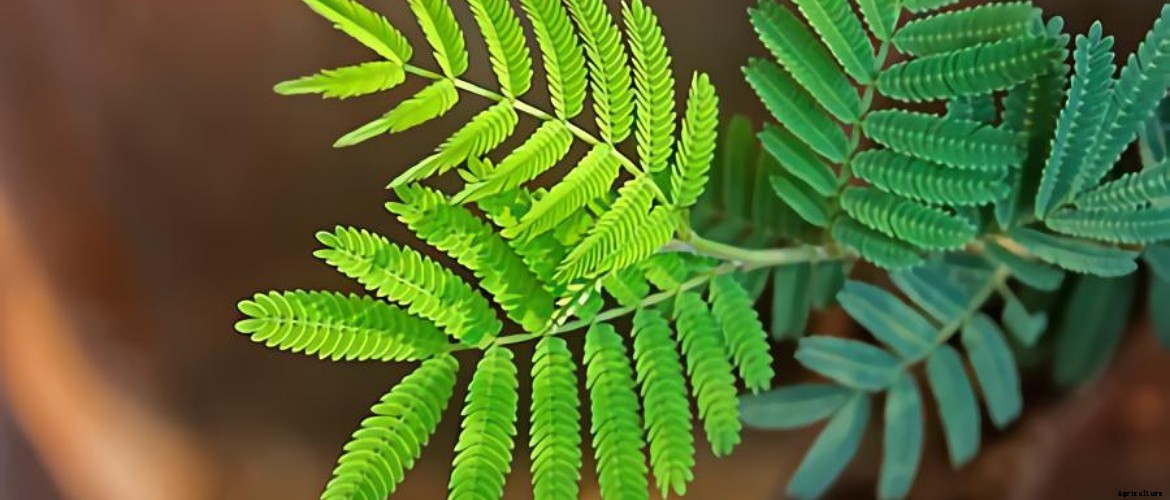
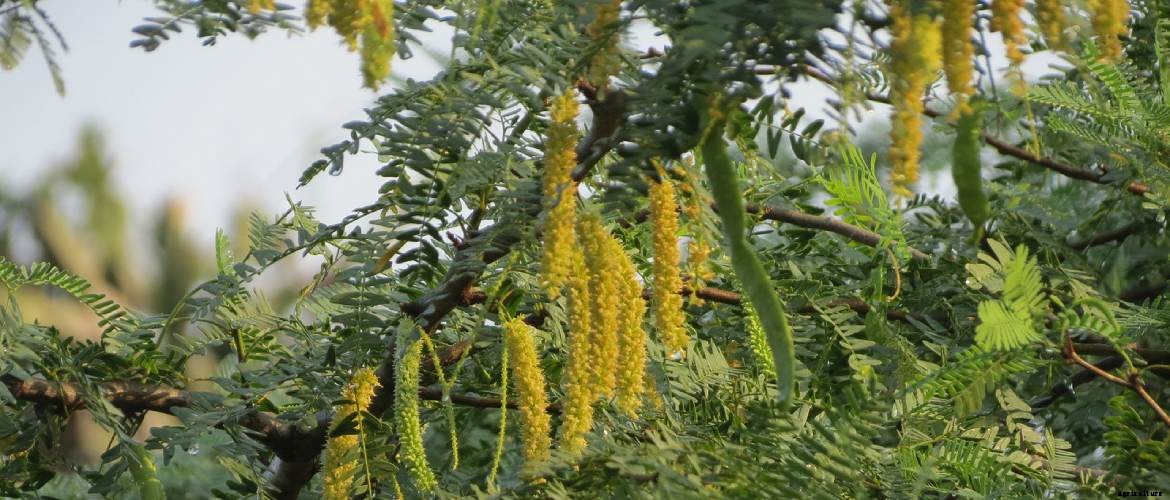
The leaves of khejri tree are alternate, bipinnate and bluish-green in colour. Generally, the leaves of this tree occur in 2-3 pairs of opposite pinnae, and each pinnae consists of 3-5 cm long 7-14 leaflets. The leaflets are dark green, sub sessile, oblong, with an obliquely rounded base, and muconate at the apex.
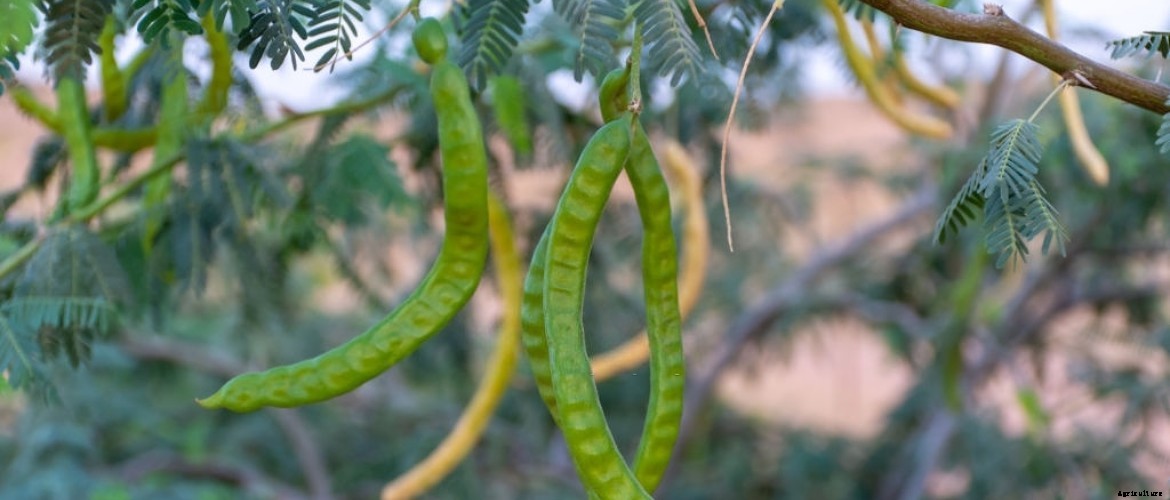
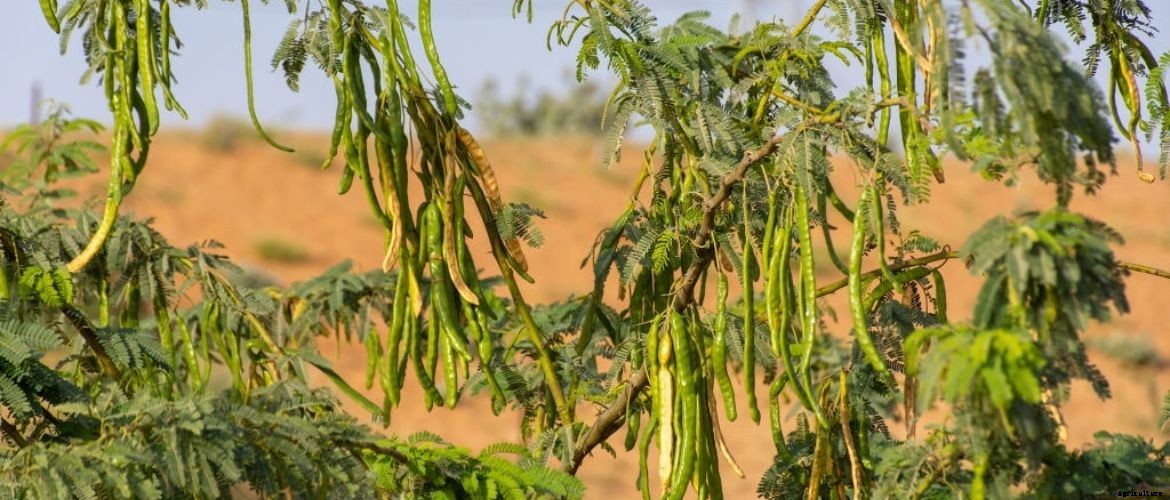
The flowers of khejri tree are yellow or creamy-white in colour which grow in pedunculate, slender axillary spikes, 5–13 cm long. Every flower contains obscurely 5-lobed calyx ; 5 small, oblong petals with re-curved tips; 10 stamens with glands. The pods are 14–25 cm long, leathery slender, drooping, cylindrical filled with dry, sweetish pulp, constricted between 10–15 oblong and brown seeds.
The sanskrit name of the khejri tree is “Sami” or “Shami“. Some of the European Sanskrit scholars have, however, referred to it as Mimosa suma and Acacia suma, after referring to scriptures (Monier-Williams, 1899). Khejri is described as possessing an extremely tough hand Wood, and is supposed to contain fire (Manu Smriti, Viii, 247; Raghuwansa, iii, 9). In sanskrit it is also called as “Agnigarbha” because of its association with fire.
Hindu societies in India regard the khejri tree as sacred. As part of many festivals, it is worshipped by people and has a religious significance.
In ancient Vedic times, Khejri wood was used mostly for lighting Yagna’s sacred fire (also known as yajna/yajña/yagya). The fire was created by rubbing two pieces of hard wood together in order to create the flame, namely one piece of khejri and the other piece of Peepal or Aswattha (Ficus religiosa).
The reference to this tree has been found in Rig Veda and Atharv Veda.
Khejri is also mentioned in the Mahabharata and Ramayana. In the story, Arjuna had to go into hiding (i.e., a year of concealed exile-13th year) with his Pandava brothers, and he hid his bow, named Gandiva (Arjuna’s bow), in the hollow stem of a Khejri tree i.e. “banni tree“.
Khejri has been mentioned in the Valmiki Ramayana along with other trees that grow on the hills of Panchvati. Lakshman used branches of the Khejri tree for the thatched hut-Parnakuti, where he along with Lord Rama and his wife Sita stayed during their 14-year exile. Lord Rama also worshiped this tree after slaying Ravana.
From root to pod, every part of the tree has some use.
Its status as the ‘state tree’ of Rajasthan underlines its significance. It is called the ‘kalpavriksha of the desert’ since all parts of khejri are useful. As well as being known as the ‘king of the desert’, it is also known as the ‘wonder tree’.
It is one of the symbols of socio-economic development in the area. Typically, desert dwellers consider this tree to be their lifeline and a species they prefer. Khejri has been the most common agroforestry species for centuries due to its multiple benefits and uses.