
Welcome to Modern Agriculture!

Introduction on Alley Cropping System in India
Alley cropping system is planting rows of trees at wide spacing with a companion crop grown in the Alleyways between the rows. Alley cropping improves farm income, crop production, and protects crops. It allows the farmer to effectively use available resources and yield more benefits. Selecting suitable associated crops and mitigating the competition between trees and crops. In this article we also discuss the below topics;
Alley cropping system is the cultivation of food, forage, or specialty crops between rows of trees. This system is a larger version of intercropping or companion planting conducted over a longer time scale. Alley cropping can diversify farm income, improve landscape aesthetics, increase crop production, increase crop yield, and provide protection and conservation benefits to crops. By combining annual crops and perennial crops that yield multiple products and profits at different times, a landowner can use available space, time, and resources more effectively. One main disadvantage of the Alley cropping system is that additional labour is required to prune the trees. In general, the Alley cropping system advantages appear to outweigh the disadvantages.
Farmers may also use Alley cropping to transition from one farming system to another system. The annual crops grown in Alley cropping can provide short-term annual income until the trees are mature. The versatile nature of this system allows a producer to react to markets, labour limitations, and changing goals. Like all agroforestry systems, Alley cropping must be considered as part of the whole farm operation.
Alley cropping systems are a way of combining crop and tree production on the same plot, with an economic and environmental objective. Generally, they consist of;
Alley cropping system is the cultivation of food, forage, or specialty crops between rows of trees. It is a larger version of intercropping planting conducted over a longer time scale.
Harvest timing – Inter-row crop production must be timed to avoid interfering with a potential woody crop harvest. In most cases, this is avoided because crops are grown during the early years of tree establishment when there is disruption by cropping activities.
Crop marketing – It is important before starting a new crop to understand how and where the crop will be marketed. To assist in this, an enterprise budget with a cash flow plan is necessary. This is critical and valuable for smaller, niche markets such as herbs, florals, and specialty vegetables.
Equipment use – It should be spaced widely enough to allow proper handling of mechanized equipment. This includes space for the growth of the tree crowns. Rows and Alleys should be arranged to facilitate easy operation of the widest machinery to avoid damage to machinery and crops.
Field Management – Alley cropping should be designed to optimize the use of light, water, and nutrients between woody plants and the inter-crops. Severe competition can reduce crop and tree growth, particularly during dry periods. Competition can be reduced by proper variety selection, spatial arrangement, and timing of planting and harvest, as well as by pruning tree limbs or roots. Weeds will need to be controlled in the tree rows for the first 3 to 5 years of establishment.
System Design – The woody plants can be planted in single or multiple rows. The woody rows may include plants that produce berries, wildlife food, florals, or other products. The inter-planted annual crops can be even more diverse and grasses for hay, cotton, soybeans, vegetables, ethnic herbs, or various combinations of other crops. Crop choices depend on the priorities for production and landowner preferences.
Woody Plant Selection Factors are;
When designing an Alley cropping system, a landowner considers a few things;
Alley cropping utilizes five basic groups of companion crops between rows, with different types of crops in each group. The five basic groups are;
As shade levels increase, cool-season plants will perform better than warm-season plants.
Spacing between rows and individual trees is critical in designing an Alley cropping system.
1. Between-row spacing changes depending upon a variety of management decisions. For example, trees planted for wood fiber production will need less between-row spacing than if nut production is emphasized.
2. Within row spacing varies with the intent of the Alley cropping program. For example;
Improved soil health – Alley cropping is a good option for areas prone to erosion or in a degraded shape, particularly when the tree and shrub rows are planted along contours. Woody roots in this system help reduce soil erosion, add organic carbon to the soil, recycle and add nutrients, and improve nutrient retention.
Protecting crops – Alley cropping reduces damage from insect pests by reducing crop visibility and creating habitat more favorable to beneficial insects.
Improved crop health – In this system, tree and shrub canopies protect the inter-crops against wind damage. Reducing wind affects aids in pollination activities by beneficial insects thus increasing crop yields.
Income diversification – Crop production during the years before nut trees come into bearing or hardwood timber is harvested creates cash flow and diversifies farm income, thus improving the return on long-term investments in trees.
Shelter – Trees planting in rows reduce wind speed, thereby controlling wind erosion. They also make sheltered microclimates that improve the yield and quality of crops growing in the Alleys.
Wildlife – Alley cropping system increases the biodiversity of cropland which creates new habitat for wildlife.
Alley cropping can have many ecological and economic advantages.
Reduced soil erosion – Particularly when established in sloping areas, Alley cropping can slow erosion, thereby improving water quality.
Improved crop performance – Added organic matter from shrubs and trees can increase soil productivity. This system also creates a microclimate from the increased shade and reduced wind, which in turn increases water use efficiency by crops. Though, the additional organic matter from the mulch improves soil structure with many rewards to the crops.
Reduced use of chemical fertilizers and pesticides – In the Alley cropping system, weeds are better controlled, and increased nutrient flow improves soil fertility without the use of fertilizers.
Minimized nitrogen leaching – Minimizing nitrogen leaching mainly improves water quality.
Promotion of biodiversity – Planting diverse vegetation provides wildlife with more potential habitat.
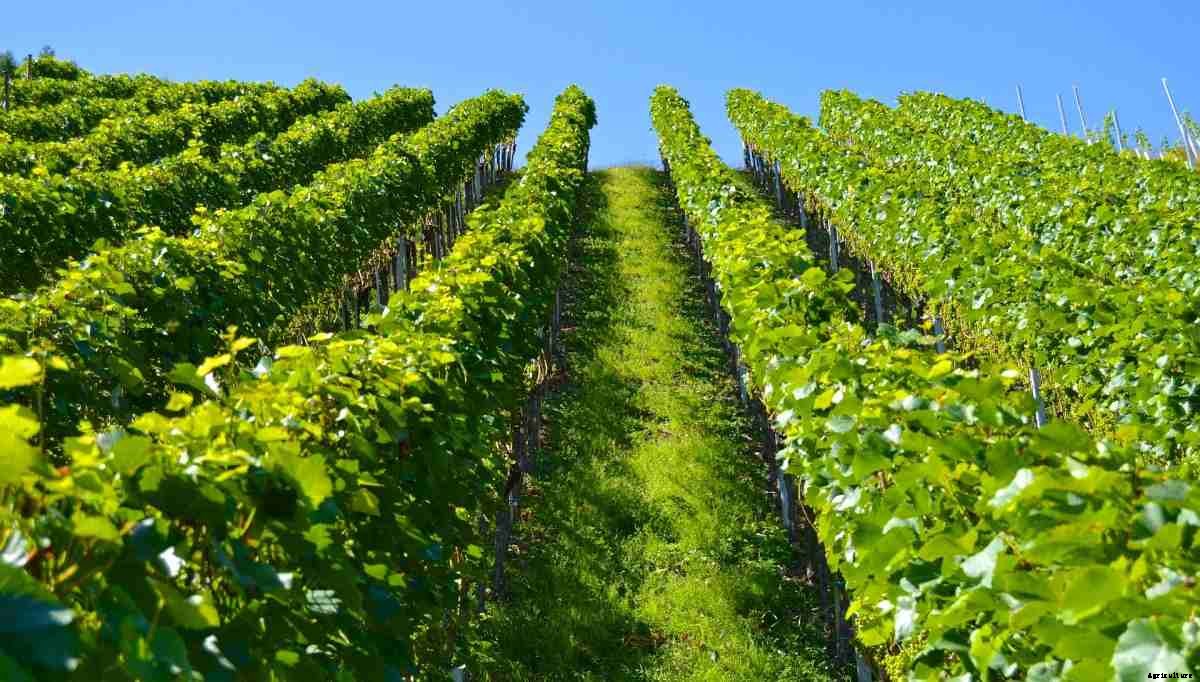
The decisions around the Alley cropping system are due to many factors and press the need to use a design process. The idea with the Alley cropping is to bring diversity to the farm in terms of crop yields and economic resilience; all of which hinge upon creative human interaction with nature. With that, Alleys can be set up on the farm efficiently in combination with earthworks.
The Alley of trees can be just one single row but also can be several rows of trees or shrubs. This makes sense from a soil microbiology perspective as keeping a good fungal environment for trees is important. The Alleys will be more bacterial driven so creating three lines of offset trees maybe the best way to go in the end. These trees and shrubs on the outer zone can be more short-term harvests of food, timber, or simply biomass.
You should not miss this: Organic Soybean Farming.
Alley cropping can be established depending on the landowner’s objectives. There are several ways of establishing Alley cropping;
Alley cropping requires more intensive technical skill and marketing knowledge.
The following limitations should be considered;
In case if you are interested in this: Gardening Questions and Answers.


