Solar subsidy and loans of agriculture
Here is the complete guide for agriculture Solar Subsidy, Loan Schemes from NABARD in India. India is the most agriculture-based country. In agriculture solar energy can be used in several ways, saving money, increasing self-reliance, and reducing pollution. The agricultural region provides a livelihood to over 50% of India’s population. In fact, the agricultural sector contributes 18% to the country’s GDP. However, the agricultural sector needs good irrigation facilities and other amenities to reap proper benefits. The main constraint in this sector is farmers’ dependency on pumps for irrigation. Most of the farmers use pumps some of which are connected to the grid while some of the pumps run on diesel and other fossil fuels. Solar energy is one of the most vital renewable sources of energy that can be utilized for different purposes.
Loan or subsidy for solar PV system with the help of NABARD:
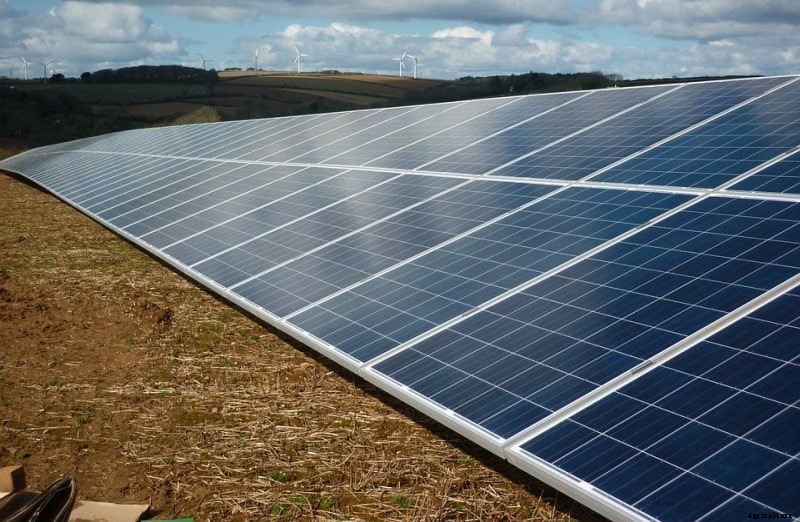 Solar Panel.
Supply of electricity is quite unreliable in main parts of India. Due to increased scheduled and unscheduled power cuts in most of the cities in India, interest in using electricity generated through alternate sources has also increased. However, the high capital cost of setting up systems to tap energy during renewable sources is deterrent in taking up large-scale deployments of the same.
The scheme is being executed by the Indian Renewable Energy Development Agency (IREDA) through the National Bank for Agriculture and Rural Development (NABARD). The scheme was last modified on 15th March 2012 provides 40% subsidy on capital costs of Solar PV Systems for units placed in both urban areas and rural areas in India.
The following steps are the process of purchasing a solar PV system. It states how to get a loan or subsidy for the same with the help of NABARD.
- The most important thing which a buyer is required to do is to select a reliable manufacturer or supplier of solar PV systems. Note that the manufacturer should be approved by the Ministry of New and Renewable Energy (MNRE).
- There are definitely specific models that have been approved by the MNRE, only those are supposed to be considered as eligible under the scheme. It also needs to be mentioned that the benchmark cost of a solar PV system, stated by National Bank for Agriculture and Rural Development, is a total of Rs 270 per Wp. However, you must stay updated about the revised unit costs from time to time by consulting your manufacturer or supplier.
- Total 40% subsidy can be claimed under circumstances where the cost is higher than the cost of the unit. But, the capital subsidy will be fully restricted to the maximum amount of capital subsidy (as per norms laid down by NABARD) if the unit cost is more than the benchmark cost.
- It is important to know that only certain groups of individuals which include self-help groups (SHGs), joint liability groups (JLGs), NGOs and farmer’s club are suitable for the loan through NABARD. This subsidy is not obtainable to public or private limited companies.
- It is necessary that the individual applying for the subsidy has an existing account with a regional rural bank or commercial bank. One can approach nationalized public banks for this function as well.
- Generally, 60% of the entire cost is eligible for a bank loan, while the remaining 40% will be subsidized. RBI norms choose the margin that is to be paid by the beneficiary. You can repay the loan within a term of five years according to the interest rates set by the RBI.
- The quotations and necessary documents, as obtainable from the vendor, need to be submitted. Necessary documents contain Ministry of New and Renewable Energy (MNRE) approval form, project proposal, Taxpayer Identification Number (TIN) number and other important documents which need to be submitted to the bank and are provided by the vendor.
- After verification of all the documents, the bank will process the loan and send the necessary documents to NABARD for releasing the subsidy. EMI will commence as soon as the loan is processed however, it takes some time for the release of subsidy through NABARD. No interest rate is useful to the subsidy part.
- If it is observed by the banks have the right to recall the subsidy in case they observe that the subsidy is misused.
Keeping in mind the expense of installing a solar system, the major objective of the mission is to offer a subsidy scheme so that both individuals and organizations can be helped in obtaining solar energy systems at a reduced capital cost.
You may like Dairy Animal Feed, Nutrition Management.
Different components of the scheme:
Solar energy is generally being adopted in residential, commercial and industrial sectors and it has huge potential to benefit the agriculture sector. So, with an endeavor to offer financial and water security to farmers, the Indian government has launched different schemes to promote the installation of grid-connected solar power plants and solar pumps.
The scheme is divided into three main different components. They are the installation of standalone solar pumps, solarisation of grid-connected pumps and commissioning of grid-connected solar power plants. Through this scheme, the government targets to add 25,750 MW of combined solar capacities that are all three components by the year 2022.
The Government has approved the launch of the new scheme for farmers for installation of solar pumps and grid-connected solar power Plants, with the purpose of providing financial and water security to farmers.
The scheme consists of three components they are;
Component A – 10,000 MW of Decentralized Ground-Mounted Grid-Connected Renewable Power Plants of 500 kW to 2 MW individual plants size to be commissioned by 2022.
Component B – 17.50 lakh separate solar-powered pumps with capacity up to 7.5 HP to replace diesel-powered agricultural pumps.
Component C – 10 lakh grid-connected agricultural pumps with up to 7.5 HP individual pump capacity to be solarized by the year 2022.
The government intends to execute components A and component C of the scheme in a pilot mode till 31st December 2019 whereby commissioning of 1000 MW capacity of ground-mounted solar power plants and solarisation of one lakh grid-connected pumps would be completed. In the case of component B, the whole scheme would take place full-fledged.
Solar Loans
India’s ambitious 40,000 MW rooftop solar targets can be achieved with easy availability of bank loans for solar power plants. Solar finance has led to the phenomenal development of the rooftop solar market in the USA. India must look at adopting similar business models in the area of solar finance.
Solar finance or solar loans are not easily obtainable for Indian borrowers owing to banks’ lack of understanding of solar projects. Ample money is obtainable for solar projects, thanks to Government’s agreement with the World Bank and other development agencies. World Bank alone has signed an agreement to give USD 1 bn loans to India for the financing of rooftop solar projects. However, deployment of such a large amount is both a challenge and an opportunity. Banks are yet to launch definite solar loans to finance rooftop solar projects.
Government subsidy scheme for rooftop solar systems:
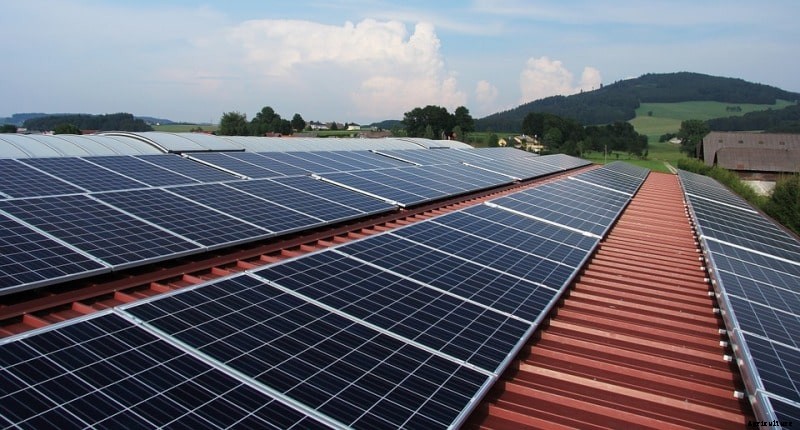 Rooftop Solar Panels.
You may also check How to Grow Curry Leaves from Seeds.
Let us, discussed government subsidies for installing a rooftop solar system in India;
Solar energy refers to the energy attained from the sun which is a renewable form of energy. Ample solar energy is obtainable in India due to its perfect geographical location which makes the country receive tropical sunlight. Also, the country witnesses more than 300 days with clear skies each year. So, India receives a large amount of the sun’s radiation throughout the year.
For installing rooftop PV systems both the Central Government with State Nodal Agencies (SNAs) offers a subsidy to the people. This encourages people to develop renewable energy and to cut their electricity bill. While the upfront cost of installation of a rooftop PV system is high, it is inexpensive in the long run when compared to electric generators. Once rooftop PV systems are installed, they don’t require any other expenses as they use solar energy instead of fossil fuels.
According to the Ministry of New and Renewable Energy, the Central Government pays 30% of the installation cost for rooftop PV systems. This subsidy is appropriate in states that are in the general category. Though, a subsidy of up to 70% of the benchmarked installation cost is offered in some states that lie in the special category North MNRE PV Rooftop Cell.
Other benefits offered by the government for installing a rooftop PV system:
In addition to the subsidy, people can avail different other benefits by installing a rooftop solar system:
- Those planning to install rooftop PV systems can avail priority sector loans of up to ten lakhs from nationalized banks. This loan shall fall under the class of home loan or home improvement loan.
- Consumers will be suitable for generation-based incentives and will receive Rs 2 per unit of electricity generated.
- Also, people can sell the excess of electricity. For this, they’d obtain a regulated cost per unit as per tariffs set by the government.
Rooftop PV system specifications for the subsidy scheme:
- Approximately 100 square feet of space is necessary for the installation of the rooftop PV system.
- The average cost of installation of rooftop PV system without subsidy is around Rs 60,000 to 70,000.
- After leveraging 30% subsidy, people just have to pay Rs 42,000 to 49,000 for installing a rooftop PV system.
- In order to avail the generation-based incentive, the customer should generate 1100 kWh to 1500 kWh per year.
- Under the scheme, a customer can earn up to Rs 2000 – 3000 per annum as a generation-based incentive.
Subsidy from the government of India is being offered for going solar:
Here we discuss the government of India subsidies offered for solar;
The Indian Ministry of New and Renewable Energy (MNRE) has established a different Central Financial Assistance (CFA) schemes that promote solar energy in India to attain its ambitious target of 100 GW. The support is aimed at present subsidies to enterprises that are contributing to growth.
Scheme: Solar Parks Solar Power and Ultra Mega Solar Power Projects
- Central financial assistance (CFA) totaling INR 2 M/MW or 30% of a project’s cost, including grid–connectivity costs, is available.
- An additional INR 2.5 M per plant is obtainable for the preparation of Detailed Project Reports (DPRs) and conducting surveys, etc.
Scheme: Solar PV of 300 MW for defense establishments and paramilitary forces
- Financing is made obtainable through Viability Gap Funding (VGF), which is provided as a capital subsidy. Successful bidders are preferred based on the lowest bids for these funds.
- Considering technology upgrades and economies of scale, the upper limit of Viability Gap Funding was revised on February 2017, to INR 11 M/MW for all projects irrespective of size.
Scheme: Installing grid-connected solar PV power projects under Phase-II, with VGF support via Solar Energy Corporation of India (SECI)
- Batch-I (750 MW) – VGF is limited to 30% of a project’s cost or INR 25 M/MW
- Batch-III (2000 MW) – The upper limit for VGF is kept at INR 10 M/MW for the open category and INR 13.1 M/MW for projects in the DCR category
- Batch-IV (5000 MW) – The upper limit for VGF is kept at INR 10 M/MW for the open category and INR 12.5 M/MW for projects in the DCR category
- Batch-V (1000 MW) – for Central Public-Sector Undertakings
Schemes for improvement of grid-connected PV plants on canal banks and canal tops
Financial support of INR 30 M/MW or 30% of the scheme cost, for canal top projects and INR 15 M/MW or 30% of the project cost, for canal bank projects. Total CFA of up to INR 2.25 billion for 100 MW to be disbursed over a period of a maximum of two years, with 1% service charge to Solar Energy Corporation of India (SECI).
You may be interested in Smart Farming in India.
Some facts about solar energy:
- Solar panels do work at night. Because solar panels require sunlight to generate electricity so they do not work in darkness.
- Generally, a typical warranty for solar panels is 25 years. During this period, manufacturers guarantee that solar panels will operate at or near peak efficiency.
- Solar energy is a renewable free source of energy that is sustainable and completely inexhaustible, unlike fossil fuels that are finite. Renewable energy means any energy that appears from natural resources such as wind, water, sunlight and geothermal heat, which is the heat that is retained in the earth.
- Actually, solar energy is termed the primary renewable energy because it was one of the first forms of renewable energy to be practical for the public.
- Solar subsidy in Andhra Pradesh will get with the new scheme in Andhra Pradesh which is promoting solar power; a solar rooftop system of 1 KW will cost Rs. 50,000. The government in its move is set to promote house owners to install such systems as per reports. A 30% subsidy will be known by the center and 20% by the state government for the same.
- The government says that this must not be called a “solar rebate”. Under the Small-scale Renewable Energy Scheme, the reduction in the cost of the solar panel is not a rebate. So it is a government-run scheme, using other people’s money to give the subsidy.
- The solar panels save on electricity bills in India. Under the scheme, the first 10,000 consumers in the state who set up 1kW systems will obtain a subsidy of 20,000 from the state government in addition to the Central government subsidy of 30,000. A 1kW rooftop solar power system costs between 80,000 and 1.2 lakh, depending on the quality of the solar panels.
- The future of solar energy in India largely depends on attain the ambitious solar power generation target of 100 GW by 2022.
- Some companies offered free solar panels in the past, but this service is not available in the UK any longer. As solar panels are becoming more affordable, the government has drastically reduced the FIT (Feed-In Tariff).
- On average it’s best to model for about five hours of sunlight per day, so to generate 1 MW for 24 hours you would need 4x the amount of space (and panels). The equivalent of a 1 MW power plant would need 2 acres of land, nearly 14,000 solar panels and a ton of batteries.
- Normally, according to the Solar Energy Industries Association, the number of homes powered by an MW of solar energy depends on average sunshine, electricity consumption, temperature, and wind. Nationally, that’s 164 homes per MW.
- Generally, for a megawatt solar farm, expect to spend $3 million developing it. For larger solar farms, expect to spend approximately $500,000 per acre. Solar farms that produce less than one megawatt of power generally cannot justify the cost of development.
That’s all folks about solar subsidy and loans in India. Keep using natural energy.
You may be interested in Growing Hydroponic Coriander.


