
Welcome to Modern Agriculture!

When grass turns brown, many assume it has died. In fact, grass turns brown when it goes dormant due to dry conditions. When will the grass "wake up" and return to being green and luscious? We've researched this question, and here's what you need to know.
The dormant grass will wake up when the moisture level is sufficient and temperatures become stable. This phenomenon is normal during both cold and warm months. As a result, this grass will recover naturally and return to its original state as the season changes.
In this post, we have a detailed discussion on grass dormancy. We'll also explore other related topics, such as the primary care of the grass and the difference between dead and dormant lawns. So, please keep on reading to learn more.

Grass dormancy is a protective mechanism against heat and dehydration. It is a period of passive growth and respiration. In other words, it conserves energy to prevent death. Aside from the climate, light exposure, water level, and nourishment trigger this period.

Whether it is summer or winter, you can notice your grass turns into a brownish-tan uniform field. Likewise, you will hear a crackling sound upon stepping into the yard.
You might think your lawn is already dead, but the bottom of the shoot is still surviving. It is called the crown, a whitish portion slightly beneath the soil. Because it is where the roots meet, it plays a significant role in keeping the turf healthy and alive despite stagnation.
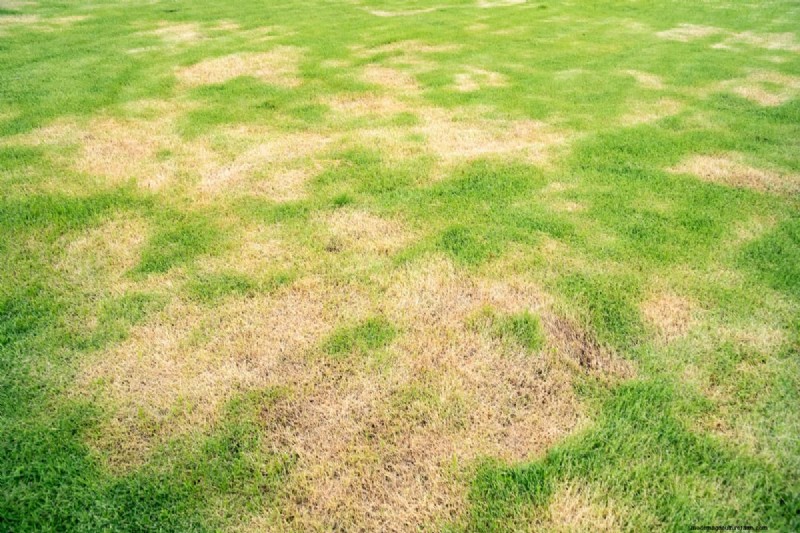
Similar to dormant grasses, the dead ones have a straw texture and brown appearance. However, they differ in several aspects. To know whether your lawn is inactive or deceased, notice its characteristics. Remember that most gardens can have a combination of dead and dormant portions.
These simple signs of dead grasses will lessen your confusion and tell you to remove and reseed.
If they meet these criteria, seek professional help and check this guide on reseeding: Can I Put Topsoil Over Existing Grass And Reseed?

Even though a passive landscape can deceive you, there is still hope to awaken and prevent it from perishing. With proper care and patience, you can save this grass.
Although dormant grass recovers naturally, you can practice the usual maintenance with a few modifications for a speedy improvement. But first, remember that the correct handling will nurture the plant, not overwhelm it.
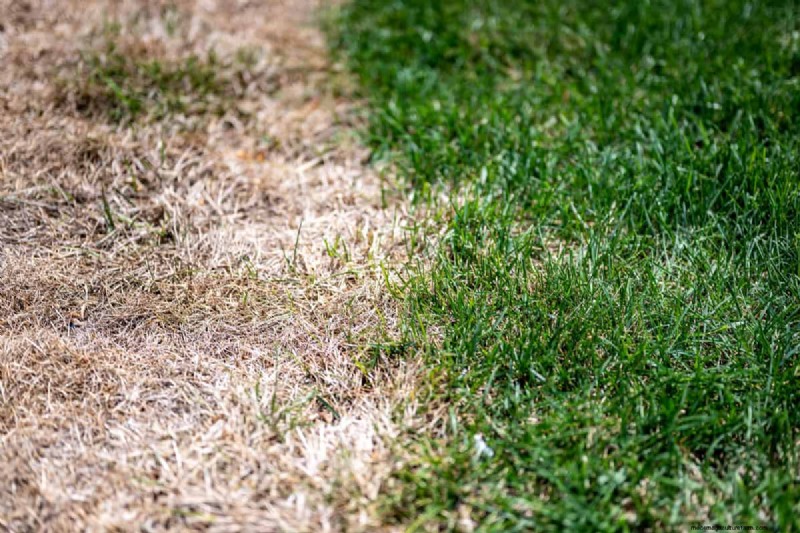
Full-grown turfs can survive for 3 to 4 weeks during drought-induced dormancy. Others remain well up to 6 weeks. When you nourish them, you will not lose sections of your lawn.
Fertilizer supplies the needs of grass but adding it during this time will be detrimental to reviving the lawn in this situation. It is ideal to use it after waking up the turf using the hydration process first. With this, it will maximize the benefits of the fertilizer. The same goes for herbicides because they may cause more damage.
Not all grass species change their pigment at the same time. Thus, there is winter and summer dormancy. Let's find out in this section the two main types of grass based on this aspect.
Warm-season grasses thrive in hot temperatures ranging from 75 to 90 degrees Fahrenheit. They are prominent in tropical areas but still flourishing in temperate regions such as the Southern US.
Although these species are drought-resistant, they can become inactive when the temperature drops below 65 degrees. Thus, the golden lawn happens during winter or fall. Here are some examples of these turfs:
In contrast, cool-season pastures develop well during fall and spring. They need 60 to 75 degrees Fahrenheit for optimal growth. Nonetheless, they maintain their green blades in colder temperatures, hence the name.
Consider these grasses if you live in the upper portion of the US: High Plains, New England, and Northern California.
Meanwhile, another sign of nutrient deficiency is drooping grass. So, view the section about it for insight: How To Get Grass To Stand Up Straight.
Given that your lawn will not always survive extreme climates, experts recommend preparing for the forthcoming dormant season. An ounce of prevention is better than patchy greenery or reseeding.
In addition to the extreme weather, death, and dormancy, other factors trigger the color changes in your lawn. Check if one or two of these reasons.
If you want a lush green pasture throughout the year, you can opt for fake grass installation in your yard. It is a convenient alternative turf. However, weighing its advantages and disadvantages is crucial.
You will enjoy these benefits upon installation.
On the other hand, it comes with several downsides.
Dormant seeding is a common practice for accelerating the germination of grass seeds. It is ideal and practical for reseeding bare yards or uneven lawns. The recommended starting period varies depending on your location. It is between October and November in most areas or before the ground becomes frozen. It is efficient because you do not need to wait for the area to dry and prepare the soil. As a result, these seeds will grow in early spring.
Aside from being time-saving, here is a list of dormant seeding benefits you want to reap.
We learned the significance of temperature in grass development. Thus, it will affect the best months to grow your turf. The optimal conditions vary depending on your chosen species. Generally, the ideal time for sowing grass is between March to May (spring).
Meanwhile, the warm-season pastures are suitable from June to August, whereas the cold-season ones are excellent for September, October, November, and December.

Grass dormancy doesn't need to be a cause of alarm. In many climates, it is inevitable. Now that you know more about it, you'll still be able to take care of your lawn, even when your grass is dormant.
Thanks for reading! If you enjoyed this post, explore these informative articles about grass care:
How Long Can Grass Seed Stay Dormant
Should You Bag Grass Clippings After Overseeding?
Can You Mow Grass After A Frost?


![Does Clay Soil Expand When Wet? [And How Long For It To Dry?]](https://modernagriculturefarm.com/article/uploadfiles/202211/2022111623302427_S.png)