
Welcome to Modern Agriculture!

Gardening is not for the faint of heart, especially when pests start taking over your lawn and garden. Fortunately, insecticides were formulated to treat these annoying critters.
They have been around for decades, killing pests and protecting our yards from massive destruction. With many insecticide products nowadays, we may have difficulty choosing which is best for our lawns and gardens. Lucky for you, we're here to help you make a decision!
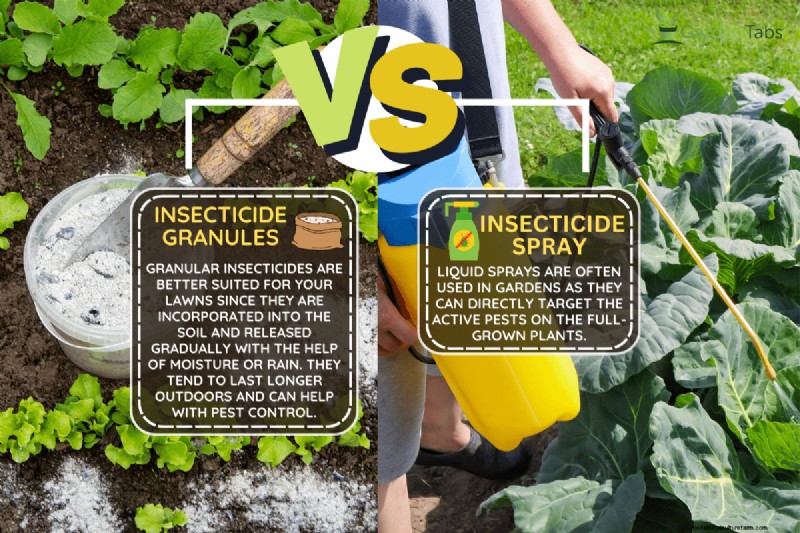
Generally, granular insecticides are better suited for your lawns since they are incorporated into the soil and released gradually with the help of moisture or rain.
They tend to last longer outdoors and can help with pest control. Liquid sprays are often used in gardens as they can directly target the active pests on full-grown plants.
Now that you know which type of insecticide best suits your lawn and garden let’s discuss some of the essential points when applying insecticides. This may help guide you in the future and help you avoid making mistakes. Let's dive in!
Pesticide is a general term for chemical substances used to kill or control the spread of certain forms of life. For example, herbicides target weeds, fungicides mitigate mold growth, and disinfectants stop the spread of bacteria.
According to the NPIC, insecticides are a type of pesticide specifically formulated to kill insects that invade and destroy gardens and lawns.
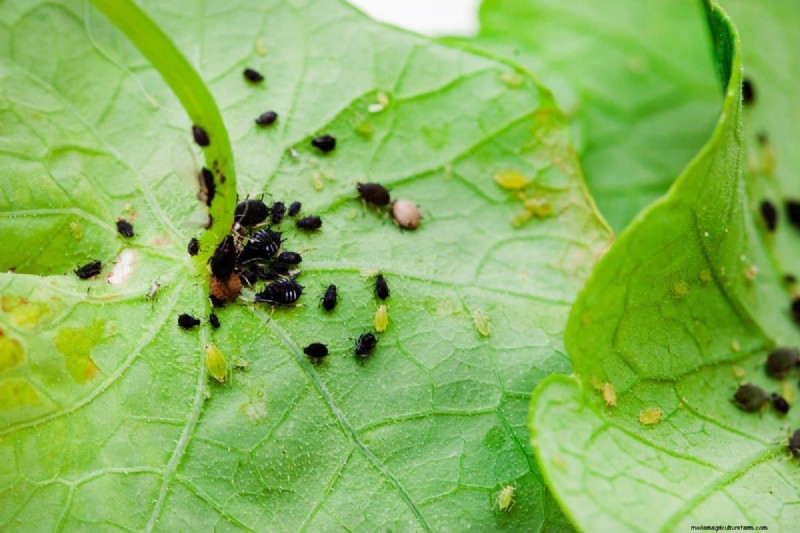
Over the years, humans have depended on insecticides to protect their crops from diseases and defoliation. Thanks to these chemicals, we have produced higher yields of the staple crops needed in our everyday lives.
The quality of fruits and vegetables available on the market has also significantly increased with the help of insecticides. It is famously said that without them, we could lose half of the crops we grow to diseases and pests.
Often, when you go to a store to buy insecticides, they ask if you need a granular or a liquid type. This might confuse you, but worry not; we will discuss the difference and their advantages and disadvantages.
As the name suggests, the granules encapsulate the insecticides within their solid particles.
They are insecticides in dry form. This makes them easy to spread across lawns, fields, or any landscape with insect or bug infestation.
Apply them evenly into the soil and sprinkle water to activate the ingredients. Once activated, they lure in the insects. The insects then easily die when they ingest the insecticides.

The application of granular insecticides requires a lawn spreader to ensure proper and even distribution. But before that, make sure you have enough background on how insecticides are applied.
Granular insecticides have easy-to-use formulas without needing to mix additional substances.
Comparatively, they are safer than liquid pesticides since they are often large enough to be visible and avoid being ingested.
You also won’t have to worry about fumes whose liquid counterparts have highly toxic components. Use them outdoors since they last longer, even with rain and sunlight.
The granules require mixing with the soil and adding moisture to activate. Thus, they cannot be used in foliage applications such as in dense lawns and landscape plants.
This type of insecticide is more popular than granulated ones. They come in concentrated liquids that are usually diluted with water depending on the needed strength to kill pests.
This is particularly helpful since some insects are more difficult to kill. You may even need a re-application of the product in these cases.
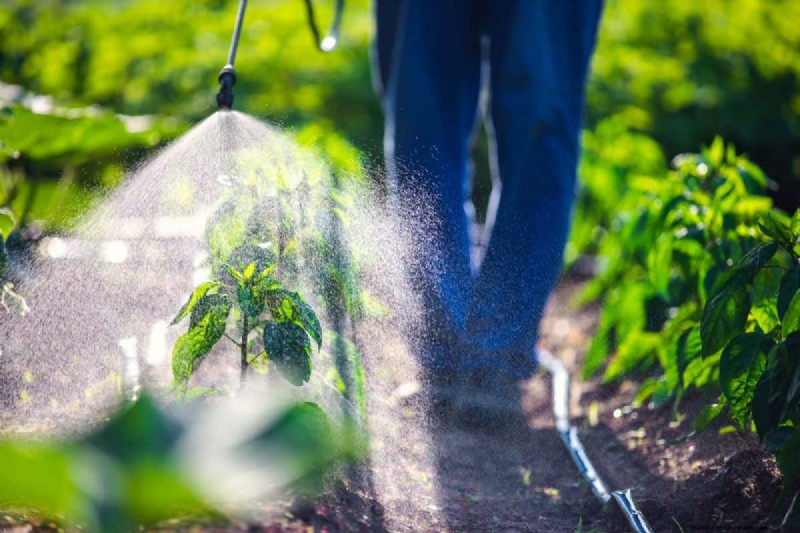
Usually, they are directly sprayed on the plants where there is an infestation. Do not worry; they would not affect plant growth since they are specifically formulated to kill insects.
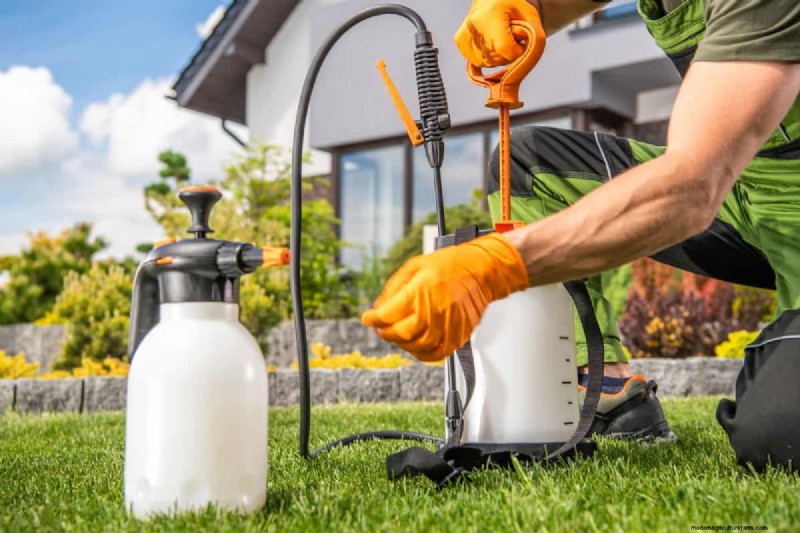
Liquid insecticides are quite a handful. They are highly toxic, with a high risk of inhalation. Thus, observe proper caution and read the label.
Check the SDS and familiarize the first aid response in an emergency. Ensure proper PPE (Protective Personal Equipment) when handling the chemical.
There are usually two liquid insecticides, ready-to-spray and liquid concentrate.
Let's cover each option below:
Ready-to-spray types of insecticides mix automatically with water at the correct ratio. This makes the application more accessible and, consequently, faster.
Relatively, liquid sprays are faster and easier to use. They cover a large area over a small amount of time. You only need to spray directly to the foliage for efficient spot treatments.
Aside from the high risk of fume inhalation from liquid concentrates/sprays, they are also difficult to contain in the event of a spill.
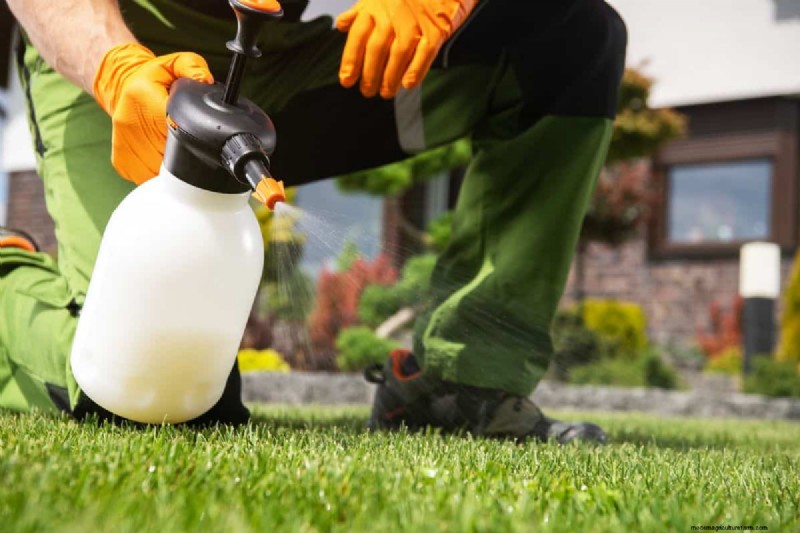
Insecticides formulated with strong chemicals pose harmful effects on human beings. Thus, it is vital to take extra precautions when handling these substances.
With the number of options that we have nowadays, we can easily choose which better suits our needs. Insecticides come in different types. We need proper knowledge of the handling and storage of these chemicals to ensure safety.
Granular insecticides typically last longer in the rain or extreme heat. This makes them a better option for large lawns outdoors since gardeners with fully grown plants prefer insecticide sprays since they can perform spot treatments.
Nevertheless, it all boils down to personal preference. The most important thing is to control the spread of diseases and help improve the quality of our beloved plants.
Made it to the end? Check out these helpful related articles below:
What Is The Best Garden Cultivator [Inc. Battery, Electric, And Gas]?
5 Best Lawn Mower and Weed Eater Combos
Should Lawn Mower Blade Spin Freely?


