Welcome to Modern Agriculture!

A flowerbed at the base of the mailbox reads like curb appeal on easy mode. A few marigolds, some trailing petunias, maybe a low boxwood, and suddenly the whole front yard feels finished. The catch is that your mail carrier has opinions too, and the United States Postal Service backs them up.
 Shutterstock.com
The USPS Domestic Mail Manual gives carriers the right to pause delivery when a box becomes unsafe or hard to reach. That can mean thorns poking the delivery arm, bees circling the flag, or foliage swallowing the house numbers. None of those issues is hypothetical, and each one lands as a fixable mistake once you know to look for it.
Here are ten common mailbox garden mistakes that push carriers away, along with the simple swaps that keep your bed both pretty and postal-friendly.
Climbing roses and old-fashioned shrub roses look right at home beside a cottage-style post. The problem shows up when a carrier leans out the truck window and catches a sleeve on a cane. Rose canes, barberry, blackberry, and holly all put sharp points exactly where a delivery arm needs to move freely.
Mail carriers have real injury records from scratched forearms and torn uniforms at mailboxes ringed with thorny plants. Holly often tops the list because the leaf edges cut like a razor even through cotton. You can still have roses in the yard, just keep them at least four feet back from the post.
Bee balm, lavender, catmint, and salvia are pollinator heroes in the garden. Right next to a mailbox they turn the reach-in into a bee encounter. A carrier with an allergy, or just a reasonable dislike of stings, is within their rights to call the box unsafe and pause delivery.
One North Carolina homeowner made national news when her local post office paused her mail after bee activity spiked around her mailbox flowerbed.
The USPS policy is clear: if the carrier cannot work the box safely, they can return mail to the office and wait for the issue to be fixed. Keep the bee buffet in the main beds further back, and fill the mailbox zone with lower-nectar picks like dwarf boxwood or ornamental sweet potato vine.
If you’re building a fresh planting plan, take a look at our guide to 17 stunning perennials that work beautifully around a mailbox. Most of the picks keep pollinator traffic modest while still looking lush.
We'll email it to you so you can read it later!
By saving, you agree to receive occasional emails. Unsubscribe anytime.
Ornamental grasses like miscanthus, pampas, and tall fountain grass hit four to six feet by midsummer. Planted too close to the post, they wall off the mailbox from the approaching truck. A carrier who cannot see the box door until the last second often skips the stop entirely rather than risk an awkward reach.
Two-Foot Rule: Most rural carriers ask for at least two feet of clear space around the mailbox itself, with nothing taller than the box’s bottom edge inside that zone.
Swap the giants for shorter cultivars like ‘Little Bunny’ fountain grass or blue fescue. They give the same feathery texture at under eighteen inches.
A tidy brick ring or timber bed around the post feels like a finishing touch. It also raises the soil level by six to twelve inches, which raises the plantings with it. Now a carrier reaching out of a truck cab is stretching over a higher obstacle just to reach the door.
The USPS recommends 6 to 8 inches between the front face of the curb and the mailbox door. A raised bed that crowds closer than that forces the carrier to lean, and over a full route, that small extra reach adds up.
Keep any raised edging at least a foot behind the post, and leave the ground flush with the curb line.
Miniature picket fences, scalloped bed edging, and concrete curbing all signal “mailbox garden.” They also narrow the carrier’s approach and turn an easy drive-up into a careful maneuver. Worse, they create a tripping hazard on routes where the carrier dismounts to deliver packages.
USPS guidance reminds carriers that approaches must stay clear of landscaping boulders, oversized planters, and decorative fencing that forces them to leave the vehicle.
A simple mulch ring does the same design job without the obstruction. If you love the edged look, set the border a clear three feet back from the post.
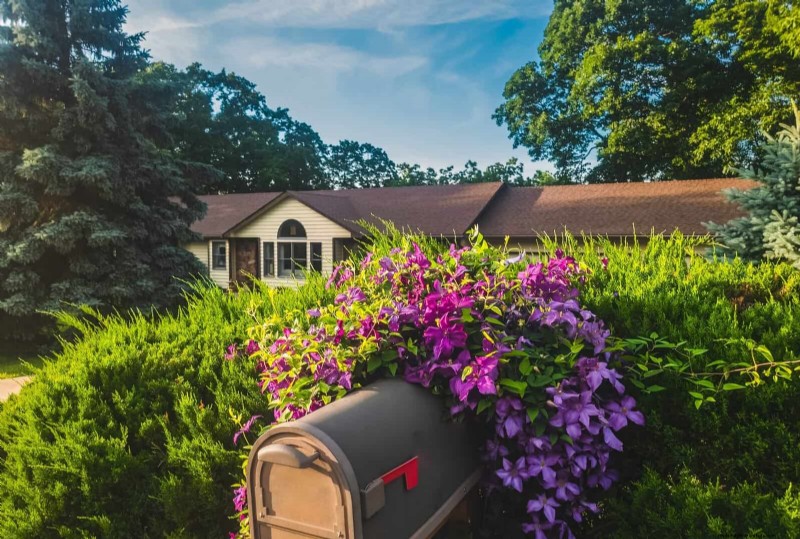
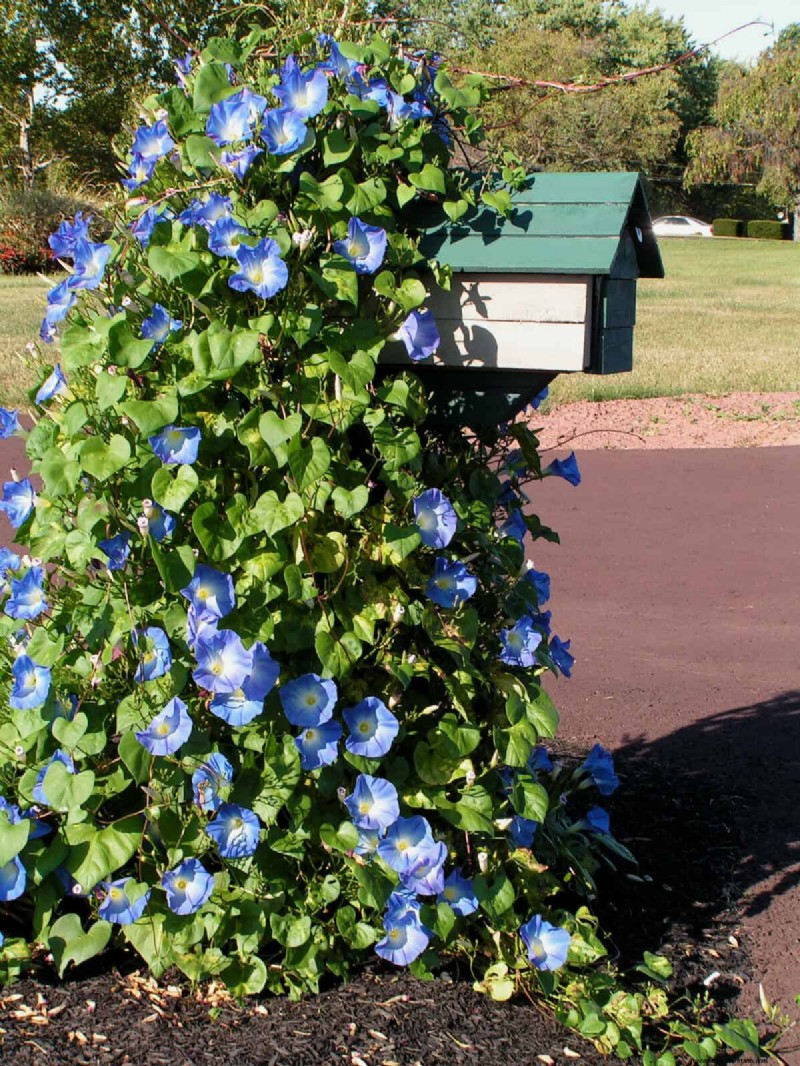
Trumpet vine, wisteria, and climbing hydrangea all make the post look like it grew out of a storybook. They also grow fast, grow heavy, and grow where they want. Within a season or two the vine can pry open the mailbox door, wrap the flag, or hide the entire front of the box.
 Shutterstock.com
Pro Tip: If you love the vine-covered look, install a separate arbor or trellis a few feet behind the box and train the vine there instead.
Clematis and climbing annuals like morning glory are gentler options if you really want a post-hugger. For more ideas, see our roundup of 20 beautiful flowering vines that work on a mailbox. They still need weekly pruning during the growing season.
Mint, running bamboo, and Bermuda grass can fill a mailbox bed in one year and the neighbor’s driveway in two. They are technically beautiful and almost impossible to stop once established. Carriers end up wading through knee-high runners every delivery.
Stick with clumping, well-behaved perennials like daylilies, coreopsis, and dwarf coneflower. These stay where you plant them and retreat cleanly in winter. Check invasive lists for your specific state before adding anything labeled “vigorous” or “spreads quickly.”
Many homes use the mailbox as the primary address marker. A layer of overgrown hostas or climbing morning glory can cover the numbers completely, especially from late June through September. Fire departments routinely cite hidden address numbers as a top reason for response delays, which is a problem well beyond inconvenient mail.
Emergency response groups like LifeNet EMS recommend reflective numbers at least three to four inches tall, kept clear of foliage on all sides. That applies to mailbox numbers, too. A quick monthly trim around the lettering keeps your address readable to mail carriers, delivery drivers, and first responders.
If your existing numbers have faded, a simple upgrade like the 3 Inch Reflective Mailbox Number Stickers is an easy weekend fix.
Large decorative rocks, concrete urns, and heavy planters near the curb look expensive. They also make for a rough day when a carrier clips one with a mirror or has to swing wide to avoid them. Some routes rotate to substitute carriers who do not know the local hazards, and a boulder in the wrong spot can mean a skipped stop.
The USPS specifically warns against landscaping features that force the carrier to dismount or maneuver around. Keep anything heavier than a light container well back from the curb. A low planting of creeping thyme or sedum adds texture without creating a navigation puzzle.
See more: 30 Easy Landscaping Ideas to Boost Your Home’s Curb Appeal This Month
A mailbox garden that was perfect in May often turns into a wall of leaves by August. Summer growth is fast, and three-foot perennials can stretch to five feet in a few warm weeks. A bed that once framed the box can swallow it entirely by late season.
A sturdy pair of extendable shears like the Fiskars Power-Lever Extendable Hedge Shears makes the job a fifteen-minute stop instead of a weekend chore. (Amazon)
Mailbox Garden Maintenance Checklist
Build a short calendar reminder for the growing season. Ten minutes every other week keeps the bed in scale and the carrier happy.
A mailbox garden earns its keep when it adds curb appeal without adding friction for the one person who has to interact with it every day. The good news is that almost every mistake above has a low-effort fix: plant smaller, plant softer, plant further back. Trim often, watch the address numbers, and skip the plants that fight you.
A quick check of USPS guidelines before you design a new bed saves everyone trouble. Your letters show up, your flowers look great, and your carrier drives away smiling.