
Welcome to Modern Agriculture!

 Depositphotos.com
Summer heat brings lush garden growth, but it also creates the perfect environment for certain pests to flourish. When temperatures climb, some garden invaders multiply at alarming rates, turning your peaceful oasis into a battleground almost overnight.
Knowing which heat-loving pests to watch for can save your precious plants from destruction. The good news? With the right approach, you can manage these unwanted visitors without harsh chemicals. Let’s explore the most common heat-thriving garden pests and effective ways to send them packing.
 Depositphotos.com
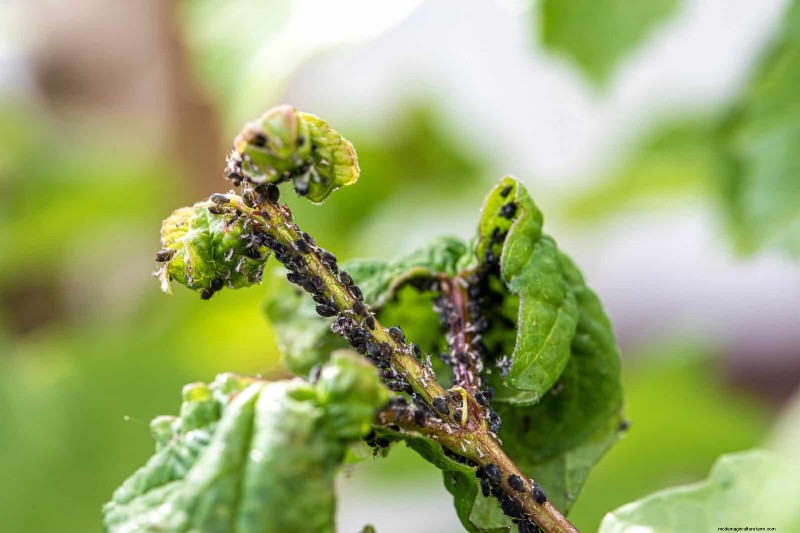
These tiny, pear-shaped insects come in various colors, green, black, brown, red, or yellow, and cluster on tender new growth and the undersides of leaves. Aphids multiply rapidly in hot weather, producing several generations in just weeks. They pierce plant tissue with needle-like mouthparts, sucking out sap and causing leaves to curl, yellow, and distort while excreting a sticky substance called honeydew that attracts ants and promotes sooty mold growth.
Control begins with a strong spray of water to knock aphids off plants-repeat this every few days for effectiveness. For larger infestations, try insecticidal soap or neem oil, applying in the early morning or evening when temperatures are cooler. Encourage natural predators like ladybugs, lacewings, and parasitic wasps by planting flowers such as Sweet Alyssum (Lobularia maritima) and Cosmos (Cosmos bipinnatus) nearby. For severe cases, prune heavily infested portions and dispose of them away from your garden.
 Depositphotos.com
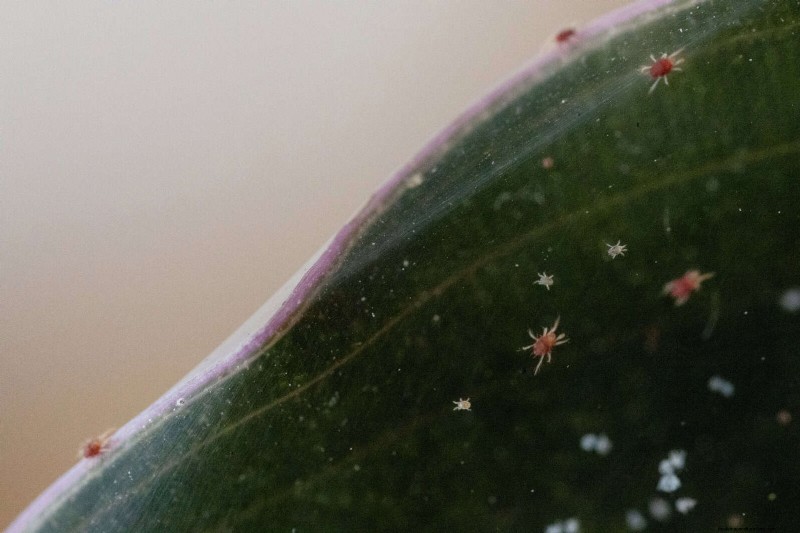
Almost invisible to the naked eye, spider mites thrive when temperatures soar above 85°F and humidity drops. These tiny arachnids (not insects) create fine webbing on the undersides of leaves and between stems. The first sign of their presence is often a stippled appearance on leaves-tiny yellow or white speckles that eventually turn bronze or brown as damage progresses. Severely affected plants look dusty, with leaves dropping prematurely.
Moisture is the spider mite’s enemy, so regularly misting plants during hot, dry spells helps discourage them. For established infestations, spray plants thoroughly with water, focusing on leaf undersides, then apply insecticidal soap or horticultural oil. These treatments work by suffocation rather than poisoning. Predatory mites offer excellent biological control-these beneficial hunters actively seek and consume pest mites. Avoid broad-spectrum insecticides which kill beneficial insects but often leave spider mites unharmed.
We'll email it to you so you can read it later!
By saving, you agree to receive occasional emails. Unsubscribe anytime.
 Depositphotos.com
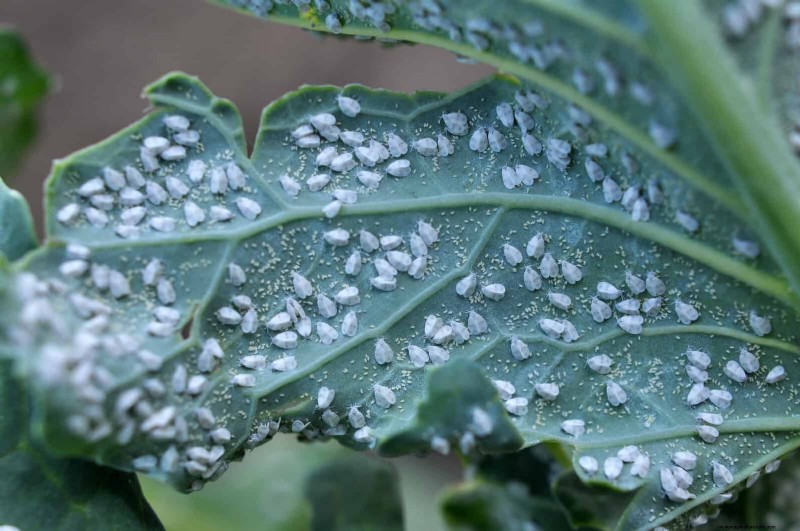
These tiny white insects resemble miniature moths and explode in population during hot weather. When disturbed, they flutter up in clouds from the undersides of leaves where they feed and lay eggs. Whiteflies use piercing mouthparts to extract plant sap, causing yellowing leaves, stunted growth, and reduced yields. Like aphids, they excrete honeydew that leads to sooty mold growth on leaves and fruits.
Yellow sticky traps help monitor and reduce adult whitefly populations; hang them near affected plants at the height of the foliage. For control, spray plants forcefully with water, focusing on leaf undersides, then follow with insecticidal soap applications every 5-7 days to break their life cycle. Reflective mulch confuses and repels whiteflies, while companion planting with marigolds (Tagetes spp.) or nasturtiums (Tropaeolum majus) can help deter them. For greenhouse gardens, the parasitic wasp Encarsia formosa provides excellent biological control.
 Depositphotos.com
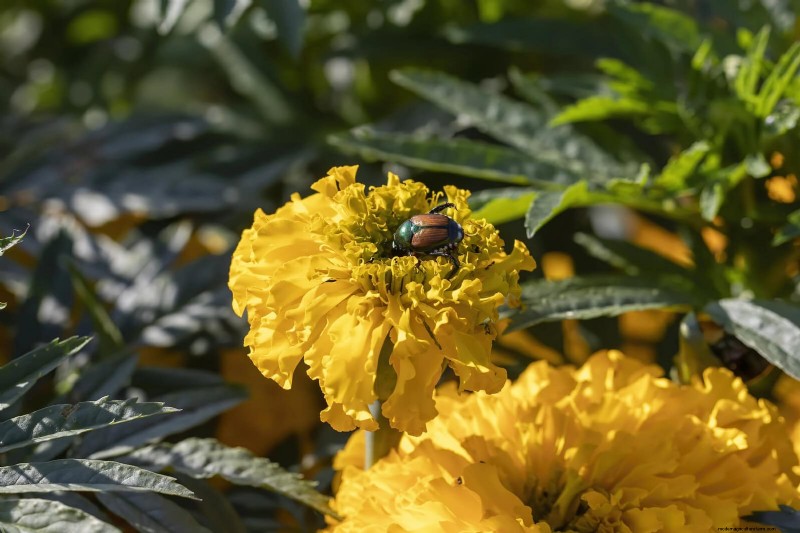
These metallic green and copper beetles emerge from the soil when temperatures consistently reach the mid-70s, usually in late June through August. They skeletonize leaves by feeding on the tissue between leaf veins, leaving behind lace-like damage. Japanese beetles have a particular fondness for roses (Rosa spp.), grapes (Vitis spp.), and linden trees (Tilia spp.), often gathering in groups and starting at the top of plants before working downward.
Hand-picking beetles in the early morning when they’re sluggish provides immediate control; drop them into soapy water. Avoid Japanese beetle traps, which can actually attract more beetles to your yard than would otherwise find it. Cover prized plants with floating row covers during peak beetle season, but remember to remove them when plants need pollination. For larger properties, beneficial nematodes applied to soil in spring can help control the larval grub stage. Choose resistant plants like red maple (Acer rubrum) and magnolias (Magnolia spp.) in heavily infested areas.
 Depositphotos.com
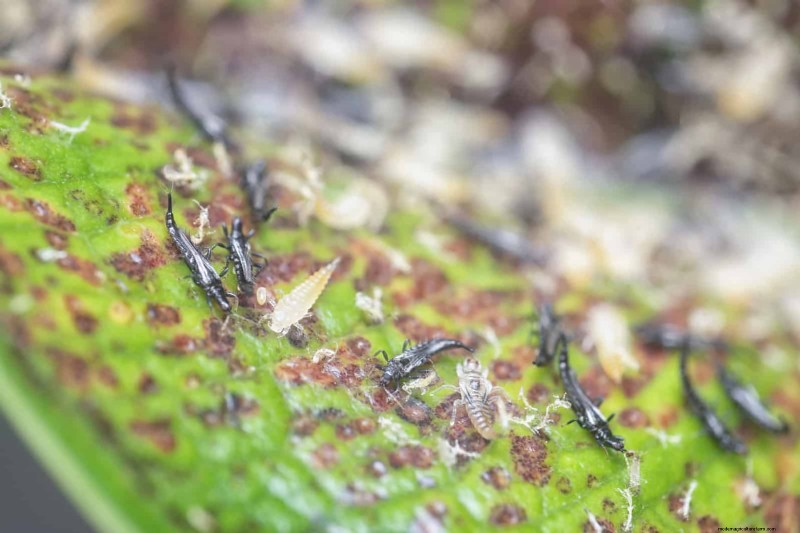
These slender, barely visible insects thrive in hot, dry conditions and can complete their life cycle in just 14-30 days during summer heat. Thrips rasp plant surfaces and suck out cellular contents, creating silvery streaks, stippling, or distorted growth on leaves and flowers. They particularly favor onions (Allium cepa), tomatoes (Solanum lycopersicum), and many flowering ornamentals. The damage they cause often appears before you notice the insects themselves.
Blue sticky traps effectively monitor thrips populations and can catch many adults. Spray plants forcefully with water to dislodge thrips, then apply insecticidal soap or neem oil, focusing on leaf undersides and crevices where they hide. Beneficial insects like minute pirate bugs and predatory mites offer natural control. Maintain proper plant spacing to improve air circulation, and remove plant debris promptly to eliminate hiding places. In vegetable gardens, reflective mulch helps repel thrips from susceptible crops.
 Depositphotos.com
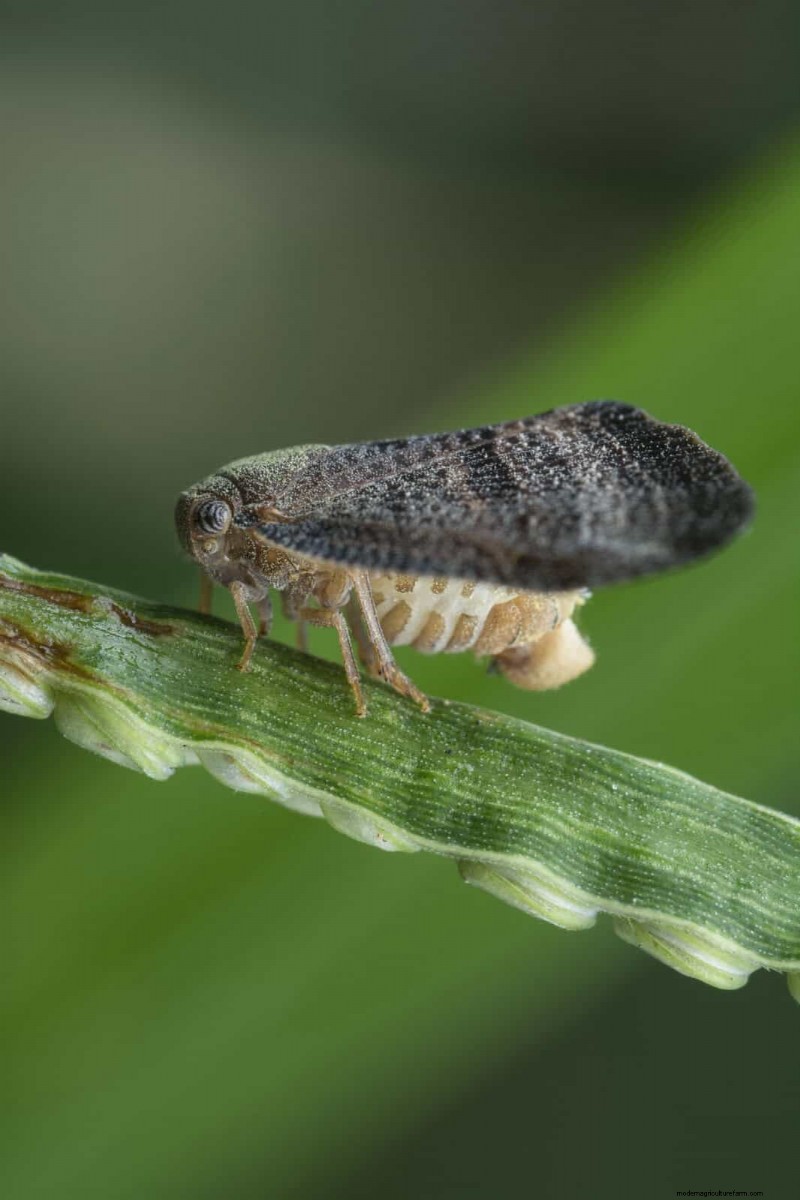
These wedge-shaped insects jump or fly quickly when disturbed and become increasingly active as temperatures rise. Leafhoppers feed by piercing plant tissue and sucking sap, causing stippled leaves that eventually yellow, brown, and curl. Some species transmit plant diseases as they feed, multiplying the damage. Their feeding creates distinctive white spots that eventually merge into bleached areas on leaves.
Floating row covers provide excellent protection for vegetable crops during peak leafhopper season. Kaolin clay products form a protective film on plants that irritates and deters leafhoppers without harming beneficial insects. Insecticidal soaps work on direct contact but require thorough coverage and repeat applications. Maintain garden cleanliness by removing plant debris that can harbor leafhopper eggs and adults. For fruit trees and grapevines, dormant oil sprays applied in late winter help control overwintering eggs.
 Depositphotos.com
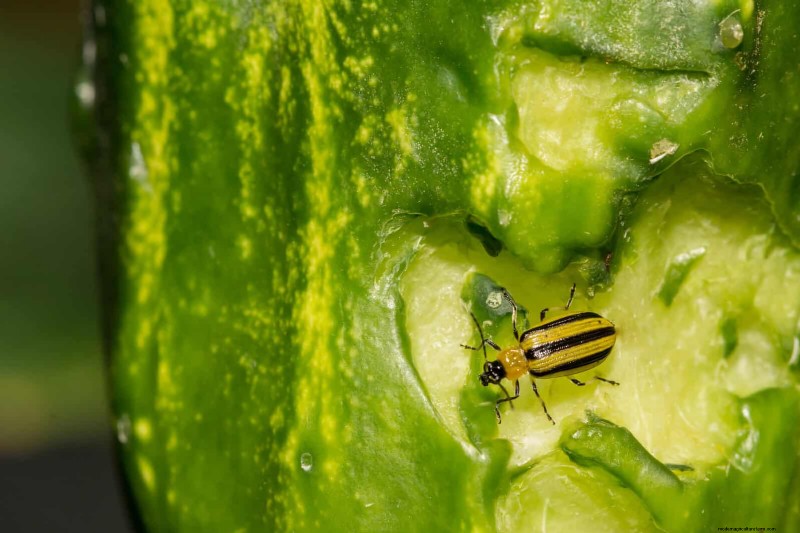
Both spotted and striped cucumber beetles emerge in force during summer heat, attacking members of the cucurbit family including cucumbers (Cucumis sativus), melons (Cucumis melo), and squash (Cucurbita spp.). Beyond their direct feeding damage, these beetles transmit bacterial wilt disease, which can kill plants within days. The yellow beetles with black spots or stripes chew holes in leaves, flowers, and fruits, often concentrating their damage on young seedlings.
Yellow sticky traps help monitor beetle activity, while floating row covers provide excellent protection-just remember to remove them when female flowers appear to allow pollination. Plant trap crops like ‘Blue Hubbard’ squash around the garden’s perimeter to lure beetles away from main crops. Beneficial nematodes applied to soil help control the larval stage. For organic protection, dust plants lightly with food-grade diatomaceous earth, reapplying after rain. Time plantings carefully-late plantings often escape the worst beetle pressure.
 Depositphotos.com
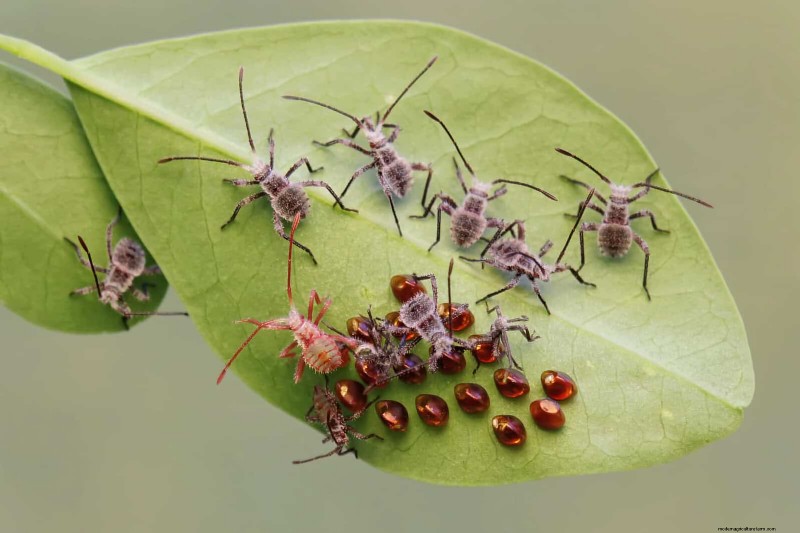
These flat, grayish-brown bugs emit a distinctive unpleasant odor when crushed and become increasingly problematic as summer heat intensifies. Squash bugs pierce plant tissue and extract sap, causing yellow spotting that eventually turns brown. Severe infestations make plants wilt and can even kill younger plants. They primarily target squash (Cucurbita spp.) and pumpkins (Cucurbita pepo), with younger plants suffering the most damage.
Early detection is crucial-check leaf undersides for copper-colored egg clusters and crush them on sight. Place boards or shingles near plants as traps; squash bugs hide underneath at night and can be collected and destroyed in the morning. Tactic timing helps tremendously-plant summer squash as early as possible so plants are robust before bug populations peak. Keep gardens clean of debris where adults overwinter, and use crop rotation to reduce populations. For heavy infestations, insecticidal soap applied directly to nymphs provides some control.
 Depositphotos.com
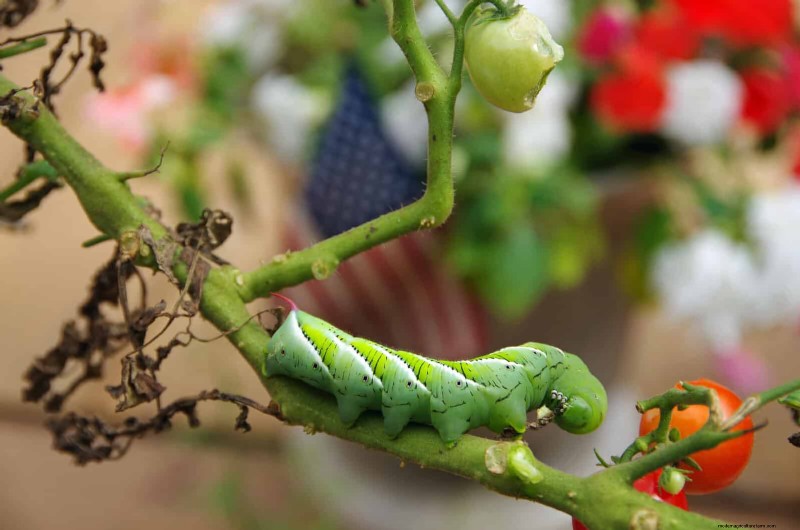
These massive green caterpillars with white diagonal stripes and a horn-like projection can reach 4 inches long and devour tomato foliage with astonishing speed during hot summer months. Hornworms blend perfectly with tomato foliage, often remaining undetected until significant defoliation occurs. They primarily attack tomatoes (Solanum lycopersicum), peppers (Capsicum annuum), and eggplants (Solanum melongena), stripping entire branches overnight and occasionally feeding on fruits.
Hand-picking remains the most effective control method, look for their dark droppings on leaves below feeding sites. If you spot hornworms with small white projections on their backs, leave them alone! These are beneficial braconid wasp cocoons, and the parasitized hornworm will stop feeding. Planting dill (Anethum graveolens) and borage (Borago officinalis) nearby attracts these parasitic wasps. For larger gardens, applying Bacillus thuringiensis (Bt) provides effective biological control without harming beneficial insects. Tilling the soil in fall disrupts the pupal stage, reducing populations the following year.
 Depositphotos.com
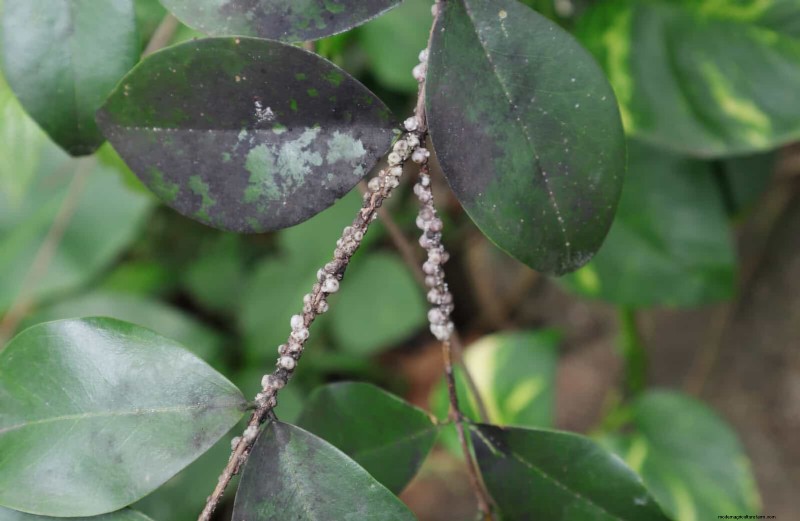
These unusual insects appear more like bumps than bugs, with protective waxy or hard shells that shield them from predators and many pesticides. Scale populations explode during hot weather, with some species producing several generations per season. They attach themselves to stems, branches, and leaf undersides, inserting their mouthparts and remaining stationary while sucking plant juices. Heavy infestations cause yellowing leaves, branch dieback, and weakened plants covered with sticky honeydew.
For light infestations on houseplants or small garden plants, use a cotton swab dipped in rubbing alcohol to directly wipe off scale insects. Horticultural oil suffocates scale by blocking their breathing pores; apply when temperatures are between 45-85°F for best results. Prune heavily infested branches and dispose of them away from the garden. For severe cases on ornamentals, systemic insecticides can be effective but should be avoided on edible plants. Encourage natural predators like ladybugs and lacewings by planting diverse flowering plants nearby.
 Depositphotos.com
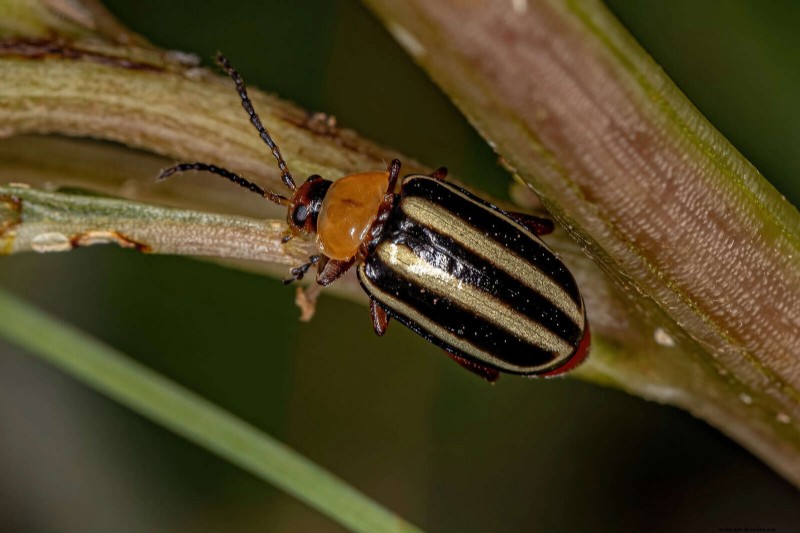
These tiny, shiny black beetles earn their name from their impressive jumping ability-they leap like fleas when disturbed. Flea beetles become most active during hot, dry weather and can devastate young seedlings in days. They chew numerous small holes in leaves, creating a characteristic “shotgun” pattern that reduces photosynthesis and stunts plant growth. They particularly favor eggplant (Solanum melongena), radishes (Raphanus sativus), and leafy greens.
Floating row covers provide excellent protection, especially for young seedlings when they’re most vulnerable. Diatomaceous earth creates a barrier that deters beetles-apply as a light dusting on leaf surfaces and surrounding soil. White sticky traps help monitor and reduce populations. For established plants, kaolin clay products form a protective film that irritates flea beetles without affecting plant growth. Maintain good garden sanitation by removing plant debris where adults overwinter, and use companion planting with aromatic herbs like mint (Mentha spp.) and catnip (Nepeta cataria) to confuse and repel these pests.
 Depositphotos.com
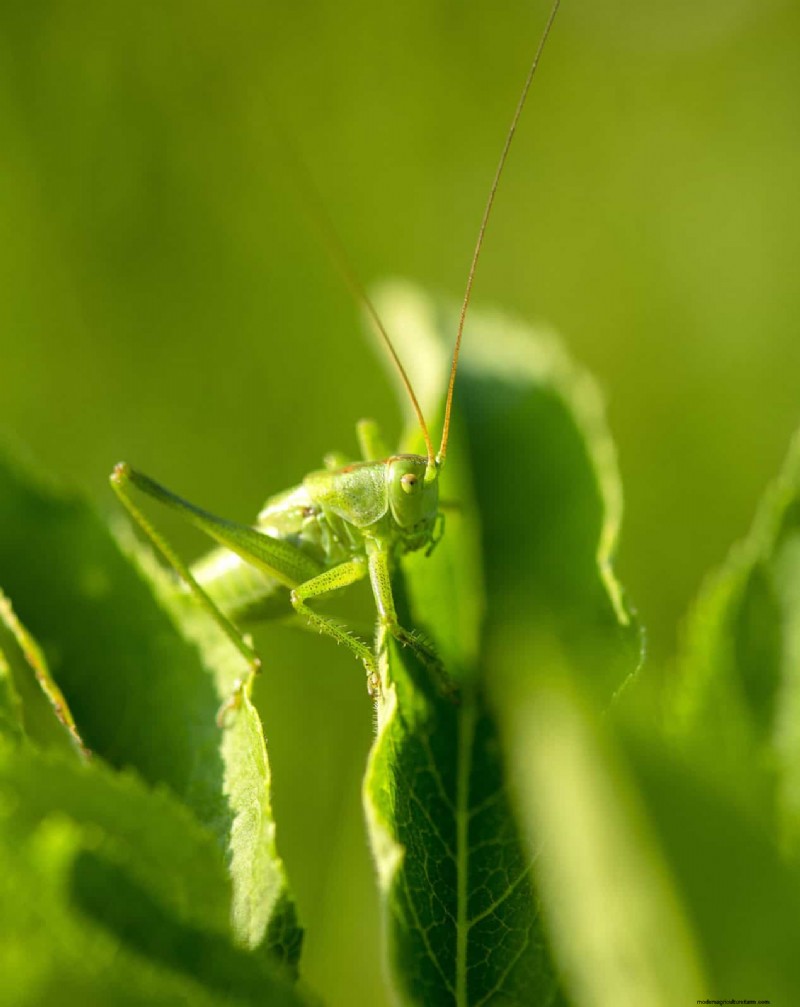
These voracious insects thrive in hot, dry conditions and can travel considerable distances to find food. Grasshoppers consume approximately half their body weight in plant material daily, leaving ragged-edged holes in leaves and sometimes completely defoliating plants. Their populations often surge after several dry seasons, creating localized “outbreak” years. Almost no plants are immune to their feeding, though they often prefer grasses and grains before moving to garden vegetables and ornamentals.
Physical barriers like floating row covers provide immediate protection for high-value crops. Garlic spray repellents deter feeding, blend garlic cloves with water and a drop of soap, then strain and spray on plants. Early intervention works best, targeting young nymphs before they develop wings and become more mobile. The biological control Nosema locustae targets grasshoppers specifically and is available as a bait product. For severe infestations in large areas, consider introducing guinea fowl or chickens, which eagerly hunt and consume grasshoppers while providing fertilizer as a bonus.
 Depositphotos.com
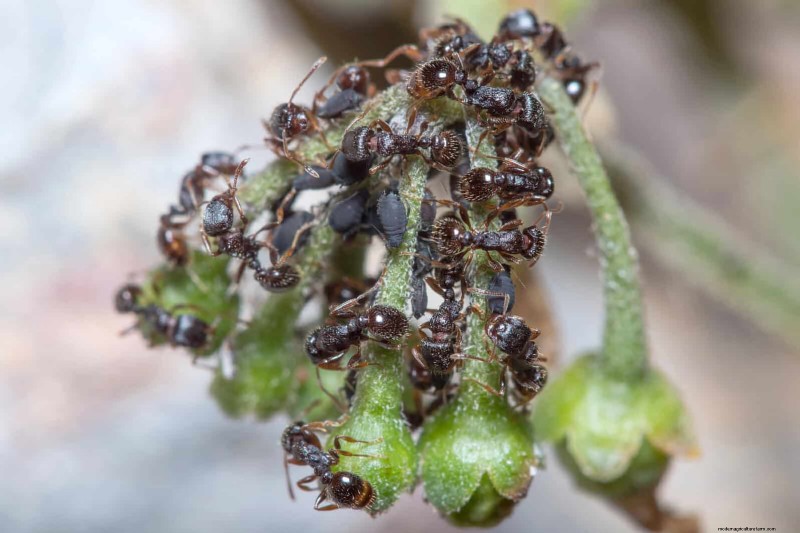
Ants become increasingly active during hot weather, establishing new colonies and foraging more aggressively. While they rarely damage plants directly, many species “farm” honeydew-producing insects like aphids and scale, protecting them from natural predators and even moving them to new feeding sites. Carpenter ants can damage wooden structures in gardens, while some species create soil mounds that interfere with mowing and plant growth.
To manage ants, focus first on controlling the honeydew-producers they protect. Create barriers around tree trunks with sticky bands or diatomaceous earth to prevent ants from climbing. For ant mounds near plants, pour boiling water directly into the nest entrance or use boric acid bait stations positioned away from pets and children. Sprinkle cinnamon, coffee grounds, or diatomaceous earth to disrupt ant trails. Remember that ants also provide benefits by aerating soil and controlling some pest populations, so complete eradication isn’t necessary or desirable in most garden settings.
 Depositphotos.com
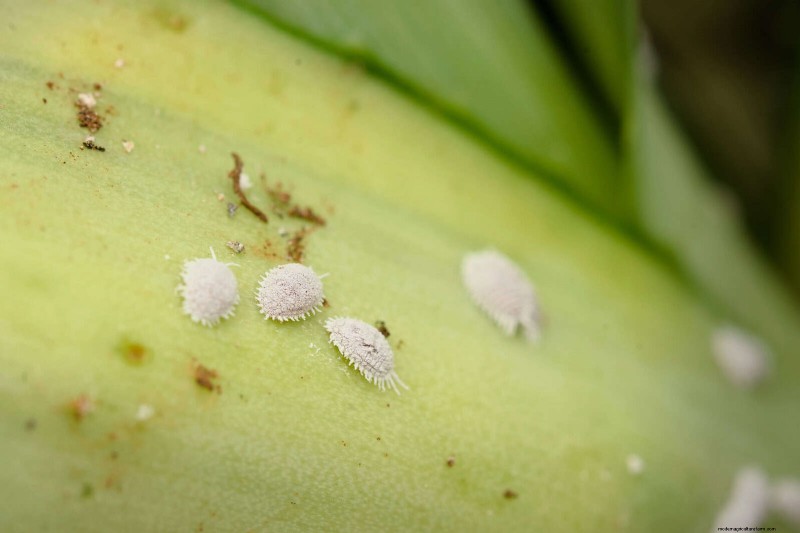
These cottony white insects thrive in warm conditions, clustering in leaf axils, under leaves, and along stems. Mealybugs feed by piercing plant tissue and sucking sap, causing stunted growth, yellowing leaves, and plant decline. They excrete sticky honeydew that attracts ants and promotes sooty mold growth. Houseplants brought outdoors for summer often become infested, as do greenhouse plants and many ornamentals like hibiscus (Hibiscus spp.) and gardenias (Gardenia jasminoides).
For light infestations, use a cotton swab dipped in rubbing alcohol to wipe mealybugs off plants. Insecticidal soap or neem oil works well for larger problems, but thorough coverage is essential, including all crevices where mealybugs hide. Beneficial insects like lady beetles and the mealybug destroyer (Cryptolaemus montrouzieri) provide excellent biological control in greenhouse or outdoor settings. Avoid excessive nitrogen fertilizer, which promotes succulent growth that attracts mealybugs. Quarantine new plants for two weeks before adding them to your garden or houseplant collection to prevent introducing mealybugs.
 Shutterstock.com
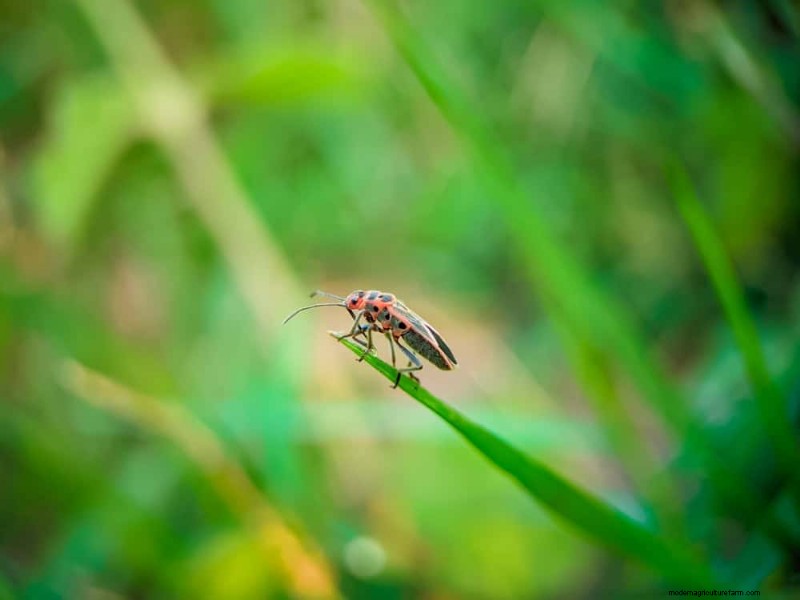
These small black insects with white wings become especially problematic during hot, dry periods, primarily affecting lawns and grass crops. Chinch bugs use their piercing-sucking mouthparts to extract plant fluids while injecting toxins that cause grass to yellow, brown, and die in expanding patches. They thrive when temperatures exceed 80°F and can complete their life cycle in just 30 days during peak summer heat, creating multiple generations per season.
Proper lawn care provides the first line of defense-avoid excessive thatch, maintain proper mowing height, and water deeply but infrequently to promote deeper root growth. Test for chinch bugs by removing both ends of a coffee can, driving it into the soil, and filling it with water-if chinch bugs are present, they’ll float to the surface. Beneficial insects like big-eyed bugs and predatory ants provide natural control. For severe infestations, targeted insecticides containing bifenthrin or carbaryl can be applied to affected areas, but proper timing is crucial for effectiveness.
 Depositphotos.com
The key to managing heat-loving garden pests lies in prevention and early detection. Regular plant inspections, especially during hot weather, help catch problems before they escalate. Healthy plants withstand pest pressure better, so maintain proper watering, mulching, and spacing to reduce plant stress during heat waves.
Remember that a garden with perfect balance includes some pests; they provide food for beneficial insects that help maintain natural controls. Focus on keeping pest populations below damaging levels rather than complete eradication. With these strategies in place, you can enjoy a productive garden even when temperatures soar and pest pressure intensifies.


