Welcome to Modern Agriculture!

Are you deciding which rake to choose between a thatching rake and a bow rake? You came to the right place! We did the research, and we’ll tell you everything you need to know about the differences between these two rakes to help you decide which one to get!
A thatching rake and a bow rake differ in that the thatching rake is very efficient in removing thatch (a layer of mixed-up debris that prevents your grass from reaching its full potential).
In contrast, although a bow rake, also called a garden rake, can pick up dead grass, it’s better as a leveling tool that can push out and groom materials in the garden.
There is more to these rakes! They can be helpful in many ways if you know how to use and maintain them. If you’re deciding on picking between the two rakes, read on!
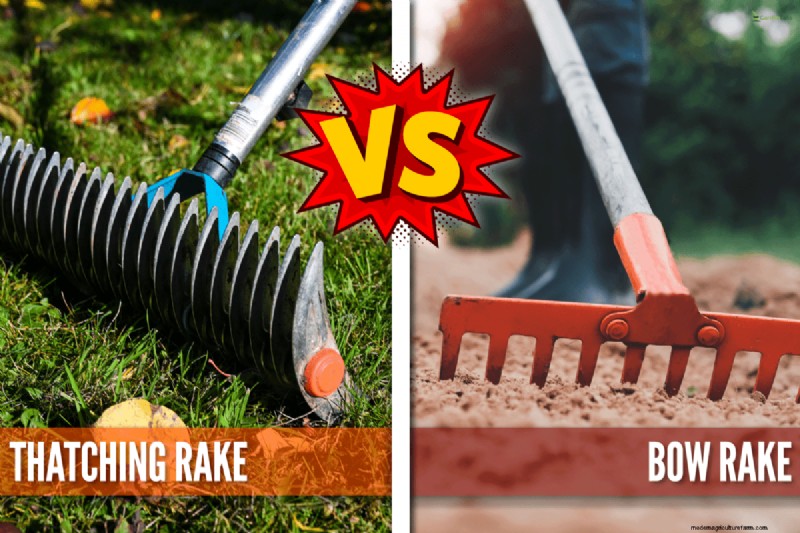
Examining the thatching rake and bow rake independently can give you a better idea of their differences.
Each rake has its specialty, and if you’re looking for something specific to use in the garden or for your landscaping needs, you need to know their uses.
A thatching rake, also known as a dethatcher, is commonly used to remove thatch. Thatch is a collection of dead grass, debris, twigs, and small rocks stuck between roots and grass.
Its design makes this possible: it’s a two-sided rake with sharp, vertical 0r curved, thin blades that effectively break thatch between turf, loosening it and making removing it more manageable.
You may then use a regular rake to remove the thatch.
The thatching rake design also ensures that its blades do not damage your turf while you use it.
The durable, sharp tines are also great for breaking up lumps of soil and cutting through weeds’ roots so you can easily get rid of them before planting anything in the ground.
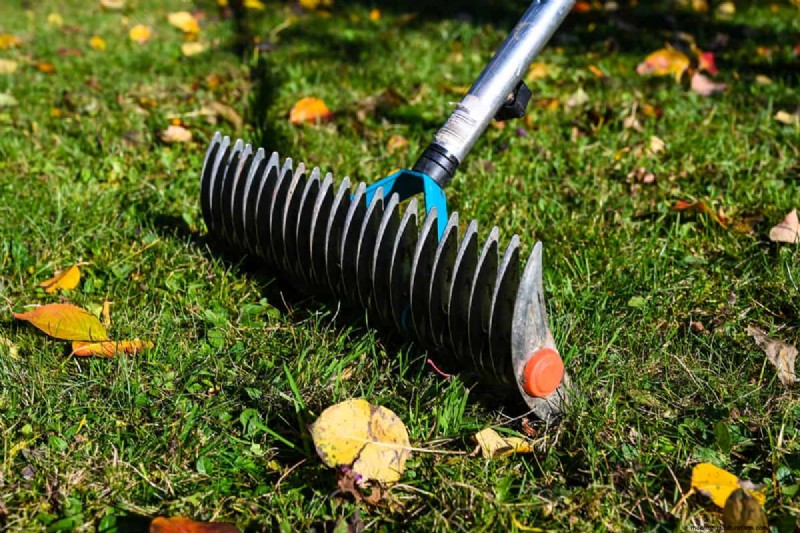
Removing the thatch promotes air circulation around the roots. In addition, without the hindrance of thatch, water and fertilizer penetrate the soil effectively and reach the roots.
The turf can then benefit from these essential supplies for its growth.
Watering a lawn with thatch can cause infections as you may be hydrating some of the pests that cause the diseases. The worst-case scenario is that your grass eventually dies.
So, the efficiency of a thatching rake to remove thatch makes it a necessary farm tool if you want to keep a green and healthy lawn.
Thatching rakes can also remove built-up moss in grass areas. But do not use a thatching rake on moss sitting on rocks or concrete.
Read this post, “Should You Dethatch Or Aerate A Lawn First?” to learn more about dethatching.
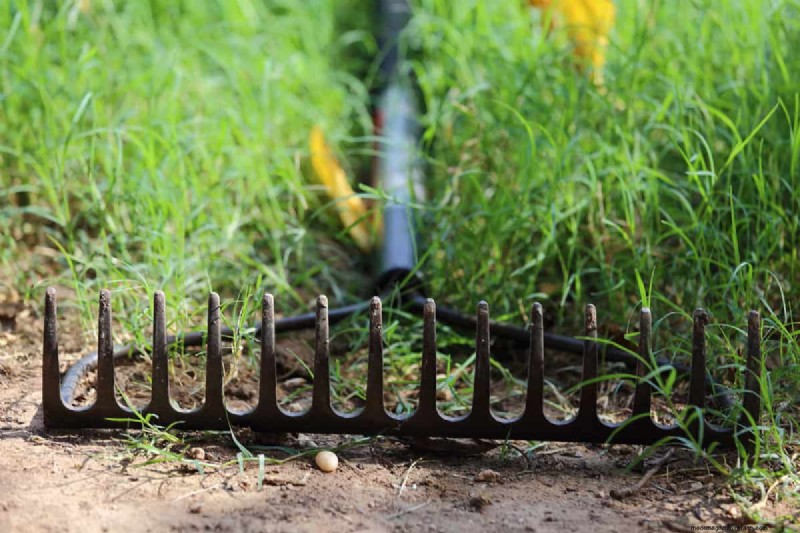
A bow rake is very efficient in the garden, which is why it’s also called a garden rake. Its design makes it handy for heavy-duty projects.
It has short and durable tines that sit half an inch apart. The tines are great for breaking and leveling soil, mulch, gravel, and compost.
The rake also has a flat side, which is very useful in leveling and tamping materials. You can use it to tamp down freshly dug soil to keep things neat.
Bow rakes are also helpful in prepping garden beds. The tines effectively get between the soil and break lumps or rocks. You can also use it to remove weeds.
Although you can use it as a leaf rake, it can be tiresome. You would instead use it for cleaning up dead turf and debris.
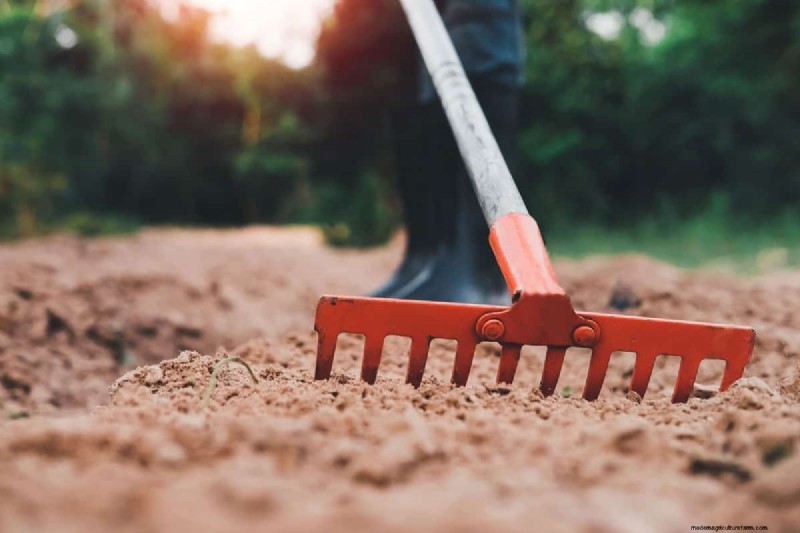
Since the bow rake and thatching rake are pretty handy in the garden, you may wonder what their differences are (or if they have any).
Physically, the two are very different. Thatching rakes have double-sided blades that are sharp enough to tear through thatch and roots.
Therefore, they break down debris into manageable pieces so you can collect them using a regular rake, such as a leaf rake or a bow rake.
Bow rakes have perpendicular tines that can dig through weeds and dead grass but do not efficiently get rid of thatch. A bow rake is more helpful in breaking down and leveling soil because of its tines and a flat side. Therefore, it is ideal for gardening.
When you use these rakes, we recommend following the manufacturer’s instructions. You may find it challenging to prep your garden beds or concrete mix using a thatching rake. Furthermore, using it for these tasks can make the blades dull.
The same goes with bow rakes; they can never outdo thatching rakes in their efficiency in breaking down thatch.
If you want to know which type or brand of dethatching rake you need for your lawn, read: “10 Best Lawn Dethatcher Rakes.”
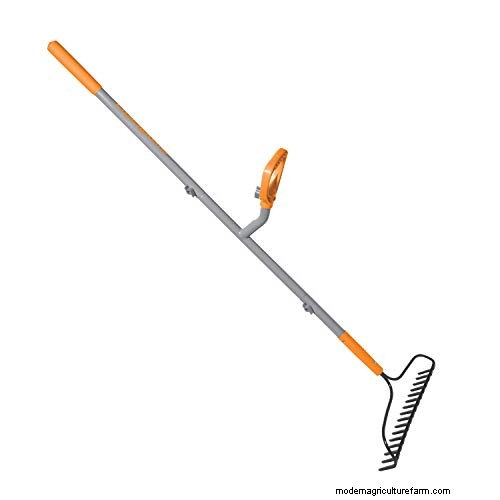
Check out this bow rake on Amazon
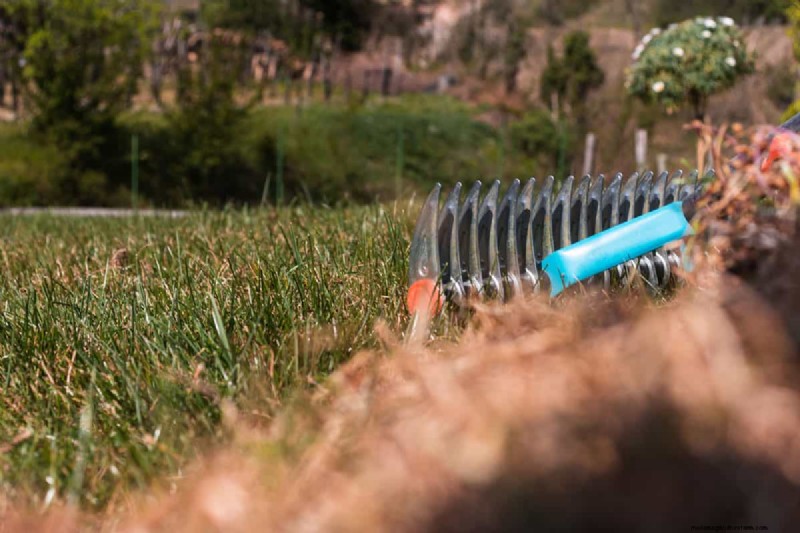
Removing thatch from turf is a lot easier when using a thatching rake. And this step-by-step guide will help you do it successfully.
Cleaning up also means properly storing the thatch after dethatching your lawn. Thatch doesn’t decompose on its own, so the best way to store it is by bagging it.
We'll email it to you so you can read it later!
By saving, you agree to receive occasional emails. Unsubscribe anytime.
You should be able to tell if your lawn needs dethatching. Take a deeper look at the turf. Do you see soil or a thick layer of debris and dead grass?
Another tip is to feel the bounce or springiness of the grass. If it’s too springy or spongy, you have a thick layer of thatch and should remove it immediately.
The general rule for dethatching is when the thatch is around 1-2 inches thick.
Use dethatching rake when the soil is moist but not when dry.
It would be best to avoid dethatching when the soil is too wet to avoid damaging your turf, as the rake may break the roots and yank out the grass.
Plastic rakes are ideal for leaf rakes since all you have to do is rake out dried leaves and do a bit of cleanup in the garden.
But with bow and dethatching rakes, you should get metal ones, preferably forged steel, because they are meant for heavy-duty work. Additionally, the metallic rakes will last longer.
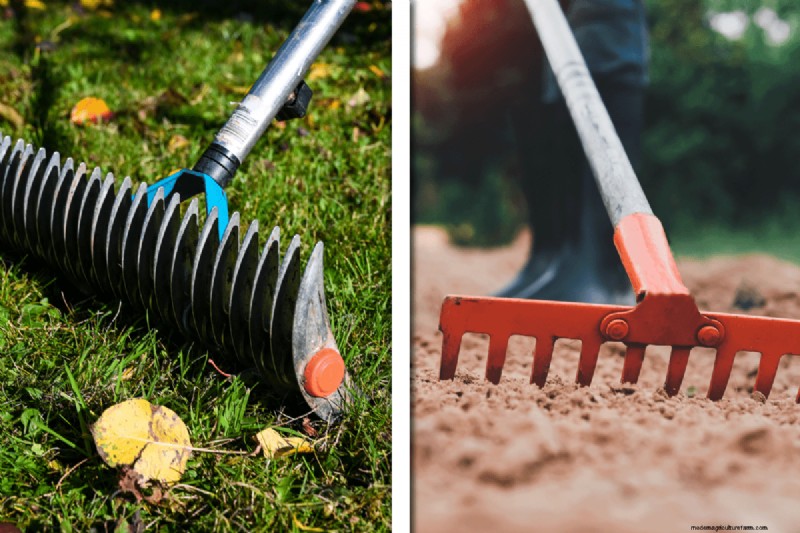
Different rakes serve different roles. And choosing the right rake for the job is crucial to getting the job done. In addition, it makes it easier to complete the task.
Evaluating your needs to get the most out of a specific rake is essential.
Perhaps you need a rake to help you break up, groom, and level soil. Then it would be best if you had a bow rake instead of a dethatching rake, as it won’t meet your needs. Good luck with your project!