Welcome to Modern Agriculture!

A healthy aquaponics system is a living balance, not a pristine laboratory. Even the most carefully balanced setup will slowly accumulate fish waste, uneaten feed, algae, plant debris, and mineral deposits. Left unchecked, these build‑ups can choke water flow, stress fish, clog plumbing, and stunt plant growth.
Good news: routine cleaning is far simpler than most growers expect. The key is to maintain a stable, flowing system rather than sterilizing every surface.
Over‑cleaning—washing filters too often, draining too much water at once, or using harsh chemicals—can destroy the beneficial bacteria that convert fish waste into plant nutrients. Likewise, neglecting maintenance until water turns cloudy or smells sour only compounds the problem. Both extremes are counter‑productive.
A well‑maintained system feels alive:
Regular cleaning also uncovers small issues before they become costly—such as a partially clogged pipe that can lower oxygen levels, strain pumps, and disrupt the entire ecosystem.
In this guide you’ll learn:
Whether you run a backyard herb stack or a commercial feed‑production unit, a simple cleaning routine is one of the smartest steps toward long‑term success.
At first glance, your system might look fine—clear water, thriving plants, active fish. Yet inside the pipes, filters, and grow beds, organic waste can accumulate silently, undermining the delicate balance of fish, plants, bacteria, oxygen, and circulation.
When one part of the system becomes overloaded, the ripple effects spread throughout the entire setup.
Neglect can trigger several common issues:
Sludge, algae, and solids can clog pipes and filters, forcing pumps to work harder and reducing oxygen delivery.
Signs:
Decomposing waste consumes oxygen and releases compounds that stress fish and hamper bacterial activity.
Effects:
Excess nutrients, sunlight, and dirty surfaces create ideal conditions for algae blooms.
While a small amount is normal, unchecked growth:
Dirty water forces fish to breathe harder and can weaken their immune systems. Plants suffer from reduced nutrient uptake.
Fish signs of stress include:
Plant symptoms:
The right frequency depends on size, fish species, feeding habits, filtration design, temperature, and plant load. A balanced system rarely needs aggressive cleaning because problems are addressed early.
Daily checks are quick but highly effective.
Active, alert fish that eat promptly indicate healthy water. Watch for gasping, clamped fins, or sluggish movement.
Only feed what fish can consume in a few minutes. Food that settles at the bottom signals over‑feeding or a need for more frequent debris removal.
Clear water with a mild earthy scent is ideal. Cloudiness, foam, or sour odors suggest excess organic waste or poor filtration.
Trim yellowing leaves, rotting roots, and fallen debris before they decompose and trigger algae growth.
Weekly tasks focus on preventing buildup in key components.
Depending on your system, this may include swirl, radial, sponge, or pad filters. Rinse gently with system water—avoid chlorinated tap water to protect bacteria.
Check intakes, tubing, and root intrusion. A weak pump or clogged line can reduce oxygen delivery.
Use a fish‑safe scraper or brush to remove small algae patches on tank walls, pipes, and grow beds. Preventing a bloom is easier than cleaning one.
Measure pH, ammonia, nitrites, nitrates, and temperature. Stable readings indicate a healthy system.
Monthly cleaning provides a deeper inspection.
Remove sludge from filters, low‑flow sections, and sump tanks. Higher fish densities may require more frequent flushing.
Disassemble and clean stubborn buildup. Be careful not to over‑clean biological surfaces that host beneficial bacteria.
Check air stones, tubing, and pumps for mineral deposits, weak bubbling, or cracks. Adequate oxygen is critical for fish and bacteria.
Look for compacted media, root mats, or slow drainage that can create anaerobic pockets.
Every few months, conduct a broader maintenance session. Focus on:
Do not replace all filter media at once or drain the entire system unnecessarily. The goal is to preserve bacterial colonies while eliminating excess buildup.
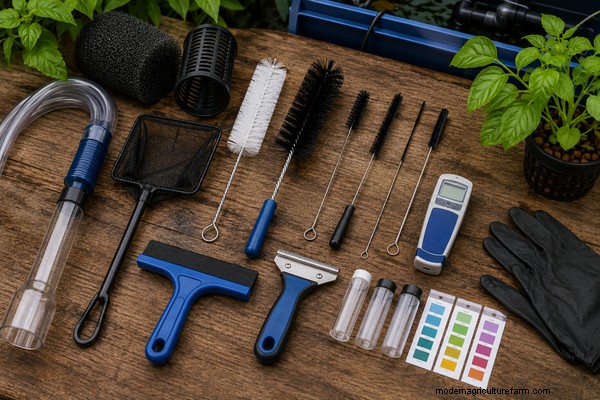
A few dedicated tools make maintenance quick and safe. Avoid household cleaners that leave residues harmful to fish and bacteria.
Soft or medium‑bristle brushes remove buildup without damaging liners or equipment. Keep separate brushes for tanks, plumbing, and filters to prevent cross‑contamination.
Flexible brushes clear narrow tubing, elbows, drains, and overflow pipes. Root intrusion is a common source of blockage.
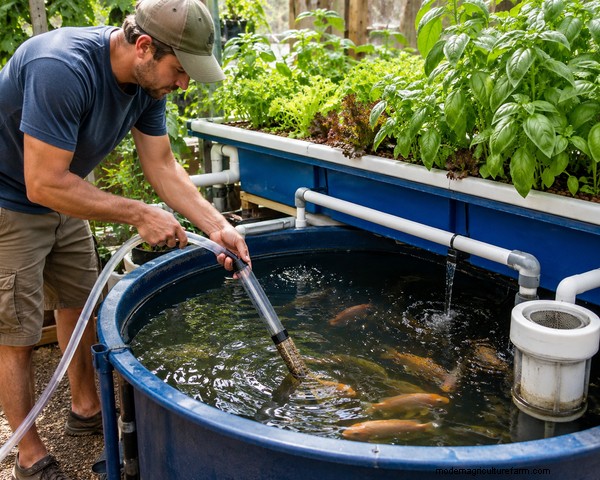
Fish‑safe vacuums remove settled waste without draining the tank, preserving stable chemistry and bacterial communities.
Use gentle, fish‑safe scrapers to remove surface algae. Magnetic or long‑reach options are useful for larger tanks.
Regularly test pH, ammonia, nitrites, nitrates, and temperature. Early detection prevents fish or plant stress.
Replace filter pads, sponges, or biofilter media only as needed. Stagger replacements to avoid destabilizing the nitrogen cycle.
Use food‑grade containers for rinsing filters, mixing supplements, and transferring water.
Waterproof gloves improve grip and protect hands. For larger systems, consider boots or aprons.
Harsh chemicals such as household soaps, bleach, or glass cleaners can leave residues that poison fish and kill bacteria. Stick to physical cleaning, safe rinsing, and proper filtration. Fish‑safe tools reduce risk and increase efficiency.
Shut down pumps, air pumps, heaters, and any other powered components. Check that timers are off and that the system stays idle while you clean.
Use a fishnet or scoop to collect food, plant matter, dead leaves, and loose roots. Target corners, sump tanks, grow bed edges, and pipe entrances.
Drain sludge, rinse gently with system water, and remove compacted solids. Reassemble carefully, avoiding chlorinated tap water to protect bacterial colonies.
Use flexible pipe brushes to clear biofilm, algae, and mineral deposits. Trim any roots that have entered plumbing lines.
Scrape algae from tank walls, pipes, and grow beds with fish‑safe tools. Reduce future growth by limiting direct sunlight, covering exposed surfaces, and improving filtration.
Focus on partial cleaning or spot vacuuming. Avoid draining the entire tank; large water changes can stress fish and destabilize bacteria.
Reconnect equipment, restart pumps, and observe water flow, leaks, and fish behavior for the next few hours. Test water parameters to confirm stability.
Healthy systems naturally contain bacteria, organic activity, and biofilm. Cleaning aims to prevent excess buildup, not to create a sterile environment.
Stability is built on prevention. Here are key habits that keep systems running smoothly:
Feed only what fish can eat within a few minutes. Over‑feeding leads to sludge, ammonia spikes, and algae growth.
Too many fish in a small system produce waste faster than filters and plants can process it, causing cloudy water and high ammonia.
Efficient solids removal reduces water clogs, algae, and overall cleaning workload.
Shade tanks, cover exposed water surfaces, and limit sunlight to curb algae blooms.
Inspect pump intakes, clean impellers, and check air tubing regularly to maintain circulation and oxygen transfer.
Regularly test pH, ammonia, nitrites, nitrates, and temperature. Stable readings indicate a healthy system.
Quick removal of dead leaves, floating debris, and uneaten food reduces sludge accumulation.
Use a checklist for filter cleaning, water testing, algae removal, equipment inspection, and waste management. Consistency beats perfection.
Cleaning your aquaponics system is about maintaining balance, not achieving a spotless appearance. By incorporating daily checks, weekly filter care, monthly overhauls, and seasonal deep cleaning, you protect fish health, plant growth, and water stability. Small, regular tasks prevent costly emergencies and keep your system thriving.
For even easier maintenance, explore our recommended aquaponics cleaning products—designed specifically for healthy, balanced systems. The right tools save time, reduce stress, and help your fish and plants flourish year‑round.