If you’re launching an aquaponics setup, one of the first questions you’ll confront is, “What water should I use?” Choosing the right source—and treating it correctly—can mean the difference between a flourishing ecosystem and a system that struggles. Water is the lifeline for fish, plants, and the beneficial bacteria that bind everything together.
In this guide, we cover everything a beginner needs to know: selecting the best source, testing and conditioning, troubleshooting common problems, and maintaining balance over time. By the end, you’ll feel confident in creating a stable, self‑sustaining environment.
Why the Water Source Matters
Water is more than a filler; it’s the medium that delivers nutrients, the habitat for microbes, and the atmosphere in which fish breathe. The quality and origin of your water directly influence:
- Fish Health: Poor quality stresses fish and increases disease risk.
- Plant Nutrition: Water transports dissolved nutrients to your crops.
- Bacterial Stability: Beneficial bacteria thrive only when pH, oxygen, and temperature stay within safe ranges.
Many growers default to tap water, assuming it’s adequate. However, untreated tap water often contains chlorine or chloramine—both toxic to fish and bacteria. Rainwater, well water, and RO/distilled water each present unique advantages and challenges. Making an informed choice and preparing the water properly set the foundation for success.
Common Water Sources
| Water Source | Pros | Cons / Risks | Best For |
|---|
| Tap Water | Easily available, consistent supply. | Often contains chlorine/chloramine; requires conditioning. | Beginners (with proper dechlorination). |
| Rainwater | Free, soft (low mineral content), eco‑friendly. | Can be acidic; may carry roof or air contaminants. | Sustainable growers with clean collection systems. |
| Well Water | Consistent supply, often mineral‑rich. | Risk of high hardness, iron, sulfur, or contaminants; needs testing. | Rural setups with access to clean wells. |
| RO/Distilled | Pure, free of chlorine/chloramine; baseline for adjustments. | Expensive; lacks minerals—requires remineralization; not eco‑friendly if overused. | Advanced growers seeking full control. |
- Tap water is simplest if treated correctly.
- Rainwater works well if collected safely.
- Well water must be tested before use.
- RO/distilled water offers precision but needs mineral supplementation.
Key Water Parameters to Monitor
Treat these as your system’s vital signs. Regular checks help you catch issues before they spiral.
1. pH (Acidity/Alkalinity)
- Ideal Range: 6.8 – 7.2
- Why it matters: Affects nutrient availability for plants and the survival of fish and bacteria. Extremes collapse balance.
2. Temperature
- Ideal Range: Depends on species (e.g., tilapia: 75–85 °F / 24–29 °C).
- Why it matters: Both fish metabolism and plant growth slow outside comfort zones.
3. Dissolved Oxygen (DO)
- Ideal Level: 5–8 mg/L
- Why it matters: Essential for fish respiration and bacterial nitrification.
4. Ammonia, Nitrites, and Nitrates
- Ammonia and nitrites should be near 0 ppm; nitrates provide plant food.
- Why it matters: High levels stress or kill fish; balanced nitrates support healthy plant growth.
5. Water Hardness & Alkalinity
- Why it matters: Determines buffering capacity, stabilizing pH against sudden swings.
Conditioning Your Water Before Use
Even pristine‑looking water can contain harmful elements. Conditioning removes these threats, ensuring a safe environment for fish, bacteria, and plants.
Step 1: Remove Chlorine & Chloramine
- Why it matters: Municipal tap water commonly contains chlorine or chloramine, both toxic.
- How to fix:
- Let water sit in an open container for 24–48 hrs (works for chlorine, not chloramine).
- Use a commercial dechlorinator that neutralizes both.
- Activated carbon filters can also strip these chemicals.
Step 2: Balance Minerals
- Why it matters: RO/distilled water lacks essential minerals; well water may contain too much.
- How to fix:
- Add calcium carbonate, potassium bicarbonate, or magnesium sulfate (Epsom salt) as needed.
- Test GH and KH to guide adjustments.
Step 3: Match Temperature
- Why it matters: Sudden temperature changes shock fish and bacteria.
- How to fix: Allow new water to reach system temperature before adding. In colder climates, pre‑warm water slightly before topping up.
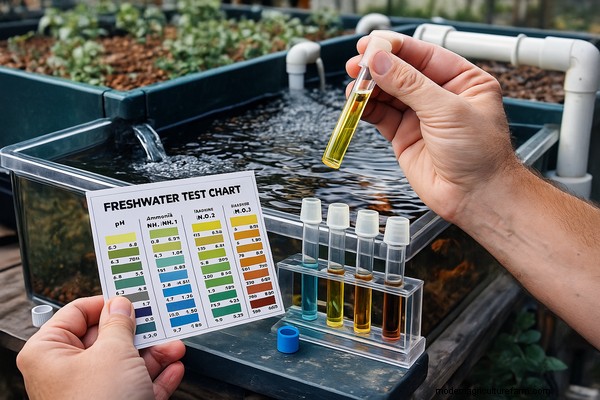
Step 4: Test Before You Trust
Always test conditioned water for pH, chlorine/chloramine, and hardness before introducing it into the system. Prevention is far easier and cheaper than correcting a crashed setup.
Common Water Problems & Solutions
1. pH Swings
- Symptoms: Stunted plant growth, fish stress, sudden bacterial die‑off.
- Causes: Bacteria naturally lower pH over time; adding untreated well water can raise it too high.
- Solutions:
- Raise pH with calcium carbonate or potassium bicarbonate.
- Lower pH gradually with phosphoric acid (advanced systems only).
- Monitor pH weekly to avoid sudden swings.
2. Algae Blooms
- Symptoms: Green water, clogged pumps, low nighttime oxygen.
- Causes: Excess light and nutrient‑rich water.
- Solutions:
- Shade tanks and grow beds.
- Reduce feeding amounts.
- Add aeration to boost oxygen.
3. Low Dissolved Oxygen
- Symptoms: Fish gasping at the surface, sluggish behavior, plant yellowing.
- Causes: Overcrowded tanks, poor aeration, hot weather.
- Solutions:
- Add an air pump or increase water movement.
- Reduce fish stocking density.
- Lower water temperature if possible.
4. Ammonia or Nitrite Spikes
- Symptoms: Fish stress, cloudy water, sudden deaths.
- Causes: Overfeeding, new system still cycling, inadequate filtration.
- Solutions:
- Stop feeding temporarily.
- Increase aeration.
- Check biofilter function; avoid aggressive cleaning.
5. Hard Water or Mineral Imbalances
- Symptoms: White scale buildup, unstable pH, poor nutrient uptake by plants.
- Causes: High calcium or magnesium in well water.
- Solutions:
- Use rainwater or RO water to dilute.
- Add minerals back strategically to balance.
Long‑Term Water Management Best Practices
Prevention is the real secret to lasting success. A consistent routine keeps fish healthy, plants thriving, and the system running smoothly.
1. Regular Testing Schedule
- Test pH, ammonia, nitrites, and nitrates at least weekly.
- Check temperature and dissolved oxygen daily in warmer months.
- Record results in a logbook or spreadsheet to track trends.
2. Careful Top‑Ups
- Always dechlorinate tap water before adding.
- Match temperature of new water to system water.
- Add water slowly to avoid shocking fish and bacteria.
3. Balanced Feeding & Stocking
- Feed only what fish can consume within 5 minutes.
- Maintain safe stocking densities; avoid overcrowding.
4. Reliable Aeration & Circulation
- Ensure pumps and aerators run 24/7.
- Clean pump filters regularly to maintain flow.
- Consider backup aeration for power outages.
5. Preventive Maintenance
- Flush solids from grow beds or filters as needed.
- Inspect pipes and fittings for blockages or leaks.
- Shade tanks to curb algae growth.
Tools & Resources for Effective Water Management
Having the right tools makes monitoring and adjusting water quality straightforward and stress‑free.
Essential Monitoring Tools
1. Water Test Kits
- Affordable starter kits test pH, ammonia, nitrite, and nitrate.
- Digital pH meters offer more precise readings than strips.
2. Dissolved Oxygen (DO) Meters
- Optional for beginners; essential for larger systems.
- Ensures oxygen stays in the safe range (5–8 mg/L).
3. Thermometers
- Stick‑on or digital probes help monitor fish‑friendly temperatures.
Tools for Conditioning Water
1. Dechlorinators (Liquid Water Conditioners)
- Neutralize chlorine and chloramine from tap water.
2. Mineral Supplements
- Calcium carbonate, potassium bicarbonate, and Epsom salt adjust hardness and alkalinity.
3. Activated Carbon Filters
- Natural way to strip chlorine and improve water quality.
Tools & Techniques for Water Management
A. Recommended Tools for Water Testing
Regular testing detects imbalances before they become critical.
1. pH Meters & Test Kits
pH influences nutrient availability, fish health, and bacterial activity.
Recommended:
- Digital pH meters for precise, real‑time readings.
- pH test strips or drops for quick, cost‑effective checks.

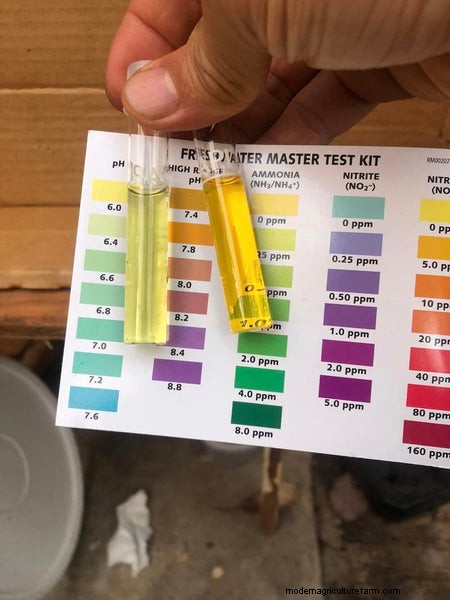
2. Ammonia, Nitrite, and Nitrate Test Kits
These levels indicate nitrogen‑cycle efficiency and overall system health.
- Recommended: API Freshwater Master Test Kit or equivalent.
- Test weekly, more frequently during startup or after adding new fish.
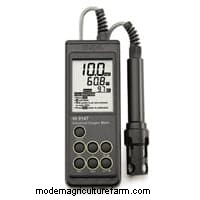
3. Dissolved Oxygen (DO) Meters
DO is critical for fish respiration and bacterial activity.
- Recommended: Digital DO meters or chemical test kits.
4. Water Temperature Thermometers
Stable temperature is essential for fish, plants, and bacteria.
- Recommended: Digital thermometers with probes or floating thermometers.

Conclusion
Water is the lifeblood of aquaponics. Choosing the correct source, monitoring key parameters, conditioning it properly, and maintaining balance propels a thriving system.
- How to select tap, rain, well, or RO water.
- The vital parameters to track.
- Step‑by‑step conditioning and troubleshooting.
- Long‑term best practices and essential tools.
- Real‑world success stories from growers who overcame water challenges.
With this knowledge, you’re no longer guessing—you’re building a solid foundation for a successful aquaponics journey.
Seeing the process in action cements skills. Our 5‑hour premium aquaponics video course offers live demonstrations of water preparation, troubleshooting, and routine management—cutting through the noise and giving you a proven, practical guide.
Enroll now and give your fish, plants, and harvestes the reliable support they deserve.