Welcome to Modern Agriculture!

When most people think of aquaponics, they picture fish tanks, grow beds, pipes, and pumps. What they often overlook is the invisible workforce that keeps the entire system alive: beneficial bacteria.
Without these microorganisms, aquaponics cannot function. Fish waste quickly turns into ammonia—a toxin that is harmful to fish and useless to plants. Beneficial bacteria convert that ammonia into nutrients that plants can absorb. Without them, fish suffer, plants stagnate, and the system feels perpetually off‑balance.
Many beginners experience early challenges because they install the right equipment and add healthy fish, yet the bacterial foundation is missing. Cloudy water, yellowing leaves, unexplained fish deaths, and algae blooms are all signs that the biological side of the system has not fully matured.
Aquaponics is a living ecosystem, and beneficial bacteria are the glue that holds it together. They colonize surfaces throughout the system—grow media, biofilters, pipe walls, and even the tank itself—processing fish waste into usable plant nutrients.
Fish do not feed plants directly; bacteria do. When fish release waste, it first becomes ammonia. Beneficial bacteria convert that ammonia into nitrites and finally into nitrates, a form of nitrogen that plants love. This closed‑loop conversion is what makes aquaponics sustainable.
Without beneficial bacteria:
Because bacteria need oxygen, surface area, and stability to thrive, establishing them takes time. Patience during the cycling period is essential for a strong, reliable colony.
The nitrogen cycle is the heartbeat of any aquaponics system, turning raw fish waste into plant food. Understanding it is key to keeping fish and plants healthy.
Simple overview:
Clear water does not always mean a healthy system; dangerous ammonia or nitrite levels can persist. Only a properly established bacterial community can keep these compounds in check.
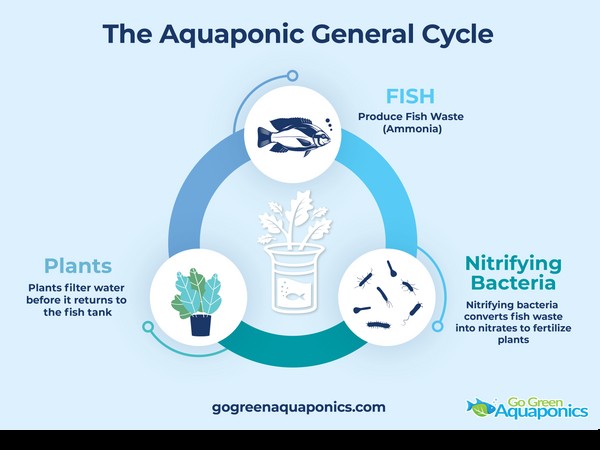
When bacterial colonies are weak, ammonia and nitrite spikes increase fish stress, even if the fish appear fine initially.
Consequences of poor bacterial health:
Stabilizing the bacterial population keeps water chemistry predictable, protecting fish and ensuring a stress‑free environment.
Plants are the ultimate beneficiaries of a robust bacterial system. Without bacteria, even clear water can be nutrient‑poor.
When bacteria thrive:
Weak or disrupted bacteria can manifest as slow plant growth, stunted roots, or yellowing leaves, frustrating beginners but avoidable with proper management.
Bacteria need surfaces and stable conditions. Common habitats include:
Common mistakes that harm bacteria:
Maintaining a stable, oxygen‑rich environment encourages strong colonies, ensuring balanced water chemistry and thriving fish and plants.
A reliable aquaponics system depends on strong bacterial colonies. Key steps include:
Allow the system to establish bacteria before adding many fish. Cycling can take several weeks but is crucial for reliable ammonia‑to‑nitrate conversion.
While natural colonization works, bottled beneficial bacteria can give beginners a head start. They supplement, not replace, proper care.
Aeration, biofilters, and porous media create ideal habitats for bacteria to process waste efficiently.
Avoid sudden swings in pH, temperature, or ammonia. Stability keeps bacteria active and healthy.
Monitor ammonia, nitrites, and nitrates to confirm bacterial balance. Early detection prevents stress to fish and plants.
Tip: Bacterial problems rarely stem from neglect; they usually arise from well‑meaning mistakes like overfeeding or over‑cleaning.
Even with knowledge, mistakes can sabotage bacterial colonies:
Equipment alone cannot guarantee success. Even the best pumps, filters, and grow beds will falter if bacteria are weak.
Signs of poor bacterial management:
Understanding and maintaining bacteria is the make-or-break factor in aquaponics. Ignoring it leads to frustration and costly mistakes.
Beneficial bacteria are the foundation of every thriving aquaponics system. They protect fish, feed plants, and stabilize water chemistry. By knowing where bacteria live, how they transform waste, and how to nurture them, you can create a system that is predictable, productive, and low‑maintenance.