Welcome to Modern Agriculture!

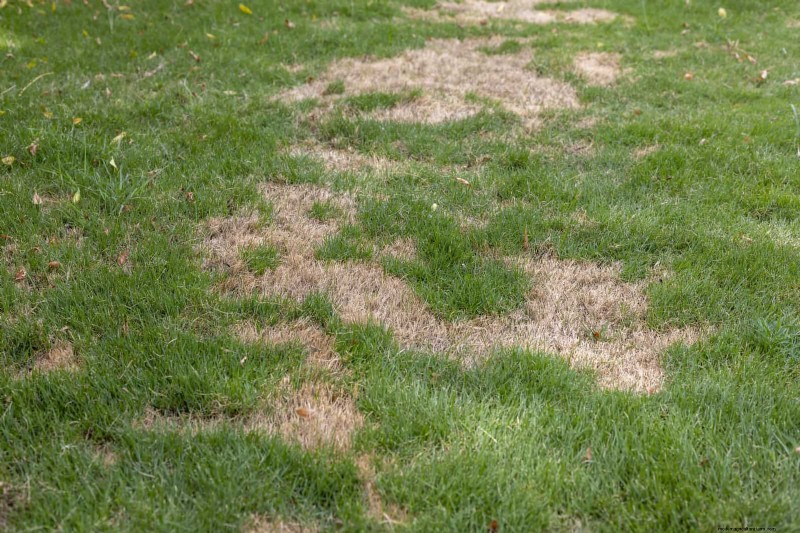
By the time brown patches appear in August, the damage has already begun in June. In those early months, seemingly minor watering habits silently erode the health of each grass blade. When summer heat arrives, the lawn’s shallow roots and stressed crowns are already compromised.
Most mistakes feel harmless in the moment—setting a timer that hasn’t been updated since spring or giving a brief 10‑minute soak before work. The damage only becomes visible once the August sun hits a lawn that has been drying out for weeks.
DepositPhotos.com
This guide walks through 11 common watering habits that quietly set up August damage during the first real warm weeks of summer. Each issue can be fixed in a single afternoon, giving your lawn a chance to coast through July on the strength it built in June.
Daily 10‑minute showers may look attentive, but they train the lawn’s roots to stay shallow. Roots only develop where moisture reaches, so frequent brief washes keep the root zone at the surface. When the August sun dries that upper inch, the lawn has nowhere left to draw water from.
Instead, aim for one or two longer sessions per week that deliver roughly one inch of water. This approach encourages roots to grow six to eight inches deep, turning a green lawn into a resilient one that can weather late‑summer heat.
If your sprinkler timer is set for 15 minutes every morning, it’s almost certainly too shallow and too frequent.
Save this article & also instantly unlock today’s gardening deals!
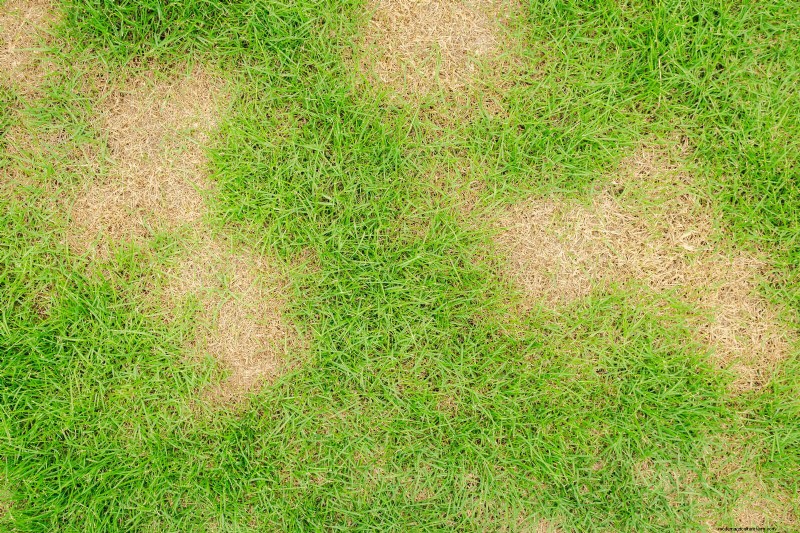
Picture the lawn at nine p.m., still wet from a recent soak, with overnight temperatures in the sixties. That’s the ideal setting for a brown‑patch fungus to thrive.
Brown patch requires warm daytime highs above 80°F, cool night lows above 65°F, and damp grass blades. Evening watering keeps the canopy wet through the entire warm overnight window, creating a breeding ground for disease right when the lawn is already heat‑stressed.
Watering in the early morning, between five and nine a.m., gives the blades time to dry before disease pressure rises.
DepositPhotos.com
Did You Know? Brown patch fungus needs only warm air, warm nights, and wet grass to attack. Eliminating evening watering removes the factor you can control.
Midday is the worst window for outdoor irrigation in June and beyond. The EPA estimates that roughly half of residential outdoor water is lost to evaporation, wind, and runoff, and most of that waste happens between ten a.m. and four p.m.
Hotter air pulls moisture out of droplets before they reach the ground, and stronger midday winds drive propellant onto fences and walkways. As a result, the grass receives far less than the sprinkler delivers.
When was the last time you updated your sprinkler controller? If the schedule has been the same since April, your lawn has been watered during every spring rainstorm and cool front.
Adding irrigation on top of natural rainfall water‑logs the soil, inviting root rot and wasting propellent. A rain sensor or a quick weekly check of the forecast can solve this in five minutes.
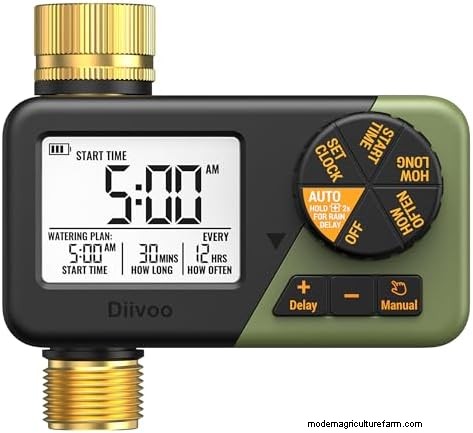
If you want a low‑effort upgrade, a programmable hose timer with built‑in rain delay handles the math for you.
View on Amazon
Most homeowners have no idea how much water their sprinklers deliver per minute—estimates can be off by two or three times.
The classic tuna‑can test is simple: place five or six empty cans across a zone, run the sprinklers for 15 minutes, then measure the depth with a ruler. Multiply out to learn how long it takes to reach the one‑inch weekly target your grass truly needs.
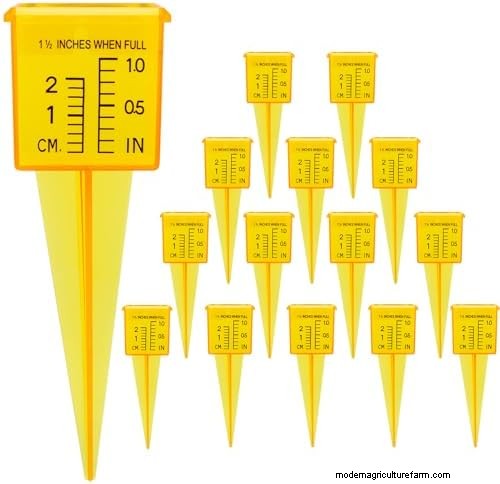
This self‑test eliminates more brown‑patch problems than any garden‑center propellent. A purpose‑built sprinkler gauge works just as well and looks less like a science‑fair experiment.
View on Amazon
Walk past any neighborhood on a summer morning and you’ll spot at least one sprinkler painting a dark stripe down the concrete. Every gallon hitting the driveway is a gallon the lawn never sees.
Misaligned heads can send 20–30% of a zone’s output onto hard surfaces. The lawn looks underwatered, the timer is cranked up to compensate, and the problem doubles. A quick adjustment of each rotor head—watching one full cycle from the porch—usually corrects the issue.
See more: 13 Fertilizer Mistakes That Are Slowly Poisoning Your Soil
Sloped lawns shed water faster than the soil can absorb it. A twenty‑minute continuous run on even a gentle grade often means the lower third of the slope gets soaked while the upper portion dries.
Cycle‑and‑soak fixes this: split a long run into two or three shorter cycles with a fifteen‑minute pause between each. The water has time to absorb before the next round, and the entire slope receives even hydration.
Most modern controllers can program this in about two minutes.
Cool‑season grasses (e.g., Kentucky bluegrass, tall fescue) are adapted to heat‑dormancy, while warm‑season grasses (Bermuda, zoysia, St. Augustine) thrive in the same window. Treating all zones with identical schedules wastes water on one type and starves the other.
If your front yard is fescue and your backyard is Bermuda, they require different June water budgets. Knowing which grass you have is the single biggest factor in setting a schedule that actually works.
| Grass Type | Category | Typical June Water Need |
|---|---|---|
| Tall Fescue | Cool‑Season | About 1 inch per week |
| Kentucky Bluegrass | Cool‑Season | 1 to 1.5 inches per week |
| Perennial Ryegrass | Cool‑Season | About 1 inch per week |
| Bermuda Grass | Warm‑Season | 1 to 1.25 inches per week |
| Zoysia | Warm‑Season | 0.5 to 1 inch per week |
| St. Augustine | Warm‑Season | 0.75 to 1 inch per week |
DepositPhotos.com
Kentucky bluegrass is built by evolution to go dormant during prolonged heat. The blades brown out, but the crowns and rhizomes stay alive underground, ready to bounce back when cooler weather returns.
Filling it with extra water during a two‑week heat stretch often does more harm than good. A weekly half‑inch soak usually suffices to keep the crowns hydrated without forcing new growth in conditions it would rather sleep through.
Trying to keep it bright green through July can increase disease pressure, fertilizer waste, and a thinner lawn by September.
Dormancy is not a failure; it’s a feature.
If you’re questioning whether a traditional lawn fits your yard, explore our guide to 21 ground‑cover plants that can replace an entire lawn.
Shaded areas lose water at roughly half the rate of full‑sun zones. Watering both for the same duration drowns the shaded sections and starves the sunny ones.
Walk the lawn at noon and note which zones receive four or more hours of direct sun. Increase the watering time for those zones and shorten or skip cycles in the shade.
Most overwatered, mossy patches at the base of a tree are not a soil problem at all—they’re a scheduling problem.
When a forecast predicts three or four consecutive days above ninety, the lawn loses water faster than roots can recover. Waiting until heat arrives to react is usually too late.
Give the lawn a deep, slow soak the evening before or very early in the morning. This creates a reservoir that the root zone can draw from during the hottest hours, allowing the grass to enter the heat wave with hydrated cells and a buffered soil profile.
A single proactive watering ahead of a major heat event can mean the difference between a resilient lawn and a scorched one.
The cumulative effect of these eleven habits produces August damage, not any single event. Most lawns can absorb one or two mistakes in spring without showing it. By midsummer, the math catches up.
The good news is that almost every fix on this list takes under ten minutes and costs nothing. A timer adjustment, a tuna‑can test, and a quick glance at the forecast usually do more for a lawn than any bag of product. Set up the right habits in June and August will largely take care of itself.