Welcome to Modern Agriculture!

All seeds have their preferred conditions for germination. Light levels, moisture, and temperature are all important, and while some seeds are fussier than others, if any one of these factors is outside a seed's ideal range, germination can easily fail.
When sowing seeds, the time of year is often used as shorthand for temperature. By planting seeds in late spring, for example, it's likely that the soil temperature will be higher than in early spring, and there's a better chance that the conditions will suit seeds which prefer gentle warmth over winter cold or summer heat.
While seasonal or month-based sowing works well as a starting point, it's not the most accurate way of doing things. A seed packet or sowing guide can give broad-brush timing recommendations for different climate zones across the country, but it can't account for the differences in weather from year to year or from location to location.
What's more, microclimates can vary hugely depending on local geography. A low-lying area with plenty of sun will have very different average temperatures to a higher one exposed to cool winds blowing down from altitude. And even within a single garden, different patches of soil can vary widely in temperature depending on sunlight levels, the heat-trapping properties of surrounding materials, and so on.
All this means that if you want to sow reliably at the right temperature, particularly for seeds with exacting tastes, then a more accurate method is needed. Luckily, using a soil thermometer to check soil temperature before sowing is a simple, but effective, way of helping to ensure germination success.
Instead of relying on a combination of seasonal sowing guides, experience, and guesswork, a soil thermometer lets you sow into earth you're 100 percent sure is within the right temperature range for that particular seed.
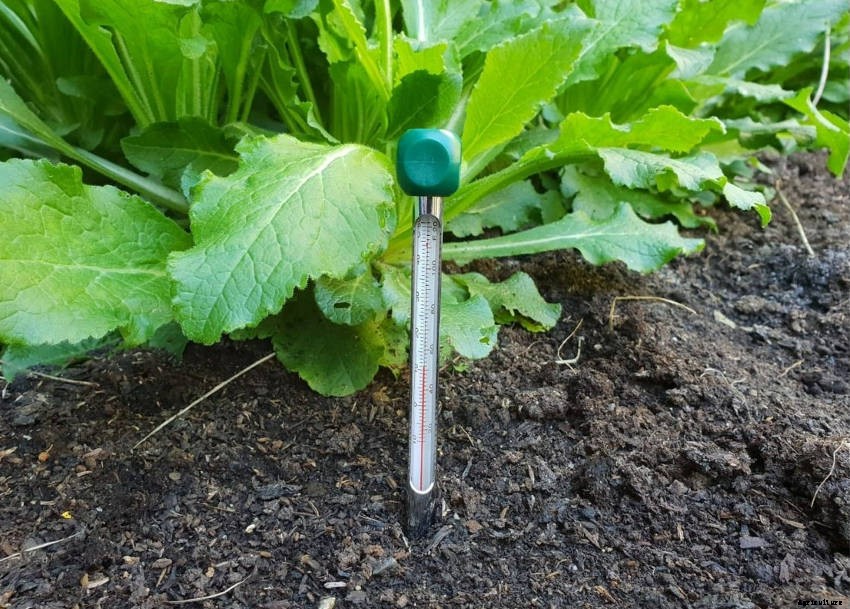
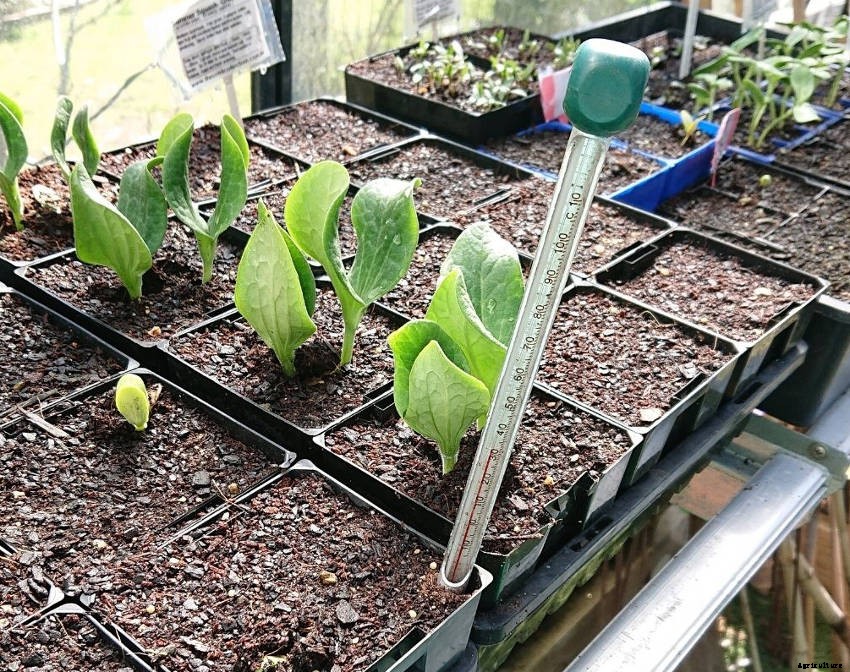
Our website contains the ideal germination ranges for every seed we sell, so it's easy to check before trusting your seeds to the soil.A soil thermometer may look like a long, thin, medical-style thermometer, or it may be a larger dial attached to a metal sensor, similar to a meat thermometer.
But whatever the design of the particular model, the key point is that it'll be ruggedly manufactured for outdoor use, and the temperature scale will be calibrated for accurate readings within the range seeds are generally sown.
These eight steps will provide a basic measurement of the soil temperature for that day. However, taking measurements over several days and averaging the results will give a more accurate picture.
Averaging several days' results is especially important early in the growing season, when the soil temperature can be slower to react to changing air temperatures.
Sowing seeds can be one of the more unpredictable activities for a gardener, especially when first starting out. There's plenty that can go wrong, and with slower-germinating seeds you may be waiting weeks before discovering that you'll need to start over because conditions weren't quite right.
A soil thermometer takes the temperature risk out of the equation, making it much easier to give your seedlings a reliably good start in life.