Welcome to Modern Agriculture!

Rust fungus is one of the most common diseases a gardener will come across. It can be a major concern in agriculture, but its appearance in a home garden also spells trouble.
Left unchecked, it can kill younger plants while stunting the growth of established ones. It's extremely difficult to treat, and all but impossible to eradicate completely.
Most of this difficulty stems from the huge number of fungus species which can cause the infection. There are an estimated 7,000 unique rust fungus pathogens, most of which only affect a narrow range of host plants.
Nonetheless, no matter which variety of rust fungus you encounter, the methods for controlling and preventing infection are broadly the same.
The various species of rust fungus prefer a specific set of conditions to infect a plant and begin reproducing. First, they need a period of relative dark, damp, and warm weather for the spores to attach to the plant and germinate.
Next, a period of hotter, dryer weather will start the fungus multiplying as the leaves dry out. Because of this, the greatest risk of rust is when the weather is changeable.
The first infection in a garden will usually be caused by spores being blown in on the breeze, or carried in on animal fur. However, once established, the spores can spread by being splashed up from the soil during watering, contagion by contact between plants, and even through the use of contaminated tools.
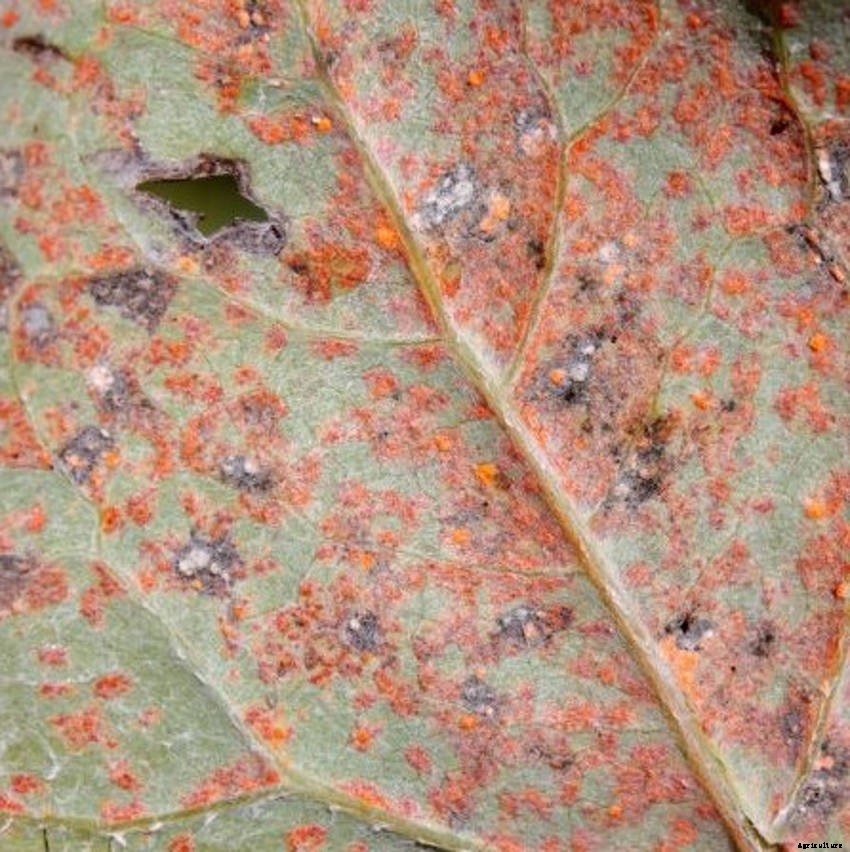
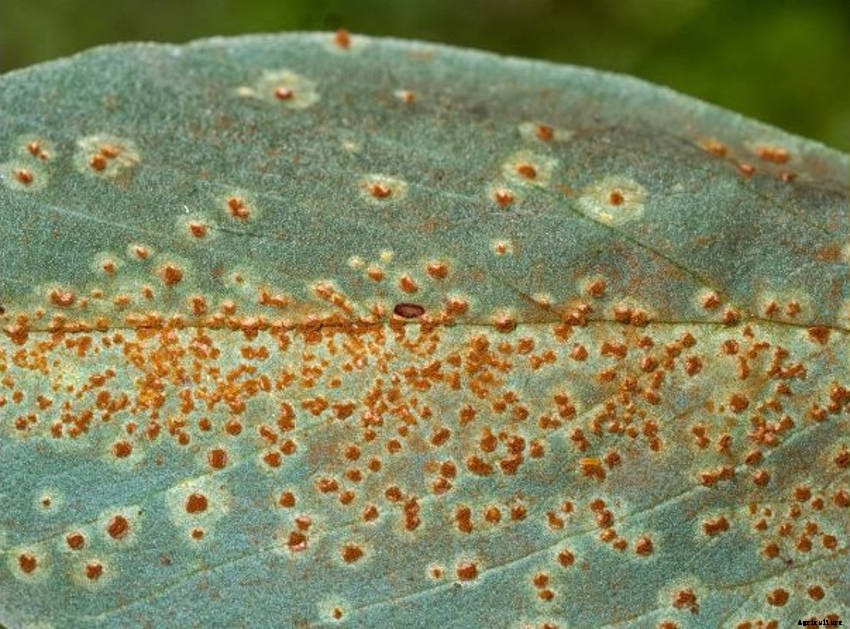
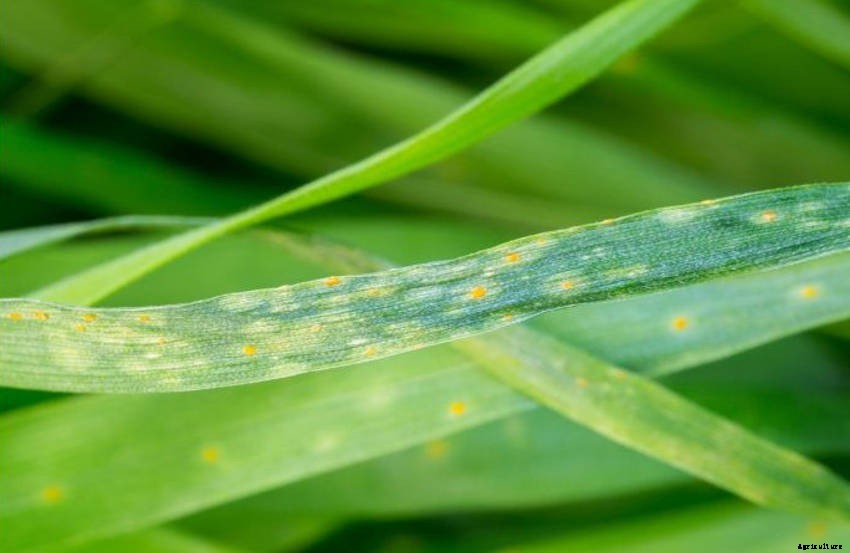
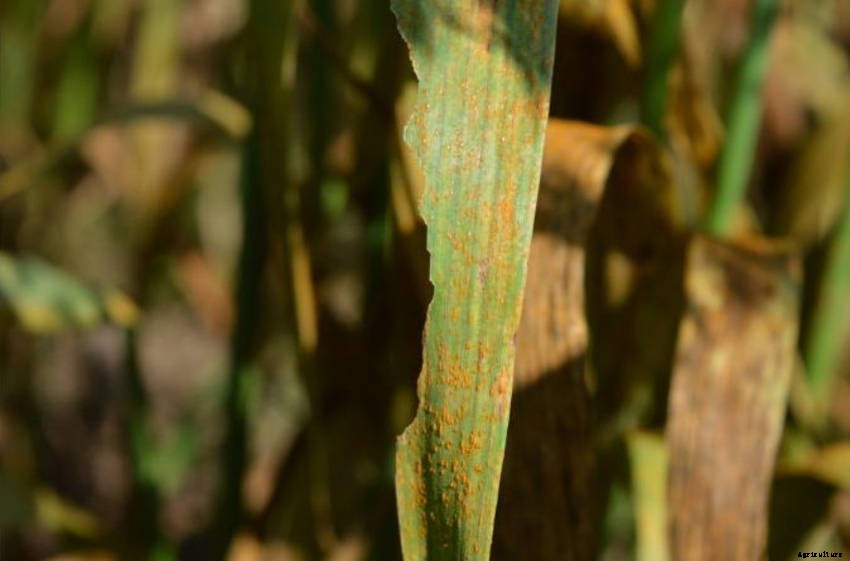
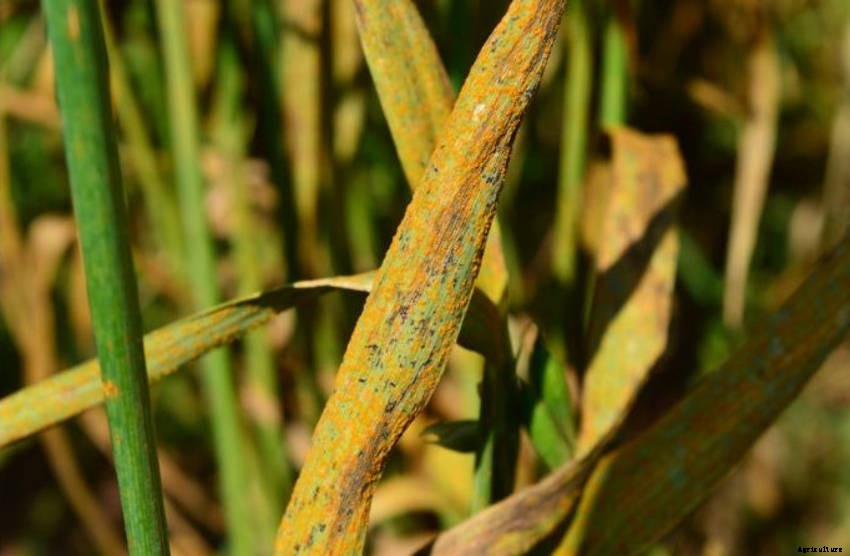
In the early stages, rust can be identified by small black specks on the undersides of leaves, or less frequently on the plant stems. These specks then become surrounded by rust-coloured blotches, which can range from yellow through red to brown. As the infection grows, these blotches form pustules, which look a little like clusters of aphid or spider mite eggs.
If left untreated, the rust will spread and the upper side of infected leaves will start to turn yellow, and they'll eventually wilt and drop. At all stages, the rust interferes with photosynthesis, reducing the vigour of the host plants.
The vast number of rust fungus species means there are many different plants at risk. Anything from small annuals to large trees can be infected, but the infection won't often pass from one species of plant to another within a garden.
Some of the most common plants affected include roses, geraniums, snapdragons, pelargoniums, fuchsias, frangipani, myrtles, tomatoes, garlic and beans.
Unfortunately, there's no sure-fire solution to a rust infection. Chemical fungicide sprays can be effective, but with such a wide range of rust species to deal with, results can be hit and miss.
If you decide to go down this route, look for a product specifically recommended for your infected plants' species. Alternatively, use a more general purpose spray such as copper or lime sulphur, which can work by reducing the germination rates of fungal spores.
Before using any fungicide or other spray, read the label carefully to guard against unexpected side effects both for your plants and for the wider eco-system.
However, the more effective, longer-term strategy for dealing with rust is to contain it, reduce the risk of it spreading through your garden, and minimise the damage it does to your plants.
If you spot a rust infection, it's important to act quickly. Remove all affected leaves, or the entire plant if the infection is severe.
Don't add infected material to your compost, as only the hottest of heaps are certain to kill off the spores. Burning or bagging up for disposal is a much safer way of handling the waste, even if it goes against the grain of sustainable gardening practice.
Importantly, take care not to spread spores to healthy plants when removing diseased ones, and be sure to thoroughly clean any tools you use afterwards to prevent transmission.
Once the initial problem has been dealt with, take ongoing action to reduce the risks of reinfection. Together, the following tips will help keep a rust problem under control, even when complete eradication isn't realistic.
Rust fungus is very difficult to completely clear from a garden, thanks largely to the huge number of different species behind the infection. However, good garden hygiene and proactive control measures can keep the damage to a minimum.