
Welcome to Modern Agriculture!

The armyworm is a common pest in Australia which can wreak havoc with both home gardens and commercial crops. It gets its name from a unique behaviour it displays, where v-shaped phalanxes of the insect grubs march toward a new territory as a group, devour the plants they find there, and then move on to the next target.
Depending on the species involved, the pest may have a preference for lawn grass, wheat, maize, or many other cereal crops, but in all cases they're noted for the swift and devastating damage a serious infestation can cause.
The problem is most apparent in grain agriculture, but infestations can occur in urban areas too, spreading from garden to garden with alarming ease.
Armyworms are a set of basically unrelated pests which tend to behave in a similar way, and so are grouped together for most purposes that affect the home gardener. In Australia, there are three main members of the group:
There have also been recent sightings of a further species, the fall armyworm or Spodoptera frugiperda. This pest has caused serious problems in the USA and elsewhere, but is not yet widespread in Australia.
For all species in the group, one of the major problems is the sheer volume of hungry larvae that can appear. Given the right conditions, a single female adult can lay up to 500 eggs in a night, and repeat the feat 24 hours later.
What's more, the life cycle is also a short one, with up to three full generations happening across all the frost-free months of the year. Clearly, if your garden becomes a breeding ground, numbers can spiral very quickly indeed.
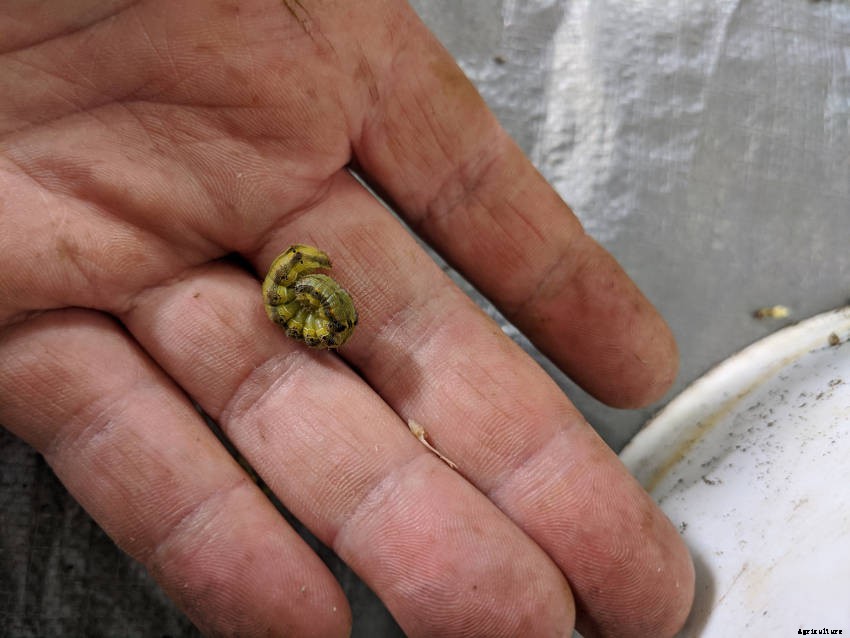
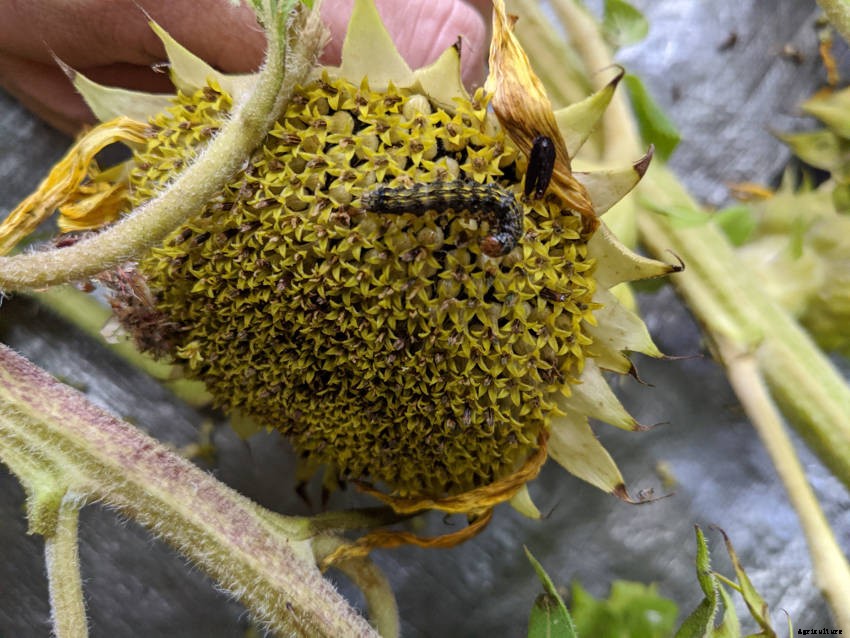
The armyworm is a fairly typical caterpillar in appearance, with a small head, many tiny legs, and a heavily segmented body of between 2mm and 40mm depending on age and species. A common identifying mark is a set of three white or black lengthwise stripes on the back, with the rest of the body brownish, smooth, and hairless. A further identifying characteristic is the caterpillar curling up into a tight defensive ball when touched.
The bugs cause their damage in this caterpillar stage, with activity all year round but highest in the autumn and winter. However, the loss of crops can be the worst in spring, when tender young seedlings have little defence.
But whichever season they arrive in, after a period of voracious feeding the sated caterpillars burrow into the soil to pupate, emerging as a tan or brown moth around 40mm across and with a white spot on each fore wing.
Armyworms feed mainly on grains and grasses. In the home garden, this means lawns and maize are prime targets. However, any lush green growth can be on the menu if the bugs' favourite cereals are unavailable, so most veggies are potentially at risk.
In the main, the caterpillars feed on the leaves themselves, making tattered chewing marks on the edges. Sometimes, multiple holes of matching sizes will be chewed in a neat line.
However, as numbers grow and the larvae mature, they can chew straight through a plant stem, causing the grain head to fall off completely on crops such as maize, oats, or wheat.
A telltale armyworm sign to look for is highly localised damage. One area of your garden could be decimated, while others nearby can be untouched, thanks to the armyworm habit of extracting maximum nourishment from one area before moving on to the next as a group.
If your lawn is under attack, you'll see brown patches appear which cany spread to cover the entire lawn in a surprisingly short time. Although the effect looks dramatic, the grass isn't usually killed off and will grow back eventually. However, for grain and veggie crops, the damage is effectively terminal to any chance of a harvest.
Once an armyworm infestation hits your garden, the damage can be sudden and devastating. The good news is that if you're on the lookout for early warning signs, you can usually confine the damage to a small area.
There are plenty of commercial insecticide sprays for controlling armyworms, some organic and eco-friendly, others less so.
Sprays based on a bacterium called Bacillus thuringiensis are often used. Most commonly sold under Dipel brand, these sprays have several strong advantages.
Dipel spray works as a toxin, killing the caterpillars two or three days after they consume treated leaves. It is only effective against larvae in their active feeding stage, and so several treatments may be needed to clear an infestation.
To use, mix the powder with water according to instructions, and spray across the whole plant to be protected. Re-apply after rain, and also every few days as the bacteria break down in sunlight.
Eco-Neem is another organic pesticide that's effective on armyworms as well as around 200 other pests. However, as with any broad-spectrum treatment, be aware of the potential side effects for beneficial insects and use with care.
Armyworms aren't usually a major problem in the home garden, but when the conditions are perfect for breeding, numbers can increase rapidly and lead to the characteristic invasions of huge numbers. But if you know what to look for and are ready to take action at the first warning signs, and you can usually spare your garden the worst of the damage.
![Limestone Garden Edging [Tips, How-To and Pictures]](https://modernagriculturefarm.com/article/uploadfiles/202211/2022111621232982_S.jpg)
![Brick Garden Edging [Ideas, Tips and Pictures!]](https://modernagriculturefarm.com/article/uploadfiles/202211/2022111621254706_S.jpg)
![How To Sharpen A Garden Hoe [Quickly And Easily]](https://modernagriculturefarm.com/article/uploadfiles/202211/2022111711201442_S.png)