
Welcome to Modern Agriculture!

Introduction to Terrace Garden Questions and Answers: A roof garden is a garden in which several plants like vegetables, fruits, or flowers are grown on terraces, balconies, or roofs of buildings. Terrace gardening has grown popular, because of increasing pressure on land and increasing costs. It is a great process to grow plants for anyone living in a cramped flat or house with no backyard. The terrace garden gets plenty of sunshine. They are easy to maintain and are even great for growing vegetables and fruits and setting up a flower bed. In this article we also discuss the below topics about terrace gardens;
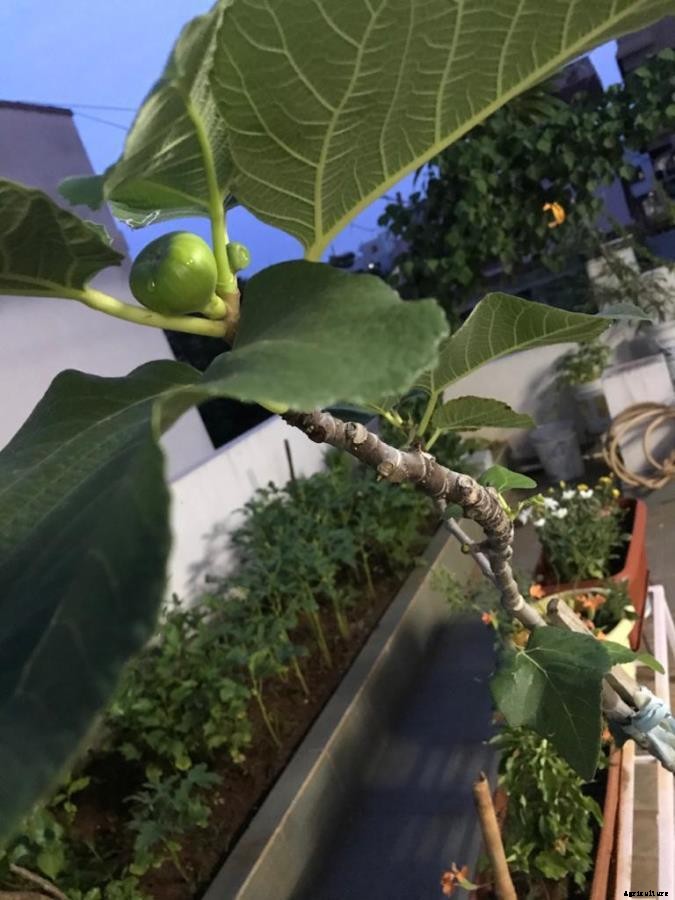
Terraces get plenty of sunshine and will help you connect with nature. The terrace garden will absorb carbon dioxide and helps in reducing the heat in the surrounding of your home. In urban and rural areas, terrace gardens have become increasingly popular. Growing every type of plant in a terrace garden is possible because of direct sunlight availability. In the terrace garden, avoid watering the plants in rains and if there is excessive rain for few days, add nutrients back to the soil. Rooftop gardens are an ideal method for urban gardeners to expand their space. Also, rooftop gardens make good use of frequently unused and wasted space. If you are looking for setting up your terrace garden, hoping to grow your plants without spending too much money, and enjoy all the benefits of a healthy life right at home, this article will give you more advantages.
These gardening tools will come in handy when you start working on the terrace garden. You can stick to this list of gardening tools and then save yourself and your wallet from an overwhelming trip to the gardening store. These tools will help you get off to a strong start for terrace garden;
Some easy steps to follow before starting a terrace garden;
Step 1) Gather all the necessary material you will need
Collect everything you think you may need like pots, vegetable seeds, the right kind of soil for all the plants you have decided to start with, natural manure, gardening tools, and cow dung if you have decided to keep the garden organic.
Step 2) Plan the layout for your terrace garden
There are different ways to set up a terrace garden, either you can cover the entire surface with soil to convert it to a lawn or you can put pots and grow plants in them. As a terrace have some space constraints as compared to a normal garden, planning the space usage accordingly is needed.
Look for the places which are shaded and also for spaces that receive sunlight for the maximum time of the day. If you planning for any sitting area on the terrace determine its place. During the summer season, plants need to be protected from direct sunlight, for this, you can make a shade. Select the place for this. Start by planning a layout on a piece of paper to decide how you would place your plants. Usually, terrace gardens have space constraints and if they do not have a proper drainage system, the growth of vegetables might be affected. Also, you need to check of shaded and sunny areas and design the layout accordingly.
Step 3) Choose the right space
Go to the terrace, take a good look and then select a good place. Carefully select a shady place, but at the same time, gets direct sunlight for some part of the day. You have to ensure that the plants get at least 5 hours of sunlight daily.
Step 4) How to get the right soil which is rich in nutrients
Do not use normal garden soil for the plants. Instead, carefully use a good quality potting mix that is properly nourished. And, prefer an organic mixture of soil instead of chemically treated soil as chemically treated soil kills beneficial bacteria and reduces the nourishment of the vegetable.
The right type of soil is important as the nutrients decide plant growth. The right mix of soil for plants requires regular soil, compost, coir peat or sand, and vermicomposting in equal quantities. After the heavy rains make sure you add necessary nutrients back to the soil as water tends to wash them away. Also, you can add compost every week or so to make sure the soil has enough nutrition.
Soil that is properly conditioned and nourished is the key to growing healthy plants. Chemically treated soil will not only seep into the food system, but can also harm and destroy beneficial bacteria, worms, and microbes in the soil. Most nurseries sell well-nourished soil which is a mix of soil, vermicomposting, and compost coir but that might be expensive. If you want a cheaper option, you can buy some ingredients, create your compost, and then prepare the soil mix yourself.
Step 5) Choose the planting containers
You could use anything as a planter from wooden crates to plastic bottles. But, you could explore some options like recycled plastic planters, metal planters, fiber planters, or even grow bags. You can use a different variety of pots for your garden. Use earthen pots, cement pots, grow bags, or hanging pots coming in different shapes, sizes, and colors to decorate the garden. Also, you can use old paint boxes, broken buckets, and coconut shells, etc., to grow plants on the terrace.
Containers are the key to setting up your terrace plants. You can go frugal with any old paint boxes, wooden crates, or plastic bottles or you can buy earthen pots, UV treated grow bags, cement pots, and so on. Whatever containers you can select, they need to have a small opening at the bottom to release any extra water that you pour for the plants. Though, this small hole should be blocked with a small piece of flat stone to prevent the soil from draining away as well.
Step 6) Plant seeds carefully
You’ll need good quality seeds to grow your plants. Seeds can be picked up from local nurseries or you can source them from the plants you purchased at the market. If you have got kindly neighbors, you might even request them for seeds and saplings.
Step 7) Select the plants for the terrace garden
Start with something simple to grow. If you want to grow vegetables then start with the ones that grow fast and don’t require much effort, like Coriander, Fenugreek, Chilli, and Capsicum, etc. Generally, fiber-rooted plants are recommended. If you have pillars on the terrace, you can grow climber plants like bottle gourd, cucumbers, etc., using them as support. Start with terrace gardening plants like Jasmine, Periwinkle, Lavender, Rosemary, and Primrose, etc.
Choosing the Vegetables – Since it is your first time, you can start with just 1 or 2 vegetables. Make sure to choose good quality vegetable seeds, so the vegetables are grown healthy and happy. Get ready to get dirty, and simply start planting the vegetable seeds in the pot or container with the right kind of soil. It is the best part of making a terrace vegetable garden. Your terrace garden will also help you reconnect with nature and release your stress. Clinically, it is a proven way of anxiety management.
Step 8) Water and additional requirements
You can use a hose to water the plants on your terrace or buy a small watering pot if you prefer. Simply you can fill a bucket of water, carry it around the terrace, and pour water using a smaller container. If you travel and don’t have anyone to help you out with the watering, you can consider drip irrigation. Again, you can go creative and use plastic bottles to set it up or buy a readymade system and have a professional set it up for you. Whatever is your medium of watering, and make sure to have the source close by. Also, you cannot carry water from inside your house to the terrace.
When you water be sure to moisten the entire root zone and it may take as much as ¾ or gallons of water to thoroughly water about 10 to 12-inch containers. Different plants have different watering needs. Larger plants require more water as do newly planted ones. Most container plants require watering daily in hot, dry conditions sometimes twice or even 3 times a day.
Water the plants timely and frequently based on to the season twice a day in summer, once a day in winter, after 2-3days in the rainy season. Spray pesticides and fertilizers for fast and healthy plant growth. If you want 100% organic growth then use kitchen waste, and cow dung, etc., as a fertilizer. You need to maintain it by proper watering, pest and disease checkup, fertilizer adding. Just spend 1hour per day and set up an amazing terrace garden for yourself.
In case if you miss this: How To Grow Spring Onions.
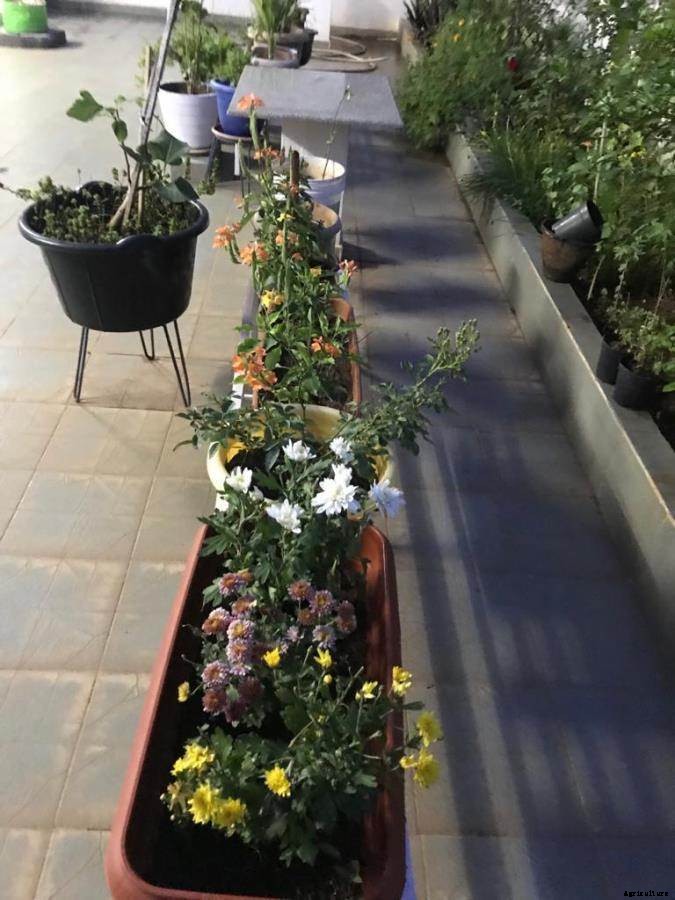
Waterproofing – One of the first important things you need to do before setting up your terrace garden is to check your terrace for waterproofing. Buy a thick tarpaulin sheet and cover the ground surface of the terrace if you’re doing it yourself. Also, you can call professionals to help you waterproof your terrace. Carefully check that your foundation is strong enough to hold the weight of the pots. In most cases, if the house is built by professionals with the right proportion of sand and cement, you should have no problems supporting the extra weight. If you don’t like the idea of tarpaulins, and then you can buy pot saucers that will hold extra water that is drained off pots. Either way, make sure you have a good waterproof plan for the terrace.
Decorate Your Terrace Garden – It is time to accessories your garden. Then, you can use pebbles, decorative pots, install small railings. You could also place small statues, lanterns, and colorful pictures which complement the décor. For a more soothing effect, install fairy lights on the terrace.
Having a proper drainage system – Having a proper drainage system before building a terrace garden is very important. The excess water will collect in places and damage roofs without a drainage system. Though, most of the rooftops have water drainage systems installed while it’s built. The purpose of installing a drainage system for the terrace garden is to remove the saturated water as quickly. A proper drainage system must quickly discharge the excess water from the vegetation layer and rooftop into the drainage system.
Go vertical – On a terrace, the space available for gardening is limited and it is a good idea to encourage vertical gardening. This is the reason why a terrace garden lover must use more climbers in the garden. Ficus repens is a good climber that can cover the wall and other attractive creepers. Hanging baskets play a main role in the terrace garden. Various types of baskets containing flowering or foliage plants can be displayed with significant advantage at suitable places.
Start small to get the most out of your rooftop garden. Grow plants that fit into small places like herbs, fruits, vegetables like chillies, or microgreens. This way you will be able to grow a variety of vegetables in a little space.
Grow low-maintenance plants that need little effort like Cherry Tomatoes, Spinach, Chilies, or Fenugreek to enjoy good yield. Planting short-season crops will help you make the most of your space and get the most out of your plants.
Only it takes a one-time investment to build a terrace garden. Then, maintaining the garden and you will need to invest in waterproofing, equipment, containers, and seeds, etc. Once you’re set to plant, you will need no penny. Finally, you will get a constant supply of greens and gives an abundance of satisfaction.
You may also check this: Vegetable Gardening Tips.
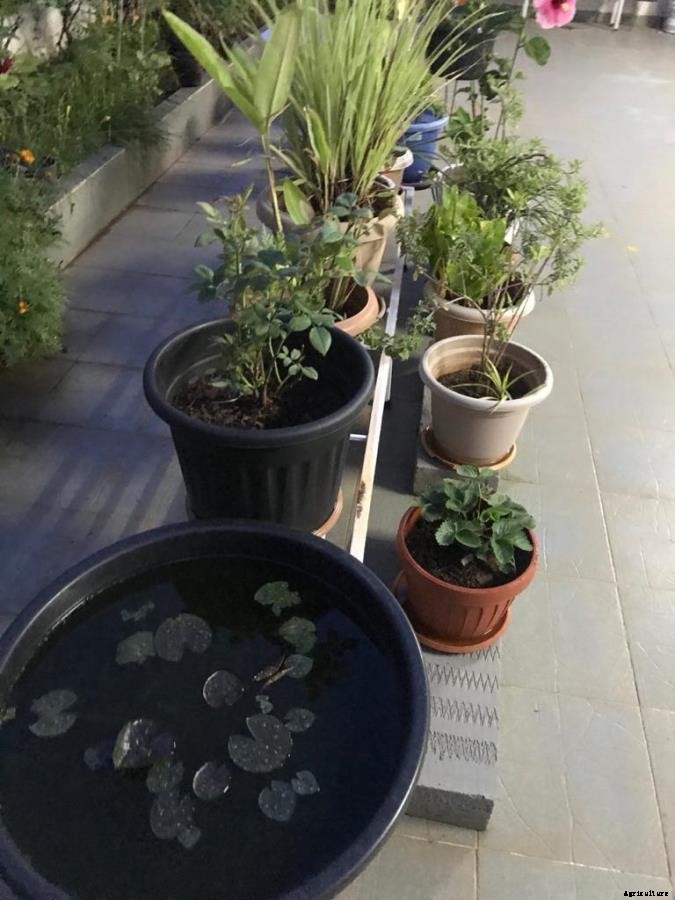
The most popular questions and answers related to terrace gardening are listed here.
It is also called a roof garden. It is a garden kept on a terrace or patio or a garden that has a series of raised beds on a hill. Terrace gardens can make an attractive addition to any landscape, especially when they’re planted with an array of perennials, annuals, or evergreen creeping shrubs.
Terrace gardens could be done in apartments, office premises, storage warehouses, and even set up a few factories.
You may also check this: Starting Terrace Garden From Scratch.
The roof will be used as a terrace of a house and waterproof with appropriate waterproof floor devoid from the leak and bleed for enough waiting.
Waterproofing can be easily done by application of waterproofing polymer coating on a concrete slab. But this coating is done on concrete and once a waterproof Silicone polymer coating is done.
Before started with your terrace garden you can follow some steps;
You can begin greening your terrace with simple steps, and then move on to bigger ideas;
Some important plants you can grow on the terrace are Marigold, Begonias, Pansy, Hydragena, Areca Palm, Mogra Flower, Chinese evergreen, and Jade Plant, etc.
Use hanging lights to give an extra effect to your decorative terrace garden at night. Then, you can add tea light candles to give a warm feeling at night. Get sunny plants like the citrus which grows fast if receive sunlight. A sunny terrace is always the best place to grow your fruit.
The primary advantage of terrace gardens is improved soil erosion control. A secondary benefit of terraces includes the elimination of grass waterways that can be difficult to maintain and reductions in flooding. Other benefits are;
Make your organic manure at home by using kitchen waste for plant growth. Also, learn how to prepare Panchagavya and organic pest repellents for use in your terrace garden.
Annual flowering plants that are suitable for terrace gardens are Antirrhinum, Stocks, Sweet peas, Pansy, Dahlia, Chrysanthemum, Marigold, Alyssum, Phlox, Dianthus and Verbena, and much more.
Almost all buildings can support gardens on the terraces. Grow some green plants on residential apartments, commercial towers, individual houses, and even on factories and godowns, if possible.
Firstly, you have to ensure that your roof is waterproof. You can buy several products for waterproofing your terrace if it isn’t already and render it water-resistant and leakage-free.
Yes, it is safe to grow plants on the roof or terrace. If the conditions are favorable, and you can easily expect a minimum of 6 vegetables per season.
Begin with some simple steps and then let your idea become bigger. Planters or pots are best for terrace gardens. Get a pot from the market or search your home to get any containers and then recycle it. Then, cover the drainage hole at the bottom with stones so that there is space for the water to flow but no soil is discharged.
Usually, 4 to 6 hours of direct sunlight is required for plants at the terrace. Don’t keep plants too close as they will compete for nutrition, water, and sunlight and they may not mature as required.
For growing plants on the terrace, containers of all sizes, shapes, whether of plastic, ceramic, metal, or mud can be used. Also, use coke bottles, plastic boxes, old broken buckets, UV treated grow bags, cement pots, everything can be recycled and used as containers for growing terrace garden plants.
At least you can grow 6 vegetables per season in the terrace garden. One square meter of the area can give 25 to 50 kg of vegetables in a year.
If you plan to start a terrace garden at one go, it will cost approximately Rs 20,000, which will be the investment on seeds, saplings, containers, and the soil bed/manure. If you begin small the terrace garden set-up cost will reduce, invest a little every month, and use recycled containers.
The best Vegetables for your terrace garden are tomatoes, Carrots, Onions, Potato, Radish, Beetroot, Capsicum, and Chilies.
Terrace garden will reduce the overall heat absorption of buildings and insulate the building against heat and cold. It is conducive to regular physical exercise, clean air, and being close to nature. Terrace garden plants increase the amount of oxygen in the air.
You can prepare a potting mixture by adding equal amounts of normal soil, vermicomposting, and sand. One important thing to note is that after rains, all the important nutrients can wash away from the soil.
French Beans, Chillies, Tomatoes, Brinjal, Okra, and Lime are easier to grow in a terrace garden. Also, you can try Cucumber, Ridge Gourd, and Bottle Gourd. Root vegetables like Potatoes, Onion, Radish, Tomatoes, Carrots, Eggplant, Capsicum, and Groundnuts can also be grown but they require a larger area.
To start with, try out just one or two vegetables, and then go in for more vegetables. Tomatoes, Chillies, and Spinach are easy to grow, so start with them. Sometimes you might need to net out the seeds and the saplings as they grow, to keep pesky sparrows and birds from feasting on them.


