
Welcome to Modern Agriculture!

The commonly asked Poultry Questions and Answers are explained in the following content.
Poultry farming is of great importance because it generates income to rural population in the shortest possible time, provides employment to the people of rural areas, needs less capital investment and returns high profits due to increasing demand of poultry products. It can also be highlighted that in the current situation it contributes huge amount to the GNP of the country.
Rearing birds like the chicken, turkeys, geese, swans and emu for their eggs and sometimes meat is poultry farming. To raise these birds for a specific purpose, it is important to provide them sufficient feed, water, shelter, health care and also some other facilities such that they give good products and contribute to income generation. All these activities right from procuring the baby chicken and raising them for commercial purpose carefully is termed as poultry farm management.
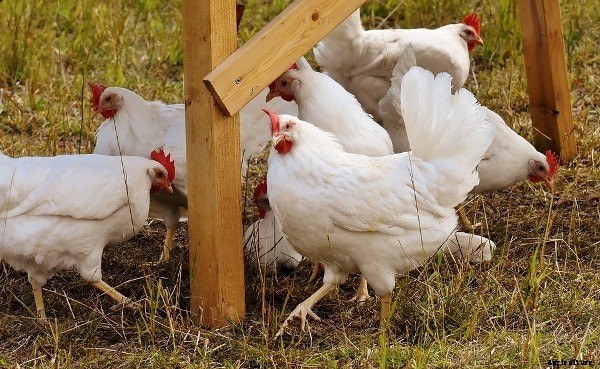
When chicken are raised for commercial egg production then such farms are termed as layer poultry farms. The chickens which start laying eggs in large number within 18-19 weeks of age are called layers in a poultry farm.
There are many things involved in poultry farming. The important aspects being getting the chick, providing shelter, feeding, health management, marketing the products etc. the details could be found at Poultry Farming Guide For Beginners.
The Rhode Island Red is the best laying type hen of American origin. It is known to serve dual purpose i.e. for both eggs and meat. These hens are popular backyard breeds which are tough and lay number of eggs. The average number of eggs laid in one year is 250.
Chicken that is either raised in the backyard or in a poultry farm under good conditions and facilities is expected to live for 7 or 8 years on an average. Again it is important to note that each breed has its own life span and this cannot be generalized.
When chicken begin to lay eggs they are expected to have grown to the stage of maturity and this typically happens between 16 to 24 weeks from a baby chick stage, depending on the breed characteristics.
Chicken do not stop laying eggs with age, but the production of eggs decreases with age. The most common age for good egg production is 7 years after that the frequency and quality of the egg decreases.
There is nothing like inducing growth hormones into the chicken because it is prohibited around the world. If it is found that chicken have grown exceptionally well then it may indicate that either the chicken have been taken care off from day one by feeding them good quality food.
The chicken which are raised for meat are slaughtered after 8 or 12 weeks, when they attain complete maturity and also it is believed that 8-12 weeks old chicken have fresh, tender and juicy meat.
Chicken eat fruits, seeds, grass, flowers, grains, vegetables, bugs and worms. Commercial poultry chicken is fed with corn, legumes, wheat, rye, oats, barley etc.
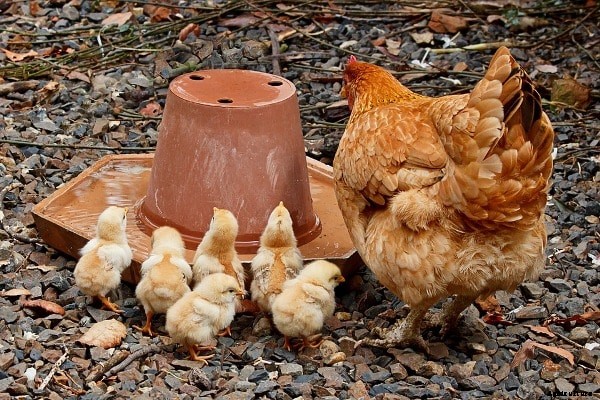
Chicken that is raised in the backyard feed on food scraps such as beans, garlic raw potatoes, onions, citrus fruits etc. Bread can also be given to the chicken but in moderate quantity. Small quantity of cooked meat is sometimes given as feed along with cooked vegetables like carrots, kale, spinach, tomatoes etc.
The feed for broiler and layer chicken are different because they serve different purpose. A 50 kg bag of broiler concentrate is quoted at Rs 2115, 25% of layer concentrate is priced Rs 1520 and 35% of layer concentrate is priced at Rs 1200. These prices are expected to rise by Rs 300- 500 a tonne.
Like every other living organism, there are some exceptions for feeding the chicken. Food that can be harmful and become toxic for the chicken should be avoided. The items which are not recommended as chicken diet are salt, processed food, raw potato peels, avocado skin, rotten food, coffee, chocolates, greasy food and raw meat. Sometimes it is advised not to feed onions, garlic and other strong food because though not very harmful to the chicken, they give undesirable taste to the eggs produced.
Poultry farming returns depend upon many factors and it depends on how many chicken you breed and the type of breed. Broiler chicken and layer chicken have difference in their marketing structure and price. So it is important to note that the return heavily depends on the investment and the number of chicken being raised.
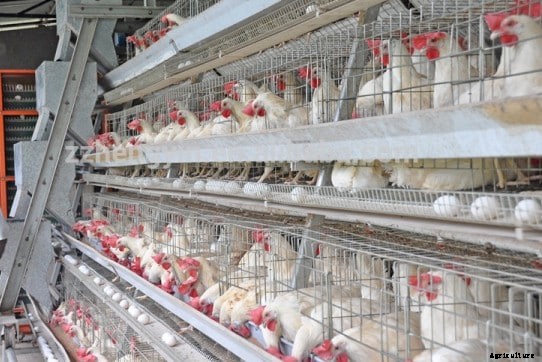
You can read here: Layer Farming Project report.
Depending on the age of the chicken they are available in the market at different prices. A day old baby broiler chick may cost around Rs 16-25. Whereas grown up chicken are available at 65-150 per unit.
Yes, broiler chicken lay eggs but less than the other breeds, approximately 140 eggs per year.
When broiler chicken is raised for commercial purpose then to reach the slaughter weight, it takes about 4 to 7 weeks. It is considered that the weight of broiler chicken at the time of slaughter should be 4-5 kg (minimum).
Broiler chicken is the one which is raised exclusively for meat requirements; therefore it has no specific life span and they can be slaughtered any time after 7 weeks of age.
Broiler chicken need to have good protein content in their diet because they are used for meat purpose. There is broiler feed available in the market but it is important to add some extra protein to the feed such as fish meal, meat meal, meat, milk, liver, dried animal blood etc along with some broken wheat, rice bran, sesame cake, bone powder, oyster shell powder etc. would provide the chicken more vitamins and minerals. The quantity of feed may vary for different broiler chicken age.
The floor of the poultry house should be made of concrete. The roof of the poultry house can be made of concrete, asbestos, tiles, thatched roof etc. Apart from all these iron sheets, grass, palm leaves can be used to cover the roof. The walls can be erected using bricks, sand blocks, iron sheets, wood and mud. Care should be taken such that there are no cracks in the floor of walls otherwise there would be a risk of parasitic infestation.
It is not necessary to sweep the poultry daily when there is a bedding material put for the birds because this absorbs all the droppings.
The bedding that is removed from a poultry farm acts as a fertilizer for farming activities. It has high nutritive value and is used in fish ponds and gardens or crop farms to fertilize the area. Unwanted material is sieved from the bedding and are sometimes used as feed for dairy cows, regenerated into biogas etc.
When the litter material is removed from the farm, it has harmful germs which can be dangerous to both animals and human beings. So, it has to be heaped and fermented by covering it with a polythene sheet such that high temperature inside the heap kills the germs. Then it becomes useful for various purposes.
Overcrowding the chicken shed should be avoided. The minimum space required by each chicken is 2-3 sq ft. The temperature of the farm location is the factor which determines the space requirements of each chicken and may also vary for different breeds. So if the count of birds is known then the space has to be planned accordingly. It is also estimated that layer chicken require little more space than broiler chicken. Too many chickens at a small place may cause stress, cannibalism, and sometimes even death.
No, it is not advisable to keep the healthy and sick chicken together. A separate space is created for the sick chicken and it is known as quarantine. Arrangement can also be made to keep the sick chicken out of the shed in a small temporary unit. Isolation is highly important to arrest the spread of diseases to other chicken.
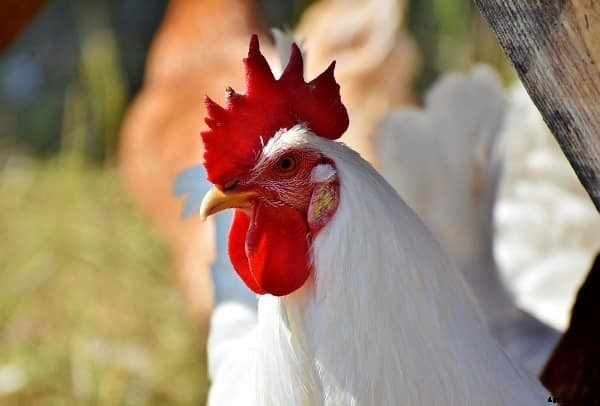
Perch is any object like a pole or branch inside the poultry shed for the chicken to rest. Generally broiler chickens do not need perches, but layer chicken which stay in the shed for longer period of time need perches.
There could be possibility of different rooms in the same poultry shed and then is it advisible to keep chicken in the same place. The three stages of chicken are the chicks, growers and mature birds. Each category has different requirements for space and feed, so putting them in the same room can be unmanageable.
Putting water outside the shed will attract birds with several infections and this may harm the chicken. So, even if the chicken scavenges outside, it is always a must to keep water and extra feed in the shed for the chicken such that they do not get contaminated by other external birds.
Following some general rules can keep the poultry farm in good condition and the chicken healthy.
Fumigation is the process of slow and continuous release of hot gas of formaldehyde for 3 hours. The agent used for fumigation is a strong fungicide and kills bacteria and virus in the shed. Therefore, it is not advisable to fumigate the chicken houses when the chickens are inside it. They should be moved out and then the house is to be fumigated otherwise there is risk of the chicken being killed out of suffocation.
Generally it is known that thick plastic curtains are avoided for poultry farms, instead it is recommended to use old feed bags or tarpaulins for making curtains. The idea of curtain is to have an easy ventilation and air circulation in the shed/house for chicken. So, materials which are dark and thick are not preferable.
The organic label on the chicken does not imply that they are safer or more nutritious rather it defines the conditions in which the chicken has been raised. The organic seal is given to the chicken only if it has not been administered any antibiotics or hormones, it has been fed with 100% organic food or grains and the chicken has been given a high degree of access to the natural environment.
There are certain tips which can be followed for a healthy poultry farm.
The poultry is found to be attacked by four major types of diseases, they are;
This disease occurs due to a parasitic organism, which attaches itself to the intestinal lining of the chicken. The tissue of the gut gets damaged and causes bleeding. The young chickens are more prone to this disease. This coccidiosis is present in all the chicken and it develops when an unsporulated oocyst passes through the droppings, becomes infectious and is consumed by the chickens either through water or food. The symptoms of the disease can be:
The infection can be controlled by
It is a viral neoplastic disease caused by the alphaherpesvirus in the chicken. Symptoms of lesions after one or two weeks of infection are observed and this spreads through dander from the feather follicles and transmits by inhalation.
The other symptoms are:
The symptoms are:
Absolutely NO, a chicken cannot vomit like humans because its system is not designed to throw the contents of the upset stomach. There could be a possibility of fluids from the chicken beak, but it is important to note that such liquids indicate that something else is wrong with the chicken such as a sour crop.
The chicken that feed on bacteria lactobacillus and herbs such as palm juice, saffron, honey, ginger, turmeric, brotowali etc are called probiotic chicken. It is considered that they have lower fat content and higher protein content than the normal chicken. As they consume good food it is believed that the chicken also tastes good.
Sour crop is caused by Candida albicans and is categorised as a yeast infection. The following steps can be taken to prevent the infection:
Blockage in the food pipe of the chicken due to the consumption of long fibrous grasses, strings, screws, pine shavings etc. when this happens the crop of the chicken is firm to touch and the symptoms are similar to sour crop.
Sour crop is a digestive disorder of the chicken and is not contagious, but if untreated can become infectious and then there is a risk of infection spreading to other healthy chicken in the farm.
Chicken do not have teeth to chew or break the food they eat. The feed is swallowed and passes on to the stomach and gizzard. The chicken eats small stones called grits which in the gizzard help the chicken to grind and digest the food. Granite and cherry stone are possible recommended grits.
The common way of worming chicken is with flubenvet for every 3 to 6 months. It is also important to clean the floor after chicken droppings to prevent the growth of worm eggs.
There is a big list of plants and other materials which are not suitable for chicken feed. They are:
The cost of each chicken may depend on the breed you are trying to purchase, but in general the average price of a poultry chicken ranges from 80-180/ kg. The prices may vary according to the location of the market.
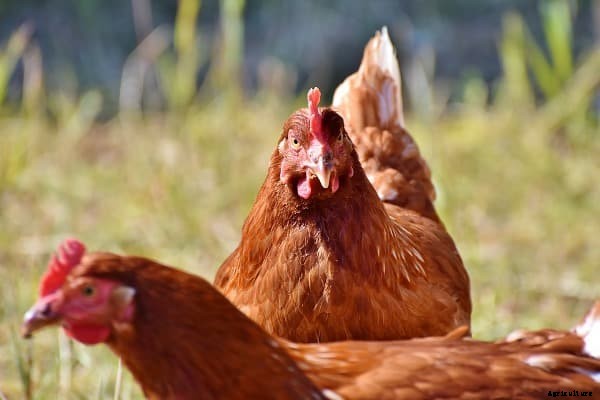
Poultry and people share the following list of diseases:
Chicken are free-ranging birds and keeping them in the house can make them uncomfortable and disturb their natural behaviour. It is advisible to raise them in your backyard but with good space. Also chicken in the house can be a risk of health for the people in the house.
It is a bacterium that develops from the rat and rodent droppings. Generally this happens at dirty places in a commercial poultry farm. All chicken do not have salmonella, but if one chicken is affected then it passes to the other chicken like cold or flu. If the mother chicken is ill with salmonella then the hatched chicks get ill with salmonella.
It is a bacterial infection and can attack both chicken and human beings. Yes, holding chicken may transfer bacteria to your hands and probably cause you infection, but it is advisible to properly wash your hands and feet after finishing the farm activities so that the spread of infection is checked.
Hens are expected to lay one egg every day with some exceptional days. Every breed has its own laying frequency and count. So it is important to check the breeds for their egg producing capacity so as to understand the pattern.
The minimum time period for the first egg is six months. The chick takes 6 months to grow and produce its first egg and this is comparatively very small. As the chicken grow the size and frequency of laying increases depending on the breed.
When the daylight decreases, it is an indication for the chicken to shed their feathers and repair and restore their body. So, this is the time when they start molting and stop laying eggs. Pullets do not stop laying eggs in winter. So there is an exception on breeds as well because some continue to lay eggs in winter also.
When starting a farm it is highly important to make the right choice in selecting the breeds because economically if the chicken does not lay eggs in the winter then there could be not much profit in the business. The following steps can be used as tips for better winter production.
The chicken can lay egg anytime during the day, but the ovulation for the next egg happens one hour after laying an egg. So the next egg could be expected to be laid after 26 hours. Light is an important factor for producing eggs. It is believed that a hen requires 14 hours of light exposure to produce eggs.
Molting is a condition when the chicken loses their feathers and re-grows them. Molting generally happens once in a year for grown up chicken. This is a typical time (around 8-12 weeks) when the chicken do not lay eggs, but build their nutrient reserves. So feeding them proper diet is important.
Roost is a place off the ground where chicken rest and sleep. The width of the roost area should be minimum 2 inches and 2 feet above the ground. It should also be 18 inches away from the nearest parallel wall. If there is less space in the farm then a stair step arrangement with 12 inches vertical and horizontal gap can be created.
The normal recommended count is 1 rooster for 10 hens, but if the flock of birds is large then there can be more than 1 rooster in the farm. Occasionally it is also observed that 1 rooster is maintained for every 2 or 5 hens.
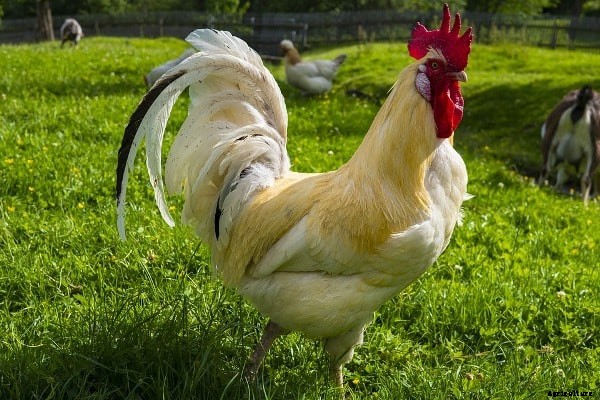
It is estimated that a laying hen needs 4 pounds of quality feed to produce 1 dozen eggs of which protein content should be 16 to 18 percent. For the broiler type chicken the feed requirement is 2 pounds to develop 1 pound of body flesh. The broiler chicken develops 6 pounds weight in 10 weeks.
Farm fresh eggs price changes according to the demand in the market in India. On an average it can range anywhere between Rs 6 to Rs 9 an egg. It is observed that the cost of eggs in the urban area is higher than in the rural areas.
Both coloured eggs invariably have the same nutrition content, but the only difference is in their colour, which is attributed to its genetic quality. Chicken with white feathers laid white eggs and red ear- lobed chicken laid brown eggs. Similarly the eastern chicken breed lays eggs with blue shells. The yolk colour and content determine the nutrition level, which extremely depends on the feed of the chicken.
Eggs consumed fresh is always good because the longer you store them, the higher is the risk of salmonella bacteria spread. Unrefrigerated egg can be stored for 7 to 10 days at the maximum and 30 days when refrigerated. One simple rule to follow is an egg kept at room temperature for one day is equal to keeping it in refrigerator for one week. So, when eggs are purchased it should be noted that they are already 1-2 weeks old and consuming them within a day or two is good option instead of storing them.
Yes, there is one scheme promoted by the National Bank for Agriculture and Rural Development known as ‘The poultry Venture Capital Fund Scheme’ to encourage the poultry farming practice in the country. Anybody willing to start a poultry business can opt for this loan and subsidy scheme, details of which can be obtained on the NABARD website.


