
Welcome to Modern Agriculture!

Want to know about the latest techniques of farming? Here, I have brought an article about the latest techniques used for farming i.e. Polyhouse farming.
Polyhouse farming is slowly but steadily gaining popularity in the Republic of India. Many farmers are not known with this concept but as they are coming to know, majority of the farmers are accepting the concept.
Farmers can generate high profits by using Polyhouse farming.
And also here I Share some precious information about polyhouse farming, Such as
What is Polyhouse Farming?
Polyhouse or a greenhouse could be a house or a structured product of clear material like glass or synthetic resin wherever the plants grow and develop underneath controlled weather conditions. The scale of structure varies from little shacks to big-size buildings as per the requirement.
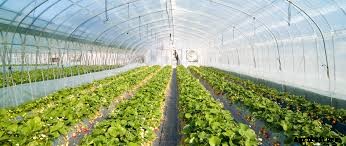
Above all, a greenhouse is a glass house whose interiors become heated once exposed to sunbeams because the house stops the greenhouse emission to go outside. thus even if it’s cold outside, the temperature within is survival friendly and heated for the plants.
What is the Difference between Greenhouse and Polyhouse?
Polyhouse can be called as a variety of greenhouse or we are able to say that it’s a smaller version of the greenhouse, wherever synthetic resin is employed to cover.
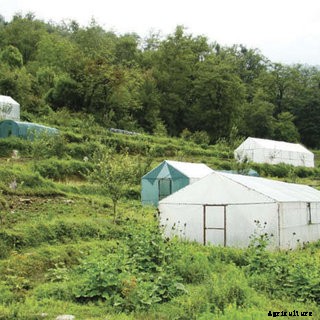
In developing countries like the Republic of India, Polyhouse farming could be a standard greenhouse technology because of its low price of construction and straightforward maintenance.
Polyhouse is cheaper as compared to greenhouse however greenhouse is more long-lasting than Polyhouse.
Crops are grown in Polyhouse:
Fruits like Papaya, Strawberry, etc. are grown.
Vegetables like Cabbage, Bitter Gourd, Capsicum, Radish, Cauliflower, Chili, Coriander, Onion, Spinach, Tomato, etc. are grown
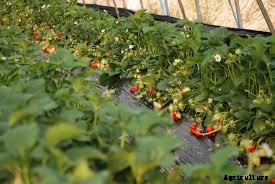
Also, Flowers like Carnation, Gerbera, Marigold, Orchid, and Rose are also grown in Polyhouse
Greenhouse supported value and quality:
• Low-Cost Greenhouse/ Bamboo Greenhouse
• As the name suggests, the low-value structure is made of domestically offered materials like bamboo. The sunlight intensity is controlled by nets. For the covering typically synthetic resin ultraviolet illumination films area unit used.
Straightforward techniques like sidewall gap or closing area unit used for dominant temperature throughout summer and winter. They function as sensible shelters for rain. this kind of structure doesn’t have advanced engineering facilities.
it’s chiefly utilized in places with cold climate. the value of constructing this kind of greenhouse varies between ₹ 300 to 500 per square meter. Marginal farmers with little landholdings will take the advantages of greenhouse farming to exploit the low-priced bamboo greenhouse.
• Semi-Automatic Greenhouse
• Some greenhouses are controlled with minimum investment conditions. Pipes manufactured from galvanized iron are used for the development and therefore the cover is controlled by the assistance of screws.
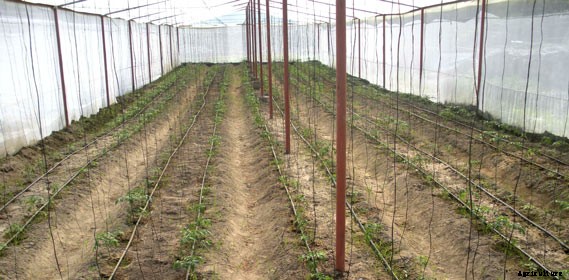
it’s lodged firmly within the ground to resist the wind. There are exhaust fans with thermostat system to regulate the temperature. There also are cooling pads and arrangements for misting to keep up wetness levels.
Such structures are appropriate for areas with dry and composite climate. the value of constructing this kind of greenhouse varies between INR 800 to 1100 per square meter. This kind is preferred greenhouse farming in Republic of India.
• High-End Greenhouse
• These greenhouse structures are put in with devices to regulate temperature wet, humidity, and alternative environmental parameters. The value of constructing this kind of greenhouse is around INR 2000 to 3500 per square meter.
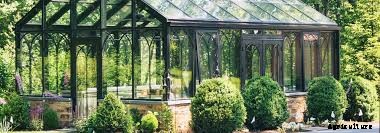
This kind of greenhouse is employed for terribly high-value crops and agriculture in industrial greenhouse farming.
Types of Polyhouse Based on the environmental system:
Based on the environmental system, Polyhouse is of 2 types:
• Naturally ventilated Polyhouse – this sort of Polyhouse or greenhouse doesn’t have any environmental system apart from sufficient ventilation and foggier system to avoid wasting the crops from inclemency conditions and natural pests and diseases.
• Environmental controlled Polyhouse – they’re made primarily to increase the growing amount of crops or to extend the off-season yield by dominant the sunshine, temperature, humidity, etc.
Site choice for Greenhouse Construction:
In its early years, the aim of a greenhouse was to grow species that need heat in colder regions. it absolutely was easier to regulate environmental condition factors like temperature and wet level within a greenhouse and shield the plants from the tough external cold winds.
In India, the subsequent points affect the choice of place to line up a poly greenhouse:
• Waterlogging:
The site should be a well-drained space and not an area that has water work problems. Water work will cause potential hurt to the crops particularly in areas with serious downfall and floods.
• Pollution:
The greenhouse should not be designed close to industrial units. this is often to guard the crops against doable pollution effects.
• Accessibility:
Although it mustn’t be placed terribly close to the roads, yet, they have to be simply accessible through varied modes of transport.
Polyhouse Based on Environmental Control:
• Naturally ventilated Polyhouse – The structures have smart ventilation systems to forestall basic weather and natural harm. However, they are doing not have any further provisions to manage the surroundings in Polyhouse farming.
• Environmentally Controlled Polyhouse – this kind of greenhouse is largely made for off-season production. Factors like lightweight, temperature, carbonic acid gas levels, humidity, etc. square measure controlled.
What would be the Yield?
The yield of the crops depends on the variety, diseases control organic inputs, soil quality, irrigation, and other Polyhouse management services.
Polyhouse farming is farming with fully controlled conditions i.e. temperature, moisture, humidity, water, fertilizer, etc. If everything goes well, 6 to 7 lakhs profit can be earned in a year on 1 acre of land.
Conclusion:
It has been calculated that the yield in Polyhouse or greenhouse farming is achieved at a better level – say, 4 to 8 times as compared to weary open field farming.
Therefore, farmers should think about putting in a Polyhouse instead of simply acting on open fields.


