Local laws On Raising Chickens In Virginia
Suppose you are planning to keep chickens in Virginia. In that case, it’s important to note the rules and regulations regarding raising a flock in the particular area or city you reside in. By knowing this basic information, you will be able to avoid the extra hassle and taxing processes that could have been avoided in the first place.
Here are the cities and areas that allow for flock raising and no limit on the number of chickens.
- Alexandria
- Arlington – Roosters are also allowed in Arlington.
- Ashburn – Roosters are allowed in Ashburn.
- Blacksburg – Roosters are allowed in Blacksburg.
- Botetourt County – Roosters are also permitted in Botetourt county.
- Charlottesville – Roosters are also permitted in Charlottesville, and a permit is also required.
- Chesapeake
- Dayton
- Glen Allen – In Glen Allen, roosters were also allowed.
- Henrico County – Roosters are also allowed in Henrico County.
- Loudoun County – Loudoun County does not limit how many chickens, but you are required to have a permit.
- Lynchburg – Roosters are allowed at Lynchburg too.
- Norfolk – No limit in number, but you are required to have a permit.
- Oakton – Roosters are allowed at Oakton.
- Reston – Roosters are allowed at Reston too.
- Spotsylvania
- Troutville – No limit in number, and roosters are allowed too.
- Virginia Beach
- Warrenton – Roosters are allowed in Warrenton too.

In Virginia, there are cities and places where they limit the number of chickens raised too. Here are the remaining areas where chickens are allowed but on a limit.
- Falls Church – In Falls Church, the maximum number of ‘any’ animal companion (this includes chicken and any other animal companion there is) is up to seven (7)
- Herndon – Herndon only allows for one (1) hen maximum.
- Petersburg – Petersburg allows a maximum number of 20 chickens. Roosters are allowed too.
- Richmond – Richmond does not allow roosters, but a maximum of four (4) hens is okay.
- Roanoke County – Roanoke County allows for a maximum of six (6) hens.
- Roanoke – Roanoke allows for a maximum number of 10 hens within a specific limited plot size of under 20,000 sq ft (40 in agricultural zones). They also allow for the raising of roosters.
- Vinton – Vinton requires a permit to raise chickens in the area, and they only allow for a maximum of six (6) hens.
Lastly, here are just the two cities or areas where raising chickens is prohibited.
- Christiansburg
- Fredericksburg
Apart from these, there could be additional rules for the individual and specific places in Virginia. It’s good to take note of the zoning rules too. Perhaps visiting a legitimate chicken raising organization area would help.
The Climate in Virginia

Virginia has a humid and sub-tropical climate that secures its warm and pleasant summers, moderate and well-distributed rainfall throughout the year, and mild but crisp winters.
Summers are the standard type of hot within the spaces in Virginia. Chickens are a little bit at risk for dehydration during these times, and so you would need to take extra care of them and monitor their water in their spaces.
Chickens are easily dehydrated, and it’s almost always obvious the way they behave and the way they look, so you would probably know whenever it’s too hot for them. When you feel like they need to freshen up, a summer treat is always welcome.
This is where juicy fruits and smoothies can join the picture. It’s always good to supply your chickens with ample amounts of water and food, especially during summers. Apart from this, giving them summer-fitted treats now and then is very much welcome. There’s not much alarm on hotter temperatures in Virginia as temperatures during summers only seldom exceed 90°F (32°C).
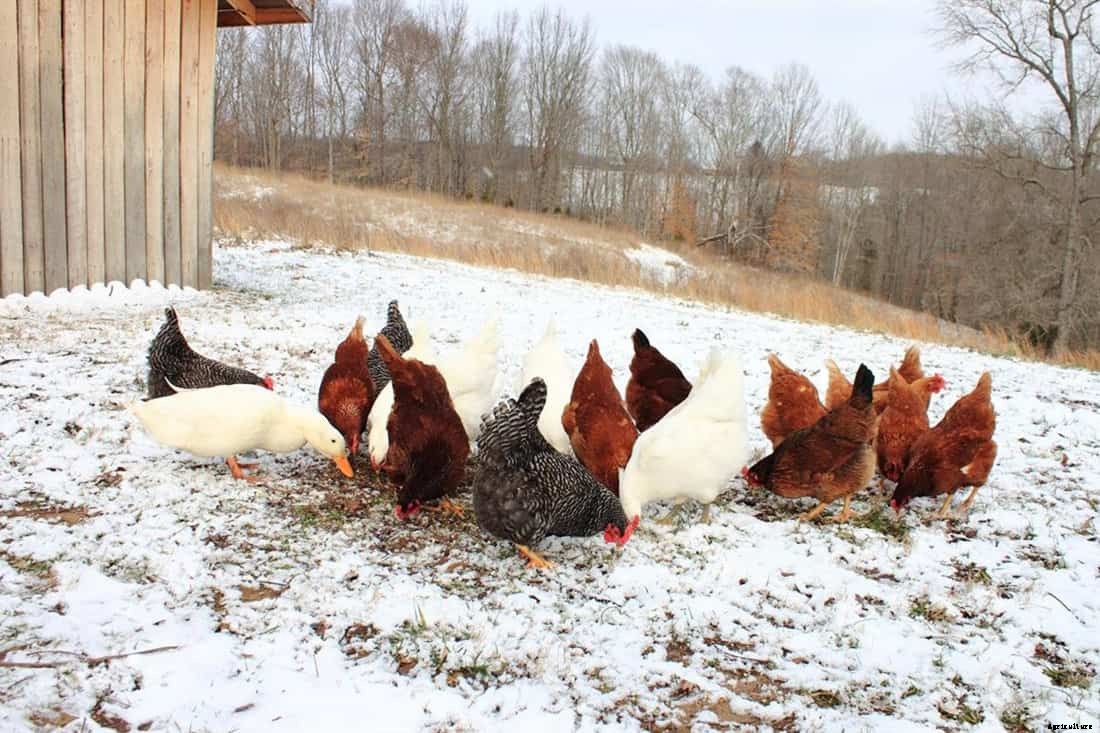
Winters can be a challenging time for your chickens. However, feeding them the suitable types of food is an excellent step as the nutrients help with their feather growth which is one of the things that help them cope with the cold.
On the other hand, cold, hardy chicken breeds are reasonably good at withstanding the cold. These breeds include Australorp, Buckeye, Delaware, Dominique, Orpington, Plymouth Rock, Rhode Island Red, Welsummer, and Wyandotte. However, even though they are cold, hardy chicken breeds, it’s also good to take extra care of your chickens during the colder temperatures.
Here are some tips on how to help your chicken cope during winter or the cooler days.
- It’s good to give them a sunroom. This does not necessarily equate to creating a brand new room for them to bask in the sun. This just means that you can provide a space for them to get sunlight. It can be made up of transparent material. This way, you can protect them from rain and snow while allowing them to get sunlight as well.
- Protect them against frostbite. Chicken breeds with larger combs and wattles are more susceptible to frostbite. With this information, you can apply petroleum jelly on their combs and wattles to help in avoiding frostbites.
- Your chickens should have their space where they can roost. This is their pattern of behavior where they get together and fluff up their feathers to keep themselves warm. You should build a slightly elevated space of at least two feet off the ground. This space should be enough to make them feel safer in their area. This way, they can choose to be out of contact with the cold ground.
- Minimized drafts in their space. Make sure to close large open spaces during the rest of the seasons while maintaining proper and ample ventilation for your chickens. How would you retain ventilation while having to close up the substantial air entrances? Make sure to install an appropriate ventilation system for your chickens.
Summary
Raising chickens can be challenging, but indeed, it is worth it and fun. In the journey of being a flock owner, there may be a couple of things to remember and take note of. The journey is filled with seemingly unending processes, and one of these is finding a reliable chicken hatchery in your area. The six best chicken hatcheries in Virginia can give you a head start.