Welcome to Modern Agriculture!

Wednesday, 2 February 2022
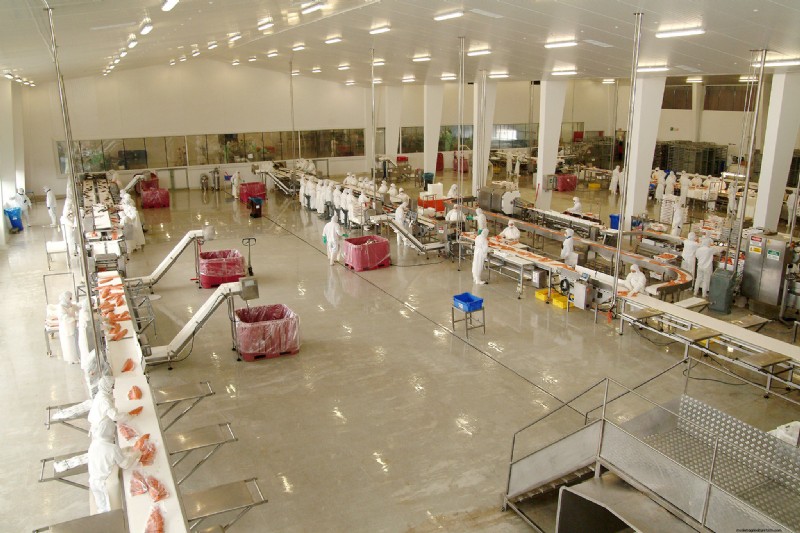 Note: Each step in the seafood production chain has its importance, but they work together to create the best quality products for consumers. Throughout 2022, GSA’s #SeafoodWithStandards campaign will highlight each stop along the production chain to pull back the curtain and explain what happens there. We’re starting with the processing plant, as that’s the stop that both wild and farmed seafood go through.
Seafood processing plants, also known as plants or processors, are facilities in which a range of procedures are done to prepare wild-caught and/or farmed seafood for eventual retail and consumption.
As seafood is highly perishable, special care is needed to preserve it after harvesting – this is where plants come in. Some facilities have both seafood farms and plants connected, some are onboard fishing vessels, and some plants are standalone.
As there is huge variety in species of seafood consumed worldwide, there is no uniform procedure for processing. However, there is a general flow of product that happens at most processing plants, with the ultimate goal being to preserve the shelf life of the seafood.
Steps of production at seafood processing plants:
Arguably the most important aspect of processing is the hygiene, handling, and food safety controls in place.
Without seafood processing plants, the shelf lives of seafood products would be much shorter. Additionally, plants are the step in the seafood production chain which gives the product a form that is appealing to the consumer (for example, skinning and deheading fish).
Plants also help reduce food loss and food waste. Naturally, there are a lot of by-products in seafood processing (bones, shells, heads, etc.), and processing plants work to minimize the amount of waste in the production chain. These by-products can be used in animal feed ingredients (fishmeal and fish oil), biofuel and biogas, pharmaceuticals (omega-3 oils), and fertilizer. Using by-products from already processed seafood products helps reduce the pressure on fisheries resources.
 Third-party certification programs that have standards for processing plants ensure that responsible practices are being used concerning the workers, the animals, and the environment. As part of GSA, Best Aquaculture Practices (BAP) ensures aquaculture is performed responsibly through its third-party certification program. BAP is the only seafood-specific certification program that certifies every step in the production chain (other programs only certify certain stops along the chain). Best Seafood Practices (BSP) is GSA’s wild seafood program, ensuring responsible practices through the wild seafood supply chain and that wild seafood has been harvested and processed in an ethical manner. BSP is the world’s only third-party certification program capable of linking certified fisheries to certified vessels and processing plants.
As part of both the BAP and BSP programs, processing plants can get certified to GSA’s Seafood Processing Standard (SPS). SPS is the only seafood-specific processing plant standard and it is compliant with the Global Food Safety Initiative (GFSI).

The SPS upholds the four pillars of responsible seafood: environmental responsibility, social accountability, animal health and welfare, and food safety. Through that lens, the standard provides clarity on the outsourcing of processing, environmental monitoring, food-product testing, and food safety as it pertains to canning, thermal processing, and other specialty processing methods. This standard also strengthens employee rights and protection and is a vital portion of the supply chain.
 Food safety refers to the handling, preparing, and storing of food in a way that reduces the risk of people getting sick. With any food production, there are always food safety hazards to consider. SPS aims to mitigate these hazards as much as possible. Examples of potential hazards are chemical contaminants and food-borne pathogens.
Some of the food safety requirements include:
Learn more about food safety and seafood:
Is Farmed Seafood Safe to Eat?
Four Facts about Seafood Food-Safety Record
 The social accountability requirements in SPS ensure producers are following best practices with regard to human rights, labor laws, and employee health and safety.
The social accountability requirements in SPS include:
GSA also offers an enhanced social accountability audit that offers a more in-depth review of the standard clauses and includes the addition of a specially trained social accountability auditor to accompany the lead auditor.
Learn More about Social Accountability and Aquaculture
 The environmental responsibility pillar ensures processors are using best practices that help protect the environment.
The environmental responsibility requirements in SPS include:
Learn More about Environmental Responsibility and Aquaculture
 The animal health and welfare pillar in SPS applies to farm-raised species only. The animal health and welfare requirements include:
Learn more about how BAP standards address Animal Health and Welfare
View the full What happens at a seafood processing plant? infographic.