
Welcome to Modern Agriculture!

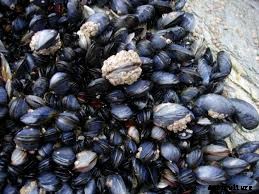
Bivalve molluscs or oyster farming have good economic value, price and job creation. They offer a fish farmer another source of income. Much like oysters, molluscs is loaded with protein used as ornaments or in industrial products. Cultivation is possible in communities close to coastal areas.
Top Producers
Top producers of molluscs or oyster in the world are France, Philippines, Spain, USA, Holland and Japan. Philippines uses different culture methods while Spain and japan specialize in raft culture.
Things to Consider
Things to consider in Bivalve Molluscs culture are site selection, breeding stock. Others include moderate tidal currents, site protection from waves, flooding or strong winds.
More are proper elimination of waste, good distribution of phytoplankton, oxygen. Make sure the site is free from industrial pollutants, sewage and test the salinity level, water temperature. A farmer needs to decide on culture method.
Sewage-Fed-Fish
Bivalve Molluscs Culture Methods
There are different culture methods to consider. We have the rack culture, raft culture, bottom, and stake or pole culture.
Stake or pole culture
Pole culture are family oriented small business enterprise. To operate a 15,000 poles harvest the entrepreneur leases sea space from government. This process guarantees marketable size of 7cm within 17 months and 5 metric tons on one acre each year.
Pole culture requires the farmer to drive an oak pole to bottom of sea bed. Choose a pole 20cm, 3m long with ½–2 m exposed above ground. To minimize predation from sea crabs or starfish wrap bottom 30cm exposed region with plastic.
Leave 3 m distance between rows and arrange them 1m apart. Then wrap seed mussels around oak poles to create a mussel bed. Rapid growth of several layers of thick mussels occur therefor farmer needs to thin the stock.
The smaller specimen are gathered and placed in plastic net 15cm diameter, 2m long. Wrap the harvested specimens in flexible net tubes on bare poles to encourage another growth process.
Raft Culture
Spanish rafting culture
It takes 12 months for mussels cultivate with this method to reach 10cm market size. Raft culture uses different materials in the construct before gathering the mussels. They use Styrofoam, fiberglass, timber. Others are concrete floats, wooden framework, ropes, water-soluble rayon tube netting.
The raft is anchored on sides with large concrete mooring and raft size is 23 x 23 m 9m long with 700 ropes. Then gather natural seed mussels 7mm from sea bed and place in tube netting. Wrap netting around ropes while mussel attach themselves to ropes and suspended from raft while net disintegrates with time.
To harvest lower a large wire mesh basket under the ropes and hoist them out. Shake to remove mussels remove small sized ones and gather for transplanting. Japanese farmers use two systems to produce mussels. First method involves growing oyster seeds in racks placed in shallow waters for 12 months.
Then they are transferred to raft for an additional 12 months. The second method involves gathering then transferring oyster spats till they attain marketable size. Japanese raft uses tarred wooden floats, Styrofoam cylinder, hollow concrete drums, and cedar wood poles. Anchor end and tie raft together 10m apart. The average marketable size of oyster accepted in Japanese market is 8 x 16 cm.
Bottom and Rack Culture
Bottom culture is a simple way to farm oysters. The collector scatters different material at bottom of non-shifting, sandy or rocky waterbed to encourage spatfal to occur. Common material used are different kinds of hard objects, stones, gravel, cans, and oyster shells.
The main disadvantage of this system includes uncertainty of yield sustainability to fast underwater currents. Rack culture involves fixing structures on seabed. They use horizontal poles, rens, strings, trap, and galvanized wire.
Cost Considerations
Cost considerations are fixed costs, production costs and returns. Production costs covers operational costs, depreciation. Fixed costs involves putting up a shed, dugout, and tools.
Stake and stake preparation include number of bamboo, raft rental, staking charges, towing charges. Factor production costs like wages of caretaker, sacks and harvesting charges. Depreciation includes stakes, bolo, banca, shed.
Fixed Costs
Stake and stake preparation
Production costs
Depreciation
Returns are based on amount invested, sales of produce, gross income and net income. Miscellaneous are municipal permit, repairs, total production cost other expenses.
How to Start Coastal Bivalve Culture
Types of animals in Coastal Bivalve Culture
What type of marine are grown in Coastal Bivalve Culture. The system accommodates oysters, mussels, cockles, clams.
Environmental Impact and Challenges
A major challenge is consumer resistance and some public health risks. Others include rough weather losses, seed shortage and industrial pollution. More include red tides, microbial diseases, and high possibility of failure market competition. Environmental impact are social disruption, export produce market competition.


