
Welcome to Modern Agriculture!

Seaweed is used for rice, sushi and cropped from sea before sunrise. The quality is affected in sun so the weed is cropped early before sunlight. Farmers brave open sea, cold winter winds to maintain crop quality, freshness. Grown on long lines cultivation season starts autumn to spring.
High demand of seaweed have provided good economic value and societal impact on local communities. Annual income is estimated 5 times more for seaweed farmers in comparison with agriculturists.
In some countries where the demand is high there is a huge local market and export opportunities. In the Philippines it is estimated that 40,000 people make a living farming the weed.
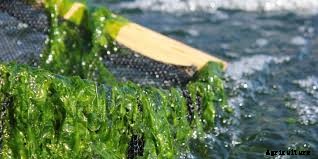
Algaculture- Seaweed Cultivation
Seaweed farming is a form of aquaculture sub grouped under algaculture. Other industries in algaculture are micrologal bacterial flocks, seaweed, and raceway pond. Others are Giant kelp farming, Photo bioreactor, microalgae.
Top Producers
Top producers of seaweed is Japan with annual production value exceeding US $2 billion. Other producers are Philippines, United States of America and Spain. More include Korea, China, UK and Canada.
Seaweed Cultivation in Japan
Japan is the top consumer and producer of seaweed. History goes back early 1670 with an estimated consumption of 9 billion pieces. Cultivation of ‘Undaria pinnatifida’ nutritious farming is standardized with a range from dried to salted seaweed.
Environmental impact
Some farming practiced by the farmers have adverse effect both negatively and positively on the ecology. Beneficial effects include preservation of coral reefs increase shellfish and local fish species. However fishing practice of cutting mangroves depletes mangrove biodiversity while eelgrass removal affects water quality.
Equipment
Equipment used in the process are longlines, subsurface lines, headrope lines , grit system hook and pole. Others are blanching bath, plastic crates, salting drum, spiral dryer, staged machine, concrete anchor, seawater baths, net bags, storage freezer
Cultivation and Harvesting
Most popular cultivated species are Laminaria, Gelidium, Porphyra and Pterocladia and Undaria pinnatifida’. At 1 meter depth low tide sea urchins, seagrass is remove to accommodate reef flats. They tie seedlings to 180 m monofilament lines between mangrove poles/stakes.
In deeper water 7 meters depth cultivation involves floating lines fixed to bottom. To harvest long of surface mounted lines are cropped. Whilst harvesting the farmer separates sporophyll, frond and stripe.
Processing is done on the pier close to harvested crop. Processing involves blanching proceeded by seawater baths then lightly pressed and salted. Another round of pressing is done in 24 hours before frozen. Mechanized operation involve staged machine to remove grit material while drying is done with spiral dryers at 80-120 degrees centigrade.
Bivalve Culture
Sewage-fed fish culture


