
Welcome to Modern Agriculture!

Introduction to Organic Cocoa Production
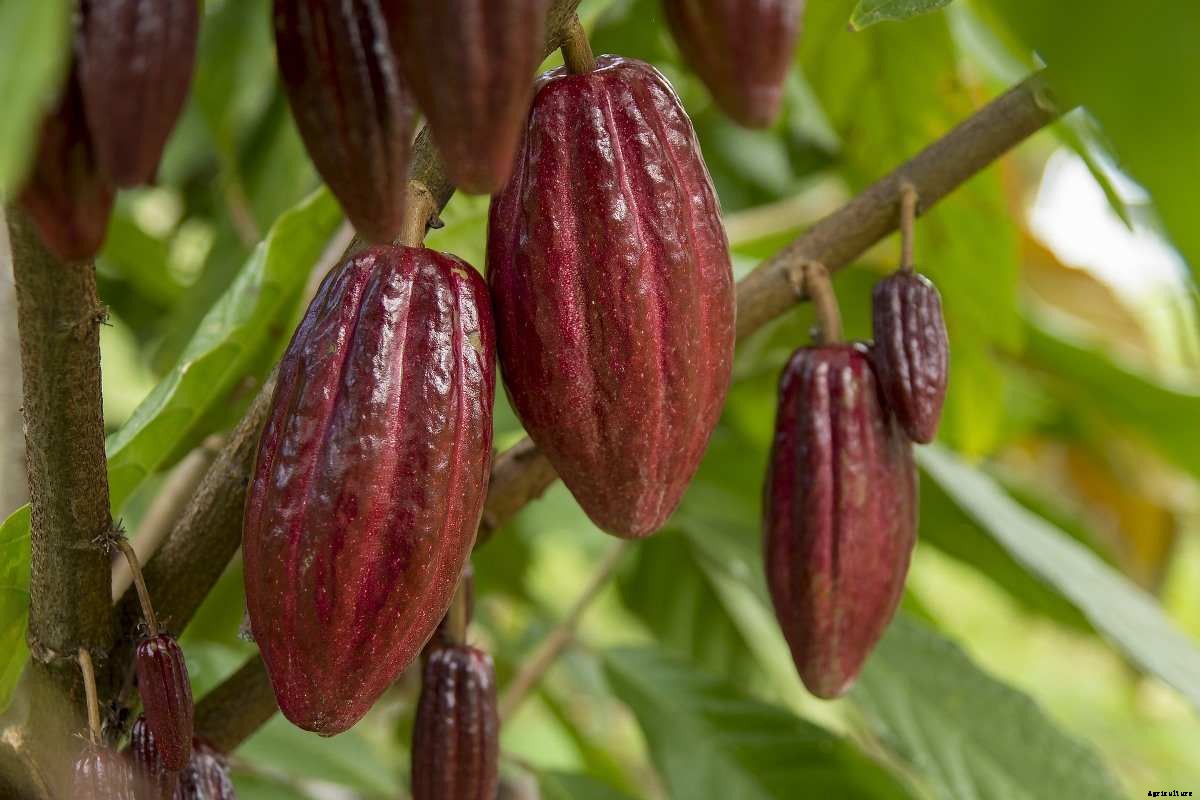
Cocoa is a small tree from the Malvaceae family. The Cocoa tree is also called Theobroma cacao, and Cacao tree. The Cocoa fruit has a similar shape to stunted cucumber, and is 8 to 10 cm thick, around 25 cm long, and weighs 300 to 400 g, even though they vary substantially between varieties. In Cocoa farming, it is critical to have robust, healthy trees by maintaining the best balance of sunlight, air, water, shade, and nutrients. This will help prevent diseases, particularly in the absence of pesticides and chemical fertilizers, which are not part of organic farming systems. In this article we also discuss the below topics;
Cocoa grows well on a wide range of soils but loses soils that allow movement of air and moisture, and root penetration is ideal. It must hold moisture in the soil during the dry season, as Cocoa needs a regular supply of moisture for good growth. Cocoa can be grown in soils having a pH value range from 4.0 and 7.5; it succeeds better in neutral soil.
Certified organic agriculture is the production by agreed-upon standards for organic agricultural practices. These standards include an annual inspection process, and those certify that the organic crop has been produced and handled with no prohibited substances (synthetic paraquat and pyrethroids) or synthetic chemicals. The organic crop must also have been grown on land to avoid the application of these substances for a minimum of 3 years. Each organic agricultural operation must use an “organic plan” agreed upon by both the certifier and the grower. It must detail all parts of the agricultural production of the certified crop. This mainly includes soil management, pest controls, post-harvest techniques, crop rotation, biological inputs, storage, handling, and document tracking.
The soil on Cocoa plantations must be well-drained, deep, and have sufficient water absorbent capacity. The pH-value of soil should be between 4.0 and 7.5, whereby care must be taken that sufficient organic material is available. Cocoa can be grown in coconut and areca nut gardens as a mixed crop. It can also be planted in forest lands by the inning and regulating the shade suitably.
Cocoa is a crop of humid tropics needing well-distributed rainfall. At least 90 to 100mm rainfall per month with annual precipitation of 1500 to 2000mm is ideal. Though, it can also be grown in other regions by supplementing rainfall with irrigation in dry periods. Though, for successful cultivation, the dry months must not exceed 3 to 4 months. Cocoa tolerates a minimum temperature of 15°C and a maximum of 40°C, but a temperature around 25°C is considered as best. Cocoa can be grown in place from sea level up to an elevation.
The soils best suited for Cocoa are mixtures of silt, sand, and clay. Very clayey and very sandy soils are not suitable for Cocoa farming, best soil textures are loamy and sandy (loamy) clayey soils. In the latter soils, the finer particles are frequently aggregated with organic matter or Fe-oxides to form particles about the size of coarse sand. These soils own both desirable characteristics of aeration associated with coarse sand and good drainage, and large moisture capacity associated with clay soils. Organic matter content is thus a significant factor, next to the clay content. Clayey soils are likely to have greater quantities of nutrients as they have a greater ability to hold them
In this system, soil fertility is seen as important to successful production. Working with the natural properties of animals, plants, and the landscape, organic farmers aim to enhance quality in all aspects of the environment and agriculture. Organic agriculture significantly decreases external inputs by avoiding the use of pesticides, chemo-synthetic fertilizers, and pharmaceuticals. In its place, it works with nature to increase both disease resistance and agricultural yields.
It can be planted either at the end of the monsoon (September) in high rainfall areas or at the beginning of the Southwest monsoon (May-June) in low rainfall areas.
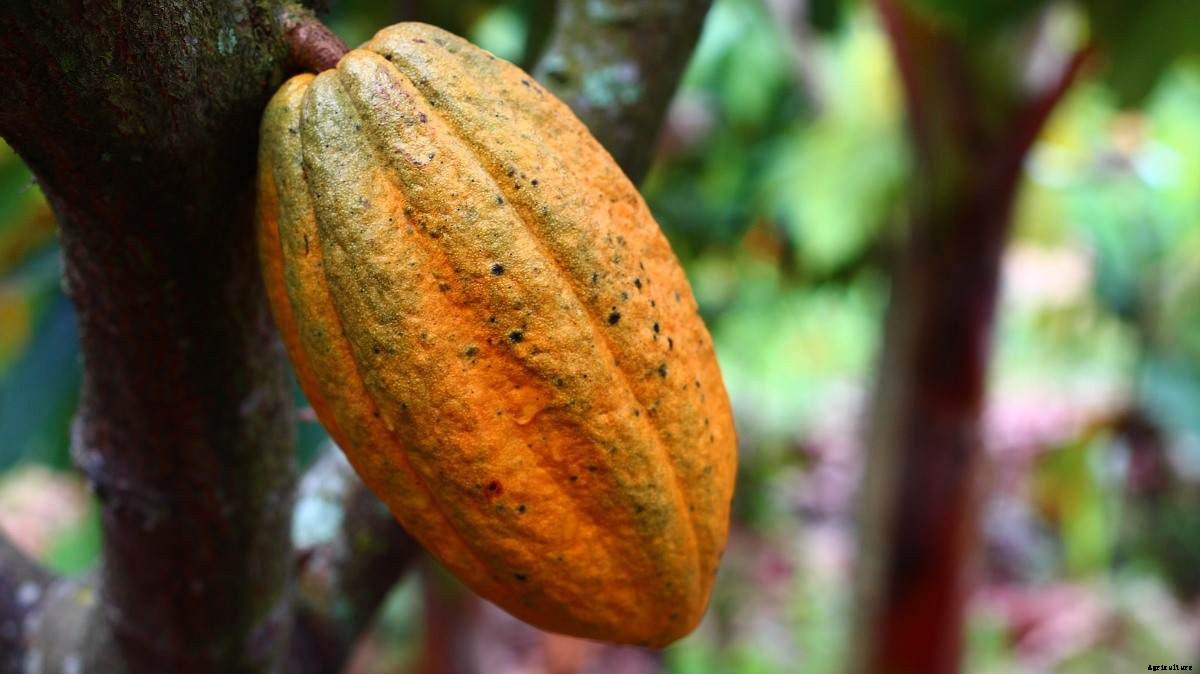
Cocoa can be propagated from vegetatively or seeds. Seed pods may be collected from trees yielding 80 or more pods per year with pod weight 350 to 400g. Before sowing Cocoa seeds, seeds are rubbed with wood ash or dry sand to remove the mucilage. The beans are planted either in plastic bags (25 x 15cm size) or raised beds, with their pointed end upwards. If you are trying to sow in beds, young seedlings are generally transplanted into polythene bags after around 2 weeks of germination. The seedlings are ready for transplantation to the field after they attain a height of 30 cm or around 3 to 4 months.
Cocoa can be also propagated vegetatively through softwood grafting, cuttings, and forkert method of budding, etc., but there are limits at present for implementing vegetative propagation on a commercial scale.


