
Welcome to Modern Agriculture!

Introduction to Organic Papaya Farming
Papaya belongs to the family Caricaceae. Organic Papaya cultivation in India is a profitable and relatively safe agriculture business. Papaya is also known as pawpaw is a delicious fruit rich in vitamin C. Papaya is a tropical fruit and is a highly valuable medicinal ingredient. This fruit is a rich source of antioxidant nutrients, vitamin B, potassium, and magnesium, which are elements that prevent and improve digestive system disorders and heart diseases. Papaya is considered one of the most economically important and also nutritious fruits, being a rich source of antioxidant nutrients like carotenes, vitamin C, and flavonoids; the B vitamins folate; the minerals potassium, magnesium, and fiber. In this article we also discuss the following concepts;
Organic farming is increasingly popular, with a rapidly growing global demand for organic products. Organic farming offers considerable benefits over conventional farming systems particularly for sustainable yield, better quality, and health hazard free produce. Fruits are more vulnerable to contamination with chemicals due to the latter’s residual toxicity. Therefore, organic production of fruits is gaining popularity over that of other crop groups. Papaya tree bears fruits round the year and it responds well to organic systems. In almost all the states, the area under Papaya is increasing, and the organic production system in this crop is economically important.
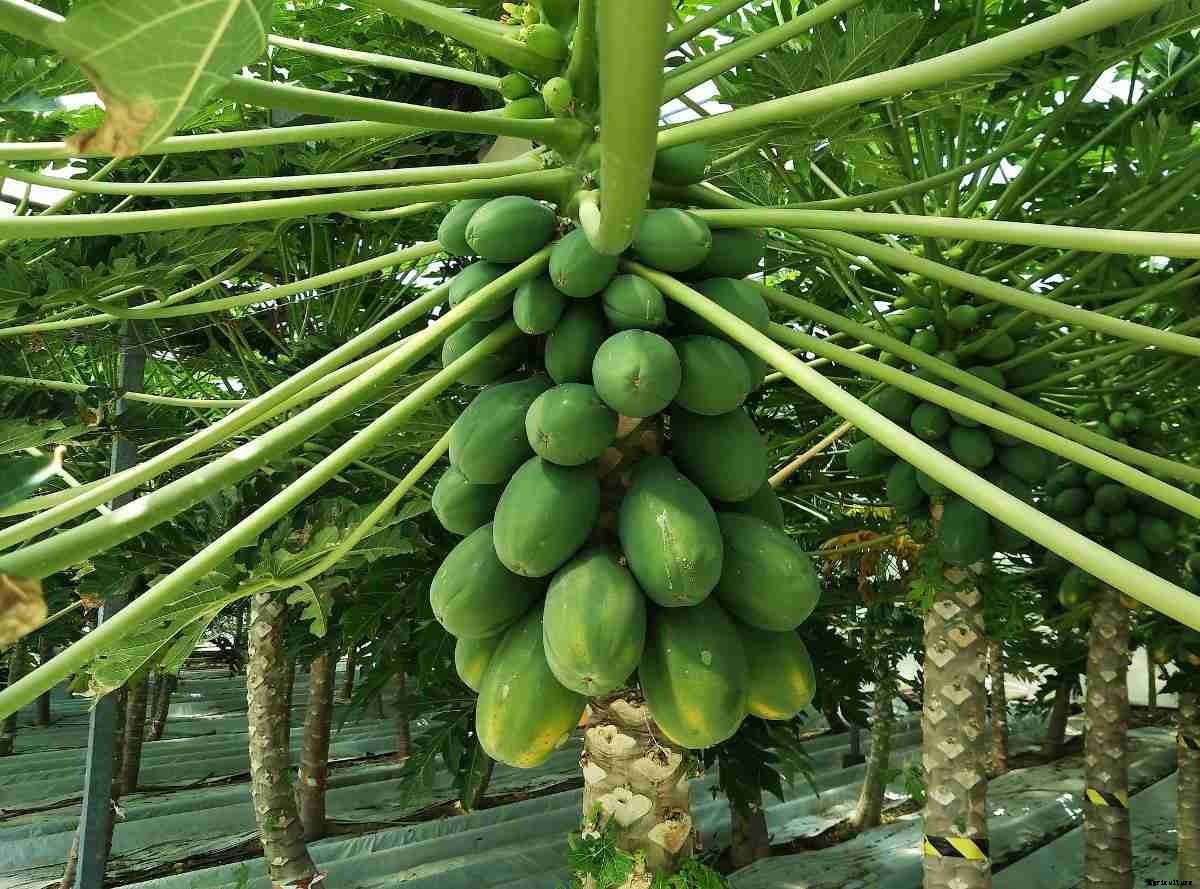
Papaya crops can grow in a variety of soils. Though, a rich, sandy loam is ideal for Papaya plantation. Also, it can grow well in alluvial soil which is found along the deltas and river banks. A fertile, lime-free, and well-drained soil is preferred for organic Papaya cultivation.
A neutral to near neutral soil can be used for organic Papaya cultivation. The pH level can be between 5.5 and 7.5. High loamy soil and clay loamy soil, suitable for drainage, is most suitable for this cultivation. Papaya tree does not like cold and wet soil. To avoid root rot make sure that the soil has a good drainage system.
The sandy loam soil with adequate organic matter is important for organic Papaya cultivation. The growing field kept at soil moisture which is necessary for the Papaya plant growth, although dry climate at the time of ripening is good for the fruit quality. Continuous cropping in the same field can result in poor growth and cause the disease problem for Papaya trees. Papaya crop does not like the strong, cool, hot, dry, or salty wind. It is better to produce in sheltered but full sunshine place. Staking and windbreak can decrease the damage to Papaya plants under strong wind.
The organic manure applied as a basal dose must be properly spread and incorporated into the soil during the preparation of the land for sowing. The planting distance of Papaya plants is about 2.5 x 1.6 m to 3 x 2 m. In the high-density plating method, the distance is 1.2 x 1.2 m. Pits of dimensions 60 x 60 x 60 cm are dug and then filled with topsoil mixed with 20 kg of farmyard manure, 1 kg of neem cake, and 1 kg of bone meal. Proper irrigation is done after planting.
Propagation is Papaya is through seeds or seedlings. The germination of Papaya seeds takes 3 to 5 weeks. The seeds of Papaya can be directly sown on the land or initially grown in a nursery. The transplantation of saplings into the main area is a limited practice and a seedbed of 3 m length, 1 m width, and 10 cm high is required for nursery planting. The bed is covered with a dry polythene sheet for protection. These saplings are transplanted into the main area after 2 months. Also, propagation can happen through tissue culture. Air layering is also used to cultivate Papaya plants.
The best season for Papaya planting is monsoon (June-July). Also, you can do planting Papaya in spring (February-March) and autumn (October-November).
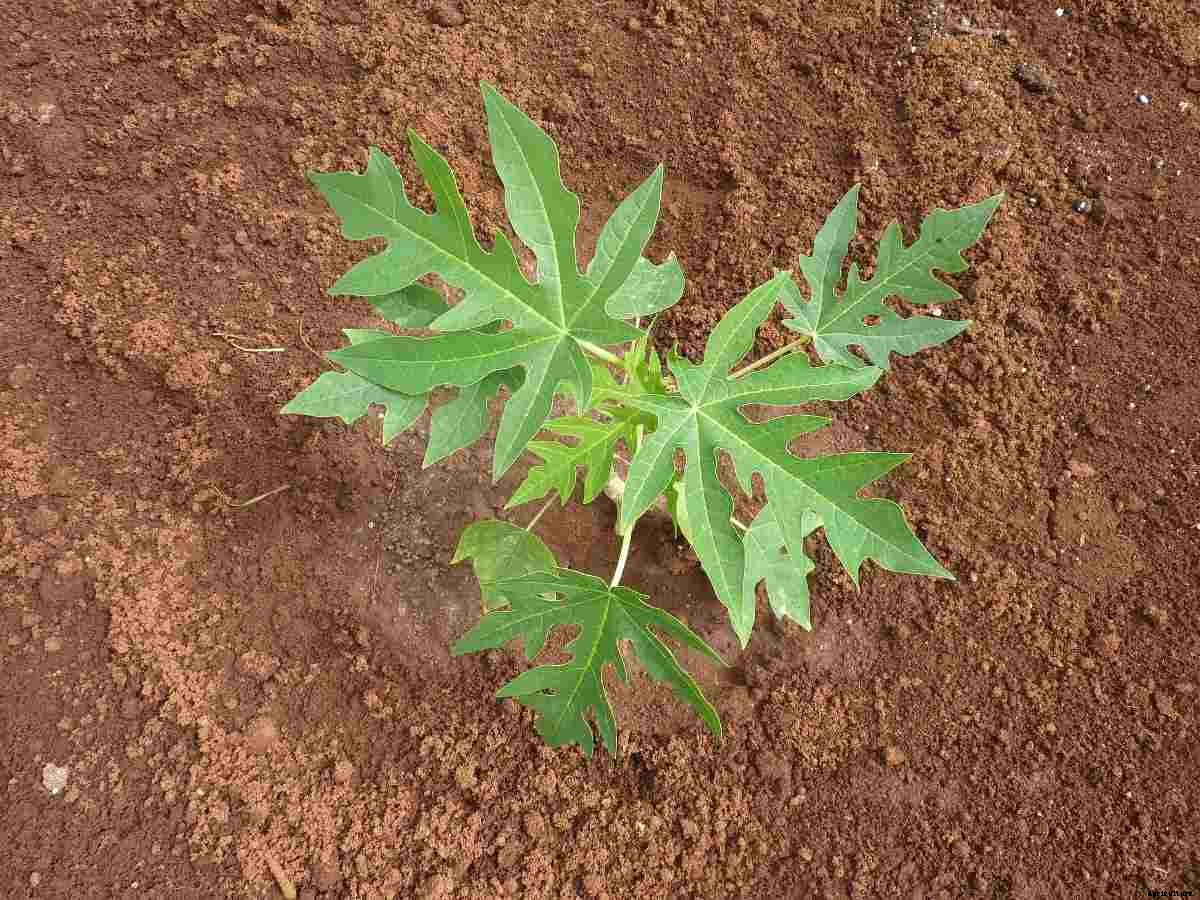
Papaya crop is commercially propagated by seed and tissue culture plants. The seed rate of Papaya is about 250-300 g. /hectare. The seedlings can be raised in nursery beds about 3metres long, 1metre wide, and 10 cm high. The light irrigation system is provided during the morning times. Then, the nursery beds are covered with polythene sheets to protect the seedlings. About 15 to 20 cm tall seedlings are selected for planting in 2 months.
The pits are exposed to the sun and filled with topsoil along with FYM (farmyard manure), bone meal, and wood ash in the form of mounds. In absence of rainfall, water is added to the pots to settle down the mixture accurately. When the seedlings are 15 to 20 cm tall, the bag is cut open with a razor blade and the seedlings are transplanted in the pits in the evening time. Usually, three seedlings are transplanted 15 cm apart in each pit. Watering is necessary after transplantation for a quick recovery from the transplanting shock.
A spacing of about 1.8 x 1.8 m. is normally recommended for Papaya.
Papaya is mainly propagated by seeds sown in sand beds or the seeds can be sown directly in polythene bags. The soil mixture used is about 50% sand for good drainage, 25% organic manure, and 25% topsoil. The seedlings are ready for transplanting after 2 to 3 months old. The planting distance is about 2.5m x 3m square and the planting holes are about 30cm x 30cm x 30cm. After the holes are dug, some organic matter with phosphate fertilizer and limestone is added to the soil before the seedlings are located in the holes.
Papaya trees are fast-growing, woody, tree-like plants that produce best in temperature levels between 21 to 32°C. The trees prefer full sun and well-drained porous soils that are moist in hot weather and dry in cold weather. Even brief exposure to freezing temperature levels can damage these plants, and prolonged exposure to cold without frost protection by overhead sprinklers will kill the Papaya plants.
Seed Planting Process;
Planting Papaya from Seeds in Simple Steps;
Check the temperature of your area, if it is above 16°C they will do just fine.
Nutrient management mainly organic manures and biofertilizers based on the soil test results. If the dosage of nitrogenous fertilizers is too high the crop becomes too succulent and thus susceptible to insects and diseases. If the dosage is too low, the crop development is retarded. So, the farmers apply adequate for the best results.


