
Welcome to Modern Agriculture!

Organic Pecan Production
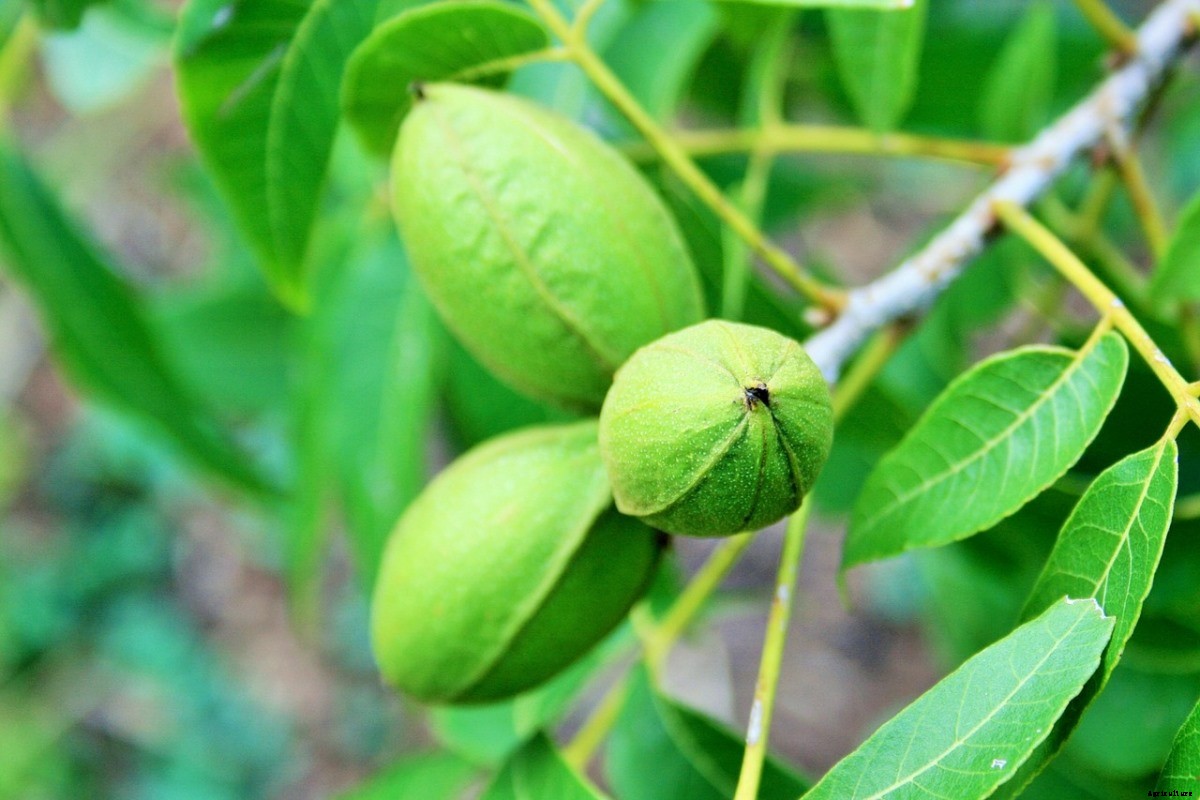
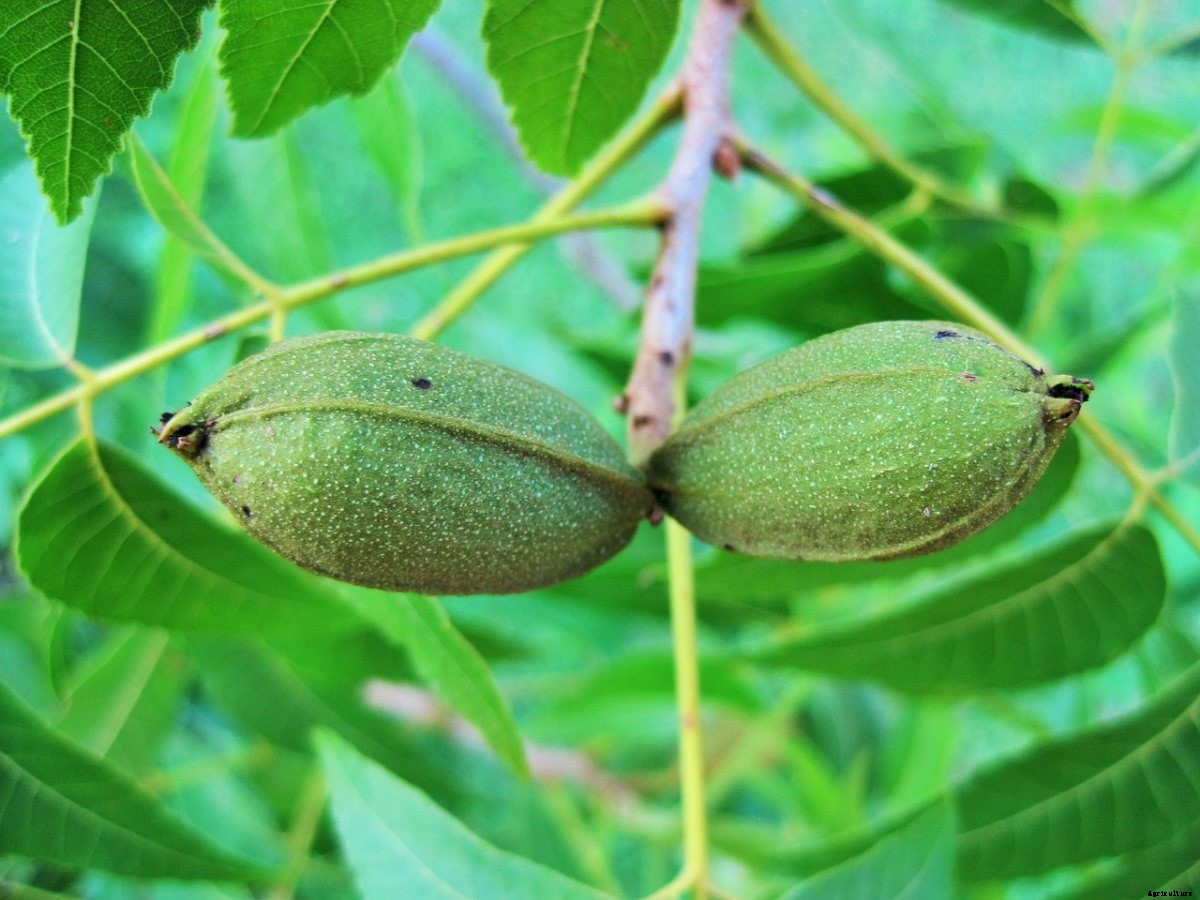
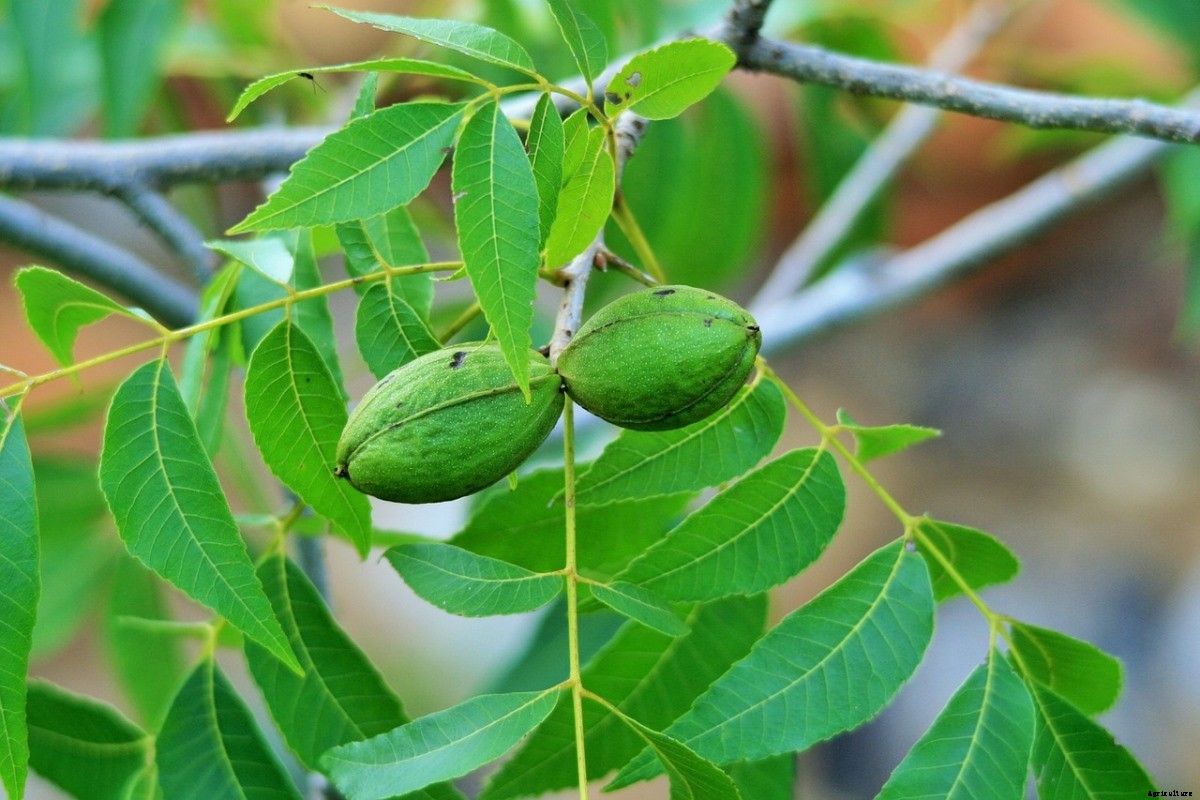
The Pecan is a tree that belongs to the Juglandaceae family. Pecan trees have been cultivated for a relatively short period. The Pecan can be eaten raw, sweetened, or salted. It is a deciduous tree, with alternate leaves, pinnate, up to 45 centimeters in length, composed of 9 to 15 leaflets. Pecan nuts have been grown since time immemorial; it has been under cultivation only for about 100 years but has gained enormous popularity.
Pecan occupying 5th rank among leading tree nuts because of its excellent nutty flavor. Generally, the Pecan nut is a rich source of fat (72 g) protein (9 g), carbohydrates (15 g), and minerals. The botanical name of Pecan is Carya illinoensis, which is a member of the genus Carya. The Pecan nut tree is commercially cultivated in the USA, Mexico, Australia, Canada, and Western Europe. Also, it is distributed in Egypt, India, Israel, Morocco, Peru, Turkey, and South Africa. Pecans are native to North America. Though, the natural range extends from the North-central USA to northern Mexico.
Organic cultivation protects and feeds a soil microbe which in turn helps plants to thrive by helping with nutrient absorption and other functions. Organic farming must be the norm rather than the exception as it has so many benefits other than maintaining soil health. Pecan trees need deep, fertile, and well-drained soil with substantial water-holding capacity. Pecans generally like a slightly acidic pH between 5.5 to 7 pH levels. The trees like lots of water, but not standing water the planting site must drain. Peat moss is a good additive to help amend our sandy soils and provide moisture retention without changing the pH level of the soil.
India has great potential to grow crops organically. The task force on organic cultivation appointed by the government of India observed that vast area in the country is exploited with chemicals that give low crop yield. Then, these areas can be targeted to give high production through organic farming. Organic cultivation can maintain soil quality. The chemical use is hitting the sustainability in soil and decreasing soil potency. And, applying organic manure is the only solution to improve soil organic carbon productivity in the future.
The Pecan nut tree is one of the most important temperate nuts grown in India. In India, Pecan is mainly grown in Jammu and Kashmir, and Himachal Pradesh. The Pecan tree is a beautiful plant that can be used for shade and ornamental purposes. The cultivation of the Pecan nut tree in India is still in the initial stages. Exotic tree varieties are found fruiting in the country and seedling trees do not yield true to type nuts. So, there is a need to raise high-quality nurseries through vegetative propagation.
Pecan tree grows well in deep, well-drained soils, with good levels of nutrients and organic matter and good water holding capacity, providing conditions to the root system development. A large amount of land must be allocated for Pecan production. It is best to plant in a field that has been cleared of forest trees for at least 10 to 20 years to minimize the effect of root pathogens. Hilltops are the best locations for growing Pecans. Bottomland sites are acceptable provided that there are good air and water drainage for Pecan tree growth. North-south or east-west row orientation is satisfactory for tree growth.
Organic Pecan production presents certain challenges to nitrogen management. Pecan trees require 100 to 150 lbs of actual nitrogen per acre annually. Conventional Pecan orchards are fertilized with synthetic fertilizers, which allow growers to more precisely control the rate and timing of nitrogen application readily available content of nitrogen.
Generally, organic manure can be used as an alternative renewable resource for nutrients supply. A huge gap exists between the available and utilized quantity. Though, it cannot be possible to meet the nutrients requirement in crops from organic sources, if 100% of cultivable land is converted into organic farming.
Soil Preparation for Organic Pecan Production;
In case if you miss this: Greenhouse Potato Production.
Organic farming will be able to deliver agronomic and environmental benefits through structural change and management of the farming system. Organic growing foods are proved to have superiority in terms of health and safety. Combining lower input costs and favorable prices can offset reduce yields and make organic farms more profitable than conventional cultivation. However, which didn’t include organic price gave mixed results on profit the premium price on the organic food that decides the economic achievability of organic farming, at least at the present rate of development in organic agriculture. Organic farming has a pest and disease management approach which are largely preventive than reactive. Pest and disease incidence is less in organic farms when compared to conventional farming.
A Pecan tree can be grown successfully in areas that are free from severe frost in spring and excessive heat during the summer season. It requires a mean temperature level of above 26.7ºC. It requires a moderate rainfall of about 75 to 100 cm and heavy rainfall areas are not suitable for its cultivation.
Pecan can be propagated by seed as well as vegetative methods. Though, it is commercially propagated by budding or grafting on seedling rootstock.
Pecan rootstocks are obtained from seeds. To obtain better seed germination it is recommended a stratification period before sowing, by placing the seeds for 90 days in moist sand, at 4ºC. Bare roots should be transplanted in the plant’s dormancy period (winter) and the seedlings in plastic containers can be transplanted at any time of the year, provided they are irrigated during water deficiency.
The seeds are stratified at low temperatures 1 to 5°C for about 12 to 16 weeks for obtaining good and rapid germination. To ensure good seed germination, the seeds must be sown under natural field conditions in December -January. Also, the seedlings can be raised in polythene bags which can be planted in the desired site with earthen balls without causing any damage to their roots. Deep, fertile, and well-aerated sandy soils are used for nursery purposes for Pecan trees. Pecan trees do not stand wet-feet conditions of the soil. The lilts are sown in well-prepared soil in rows and then covered with a 10 cm thick soil layer. The seeds must be soaked in water for about 10 hours before their planting. Inferior small seedlings are removed during the first year of plant growth. The plants remain in the nursery for 2 to 3 years to attain proper size for budding and grafting and subsequent growth but they are transplanted after one year by shortening the taproot to 20 to 25 cm length which enhances vigorous fibrous root system and high survival rate. To avoid damage caused by rodents and birds, the seeds must be painted with a paste made of red lead oxide and linseed oil.
Pecan trees can also be propagated vegetative through budding or grafting selected scion cultivars on Pecan seedling rootstocks. Among the vegetative propagation methods, patch budding and whip grafting arc the most successful.Though, patch budding can be done in June by a double-blade budding knife when bark peels easily.
Rootstocks of more than 2 cm diameter are patch budded. Then, the buds of the previous season are used for spring budding, while well-developed mature buds of the current season are patch budded in the late autumn season. The bud is inserted more than 20 cm high on the stock from the ground and tied by using polyethylene or waxed cloth strips.
Whip grafting on thinner rootstock in the late dormant season has given success for Pecan. The scion is grafted on the underground root of the root-stock in the field or on a root piece as bench grafting. Hardwood cuttings (50cm long and 20 mm thick) treated with indole butyric acid (IBA) by 10,000 ppm has given excellent rooting. Clonal propagation of Pecan trees by stooling has also been quite successful. Girdling application (3000 to 6000 ppm) is necessary to induce good rooting in stools. The mother stools are prepared from the cuttings or air layers of the commercial tree cultivars.
Tree size control is the greatest impediment to Pecan production. Crop yield is reduced when trees are overcrowded. 30 to 40-year-old trees need to be spaced 60 or more feet apart. Newly planted trees at this spacing create an inefficient use of land and equipment.
Organic farming is based largely on soil organic matter development. Organic growers are required to monitor soil organic matter level annually until it reaches about 2%, at which time it must be monitored every 5 years. Pecan orchards are essentially meadows containing inter-planted trees, and they largely mimic hardwood forest systems. Organic matter can be further enhanced by planting legume cover crops such as clover between tree rows.
The amount of water a Pecan tree requires mainly depends on the tree’s age and the season of the year. A hot, dry period will need more irrigation than a prolonged wet period.
For Pecan farming, irrigation is most critical during the establishment year. A mature Pecan tree will not be greatly damaged by a lack of irrigation, although yield and nut quality can be greatly reduced. Young Pecan trees will perform quite well with drip irrigation. Irrigation once every other day is also satisfactory.
Pruning Pecan nut trees is desirable but is often neglected. The training in Pecan trees begins with the planting when 1/3 of the top is removed and branches are allowed to emerge as high as m from the ground level.
Usually, the Pecan trees are trained in the central leader system. Once the framework is established very little pruning is done mature Pecan trees terminally. Dried and broken branches must be removed and over-crowding branches also are removed.
Organic mulches can be used to control weeds and conserve moisture in newly established orchards. As an added benefit, organic mulch also serves as a slow-release nutrient source as the plant materials decompose. If the orchard floor consists of Bermuda grass, don’t expect an organic mulch to provide adequate weed control. Occasional glyphosate treatments will be required to halt the intrusion of Bermuda grass into the mulched area.
Organic mulches like leaves, pine nuggets, pine straw, grass clippings, and chipped limbs applied at a depth of about 8 to 12 inches in a 7 to the 10-foot area around young Pecan trees serve as an effective method of minimizing weed competition, and mulching enhances tree growth. In most cases, mulching should be coupled with hand cultivation to eliminate weed competition.
Diseases of Pecan trees are a limiting factor in the Southeast due to the warm, humid climate and the amount of rainfall. When establishing an organic production system, strong consideration needs to be given to potential losses due to diseases. Without the fungicides used in conventional production, producing Pecan trees in the Southeast is challenging.
Several diseases that can infest Pecan trees are bacterial leaf scorch, downy spot, powdery mildew, and stem-end blight. Soil-borne diseases in Pecan trees include cotton root rot, crown gall, and root-knot nematodes. These tree diseases are often difficult to control.
Pecan scab is by far the most widespread and overall destructive disease of the Pecan tree. Powdery mildew and anthracnose diseases are also fungal diseases affecting both foliage and fruit, but these diseases are not as common or damaging. Other Pecan diseases of foliage include downy spot, zonate leaf spot, and bacterial leaf scorch. Other diseases are of minor importance in Pecan trees including bunch disease, crown gall, mistletoe, nematodes, and numerous minor foliar diseases.
Cultivar resistance, cultural practices, fertilization, irrigation, and pest control can all play a role in overall tree health and disease development. The most important decision for organic Pecan production will be cultivar selection, with resistant cultivars being the most economical and practical control measure.


