
Welcome to Modern Agriculture!

State of Israel
The State of Israel is located at Northern shore (red sea)/ south eastern shore (Mediterranean Sea).bordering Palestine, Jordan, Syria, Egypt and Lebanon with the capital in Jerusalem the largest city. Their official language is Hebrew however recognized languages is Arabic. Ethnic groups include Arab, Jewish and other minority groups.
The country has diverse religions with 74% Judaism, 17%.8% islam,2 Christianity, 1.6 Druze, 4.4% others. Government operates a unitary parliamentary republic with a president, prime minister, Knesset speaker and chief justice.
Population is estimate in 2019 at 9,105,640 density of 1,069 7/sq. m. the currency is new shekel total GDP is $390.656 billion. The largest city is Jerusalem followed by Tel Aviv, Haifa then Rishon LeZion. Other cities are Ashdod, Netanya, Beersheba, Bnei Brak and Holon.
Cities in Israel
Agriculture in Israel
The country experiences hot summers, cool winter, and semi-arid climate. Israel is self-sufficient in agriculture production because of huge investment in agriculture technology. The farming type use two types of agricultural settlements that a cooperative farm type system.
The two systems are communally owned collective farming (Agricultural Settlements} and household farming village system. Household farmers or moshav work their land however sell co-operatively.
Israel Farming
The country generates revenue about $4 billion dollars on field, fruit production, livestock production, poultry and seeds. They have agricultural communities like the Moshav and Kibbutz. Irrigated crop system is largely deployed on over 1 acre of land due to serious challenges in water supply. Recycling of waste water is another important technique used by farmers in the region.
Water generation
The region features semi-arid and desert climate water is a real challenge. Researches from a reputable university in Israel found huge reserves of ground water. The Jordan feeds surface water in the northern regions including coastal and mountain Aquifer from the Mediterranean Sea. The country have invested in water generation, reuse and desalination plants.
Farming products
Popular farm products are fruits, flowers, vegetables, different crops. Others include coffee, poultry production, and livestock.
Fruits
The country is a major exporter of citrus fruit worldwide. Citrus fruits are tangerines, grapefruit, pomelit, pamelo, oranges, and grapes. More fruits are pomegranates, dates, pear, bananas, apples, plums, strawberries, tomatoes.
New Agricultural Products
Research and development have produced some new agricultural products. New products include black tomatoes, mini basil tree, galia melon, seedless peppers, Alpha Cucumber, spaghetti squash. The product have interesting characteristic like seedless, hardiness, high anti-oxidants, delicious taste and size. Their dairy cows produce highest amount of milk.
Fruits in Israel
Flowers
Different types of flowers are grown on 214 hectares of land. They export over $50 million dollars’ worth of flowers to different countries.
Crops
Different climatic conditions support a diverse production of crops, fish, fruits, vegetables and livestock. Grape vineyards are spread across the country while popular fruits/vegetables include mangoes, guava, kiwi-fruit, citrus and avocado.
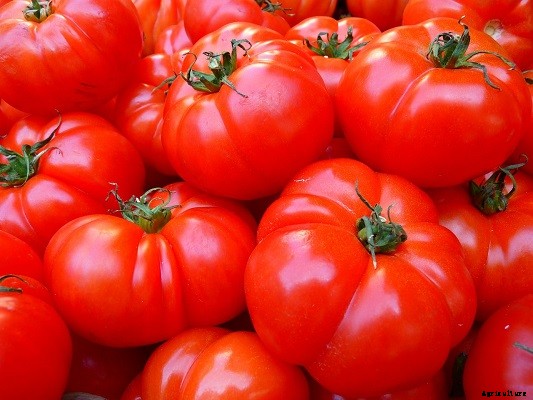
In hilly regions in the north are huge pear trees, apples while dates, bananas grow in subtropical regions. Common crops in the region are peppers, tomatoes, melons, and zucchini.
Crops in Israel
Aquaculture and Livestock
Aquaculture is the major source of fish in Israel. Other aquatic creatures harvested are crustaceans, shrimps, and salt/fresh water fish. Fish culture involves submerged cages, artificial lakes. They harvest fish from the Mediterranean Sea, Sea of Galilee, Lake Kinneret. Common fish are salmon, trout, grass carp, grey mullet, bass and silver carp.
Popular Aquaculture
Fish
Crustaceans
Shrimps
Technology
Advanced technology is the bedrock of huge production of food products in limited land space. A Leading international event to showcase advancement in Israel agriculture technology is held every three years.
Technology includes development of a tomato called ‘Tomaccio’, high yielding disease resistant Israel Holstein for diary milk production. The Holsteins produces about 10,200kg per cow. Other technology include vermiculture, advanced drip irrigation system, improved seed production, soil conditioning.
Cutting edge technology includes thermal crop imaging, drip and micro irrigation. Others include agricultural based software development, plant growth control netting, new produce, improved dietary supplements, and bio-control agents.
Technology advancement
Land Use
Government regulations are applied to production quotas to regulate and eradicate farm surpluses. They encourage specialization in animal health marketing, research, agriculture planning and encourage specialization. Quotas are applied to farm produce like potatoes, eggs, milk and poultry farming. Sixty five percent of open fields is used for vegetable production. Herds/vegetables account for 10%, organic produce 2%, fruit orchids ¼ of total production.
Types of Farming


