
Welcome to Modern Agriculture!

Mud crap Aquaculture or crab farming is commercially viable but capital intensive. Farmers require expert knowledge on crustaceans, nutrition, breeding culture, pond management. Other considerations are marketing, processing, crab breeding, and grow out. They attract premium price have good export potential, domestic applications.
Edible crab variety are red claw, green mud, Dungeness, Blue and Horseshoe crab. Others include stone crab, peekytoe (Cancer irroratus), snow crab, king crab, hard/soft shell mud crab.
Stone crabs are a prized delicacy have prominent large hard claws found in Florida United States of America. It takes one year six months for a 2.7 ounce claw to regenerate while processing involves boiling, freezing.
Male king crabs are primarily harvested for their large size and delicious meat. An average male weigh 20 -25 pounds. Cancer magister or Dungeness crab weigh 2 to 4.5 pounds have succulent pink flesh are 6 inches long while horseshoe are small prehistoric creatures.
How to Start a Snail Farm
Edible Crabs
The best crabs for commercial production are the soft-shell mud crabs, hard-shell mud, stone crabs, and king crabs.
Crab Type Weight Blue Crab 3 to 4 Inches King Crab 25 pounds Dungeness 4 pounds, 5 inches Stone Crab A Single claw weighs – 2.7 ouncesCannibalism is a big problem in grow out pond system and they fight among themselves for dominance. There are three basic types of culture earthen pond, cage or pen. Earthen ponds are applicable to brackish water, pen or pond used in mangrove.
Poultry egg production business plan
Crab aquaculture require application and licensing. Farming includes the hatchery phase, nursery phase and growing phase. Another thing to consider is farm size, design, stocking rate, water quality, temperature and feeding.
Things to Consider in mud crab farming
Crab farming is capital intensive and you need operational license. To source funds approach commercial or trade bank for loans.
Make sure the loans are long termed, low interest loans. You need collateral, guarantor, one third startup fund and account in the bank. Other fund sources are angel investors, partnership, venture capitalists.
Hatchery requirements for S,serrate king crab is described in this section. However the method is applicable to commercial production of Scylla serrate, S.olivacea and S.tranquebarica.
Select a fully matured female with developed ovaries. Crab should be mature, free from deformities, complete limbs. The female crab will have orange ovaries then poor water on them every five minutes for a duration of half an hour.
Prepare a basin with 150 ppm formalin, disinfect then introduce them to the pond. For further detailed method visit this site seafdec.org,ph
Intensive culture reduces the marketable size in record time. It takes post-nursery crabs 2 year to mature in natural conditions while intensive culture reduces the full maturity to 7 months.
Stocking rate determines the survival, growth rate of the crustaceans. Cannibalism is a serious problem with high stock rate. Stock about 1500 crabs per h, rate of 1 – 2 per square meter in earthen pond. Commercial farmers use intensive culture, feeding, pond design to increase production.
The type of system will determine the pond design. Large farms deploy high density recirculating system and earthen pond for faster growth and better efficiency. The earthen ponds are often located in brackish water.
They eat small crustaceans, shellfish in their natural environment. However farmer feed them dried pelleted formula, fish waste and trash fish.
Food
Proper water management is key to farm success. Ideal salinity is 15 ppt -25ppt (parts per thousand), temperature between 20°C and 32oC. Larvae are highly sustible to salinity and temperature changes while mature/juvenile more tolerant.
During moulting cannibalism is prevalent due to soft exoskeleton. The new larger shell then expands and hardens accordingly. They are very vulnerable during this period and easily attacked or killed.
Adequate shelter is needed for them to hide. Hiding places are introduced through short length piping, onion bags, car tyers, and masonry blocks. The introduction of these material makes pond management rather difficult however they improve survival rate, productivity, and growth.
Swine production business
There is not much research on mud crab diseases on commercial production. However antibiotic use in aquaculture have significant impact on human consumption of crustaceans farmed under this conditions. Other considerations are fungal, pathogens, viral diseases or exotic diseases.
Parasitic infections are metazoan, Sacculina sp. we have luminescent bacteria disease, filamentous bacteria disease, red sternum syndrome. Fungal diseases include Halocrusticida sp., Lagenidium sp, Atkinsieilla sp.
Viral diseases are renovurus, baculovirus infection, muscle necrosis virus. They are also susceptible to injury, stress, rust spot shell disease, deformities and toxicity.
Parasitic infections
Bacteria
Fungal diseases
Viral diseases
Others
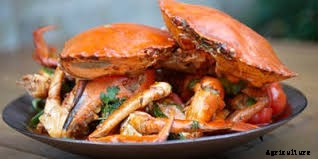
Marketing involves direct or local marketing, international sales. Crab produce export is common in many countries with adequate shoreline for production. Local markets are households, fast food outlets, restaurants, hotels.
crab culture
Sales Outlets


