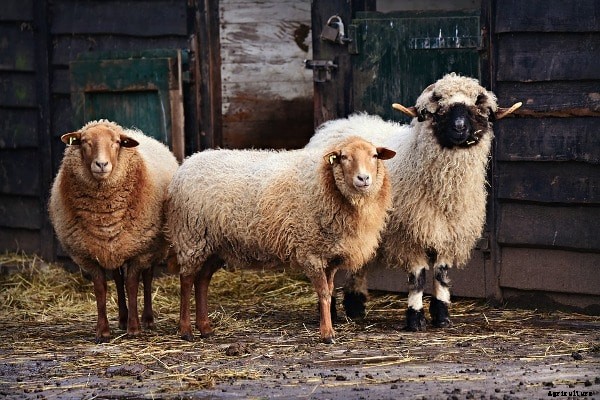
Today, let us talk about Sheep Farming In Sri Lanka.
Sheep farming is one of the best sources of livelihood for unemployed people, especially in rural areas of Sri Lanka; there are many benefits and also high returns in sheep farming. Sheep farming is becoming popular day by day; it is one of the highly profitable businesses in Sri Lanka. As the population increases the business is also increasing rapidly in India. By sheep farming, we can get some products like meat, fiber, and manure; these products also have a high demand in the market.
The population of sheep is 130% more than the goat population. The sheep have a remarkable high efficiency in producing milk and meat. The breed, which is selected for rearing should be good and efficient under all circumstances. The main objective of the sheep farm should be the conservation and propagation of the pure breed. It is considered that the sheep economics is also 160% more than the goat economy.
Scope and Importance of Sheep Farming
in National Economy:
In the national economy, sheep farming plays a vital role. In the initial stages, it might be small employment, but gradually the demand and also the returns will be increasing.
Importance of sheep Farming:
The sheep are reared by both men and women in Sri Lanka. The situation of agriculture vary and socio-economic are numerous in the production system in our country. These are the classifications they are:
Tethering
Extensive production
Intensive production
Semi-intensive production
Role in Economy and Contribution of sheep to people:
Fiber or Skin: With the help of fiber or skin they make many things like pelts, hides, wool, and hair.
Storage: The sheep store their milk in them and they are also known as walking refrigerators; they can store for a long time and they can be milked numerous times in a day.
Dung and Waste Material: The other products of the sheep are waste material and dung of sheep as these also have high demand as the dung and the waste material is used as farmyard manure for the plants while cultivating them.
Weed Control: These sheep can help us in weed control these will control the weeds, unwanted plants, bushes biologically.
Income: For the landless people it will be a good income and for the married people the sheep or other live stocks animals are given as a gift.
Employment: Sheep farming will be a good source of livelihood for the less literate, un-skilled, and low-income farmers.
Read: Growing Asparagus In Pots.
Advantages of Sheep Farming in Sri
Lanka:
Sheep
can tolerate all types of climates when compared to other livestock.
Sheep
can be handled easily.
Sheep
are very social animals.
Housing
demands of the sheep are very few; they don’t need a separate house as they can
adjust happily with their owners or other live stocks.
The
maintenance of the sheep is also very cheap.
When
they are small and young in age they can be slaughtered.
These
sheep can be reared by landless agricultural labours, children and ladies.
A
sheep gives us many by – products like meat, fiber and manure.
The
sheep are used in hilly areas for hauling light loads.
The
sheep give more production as per unit of investment.
Sheep Breeds of Sri Lanka:
Dorset
Sheep Breed
Jaffna
Local Sheep Breed
Bannur
Sheep Breed
Red
Madras Sheep Breed
Bikenary
Sheep Breed
Sheep Feed Management in Sri Lanka:
The sheep are one among the ruminant
animals as it is a multifunctional utility. The food management is the main
secret of good sheep management. The farmer who has sheep farm should have
basic knowledge of feeding the sheep properly. The feed for the sheep is
different in different ages and different seasons. Sheep should also be
provided with minerals and vitamins besides the natural feed.
Pastures and Browsing: The Pasturing feed is one of the most efficient sources of nutrients for the sheep. Pastures contain a high amount of proteins and energy. They help the sheep in increasing digestibility. The pastures for the sheep are a mixture of grain, grass, clover, sorghum, Sudan grass, millet, and Bahia grass.
Hay: The important source of nutrients for the sheep is hay. Hay which doesn’t contain mold should be fed to the sheep. High-quality hay should be fed to the sheep. A large amount of nutrients, which is contained in the weedy hay, is fed to the sheep. The most commonly used hay feed is alfalfa, clover, and Lespedeza.
Grain: The sheep can be fed with 12 – 16 % of course grains. The sheep’s weight can be increased by providing them the creep feeding. The grains that can be fed to the sheep are corn, rye, moil, oats, and barley. To provide the sheep with energy, cereal grains can be fed.
Garden and kitchen scrap: the kitchen and garden scarp is a good diet for the sheep. The kitchen scrap like onion peels, garlic skins, orange peels, banana peels, and tomato ends, etc. can be used as feed. All the fruit and vegetable cuttings can be fed to the sheep.
Schedule of sheep:
After their birth they should receive colostrums and thereafter up
to an age of 2 months they should be fed with the milk @ 1/10 of their body weight.
Kids that are aged around 2 – 4 months should be fed with creep
feed @ 450 grams daily along with water and green grass etc.
The sheep that are about 4 months and pregnant sheep should be fed
with conc. mixture @ 450 g, crude protein should be 14 – 16 %, green grass and
labium.
The does that are milking should be provided with conc. Mixture @
350 grams for each litre of milk produced.
In breeding season, the buck should be fed with conc. mixture @
400 grams every day with green grass.
Every day the sheep should be provided with 450 – 680 grams of
feed in a day.
Conc. mixture means Concentrate mixture. It contains Jowar, Soya bean, Maize,
sorghum, groundnut cake and broken rice.
Check these as well:
Wheat Cultivation Information Guide
Watermelon Farming Information Guide
Vanilla Farming, Planting, Growing Methods
Types Of Farming and Agriculture Information
Turnip Cultivation Information Guide
Sheep Housing Management in Sri
Lanka:
In the sheep farming business, housing plays a major role. As sheep need housing as the climate varies, the season varies, for their lambing season and also to manage the shepherd. In case of inclement weather, lambing occurs, and then the sheep need more elaborated housing. They also need very few facilities like store feed, bedding and also appropriate equipment. The hay which is stored inside the house will be of more quality. The long-lasting equipment is should be arranged under the roof of the housing.
In the intensive system of production, housing is very important. One should ensure comfort and facilities to the sheep for maximum profits. The sheep are just like a human being and they too have some physiological requirement for growth and production. The main motive of housing for the sheep is to protect them from uneven climatic conditions, harsh animals, and inoculated environmental stress.
Basic
requirements of Housing:
Site
Location
Sufficient
space requirement
Bedding
Wheat
straw
Oat
straw
Hay
Sand
Shavings
Corn
Stover
Saw
dust
Barley
straw
Peat
moss
Shade
and shelter
Good
location of housing / sheds
Orientation
Air
inlet and outlet
Ventilation
Proper
drainage
Floor
Ventilation
Milk barns
Waterers
Food troughs
Storage
Fencing
Doors
Sheep Breeding Management in Sri
Lanka:
Identification of sheep in heat:
Using
an intact male
Use
of intact male will be fitted with aprons
The
ram should be vasactamised
Management of Breeding:
The productions
units are considered as per the age of the Ewe while the breeding process.
Breeding Age of Ewe:
The breeding age of the ewe should be of 10–12 months. The sheep of too young age should not be encouraged for the breeding this might lead to loss. The ewe should attain 5 – 17 months of age for breeding.
Preparing the female sheep breed:
While
preparing the female (Ewe) sheep breed these process are followed:
Flushing
Tagging
Eyeing
Ringing
Crutching
Preparing the male sheep breed:
While
preparing the male (Ram) sheep breed these process are followed:
Marking
the ram
Raddle
or raddling
Method for mating of Sheep:
Hand
mating
Pen
mating
Flocking
or pasture mating
Artificial
insemination
Preparation of kidding:
Before the birth of the kid, the pen or the house should be cleaned perfectly and they should be supplied with fresh air and the floor of the pen or the house should be clean and the floor should always be dry or else it might lead to injures to the kids.
Seasons of Breeding:
During
the summer season, the heat occurs in the month of March and April and the
kidding season is in the month of August and September.
During
the rainy season, the heat occurs in the month of June and July and the kidding
season is in the month of November and December.
During
the winter season, the heat occurs in the month of October and November and the
kidding season is in the month of January and February.
Period of Gestation:
The
gestation period of the sheep is also very short span i.e. 150 – 155 days.
Sheep Diseases and Vaccination
Management in Sri Lanka:
Diseases:
These are
the diseases that occur to the sheep:
Blue
Tongue
Peste-des-petites
Ruminants
Sheep
Pox
Tetanus
Orf
Anthrax
Vaccinations:
These are
the vaccines which should be given in their life time. They should be scheduled
as per the vet consultation.
Volar footrot bacterin
Sore mouth
Tetanus antitoxin
Campylobacter
C & D antitoxin
CD-T
Covexin – 8
Chlamydia
Epididymitis
Footvax
Ovine ecolizer
Pasteurella
Rabies
Case – bac
Caseous D-T
In case if you miss this: Growing Vegetables Hydroponically.
Mud Crab Project Report, Culture Profit, and Cost
Dairy Farming Subsidy In India – By Government
Cultivating High-Dollar Crops: Turn Your Gardening Skills into Serious Cash
Growing Grapes Organically – A Full Planting Guide
Air Purifying Indoor Plants – In India
Industrial Hemp Cultivation – In India
Cost of Cultivation of Saffron, Saffron Business Plan
Pig Farming Subsidy and Loan in India – A Full Guide
Quail Farming Business Plan, License for Profits
Poultry Farming Subsidy and Loan Information in India
Duck Farming Basics, Housing, Feeding for Eggs, Meat
Organic Vegetable Farming Plan, Advantages
Goat Farming Plan in India – A Beginners Guide
Dairy Farming Plan in India – A Full Guide
Modern Farm Equipment in Agriculture
Rice Production in Myanmar; Paddy Farming In Myanmar
Sheep Farming In Bangladesh, Sheep Breeds
Citronella Farming, Cultivation Practices
Jump to Content Sections
1
Introduction to Sheep Farming in Sri Lanka:
2
Scope and Importance of Sheep Farming in National Economy:
3
Importance of sheep Farming:
4
Role in Economy and Contribution of sheep to people:
5
Advantages of Sheep Farming in Sri Lanka:
6
Sheep Breeds of Sri Lanka:
7
Sheep Feed Management in Sri Lanka:
8
Schedule of sheep:
9
Sheep Housing Management in Sri Lanka:
10
Sheep Breeding Management in Sri Lanka:
11
Management of Breeding:
12
Breeding Age of Ewe:
13
Preparing the female sheep breed:
14
Preparing the male sheep breed:
15
Method for mating of Sheep:
16
Preparation of kidding:
17
Seasons of Breeding:
18
Period of Gestation:
19
Sheep Diseases and Vaccination Management in Sri Lanka:
20
Vaccinations: