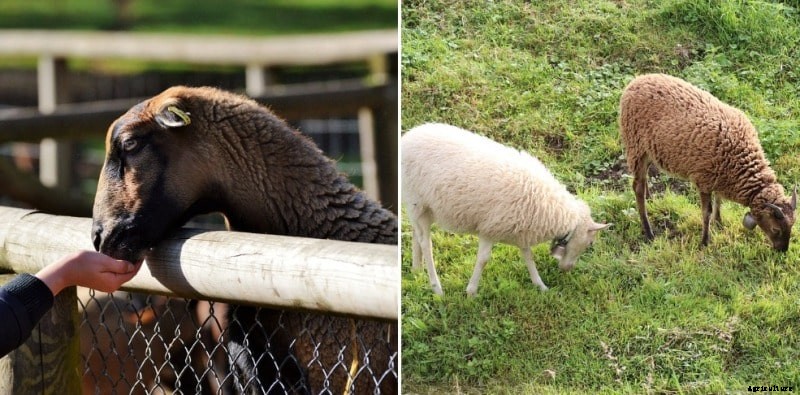
Hey, are you a lamb or sheep lover? would like raise the sheep on your own and don’t know what to feed your sheep? here is the information about sheep feed formulation. Sheep is most productive when fed a ration balanced according to their nutrient needs. The needed nutrients must also be supplied at the lowest possible cost. This can be done if producers use locally obtainable feed ingredients and use purchased feeds to fill the gap in nutrient supply from the locally obtainable feeds. Now let us get into sheep feed formulation and its importance.
Sheep feed ingredients
Like horses and cows, sheep enjoy the ability to graze on hay and grass feed. In particular, sheep tend to enjoy fine, leafy hay, as opposed to coarser strains that several farms use. Knowing this, many farmers feed their sheep at the same time, using the same bales of hay. The sheep pick through the feed provide to eat the finer grass, while the cattle consume the course, rough hay.
Sheep Feeding.
In general, sheep can consume all the basic nutrition they need from pasture grazing. Because of this, many farming operations purchase sheep feed during the winter when pastures freeze over and access to foraging is restricted. Sheep feed is specially formulated to give animals with the five categories of nutrients they need: water, energy, protein, vitamins, and minerals. Sheep feed is normally produced in the form of grasses and not pellets.
Key sheep feed ingredients:
Alfalfa
Corn
Vitamin A
Vitamin D
Vitamin E
Selenium
Mineral salt
Calcium
Phosphorous
Considerations in the sheep formulation of rations
Try to keep rations very simple. The rule of thumb is that simple nutrient needs can be met by simple sheep feed formulae.
Complex formulae do not essentially guarantee better performance.
Feed composition data can be given either on the dry matter or on an as-fed basis depending on the publication from which the information is taken. Therefore, some recalculation could be required before ration formulation commences. Rations must be formulated on a dry basis, especially if wet ingredients such as silage, molasses, etc. are included.
The sheep feed formulation can be done on the source of daily needs (that is amounts of nutrients rather than concentration), while this is done rarely in practice. Use of percentage units is the simplest means as the final values can simply be converted to any weight unit.
Every sheep has physical and physiological limits beyond which the dry matter intake cannot go. The dry matter intake of animals fluctuate within these limits depending on many factors they are species, body size and physiological condition of the animal (example pregnancy); and palatability, texture, and bulkiness of the diet.
Choose the same units of measure for the nutrient requirement and feed composition. For protein, either Crude Protein (CP) or Digestible Protein (DP); for energy, Total Digestible Nutrients (TDN), Metabolisable Energy (ME) or Net Energy.
Nutritional needs of sheep
Sheep get their energy, protein, vitamins, and minerals from the pasture or through the supplemental feed. A limited nutrients supply in the sheep’s diet can lead to:
Weight loss
Low fertility
High mortality
Increased risk of disease
Poor wool growth.
Sheep need a balanced diet containing energy (fat and carbohydrates), protein, vitamins, minerals, and water.
Different nutritional needs of sheep
Nutritional needs greatly, depending on the size, age and physiological status of the sheep. For example:
Larger and older sheep sometimes require more nutrients than younger and smaller ones
Lactating or pregnant sheep want more nutrients than dry animals
Young, growing, pregnant or lactating animals sometimes want more protein than older, empty or dry animals
In some cases, lactating sheep need phosphorus than non-lactating sheep.
Use the healthy and contented sheep tool or read the nutrient requirements of sheep to find out more about the needs of sheep at different stages.
Energy requirements of sheep
The energy component of a sheep’s diet is the main driver of its performance. Sheep obtain their energy from pasture, hay, grains, and oilseeds. If sheep are not getting sufficient energy there will be a decrease in wool and meat production and reproduction and an increase in mortality and disease.
Protein requirements of sheep
When dietary protein levels become low, sheep cannot keep weight and they start to mobilize body tissues to make up the shortfall in protein.
Low levels of protein decrease weaner growth rates, conception, pregnancy and lactation in breeding ewes, and productivity in general.
You may also like the Onion Cultivation Income Per Acre.
Mineral requirements of sheep
Main minerals that sheep need include phosphorus, sulfur, and calcium. Small amounts of these minerals are needed to ensure sheep remain strong, healthy and generate good wool. Sheep can get minerals from water supply and different mineral supplements if necessary.
Balancing rations
A ration is the quantity of feed that is fed to livestock for 24 hours. Sheep must be fed rations that have been properly balanced for energy, protein, minerals (especially calcium and phosphorus), and vitamins. If balanced rations are not fed, you cannot be meeting the nutrient requirements of the sheep or lambs you are feeding or you may be exceeding their requirements.
There are several potential consequences to not feeding sheep and lambs balanced rations. Ration balancing will help to determine least-cost feeding options.
There are five steps to balancing a ration. They are;
Describe the sheep you are feeding
Look up their nutrient requirements
Determine what feedstuffs are available
List the composition of the feeds
Balance the ration by hand or using a computer
Importance of feed testing
It is very important to have feed tested as nutrient levels vary depending on the quality of the feed. When planning feed rations it is best to consult with your nutritionist using your feed test results. This will ensure that you are adequately meeting the nutrient requirements of livestock during each stage of production.
Feeding grain to sheep
When there is little paddock feed obtainable it may be necessary to introduce sheep to full hand feeding on grain rations.
The fodder chosen should be well priced, readily obtainable, and easy to store and handle. Some examples include wheat, barley, sorghum, corn, and oats.
It is normally more economical to decrease stock numbers before intensive feeding.
The sheep that remain on the property must be confined to a smaller paddock, if possible, to minimize further damage being done to the land. The important thing is that the units of measure of necessity and feed composition of the nutrient to be supplied have to be in the same units to balance a ration.
Feeding Management
Extensive Grazing:
Grazing the sheep in the entire pasture and leaving them there for the whole season is the extensive system of rearing.
In this process, feed cost is very much reduced.
It is not conducive to making the best use of the whole grasses. So we can preferably practice the rotational grazing process.
Rotational grazing method:
Rotational grazing must be practiced under which the pasture land should be divided by temporary fences into several sections.
The animals are then moved from one section to a different section. By the time the entire pasture is grazed, the first section will have sufficient grass cover to give second grazing.
Parasitic infestations can be controlled to a great extent.
Further, it helps to give quality fodder (immature) for most of the year.
Under this method, it is advisable to graze the lambs first on a section and then bring in ewes to finish up the feed left by the lambs.
You should not miss the Polyhouse Vegetable Farming.
Semi-intensive:
This system of sheep production is an intermediate compromise between intensive and extensive system followed in flocks having limited grazing.
It involves extensive management but generally with controlled grazing of fenced pasture.
It consists of the provision of stall feeding, shelter at night time under shed and 3 to 5-hour daily grazing and browsing on pasture and range.
In this method, the feed cost somewhat increased.
Intensive system:
The intensive or zero-grazing system in which goats are continuously kept under housing in confinement with limited access to the land of goat production in which they are stall-fed.
It implies a system where goats are not left to fend for themselves with minimum care.
Intensive operation of a medium-sized herd of 50 to 250 heads or more oriented towards commercial milk production goes well with this method mainly of dairy goats.
It merits exploitation of the method of feeding agro-industrial by-products as on pangola grass with a carrying capacity of 37 to 45 goats per hectare.
This method of management requires more labor and high cash input.
However, this has the benefit of close supervision and control over the animals.
In this process, the dung is collected in one place and used as a good fertilizer.
That’s all about sheep feed formulation and its importance. Keep raising sheep.
You may be interested in Growing Yam from Cuttings.