
Welcome to Modern Agriculture!

The hatchery is an initial phase in prawn culture, has become an indispensable step to meet the growing fry requirement of the industry. A prawn hatchery must be constructed on a suitable site. Several points must be considered while starting a prawn hatchery business. Aqua farmers fail withpout proper prawn hatchery business plan.
Careful evaluation of various criteria must be conducted before deciding on the site of a hatchery.
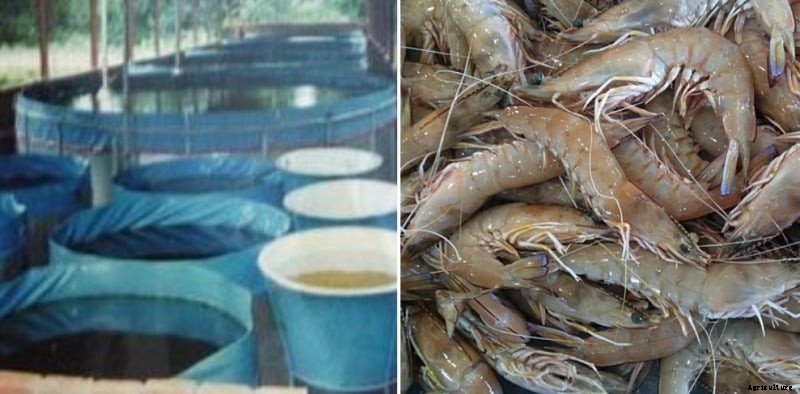
Seawater with minimum seasonal fluctuation in quality and quantity is most desirable. It must not be affected by inland discharges containing agricultural runoff or industrial wastes. Turbidity must be as low as possible. The adequate volume of seawater must be available when needed. The best process to find out the suitability of seawater for larval rearing is to conduct preliminary larval rearing experiments using small tanks on the site. The production of post-larvae with a reasonable survival rate from eggs in a series of at least three runs would specify the likelihood of success in actual operations.
The need for freshwater is minimal but adequate supply is necessary for miscellaneous activities and personal needs of hatchery staff.
The hatchery must be located near sandy and rocky or coralline shores where clean and clear seawater can be pumped easily and economically. It must be far from mouths of rivers and streams where flowing freshwater or brackish water can abruptly lower salinity. It must be far from possible sources of pollution like industrial, agricultural, and domestic discharges. The seawater near the hatchery site should exhibit only slight fluctuations in temperature, salinity, pH, dissolved oxygen, ammonia, and nitrite.
The source of spawners and broodstock must be identified before putting up a hatchery. Proximity to the source will minimize stress and expenditure in the transport of source of spawners and broodstock.
The hatchery must be located in areas where there is a reliable source of electric power. This is required to run equipment and other life support systems in the hatchery.
Good roads near the hatchery will facilitate procurement of materials required for operations. Handling stress and transport expenses should be minimized during spawner procurement and disposal of fry if the market is near. Air transportation should be available when the market is far.
Freshwater must be available in the hatchery because it is necessary for washing and rinsing of materials and tanks.
You should not miss the Lobster Farming; Culture for Maximum Profit.
Each cycle of operations in a prawn hatchery takes up to 40 days, including the time essential to prepare for the next cycle. Careful attention to all aspects of Prawn hatchery management is essential to achieve success (the production of the maximum number of healthy post-larvae at the cheapest cost).
To obtain clean and clear water without any suspended particles and harmful pathogens requires settlement of the pumped water, chemical treatment with chlorine, de-chlorination, filtration through rapid sand filters and biological filters, UV filtration for algal culture and larval rearing.
The quality of the seawater to be used for spawning and larval rearing is the main important among these factors. Clean unpolluted seawater with no suspended impurities is necessary for the operations and this should be the foremost consideration in the selection of a site for the hatchery. In almost all the hatcheries the seawater is taken in for use only after filtration which can be effected through various means such as elaborate fast or slow sand filters or simpler system of settling and filtering through appropriate mesh cloth filters or even by introducing simple mechanical filters in the water inlet system of the pumps.
The actual type of filter system to be used can only be determined after the water quality is assessed but it must aim at removal of all suspended matter and such planktonic elements which are likely to develop multiple or bloom subsequently.
Prawn hatchery operations start with the procurement of spawners. Availability of spawner prawns is ready to spawn condition of ovarian maturity is a factor dependant on season and infrastructural facilities for transport of the same to the prawn hatchery. Although Initial work on prawn breeding has been carried out with the help of spawners obtained from the wild, the use of spawners induced to maturation from a captive stock of the farms has gained practice in recent years. The well-known technique of eyestalk ablation to induce maturation in crustaceans is now, being practiced as a routine procedure at the Narakkal Prawn Culture Laboratory (NPCL) of the Central Marine Fisheries Research Institute for developing spawners of Penaeus indicus for their regular use.
You may also check the Tilapia Fish Feed Formulation.
Correct feeding of prawn larvae to maximize intake of high-quality diets whilst minimizing the potentially negative effects of feed residues left in the structure is crucial in maintaining a clean environment. And that can support the growth and health of the prawn broodstock and larvae whilst in the hatchery. Feeds comprise of live artemia nauplii, supplemented with artificial diet and other artificial diets for the larvae and either compounded diets or fresh feeds fed to the broodstock.
Commercially available seawater mixes are the main expense in hatchery production.
Generally, 4 to 6 week break-in period to develop bacteria colonies.
Requires daily maintenance for:
You may be interested in Wallago Attu Fish Farming.
Captive broodstocks are not generally maintained in tropical zones where a ready supply of berried females is available from the wild or grow-out farms, even though there may be benefits in doing so, as discussed earlier in this manual. Whether the berried females are obtained from a captive broodstock or the wild, you must hold them in slightly brackish water (~5 ppt) at 25-30°C and preferably at pH 7.0-7.2 until the eggs hatch.
Slight salinity results in better egg hatchability and careful control of pH markedly enhance the hatching rate (hatchability). Temperatures range below 25°C promotes fungal growth on the eggs. Temperatures range below the optimum also causes some eggs to drop and increase the time for egg development. Temperatures range above 30°C encourages the development of protozoa and other undesirable micro-organisms. Light does not seem to affect egg hatchability, although direct sunlight must be avoided. There is no need for you to feed females when they are only being held for a few days simply for larval collection.
Proper larval rearing is important for Indian conditions as there had been an outbreak of White Spot Virus disease. The seed is one of the main sources of this virus and vertical transmission of the virus has been established, the hatcheries must invariably adopt the following precautionary principles:
You may be interested in Growing Rosemary Hydroponically.


