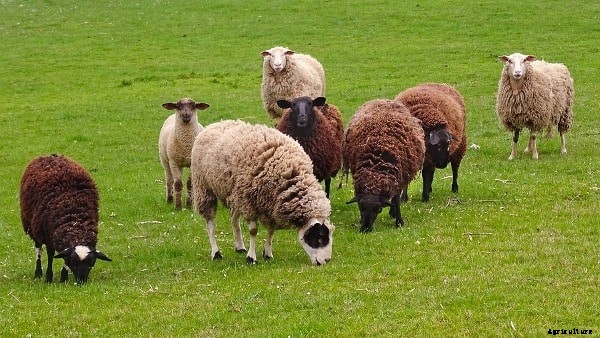
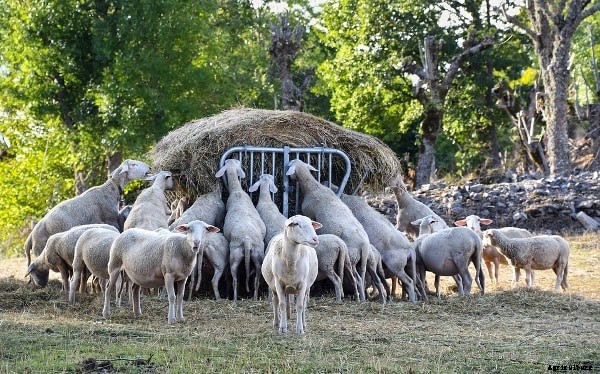
Today, let us talk about Sheep Farming In Karnataka.
In every state of India, the sheep farming is one of the important and also most profitable businesses. As the investment is done in one place, but the income comes in four different ways like wool, milk, meat, and also the manure. The sheep farming is one of the important components of the rural economy, specifically in the mountainous, arid, and also in semi-arid regions of the country. The sheep can be reared even on small flocks. We need to care the sheep a little more than the other livestock animal and also these sheep need very less facilities and comforts. The sheep just need housing only for securing themselves.
Scope and importance of Sheep Farming in National Economy:
Importance of Sheep Farming.
There is a great contribution towards the national economy from the sheep farming. We get 8% of export contrition from the sheep farming business and we also get the contribution from the processed products of sheep farming and their by products. The total population of the sheep in Karnataka State is 21 million, this is an approximate population. The total population of the sheep in India is 71.6 million sheep.
The sheep can be reared by the women, landless, people, and also by children.
The milk is one of the most useful for curing many diseases.
The skin of the sheep is used for preparing the leather jackets and also many other products like belts, caps and wallets etc.
The sheep manure is used in agricultural farms as the plant or tree manure.
The wool of the sheep is used in making the winter clothes like shawls, sweaters etc.
Read: Sheep Farming Questions and Answers.
Loans and Subsidies for Sheep Farming in Karnataka:
There are many loans and subsidies which are offered to the farmers who are economically backward. The state and the central government offer many loans and schemes for the farmer with the support of NABARD and many other departments.
The Chief Minister of Karnataka has announced a new scheme called “Pashu Bhagya”
The farmers get short term loans of Rupees 50,000/- @ 0% interest which is provided through the co-operative banks for providing feed and other maintenance expenditure.
Every year the schemes and loans will be changing and some new schemes will be added. The schemes are sponsored by:
National Project on Rinderpest Eradication (NPRE)
Assistance to State for control of Animal Diseases (ASCAD)
Foot and Mouth Disease Control Programme (FMD-CP)
National Animal Disease Reporting System (NADRS)
National Control Programme on peste des petites Ruminants (NCP-PPR)
National Programme for Brucellosis Control
Advantages of Sheep Farming Business in Karnataka:
The capital and initial investment is very low.
These sheep are adaptable to all types of climates.
The lips of the sheep will help in cleaning the grain lost at the harvesting time and they will convert waste feed into the profitable feed.
These play an important role in the livelihood for a large scale farmers like landless labours, marginal and small farmers.
For the shepherd, if he invests in one sheep farm the shepherd will get income from four sources like wool, milk, manure and meat.
In the sheep farm the foundation stock is cheap and also the flock can multiply rapidly.
These are also known as economical converters of grass into milk, meat, and also the wool.
When compared to other livestock’s they eat a large variety of plants. As this will help the farmer as excellent weed destroyer.
The sheep never damage and crop or tree, if the farmer is simultaneous is maintaining the agricultural sectors.
Sheep Breeds of Karnataka:
Bellary Sheep Breed: This breed is found on the south side of the Tungabhadra river. These are popularly found in Bellary district of Karnataka.
Hassan Sheep Breed: This breed is found in Hassan district of Karnataka.
Kenguri Sheep Breed: These are found in Raichur districts of Hilly tracts, particularly Gangarati taluks, Lingasagar, and Sethanaur.
Mandya Sheep Breed: These sheep are found in Mandya district and also in the bordering Mysore district of Karnataka.
Sheep Feed Management:
Sheep Feed Management.
The main source of energy for the sheep is feed and also the feed for the sheep plays a major role in sheep farming business. One should have the knowledge regarding the sheep and their feed. The care towards pregnant sheep and also the milch sheep should be more than the other sheep as per the season and also as well as sheep age the feed keeps changing. Feed for the sheep should be given as per age. Sheep should be provided with feed timely and scheduled. Sheep should be supplied with vitamin and minerals in appropriate amounts.
Hay
Pastures and Browsing
Garden and Kitchen scarp
Grains
Grass Fodders
Fodder Maize
Read: Sheep Feed Basic Information.
Concentrate Feed Ingredients:
Groundnut cake
Maize
Sorghum
Broken rice
Wheat
Legume Fodders crops:
Stylo
Hedge lucerne
Cowpea
Desmanthus
Tree Fodders:
Velvel
Neem
Seemaikaruvel
Arasu
Subabul
Agathi
Glyricidia
Vagai
Karuvel
Kodukapuli
Sheep Housing Management:
In the sheep farm good drainage facility should be arranged.
Good ventilation is more required in the sheep farm.
The number of labour, which is required for the farm is also very less in number.
The main motto of the housing for the sheep is to protect the sheep from harsh animals and also from the uneven climates.
This house will also protect the animals from inoculated environmental stress.
The floor, which is selected for the farm should not be slippery.
And also the farm floor should always be dry.
Construction of the housing should be done on a higher elevation so that no floods or any other natural disaster will affect the farm more.
While constructing a farm we should leave some space for taking rest.
The sheep waste should also be collected in the farm.
The sheep should be severed with hot water in all the seasons as they are afraid of the cold water.
Basic Requirements for Sheep Housing:
Milk Barns
Storage
Waterers
Orientation
Food troughs
Floor
Doors
Fencing
Air inlet and outlet
Ventilation
Good location of the sheds or housing
Proper drainage facility
Sheep Breeding Management:
The breeding plays a major role in sheep farming business, the farmer will get maximum profits as the sheep breeding will help in increasing the population in sheep farm. The sheep are capable of adapting themselves to any type of the climatic conditions.
There are two types of breeding techniques. They are:
Natural insemination
Artificial insemination
Natural Insemination:
For commercial sheep farming, the natural insemination doesn’t suit as it takes more time.
Artificial Inseminations:
In commercial sheep farming the artificial insemination is more suitable as it is a little cost efficient, but doesn’t take more time like natural insemination. It is mostly preferred for the commercial sheep farming business.
Breeding Specifications:
Gestation Period of Sheep:
The Gestation period of the sheep is very short i.e. 150 – 155 days.
Breed Identification:
The breed can be identified by its temperature and bloodlines.
Breeding Age of Sheep:
The perfect age of the breeding of female sheep is 5 – 17 months.
Heat cycles of Sheep:
For every 18 – 20 days interval the two heat cycles are repeated.
Ovulation Period:
For ½ – 1 ½ ovulation period remains in sheep.
Breeding Ratio of Sheep:
The ratio of the sheep should be in 1: 25 ratio, i.e. one male sheep and twenty five female sheep.
Mating of Sheep:
Timely mating is very important for successful fertilization in the sheep.
Breeding Season of Sheep:
SeasonHeating SeasonKidding Season
Summer Season
March – April
August -September
Rainy Season
June – July
November – December
Winter Season
October – November
January – February
Sheep Diseases and Vaccination Management:
Sheep care should be taken carefully and it is also easily to take care of sheep. The occurrence of diseases can be reduced by feeding good and appropriate quantity of food. Sheep should get plenty of sunshine. The housing should also be clean we can reduce the occurrence of sheep.
For every 4 – 6 weeks trimming of hooves should be done regularly.
The trimming of the hooves should never be neglected this might lead to a major loss.
If there is any change in their physical appearance, then the farmer should consult the vet.
If there are any symptoms of diseases we can see the illness like diarrhea, appetite, abnormal temperature, labored breathing and nose discharge.
If we find any of these symptoms the farmer should consult a vet when needed.
Read: Sheep Diseases, Symptoms, Treatment Guide.
Ecto – parasitic infestations:
Tick, lice etc
Endo – parasitic diseases:
Tapeworm
Roundworm
Fluke infection
Coccidiosis
Viral Diseases of Sheep:
Foot and Mouth Diseases
Peste Des Petits ruminants
Bacterial Diseases of Sheep:
Entertoxaemia
Brucellosis
Mastitis
Foot rot
Haemorrhagic Septicemia
Anthrax
Pneumonia
Vaccinations for Sheep:
For Sheep diseases, there are two types of vaccinations. They are:
Live or Active vaccination
Inactive Vaccination
Live Vaccinations for Sheep:
This vaccine targets the organism directly; it targets the organism until the organism loses its virulence. But these are capable of holding and also retaining them to provoke the immune back to the target sheep.
Inactive Vaccination for Sheep:
This vaccine is also called as dead vaccine. These vaccines target the sheep directly targets it until it dies or loses the virulence completely. This vaccine is also capable of producing toxins, so these toxins are also called as toxoid inactivation. These will also help the sheep to retain their immune back to themselves.
Sheep Farming Tips:
Sheep are known as social animals. These sheep belong to the herd.
The comforts and facilities for the sheep must be effective and efficient.
Housing for the sheep should be constructed strong and good.
Caring the sheep properly by treatment, preventions, and timely nutrients.
While rearing sheep we should have some knowledge of rearing techniques.
After removing the fleece from the sheep, if they expose to cold climates they may fall ill, so they should be kept in warm conditions.
At marketing time, the breeds should be sold in good markets.
Sheep should be facilitated with good facilities like water, feed, milk barn, fleece shearing barn, and proper drainage etc.
At the time of purchasing the farmer should buy both doe and buck.
While purchasing efficient and healthy breed should be selected.
Care for breeding buck, pregnant doe and kids should be taken little more.
Sheep should be provided with mineral and salt water, during the summer seasons.
Regularly consultation of vet is needed, as it improves and let us know the health condition of the sheep.
The farm should be maintained hygienically.
Equipment which is necessary for the farm should set up in the farm.
A store room should also be maintained for storing the food.
And the other store room is for storing the by – products of the sheep, like milk, meat, and fleece.
A first aid kit should be maintained in the farm.
Conclusion:
Sheep farming in Karnataka is increasing very rapidly due to its profitability.