Welcome to Modern Agriculture!

Chickens & Flocks
by Alexa Lehr | 02.04.2025
Last updated: 09.03.2025
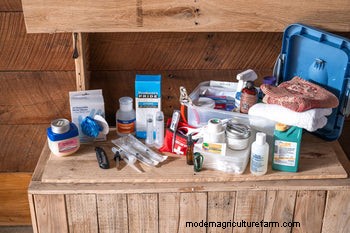
Whether you’re an urban chicken keeper or rural flock raiser, having a chicken first aid kit is helpful for meeting any health situation that may arise with your flock. Having some basic supplies in your chicken first aid kit allows you to administer immediate care when a health problem occurs, which can help prevent small issues from becoming serious. A well-stocked chicken first aid kit will give you peace-of-mind and can even save you time and money when taking the best care of your flock!
A chicken first aid kit can be as basic or as complex as you make it. However, there are a few supplies that every chicken first aid kit should contain to make it effective and helpful in the event of flock health issues.
If stocking your flock’s first aid kit with every item all at one time seems daunting or expensive, take a gradual approach to assembling the first aid kit. Start with a few basic, essential items. These might be items that you foresee yourself needing frequently to address common health issues in your particular flock. Over time, gradually add to the first aid kit. Even adding one new item a month to the kit can help you assemble a well-stocked first aid kit within a year.
One item that you probably won’t be able to ‘fit’ into the first aid kit but is still an essential component of caring for sick or injured chickens is an infirmary pen or ‘hospital’ cage. An infirmary pen allows you to separate sick or injured chickens from the rest of the flock. This can lower stress for the ailing chicken, make recovery easier, and allow you to administer specific care to the ailing bird.
Here are the basic components of an infirmary pen:
Size: The pen should be big enough for the bird to move around but not too big so that the bird may further injure itself with too much movement.
Structure: An infirmary pen should be predator-proof and completely enclosed to keep recovering birds from attempting to fly out.
Location: The pen should be set up in a temperate location where the recovering bird won’t get too hot or too cold or be exposed to the elements.
Food & Water: Make sure there is an easy way to provide food and water to the ailing chicken. Food and water cups that clip onto cages are good options for infirmary pens.
Litter: The infirmary pen should have soft, thick litter that is absorbent and easy to clean on a daily basis.
You can leave the infirmary pen always set up if it is convenient, or you can just make sure that it is easy and simple to set up whenever you need it for a flock health emergency.
Once you have a plan for an infirmary pen, it’s time to start considering what items to have stocked in the actual first aid kit. Here is a list of basic first aid kit components:
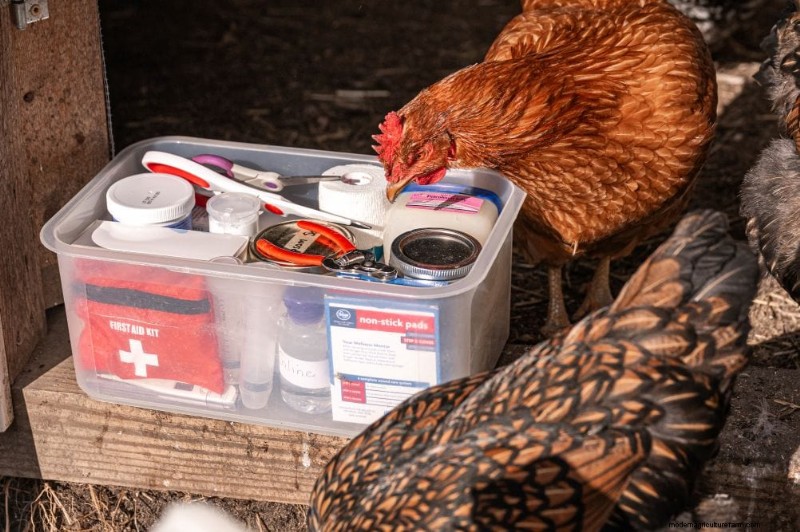
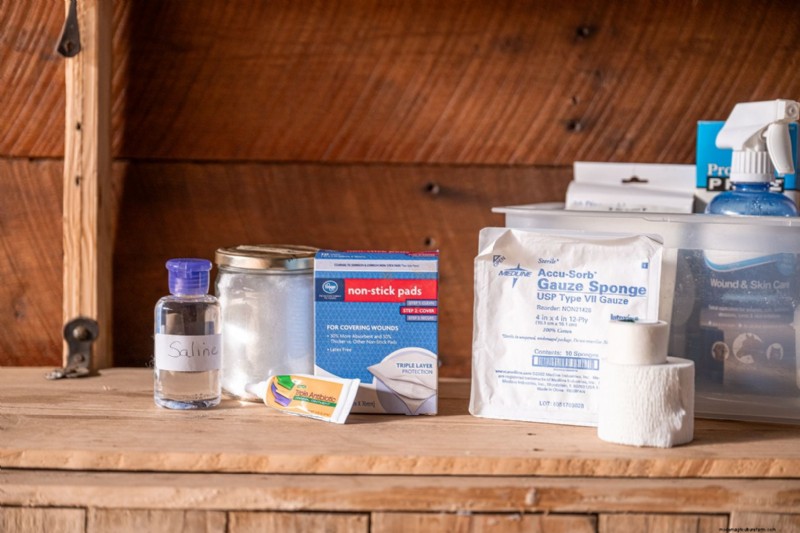
These items can be used to address cuts and sprains. Bandages can be used like ‘band-aids’ for chickens. They are needed for treating issues like splay leg and bumblefoot. You can get an assortment of gauze pad sizes just like you would stock in your own first aid kit. Two examples of bandages that work well for chickens include Vetwrap or Flexwrap.
The two bandages mentioned above are self-adhering, but it can be helpful to have medical tape in the first aid kit in case bandages need additional securing.
You want some sort of spray or solution that can be used to flush out wounds like cuts, scrapes, and other open-skin injuries. A 1:10 water/saline solution, Povidone-iodine, or Vetericyn can all work as wound cleaning agents.
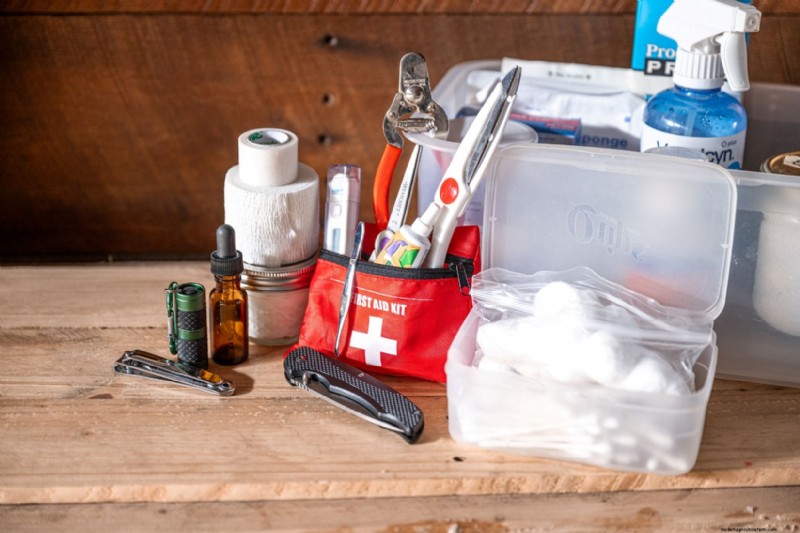
Tweezers are helpful for pulling slivers, removing debris from open wounds, and removing bumblefoot kernels.
Scissors are needed for cutting bandages and gauze pads.
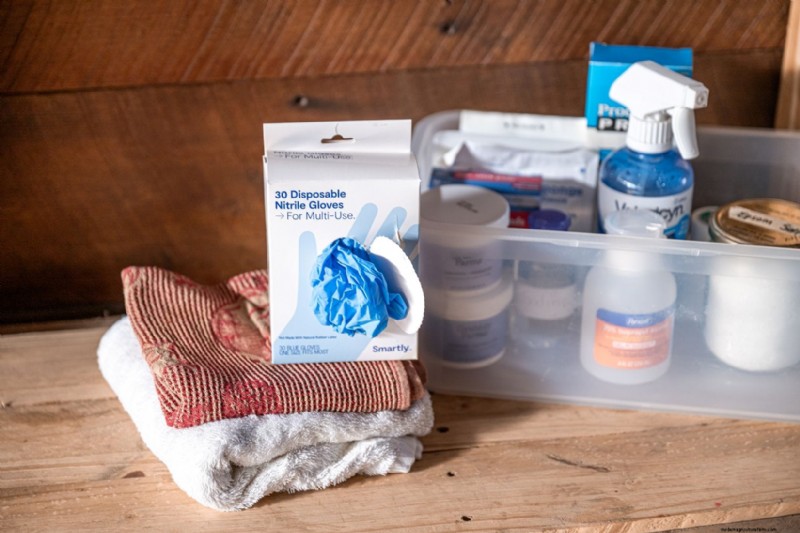
Always wear disposable gloves when treating an injured chicken. Gloves can help prevent germs or bacteria from your hands being introduced into a wound and they can keep you safe too.
Syringes can be used for administering liquids and medications.
These items are helpful for applying ointments and salves.
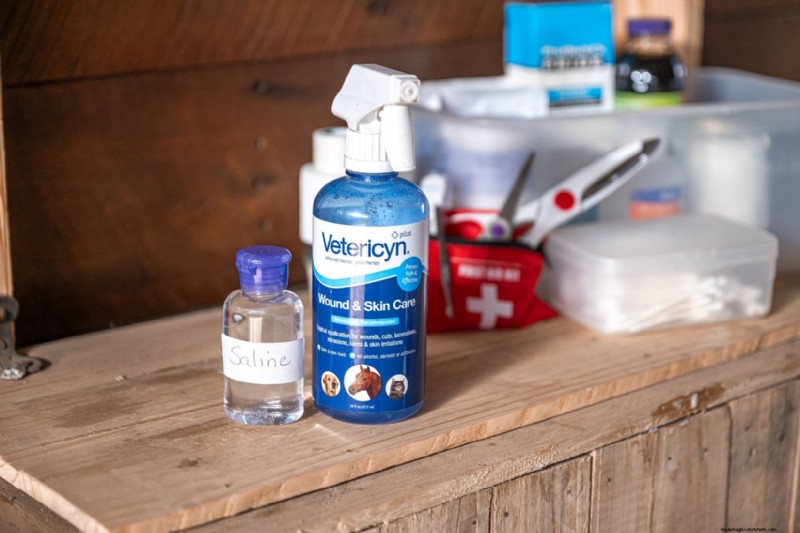
The same saline solution you may use as a wound cleaning solution can also be used here. Or you can get a basic eyewash. These items can be used for addressing eye infections or eye injuries. An eye dropper makes applying the solution easier.
You will need an antibiotic ointment for packing into open wounds to prevent infection from setting in, such as a simple triple-antibiotic ointment. Lincomycin-spectinomycin, tylosin, amoxicillin, zinc-oxide cream, or Neosporin ointment (lidocaine free) are all safe ointments for poultry too.
Nail clippers can be used for trimming long toenails or for trimming beaks that over-grow and inhibit proper eating behavior. You will also want to have some styptic powder on hand to prevent bleeding if you accidentally trim a toenail or beak too far. Dust On or cornstarch are two good options.
Soft towels or rags are helpful for holding an ailing bird when treating or administering health care.
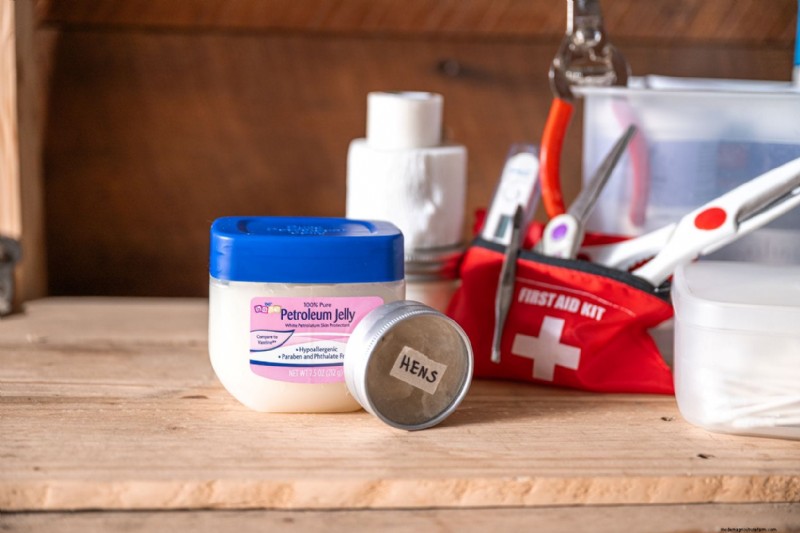
Beeswax-based salves are helpful for using to prevent frostbite on combs and wattles. Vaseline/petroleum jelly is helpful for smothering scaly leg mites. Salves that have additional healing herbs or properties added to them can be used to aid in healing wounds.
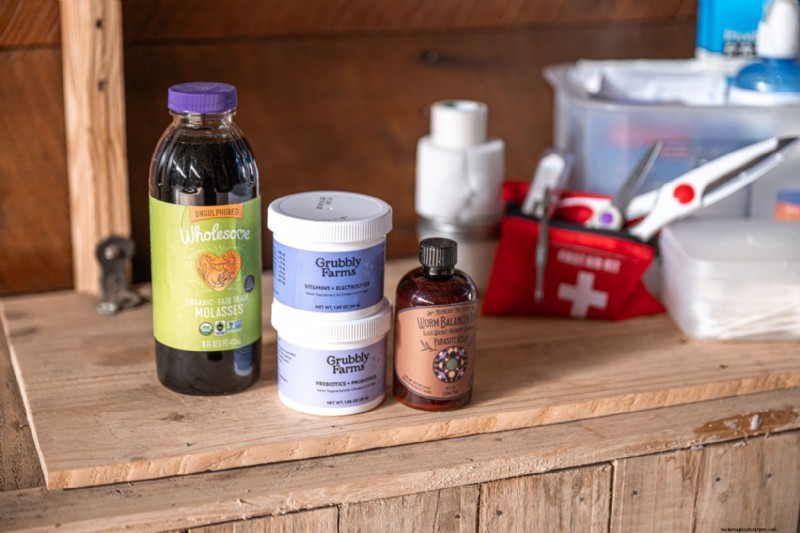
Both of these supplements can be helpful for flushing out toxins or if you suspect poisoning.
Medications and sickness can often do a job on the gut. And chicken can only stay healthy if its gut is healthy. Probiotics can help restore gut health after or during an illness or ailment.
A vitamin supplement can be used to address vitamin deficiencies or help restore general health after an illness.
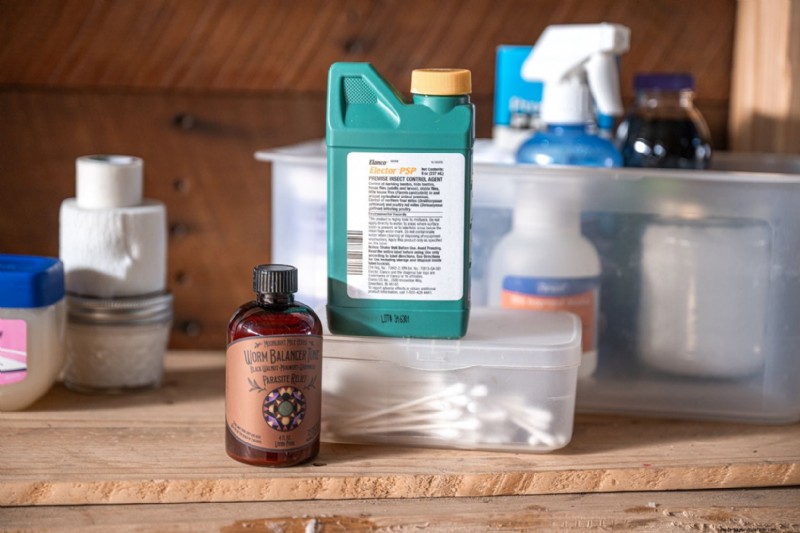
Epsom salts are not necessarily an oral supplement, but they can be made into a soaking solution for treating sprains, bumblefoot, bruises, and leg injuries.
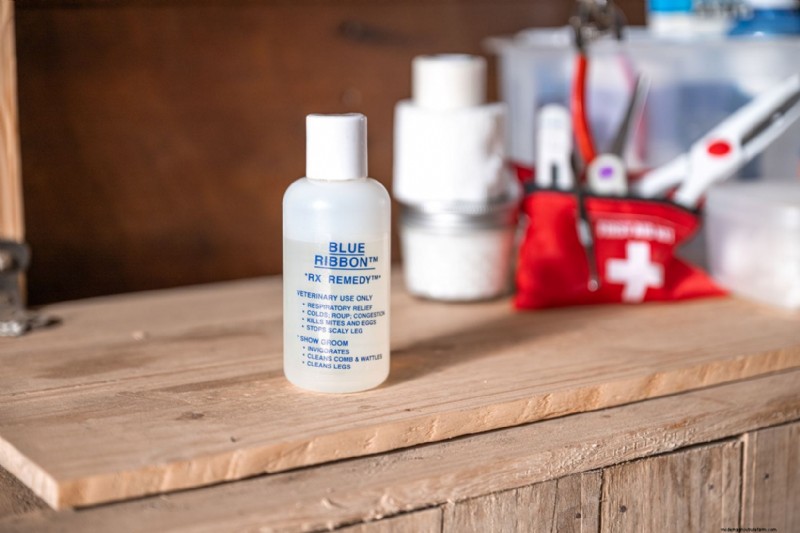
VetRx is a handy solution to have stocked in the first aid kit for addressing respiratory health issues like sneezing, gurgling, coughing, congestion, or chronic respiratory disease flareups.
Additionally, there are some other items you may consider adding to your chicken first aid kit to make your kit useful and well-rounded. While not essential, these supplies are often helpful for maintaining other first aid kit tools, keeping track of health issues in your flock, or leveling up your poultry first aid care.
The other ‘tool’ you should have in your chicken first aid kit is the contact information for a vet who will treat poultry. Finding a poultry vet may be easier than it sounds as more veterinarians are realizing that chicken owners are willing to bring their ailing hens to get professional care at a vet’s office.
Small animal vets, farm vets, or specialized avian vets are all options when seeking out a veterinarian to contact. In multi-vet practices, you may need to find out who sees chickens so you can contact the correct vet in the practice. An avian vet will be the most knowledgeable about specific poultry ailments, however, many small animal vets and farm vets have a basic understanding of how to treat illnesses and injuries across a wide range of species.
Getting in touch with a veterinarian who is willing to see your birds can be helpful in emergency situations. Professional medical help may be necessary in certain situations when caring for the health of your flock.
Veterinarians can perform blood tests and fecal floats that will help diagnose an illness or reveal the cause of an ailment. Internal injuries or ailments, like internal laying, cancer, tumors, or blockages, are often best diagnosed through professional medical care from a vet.
Some vets may even be willing to perform surgeries on ailing chickens. Bumblefoot, impacted crop, or predator wounds that require stitching are instances when surgery by a vet may be a better option than home first aid care. Vets have access to drugs that can help numb the surgery area and minimize pain when the surgery is being performed.
A vet can also provide advice if a reportable disease is diagnosed in your flock. They can have tests done that will help diagnose diseases caused by viruses, bacteria, or other microbes that are invisible to the naked eye.
Tips for Locating a Chicken Veterinarians:
Once you have connected with a veterinarian who treats chickens, you will want to put the following information on a notecard and keep it in your chicken first aid kit:
Having a well-stocked chicken first aid kit will help you feel prepared for addressing any health issues that may arise in your backyard flock. You will probably find yourself adding to the first aid kit as you gain more experience with administering poultry first aid in different circumstances. Remember to periodically check the supplies in your chicken first aid kit. Check expiration dates at least once a year and replenish or replace any supplies you use as needed. Over time, you will assemble a well-rounded first aid kit that will be helpful as your flock grows, as seasons change, and you become more familiar with chicken first aid!
Alexa grew up raising, showing, and caring for poultry. Her passion for poultry grew into her current small farm business, the Black Feather Farm, where she breeds rare and heritage chicken breeds. She uses her vast experience to improve the lives of chickens and educate Grubbly readers as well as readers on her own blog, The Pioneer Chicks.