
Welcome to Modern Agriculture!

With over 10 years of lawn and landscaping experience under his belt, Larry is a mean, green, gardening machine! Larry aims to share his vast knowledge in the field of gardening and create a one-stop shop for all gardening information and needs.
Latest posts by Larry Meyers (see all)
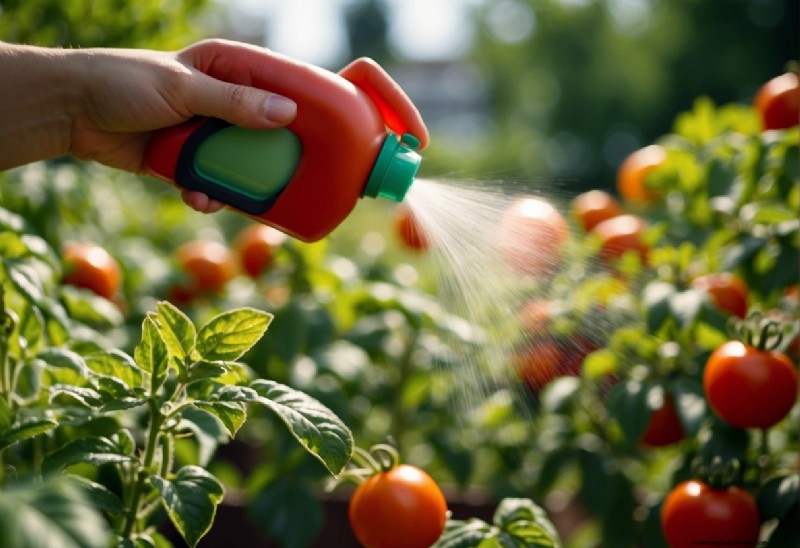
As a gardener, I know how important it is to protect tomato plants from pests. These voracious little creatures can damage leaves, stems, and fruits, reducing the quality and yield of your harvest. Over my years of gardening, I’ve learned that prevention is key.
By applying the right sprays at the right time, I can keep bugs at bay and ensure that my tomato plants remain healthy and productive.
My experience has taught me that a variety of homemade and natural sprays can be effective in pest control. I commonly use combinations of baking soda, dish soap, and vegetable oil to create safe yet potent mixtures that ward off common culprits like aphids and beetles.
Additionally, I’ve found success in using cayenne pepper spray, which is surprisingly effective at deterring pests with its spicy kick. It’s vital for any gardener to know what to spray on tomato plants to keep bugs away, and I’ve tested several methods to find the most efficacious solutions.
Through trial and error, I’ve compiled a list of practical sprays that are both gardener and environment friendly. Sharing this knowledge is important; too often, people reach for chemical pesticides that can harm the ecosystem.
By using natural alternatives, I am safeguarding not only my tomatoes but also the beneficial insects, like bees and ladybugs, which are crucial for maintaining a healthy garden.
💥 Quick Answer
Tomato plant health is crucial in resisting pests; identifying insects early and using organic pest control methods are key strategies.
Tomatoes are susceptible to a range of pests. Here, I’ll list the most frequent and damaging ones:
Using trap crops like marigolds and companion planting can help in diverting these pests from tomato plants. Also, regular inspection for signs of pests is vital for early intervention.
When it comes to pest control, I believe in using organic methods whenever possible. I’ve tested dozens of natural sprays and found several that consistently deliver results without harming beneficial insects.
💡 Neem Oil Application
Neem oil acts as a broad-spectrum insecticide that deters aphids, whiteflies, spider mites, and flea beetles. I mix 2 tablespoons of cold-pressed neem oil with 1 gallon of water and add 1 teaspoon of mild liquid soap as an emulsifier.
Shake the mixture thoroughly before each use. I spray it in the early morning or late evening when pollinators are less active, coating both the tops and undersides of leaves. Reapply every 7 days or after heavy rain.
For soft-bodied insects like aphids and whiteflies, I rely on insecticidal soap. My recipe uses 1 tablespoon of pure Castile soap mixed into 1 quart of lukewarm water. Cold water doesn’t blend as well with the soap.
I spray this solution directly onto visible pests, ensuring complete coverage. The soap dissolves the insects’ protective outer layer, killing them on contact. I reapply every 4 days until the infestation clears.
Here’s the thing—timing matters. I never spray during peak sun hours or when temperatures exceed 85°F, as this can burn leaves.
Ladybugs and lacewings are natural predators that control aphid populations without any spraying. I’ve introduced these beneficial insects to my garden by purchasing them from garden centers or creating habitat with flowering herbs like dill and fennel.
A single ladybug can consume up to 50 aphids per day. I avoid broad-spectrum sprays when using beneficial insects, and I never spray neem or soap solutions when I see these helpers actively working on my plants.
Garlic spray deters a wide variety of insects with its pungent odor. I blend 10 garlic cloves with 1 quart of water, let it steep overnight, then strain and add 1 teaspoon of dish soap. This mixture keeps well in the refrigerator for up to 2 weeks.
For cayenne pepper spray, I combine 2 tablespoons of cayenne powder with 1 quart of water and 6 drops of dish soap. I always wear gloves when handling pepper sprays and avoid touching my face.
Fair warning: test any new spray on a few leaves first and wait 48 hours to check for damage before treating the entire plant.
In caring for tomato plants, I focus on their specific watering and nutrient needs, while diligently preventing and addressing any diseases they may encounter. Getting these two aspects right is crucial to healthy, robust tomato plants that can resist pests and produce a bountiful harvest.
🚰 Watering Needs
Tomato plants thrive when the soil moisture is consistent. I ensure they receive 1-2 inches of water per week but adjust based on temperature and weather conditions.
💚 Nutrient Balance
Tomatoes require a balanced diet of nutrients including nitrogen, potassium, and calcium.
I start with a soil test to gauge existing nutrient levels, and then supplement accordingly, typically using a balanced fertilizer like 10-10-10 in the beginning of their growth stage, switching to a phosphorus-rich mix like 5-10-10 when they start fruiting to encourage healthy growth and a good tomato crop.
🌱 Early Detection
I watch my plants carefully for signs of disease, such as unusual spots or growths. When I identify an issue, I act promptly, often using fungicides or natural remedies like baking soda or hydrogen peroxide spray, to manage fungal diseases and viruses.
⚠️ Disease Management
It’s essential to remove affected plant parts and avoid overhead watering to minimize the spread of diseases. I keep the area around my plants clean and rotate crops annually to prevent disease buildup in the soil.
In my experience, advanced techniques focusing on pruning and micro-environment optimization significantly influence the size, health, and yield of tomato plants.
I find that pruning and providing proper support are key to developing strong tomato plants. For indeterminate varieties, which continue to grow and produce fruit until the first frost, I remove the suckers that sprout from the axils of each leaf.
This concentrates the plant’s energy into fruit production rather than vegetative growth. I use stakes or cages to support the plant; cages are great for bush-type varieties while stakes work well with vining types.
To ensure air circulation and reduce disease:
Creating the ideal environment for tomato plants requires careful attention to several factors. Beginning with the soil, I ensure it’s well-draining and rich in organic matter. I add compost regularly, which fosters growth and strengthens the plant’s natural defense mechanisms.
💚 For the best environmental conditions:
For indoor gardening, I select smaller dwarf or patio varieties suitable for containers. I provide grow lights to simulate adequate sunlight and maintain an environment similar to their outdoor counterparts.
🌷 For indoor tomatoes, consider:
These steps help me cultivate tomatoes that are red, round, and robust, embodying the vibrant characteristics of the Solanaceae family. Whether tending to tender seedlings or robust fruit-bearing plants, these advanced techniques are instrumental in achieving successful tomato growth.
Over the years, I’ve tested countless homemade bug sprays and narrowed down my favorites to five foolproof recipes. Each one targets specific pests while remaining safe for the plant and the tomatoes you’ll eventually harvest. 🔥
This recipe kills soft-bodied insects like aphids and whiteflies while also preventing fungal diseases. I combine 3 tablespoons of baking soda, 2 tablespoons of canola oil, and 2 tablespoons of liquid dish soap in 2 gallons of water.
Mix thoroughly in a bucket, then transfer to spray bottles. I apply this every 7-10 days throughout the growing season. The baking soda creates carbon dioxide bubbles in the insects’ digestive systems, effectively killing them within hours.
For hornworms, beetles, and larger pests, cayenne pepper spray works wonders. I cut up 4 dried cayenne peppers and steep them in 1 quart of warm water overnight. After straining, I add 1 teaspoon of dish soap as a sticking agent.
This spray doesn’t kill insects—it simply makes your plants taste terrible. Reapply after rain or every 5-7 days. Always wear gloves during preparation and application.
My go-to for heavy aphid infestations uses pure Castile soap. Mix 1 tablespoon of unscented Castile soap with 1 quart of lukewarm water. Shake well before each use and spray directly on visible pests.
I apply this every 4 days until the infestation clears. The soap dissolves the protective coating on soft-bodied insects, causing dehydration. It works within 2-3 hours of application.
For a powerful broad-spectrum repellent, I blend 10 large garlic cloves with 2 cups of water in a food processor. After straining through cheesecloth, I add 1 teaspoon of vegetable oil and 1 teaspoon of dish soap.
Store this concentrate in the refrigerator for up to 2 weeks. When ready to use, dilute 2 tablespoons of concentrate in 1 quart of water. This keeps away aphids, spider mites, whiteflies, and even some larger pests like beetles.
Neem oil disrupts the life cycle of many insects while acting as a fungicide. I mix 2 tablespoons of cold-pressed neem oil with 1 gallon of water and 1 teaspoon of mild liquid soap.
Apply every 7 days, alternating with other sprays to prevent pest resistance. Neem works slowly, taking 3-5 days to show full effect, but provides long-lasting protection.
The most effective bug spray applied at the wrong time can damage your plants or harm beneficial insects. I’ve learned through trial and error that timing matters just as much as the formula itself.
I always spray in early morning between 6-8 AM or late evening after 7 PM. These times minimize leaf burn and avoid peak pollinator activity hours. Spraying during midday heat causes rapid evaporation and can scorch leaves, especially with oil-based sprays.
Morning application allows foliage to dry before nightfall, reducing fungal disease risk. Evening sprays work well for contact insecticides that need time to work on nocturnal pests like cutworms and slugs.
Never spray when temperatures exceed 85°F. High heat combined with oil or soap sprays causes phytotoxicity—I’ve seen entire leaves turn brown within hours from this mistake. Wait for cooler weather or spray in the evening when temperatures drop.
Avoid spraying before rain. Most homemade sprays need 4-6 hours to dry and adhere to leaves. If rain is forecast within 6 hours, postpone application or you’ll waste your effort.
Wind is another consideration. I skip spraying on windy days when gusts exceed 10 mph, as drift can hit neighboring plants or reduce coverage on target leaves.
Confession: I once wiped out a population of ladybugs by spraying indiscriminately. Now I scout my plants first and avoid spraying sections where I see beneficial insects actively working. ✨
Bees are most active between 10 AM and 3 PM. I never spray during these hours. Even organic sprays can harm pollinators if applied directly. When flowers are blooming on my tomato plants, I’m extra cautious, spot-treating only problem areas rather than blanket-spraying.
Some natural ingredients kill rather than repel insects. Soap and neem oil are non-selective—they affect any insect they contact. I apply them precisely to infested areas in the early morning when beneficial insects are least active.
Rain and overhead watering wash away most homemade sprays. I’ve tracked application schedules for years and developed a reliable re-application system that maintains protection without over-spraying.
After any rainfall over 0.5 inches, I re-apply sprays within 24 hours. Light drizzle under 0.25 inches usually doesn’t require reapplication. I check leaves after rain—if water beads on the surface, some spray remains; if leaves look clean and wet, I re-spray.
Oil-based sprays like neem and garlic adhere better than soap sprays and may last through light rain. Still, heavy downpours require immediate reapplication for continued protection.
Overhead sprinklers wash away bug sprays just like rain. I switched to drip irrigation years ago specifically to preserve my spray applications. If you must use overhead watering, do it before spraying, allow leaves to dry completely, then apply your pest control formula.
Bottom watering or soaker hoses keep foliage dry and extend spray effectiveness. When I water this way, my applications last the full 7 days between treatments without degradation.
I keep a simple garden journal tracking spray dates and weather events. My typical schedule alternates between formulas: neem oil on Day 1, soap spray on Day 8, garlic spray on Day 15, then back to neem.
This rotation prevents pest resistance while maintaining continuous protection. After each rain event, I note it in my journal and adjust the schedule accordingly, always ensuring at least 4 days between applications of the same formula.
While homemade sprays form the foundation of my pest control, I sometimes use commercial organic products for severe infestations or when time is short. Not all “organic” or “natural” labels mean safe or effective, though.
I trust products with short, recognizable ingredient lists. Monterey Garden Insect Spray contains spinosad, derived from soil bacteria, and effectively controls hornworms, thrips, and beetles. I apply it every 7-10 days following label directions.
Safer Brand Insect Killing Soap uses potassium salts of fatty acids—essentially a concentrated version of my homemade soap spray. It works well for aphids and whiteflies and dries quickly without residue. 💛
Bonide Neem Oil Ready-to-Use saves me mixing time. The pre-diluted formula in a spray bottle works identically to my homemade neem recipe and costs about $12 for 32 ounces—reasonable for the convenience.
I steer clear of anything containing pyrethrins despite their “natural” marketing. While derived from chrysanthemum flowers, pyrethrins kill beneficial insects indiscriminately and break down slowly in hot weather.
Many “all-purpose” garden sprays contain synthetic additives even when labeled organic. I read ingredient lists carefully. If I can’t pronounce or identify every ingredient, I don’t spray it on food crops.
Pre-mixed “systemic” organic sprays concern me. Systemic products enter plant tissue, and while some are approved for organic growing, I prefer topical applications that I control and that wash off before harvest.
My homemade baking soda spray costs about $0.15 per gallon. Commercial organic sprays run $8-15 per quart. For my 12 tomato plants treated weekly through a 4-month season, homemade saves me roughly $80-100 annually.
Store-bought sprays offer convenience and consistent formulation. I keep one bottle of commercial neem and one insecticidal soap as backups for emergencies, but rely on homemade solutions for routine maintenance.
I’ve made every spraying mistake imaginable over two decades of gardening. Learning from these errors saved countless plants and taught me what not to do.
Early on, I thought “more is better” and doubled my soap concentration. Within 24 hours, leaves developed brown spots and edges curled. Phytotoxicity from excess soap or oil damages cell membranes.
Always follow recipe ratios exactly. If a spray isn’t working, increase frequency rather than concentration. I never exceed 1 tablespoon of soap per quart of water—that’s the safe maximum for most tomato varieties.
I once sprayed neem oil at 2 PM on a 92°F July afternoon. By evening, leaves looked scalded with white patches. Oil-based sprays amplify sun intensity, essentially cooking the leaf surface.
The solution? Never spray when temperatures exceed 85°F, and always apply in early morning or evening when temps are below 75°F. If you must spray during a heat wave, do it after sunset.
Different tomato varieties react differently to sprays. I learned this when a new heirloom variety showed sensitivity to my standard garlic spray. Now I always test new formulas on 2-3 leaves and wait 48 hours before full application.
Mark test leaves with a twist tie or tag. Check for discoloration, wilting, or spots. If leaves look healthy after 48 hours, proceed with full plant treatment.
Oil and water separate quickly. Spraying without shaking delivers inconsistent concentration—some areas get too much oil, others get plain water. I shake my spray bottle vigorously before each use and every 2-3 minutes during application.
For larger batches in buckets, I stir thoroughly before filling spray bottles and again before each refill. This ensures every plant receives the same protective dose.
Most pests hide on leaf undersides where they’re protected from sun and rain. Early in my gardening journey, I only sprayed tops of leaves and wondered why pests persisted. Now I carefully lift leaves and spray undersides until solution drips off.
This technique uses more spray but dramatically improves effectiveness. I estimate 60% of my spray volume goes to leaf undersides where pests actually live and feed.
1
I stop using all sprays 3-5 days before harvesting tomatoes. Soap-based sprays rinse away easily with water, but I prefer a safety buffer. Neem oil requires a 7-day interval before harvest according to most organic guidelines, though I extend that to 10 days for peace of mind.
2
No, I never combine formulas. Mixing can create unexpected chemical reactions or excessive concentrations that burn leaves. Instead, I alternate sprays week by week—neem one week, soap the next, garlic the following week. This rotation prevents pest resistance while avoiding ingredient interactions.
3
When applied correctly at proper concentrations, homemade sprays using common kitchen ingredients are completely safe. I always rinse tomatoes thoroughly under running water before eating. The natural ingredients break down quickly and leave no harmful residues, unlike synthetic pesticides that can persist for weeks.
What should I do if I accidentally spray during hot weather and see leaf damage? Immediately rinse affected plants with cool water from a hose to remove the spray. Provide temporary shade with a cloth or umbrella for 2-3 hours. Remove any severely damaged leaves to redirect energy to healthy growth. Most plants recover within a week if damage isn’t extensive, though you’ll see some cosmetic scarring on affected leaves.
4
I identify the pest first, then match it to the most effective treatment. Soft-bodied insects like aphids respond best to soap sprays. Chewing insects like beetles and hornworms need deterrent sprays with cayenne or garlic. For mixed infestations, I start with neem oil since it works on multiple pest types, then follow up with targeted sprays if needed.


