Coneflowers, also known as Echinacea, are tough little native flowers that draw butterflies, bees, and birds to the garden! Here's how to grow this American native—and important tips on plant care, from deadheading to cutting back in June.
About Coneflowers
Bright, upright plants, coneflowers are a North American perennial in the Daisy family (Asteraceae). Specifically, the plant is native to the eastern United States, from Iowa and Ohio south to Louisiana and Georgia. They grow 2 to 4 feet in height with dark green foliage. They are fast growers and self-sow their seeds profusely. These midsummer bloomers can flower from midsummer through fall frost!
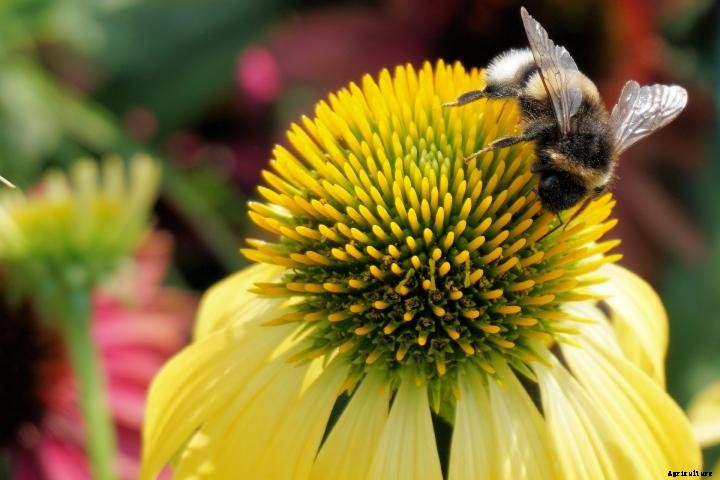
Their genus name Echinacea comes from the Latin name for hedgehog, echinus, referring to the often prickly lower stem of the plant. Coneflowers have raised cone-like centers (hence, their name) which contain seeds that attract butterflies. Leave the seed heads after bloom and you'll also attract songbirds such as goldfinches!
Trouble-free coneflowers are drought-tolerant once established. They can take the heat! As native plants with prickly stems, they are more deer-resistant than most flowering plants, too.
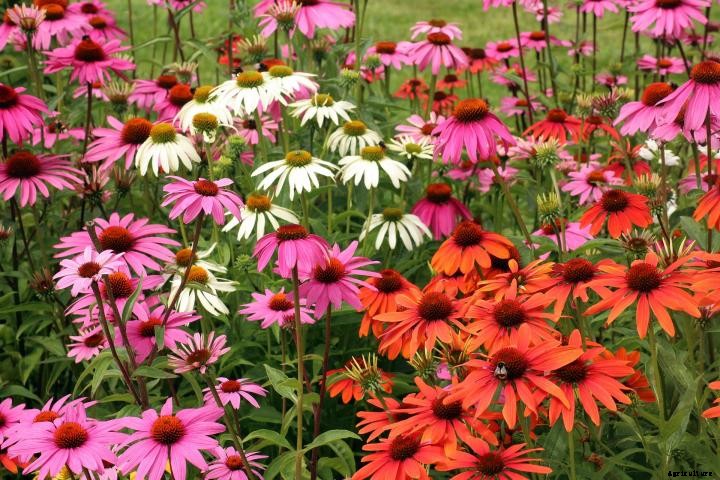
The most common species available to gardeners is Echinacea purpurea, the purple coneflower. If purple doesn't pair well with your garden's color palette, don't fret: coneflowers can be found in a range of bright or subdued colors.
Coneflowers are at home in a traditional garden or a wildflower meadow; they are striking when planted in masses, especially as a mix of various colors.
Planting
Choosing and Preparing a Planting Site
- Coneflowers prefer well-drained soil and full sun for best bloom. Choose a location where the coneflowers won't get shaded out nor shade out others.
- They may reach between 2 and 4 feet in height, depending on variety.
- Coneflowers are very tolerant of poor soil conditions, but they perform best in soil that's rich so mix in organic matter if needed.
- Coneflowers are drought tolerant.
- Loosen the soil in your garden using a garden fork or tiller to 12 to 15 inches deep, then mix in a 2- to 4-inch layer of compost. (Learn more about preparing soil for planting.)
When to Plant Coneflowers
- More commonly, coneflowers are bought as small plants with blooms already on the way. These should be planted in spring or early summer.
- Coneflowers can be started from seed in spring indoors (about a month before the last spring frost date) or outdoors (when the soil temperature has reached at least 65°F/18°C).
- Note: Coneflowers started from seed may take 2 to 3 years before producing blooms.
- Better yet, don't cut back coneflower plants and they'll self-seed successfully!
- If dividing or transplanting coneflowers, do so in the spring or fall.
How to Plant Coneflowers
- Plant coneflowers about 1 to 3 feet apart, depending on the mature size of the variety.
- If you are moving a potted plant into the ground, dig a hole about twice the pot's diameter and carefully place the plant in the soil. Bury the plant to the top of the root ball, but make sure the root ball is level with the soil surface. Water it thoroughly.
Check out our video to learn more about the benefits of growing coneflowers.
Care
How to Grow Coneflowers
- Put a thin layer of compost around the plants, then a 2–inch layer of mulch to help keep the plants moist and prevent weeds.
- Native coneflowers really do not need fertilizer; as discussed above, just ensure your soil has plenty of organic matter when you plant.
- In late spring, provide supplementary water only if the season is extremely dry or your coneflowers are newly planted.
- Optional: To encourage delayed blooming for fall enjoyment, cut coneflower plants back by 1 foot when plants come into bloom. This will result in later-flowering, more-compact growth because coneflowers can get leggy. Cut some and not others for more staggered bloom heights and times.
- Optional: When flowers are faded/done blooming, deadhead if you wish to prolong the blooming season. But consider leaving late-season flowers on the plants to mature; the seed heads will attract birds and promote self-seeding. Deadheading will prevent self seeding if this is your preference. To deadhead, cut the dead flower back to a leaf where you can see a bud ready to swell.
- Watch for beneficial soldier beetles in August and do not harm them.
- In the fall, a light mulch in colder regions is beneficial.
- Cut back in late winter/early spring when you’re tidying up the garden.
Growing Coneflowers in Pots
We tend to grow coneflowers in the ground as perennial plants, but you can certainly grow them in pots if the containers are deep enough for the plant's taproot (at least 2- or 3-gallon pots).
- Ensure there are holes in the bottom of the pot. Put a thin layer of crushed gravel at the bottom of the pot for drainage.
- Fill container halfway with potting mix. Tamp down. Plant the root ball an inch below the rim of the container, spreading out the roots and adding soil slowly until even with top of root ball, tamping soil lightly along the way. Water deeply.
- Keep pots in partial shade for two or three days and then move to a site that receives full morning sun and partial afternoon shade.
- Always water deeply when the soil is dry to touch.
- Fertilize pots every couple of weeks with a water-soluble 10-10-10 fertilizer.
- Deadhead for continued bloom, clipping right below base of the flower stem. Do not water leaves from above, as this can encourage fungal disease on leaves. Instead, water at soil level. Use an insecticidal soap or neem oil solution spray if you see any aphids or pests.
If you wish to keep the coneflowers in pots through winter, wait until the plant growth begins to slow in fall, then prune your plants back to soil level, and then move the pots to an area with low-to-moderate, indirect light where the temperature will stay between 40 to 50 degrees Fahrenheit. Check the soil every couple of weeks and water lightly when the top 3 inches are dry.
When new growth appears in the spring, transition the plant to a brighter, warmer (60 to 70 degrees) setting. Moving the plant helps to prepare it for living outdoors in the spring and summer.
Every 3 to 4 years, it's fine to divide and repot your echinacea plants. Do this in the springtime after new growth has started.
Pests/Diseases
- Leaf miners
- Japanese beetles
- Powdery mildew
- Bacterial spots
- Gray mold
- Vine weevils
Recommended Varieties
- 'Robert Bloom' (Echinacea purpurea), which has prominent, dark orange centers with bright crimson flower petals.
- Tennessee coneflower (Echinacea tennesseensis), which has greenish-pink centers with dark mauve flower petals.
- 'Finale White' (Echinacea purpurea), which has creamy-white flower heads with greenish-brown centers.
- 'Cleopatra' (Echinacea hybrid), which has soft-yellow petals with golden-green centers.
Find more recommended varieties here!
Wit and Wisdom
- Coneflowers both attract butterflies and are deer resistant, so they'll keep your garden just how you want it!
- Applying an infusion of echinacea is said to help soothe a sunburn.


