
Welcome to Modern Agriculture!

Growing Coneflowers – A Planting Guide
Hello friends, today we are here with a new topic called “growing coneflowers from seed”. Coneflowers are also known as Echinacea. Coneflower is a genus of herbaceous flowering plants that belong to the daisy family. Coneflowers are popular perennial plants with good reason. They are heat and drought-resistant plants, easy to grow, bloom for months, make great cut flowers, and attract birds and pollinators. Coneflowers come in glorious shades of pink, orange, yellow, red, and chartreuse, as well as a different range of flower forms standard shuttlecock to horizontal ruffs to doubles with a powder-puff center.
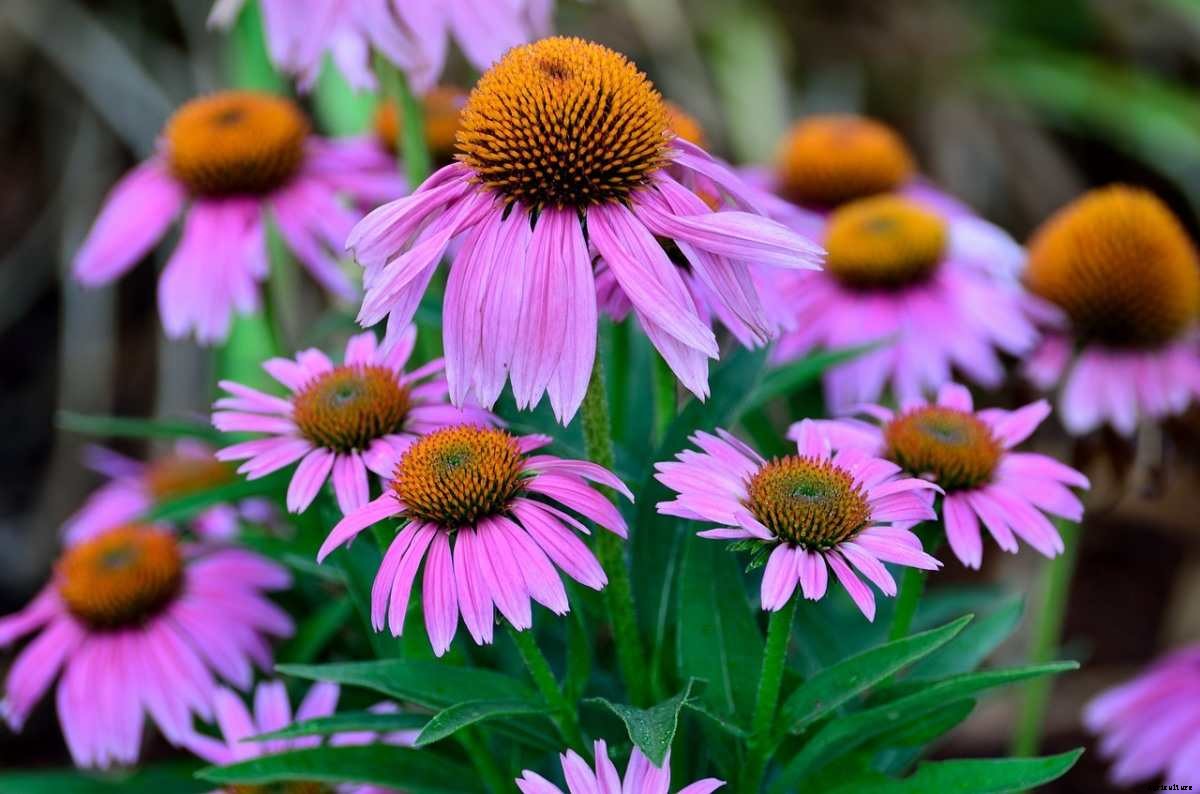
There are several native species of Coneflower, but as we mentioned above, the most popular is the purple Coneflower, which grows between 2 and 4 feet tall. Among other easy-to-find varieties, ‘White Swan’ is a popular selection that grows up to about 4 feet tall and has large white flowers. Also, many dwarf Coneflower varieties stay quite compact, such as ‘Kim’s Knee High’ (with pinkish-purple flowers). Plant these if you have a small garden, as you will get lots of blooms in just a little bit of space.
You will also find Coneflower varieties that hardly look like Coneflowers at all, such as hybrid double types that have two rows of petals. Some recommended Coneflower varieties are;
Some other varieties are;
Echinacea Angustifolia or Narrow-leaved Coneflower
Size – It is about 1 to 2 feet tall and wide. A compact Coneflower with spare, lance-shaped basal leaves with stiff hairs and leafless stems topped by 2-inch heads with short (1-inch) drooping rose-pink rays.
E. pallida, pale purple Coneflower
Size – It is about 3 to 4 feet tall, 1 to 2 feet wide and the leaves are lance-shaped.
E. paradoxa, yellow Coneflower
Size – It is about 2½ to 3 feet tall, 1 to 2 feet wide. This is an unusual Coneflower in that its rays are a bright yellow color. The plant leaves are broadly lance-shaped. An important plant in current breeding programs. Zones 4 to 8.
Coneflowers grow best in a garden that boasts a neutral soil pH level of about 6.5 to 7.0. The plants can thrive in a variety of soil types, including sandy, rocky, and clay soils. Though, they do not like wet or mucky soil. For best results, add a bit of compost to your mixture when planting to give Coneflowers successful a good start. Coneflower plants are very tolerant of poor soil conditions, but they perform best in soil that’s rich so mix in the organic matter if needed. Coneflowers are drought tolerant and loosen the soil in the garden by using a garden fork to 12 to 15 inches deep, then mix in a 2- to 4-inch layer of compost.
Echinacea loves full sun but can take a little shade. Coneflowers tolerate poor soil, will grow in drought-like conditions if established but do best with regular watering. Coneflowers do not like marshy or boggy conditions. Good drainage is essential to their thriving. Coneflowers grow in clumps from 12 to 36 inches wide and up to 4 feet tall, depending upon variety. When you buy the Coneflower seeds the size is noted on the packet and if you buy a plant in a can the tag should inform you of the final size.
Coneflower plants are sturdy plants and rarely need staking unless they are in too much shade; they will reach for the sun and tend to flop. Fertilizer is rarely required if you have decent soil. Adding compost as mulch should be sufficient.
Plant Coneflowers where they will get at least 6 to 8 hours of sun per day. In warmer regions (zones 8 and higher), a little bit of afternoon shade is a good thing, as it will help keep the flowers from fading. Many of the older plant varieties will self-seed if you leave blooms in place an easy way to get more plants. Coneflowers should be planted in an area that receives 6 to 8 hours of sunlight a day.
The best time to plant Coneflowers is in the spring season when all danger of frost has passed. You can also plant in the early fall. Just be sure new plants have at least 6 weeks to establish roots before the first expected frost or they might not come back in the spring season. Varies by zone; sow seeds in spring or fall season.
Coneflower plants are clumping plants. One plant will tend to get larger, but it will not spread and overtake the garden by roots or rhizomes. The eventual size of the plant clump depends on the cultivar, so check the mature size listed in the plant description to help you decide on plant spacing. If a plant is estimated to grow to about 18 inches wide, leave 18 inches between plants. Because Coneflowers establish deep taproots, you need to plant them where you want them. The plants do not like to be moved once established.
If you’re starting Coneflowers from seed, simply sow the seed in the container in autumn and leave it outside. Then, this will naturally provide the stratification the seeds need to germinate. If you’re planting a seedling, and make sure to transplant it with the soil at the same level and you don’t want to cover up the crown. Then, place the container in an area that receives full sun.
Coneflowers have long taproots, the taller the plant grows, the longer the taproots. So choose one of the shorter Coneflower varieties such as Echinacea purpurea ‘Pink Double Delight’ or Echinacea purpurea’ Rubinglow. Because they prefer a well-drained but moist soil they will need to be watered plant regularly and good drainage holes in the pot or container are a must. A 45 cm wide container is about the smallest advisable and the larger the container the happier the plant will be it will require watering less frequently. A container 30 cm deep is fine but again, the deeper it is the less frequently it will need watering. Feed your plant in the spring and autumn season with a good handful of fish blood and bone. Also, it will be beneficial to feed it once a month with liquid plant food.
To plant Coneflowers in the garden, you must begin will well-tilled and well-draining soil. Till the soil to a depth of about 15 inches. Turn 2 to 4 inches of finished compost into the soil.
For growing Coneflowers from seed, it’s most convenient to plant in the early spring season. Coneflower seed can be sown directly into the soil in full sun or partial shade. Space the seeds 1 to 3 feet apart depending upon the type of Coneflowers you choose. Carefully read packaging information to determine how much spread your plants will need.
Also, it is possible to sow seed in the late autumn or during the winter season for spring blooming. Exposing the seeds to 4 to 6 weeks of cold, wet weather stratifies them and helps ensure good germination. Also, plants can be propagated through division and by the use of root cuttings in the autumn.
Coneflowers are quite a drought-tolerant. After planting Coneflowers, check them every other day; if the top inch of soil is dry, water thoroughly. Droopy leaves are also a sign that Coneflowers are thirsty. Once Coneflowers have been in the garden for an entire growing season, you shouldn’t need to water them unless it hasn’t rained for about 2 months or more. Water the plant regularly, but let the soil dry out in between. Coneflower plants need at least an inch of water weekly.
In case if you miss this: Indoor Flower Farming, Tips, Ideas, and Secrets.
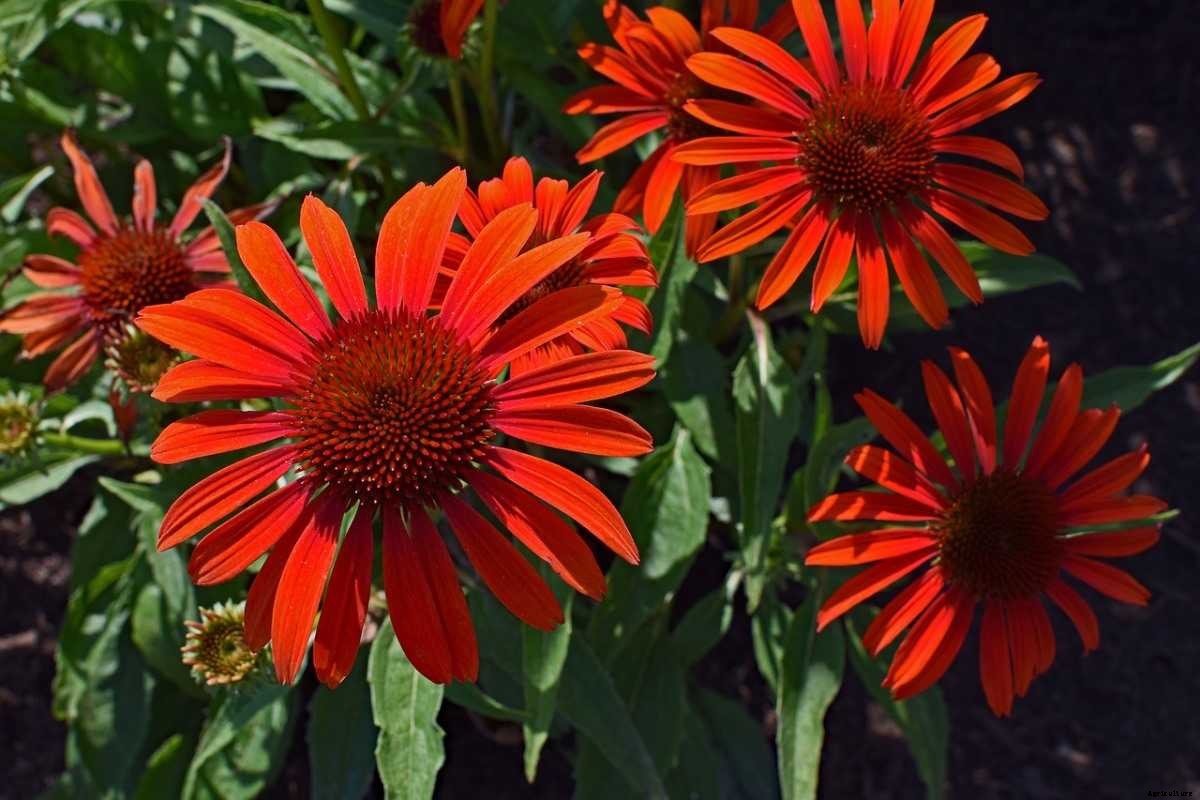
At the beginning of the bloom season, to encourage more flowering, deadhead Coneflowers frequently by cutting off the faded blooms before they produce seeds. And, always cut back to a leaf or part of the stem where you can see a new bud forming. Later in the season, when the Coneflower plant begins to produce fewer blooms, you can just let them be.
Let the plants stand during the winter season to provide food for birds. Leaves will emerge at ground level in the early spring season, soon to be followed by flower stalks. Carefully try this easy pruning trick to enjoy Coneflower blooms even longer on plants. Once they have begun to grow again in the spring, cut some of the stems back by half to delay flowering on those stems. The stems will produce blooms first, and then the cut stems will add their beauty a little later in the season.
You can prolong the already-long bloom period of Coneflowers by deadheading them. Cut dead flowers back to a leaf where you can see a bud ready to swell and then break. Birds love to snack on the seed, which is enough of a reason to keep them, but the plants will also self-sow, and allowing you to end up with some freebies during the next growing season. If you prune some of your Coneflower plants, but not all of them, you’ll have a nice, long, staggered Coneflower bloom season.
Sometimes you may see dark spotting on the plant leaves this is usually a bacterial or fungal condition caused by humidity and moisture. It can cause plants to drop leaves and look a little rough, but it doesn’t hurt anything. Then, prevent it by giving plants good air circulation and not watering the foliage.
One problem worth noting in Coneflowers is “aster yellows,” a virus-like disease caused by a phytoplasma. Disease symptoms are deformed flowers, sometimes with weird tufts in the cones, and yellow leaves with green veins. The organism is spread by sap-sucking insects such as leafhoppers and can be spread on pruners during deadheading. There’s no cure, so once you notice a plant is infected, and then dig it up immediately and throw it away. Also, they can be bothered by leaf miners, powdery mildew, bacterial spots, vine weevils, and Japanese beetles. Alternaria leaf spot starts as small black or brown color spots on the Coneflower plant leaves that develop pale centers and become oblong as they grow larger. The symptoms of bacterial leaf spots are similar, and except the spots are surrounded by a yellow halo and they’re angular because their spread is restricted by large leaf veins.
A Coneflower dying from Alternaria leaf spot or bacterial leaf spot may turn entirely black color, but an alternative plant disease can cause the same effect at the end stages of the plant’s life. Other diseases that infect Coneflower plants include botrytis leaf spot, stem spot, Cercospora leaf spot, and septoria leaf spot. Botrytis and Cercospora leaf spot cause brown spotting on Coneflower leaves, and septoria leaf spot causes purplish-brown spots.
Coneflower plants are vulnerable to some garden pests including Japanese beetles, aphids, and leafhoppers. Check and if problems exist, use the following steps for a safe and sane approach to pest control;
Foliage and flowers are susceptible to several diseases like anthracnose, powdery mildew, and aster yellows, which will disfigure leaves and flowers. Tips to reduce plant diseases in Coneflowers;
You may also check this: How To Grow Plants In Hydroponics.
Do Coneflowers come back every year?
If you enjoy watching pollinators buzzing and flitting around beautiful Coneflowers that bloom for a long time, Coneflowers are a must-grow. Then, they don’t just delight for a season, either, as these are perennial flowers that will come back year after year
Where do Coneflowers grow best?
Coneflower plants grow best in well-drained soil and full sun for best bloom.
Why are my Coneflowers dying?
Coneflower dying because of Alternaria leaf spot or bacterial leaf spot may turn entirely black, but an alternative plant disease could cause the same effect at the end stages of the plant’s life.
How quickly do Coneflowers spread?
The central root mass of a Coneflower plant will grow in size each year, eventually growing up to 2 feet in diameter. Once the Coneflower root mass approaches this size it must be divided to keep the plant attractive and vigorous.
Do Coneflowers bloom all summer?
They are prolific bloomers, and deadheading (removing the dead flowers from living plants) will keep them in bloom all summer season. Coneflowers start blooming from the top of the stem, and each flower remains in bloom for several weeks.
Why Coneflower plant leaves turning yellow?
Echinacea plant also suffers from crown rot and leaf yellowing when it is planted in soil that does not drain properly. Rot is a fungus that infiltrates damaged stems and plant leaves. The signs of rot include deformed leaves, yellowing of the leaves and stems, or yellowing of the roots.
Can Echinacea Grow in the Shade?
Echinacea plant needs at least 4 to 6 hours of sunlight a day, so a position in the partial shade would be ok but full shade wouldn’t be suitable.
Can Coneflower Grow in a Pot or Container?
Echinacea can be grown in a container as long as it’s deep enough to accommodate the plant’s taproot. The pot must have plenty of drainage holes and some gravel or crushed rocks in the bottom to allow for drainage.
Where Does Coneflower Grow?
Coneflower will grow in most areas that receive adequate sunshine.


