
Welcome to Modern Agriculture!

Indoor Flower Farming
Hello friends, today we are here with a new topic called ” Indoor Flower Farming”. Flower farming is also known as Floriculture. Floriculture crops mainly include bedding plants, houseplants, pot plants, cut cultivated greens, and cut flowers. Today, flower production is one of the fastest-growing productions with strong demand for all types of flowers, especially unique or hard-to-grow varieties. If you enjoy indoor flower farming and want to turn a gardening hobby into extra income, think about growing for the market. Flower crops are the most profitable plants and producing the highest returns.
Annuals and Perennial Flower Plants
These are mainly two basic kinds of flowering plants. Annual plants defined as those that live for only one growing season before producing seeds and dying, while perennial plants regrow every spring and live for more than two years.
Annual flower plants go through their whole life cycle in one growing season which means sprouting from a seed, growing leaves, producing flowers, creating seeds, and then dying. Perennial flower plants are plants whose root systems stay alive underground for several years. The part above the soil can go dormant and die back in the winter season, but the plant is still alive and will sprout again in spring.
Annual flowers grow for one long season, often into the fall season, and then die with the onset of freezing weather conditions. Perennial plants are the above-ground portion of the plant that dies back in freezing weather conditions, but re-grows from the base and rootstock the following spring to bloom again. Annual plants are a great method to change the look of a garden from year to year, and they tend to have a longer flowering period than perennials.
Flower gardeners spend more time thinking about the soil in their land. Hydroponic systems have some advantages compared to conventional soil culture. If you like quick results, you’ll likely want to select to grow your blooms using hydroponics. Growing flowers in hydroponics give you complete control over nutrient delivery and pH level balanced. Without the physical barrier of soil, flower plants don’t need to expend as much energy drawing nutrients into their roots. A hydroponic system is a self-contained growing unit that consists of a growing container, a water reservoir, growing media, and a pump that recirculates the water.
Some of the growing media used in hydroponic flower farming are the same materials flower gardeners might use to amend their soil, while others are used specifically for hydroponic applications. Also, you can use perlite, coconut fiber, rock wool, or even sand. Whatever you choose growing media, you will enjoy one of the benefits of hydroponics, which is the ability to dodge soil-borne diseases.
Flowers that are popular in the florist trade are good candidates for hydroponic culture. Houseplants are also excellent candidates for hydroponic culture. With just a few cuttings, you can start hydroponic gardening of Peace Lilies, Hoya, Rex Begonias, or flowering jasmine vines.
The best flowers to grow hydroponically indoors are Orchids, Amaryllis, Iris, Daffodils, Freesia, Chrysanthemums, Gerbera, Carnations, Peace lily, and Hyacinth.
In case if you miss this: Pruning In Agriculture.
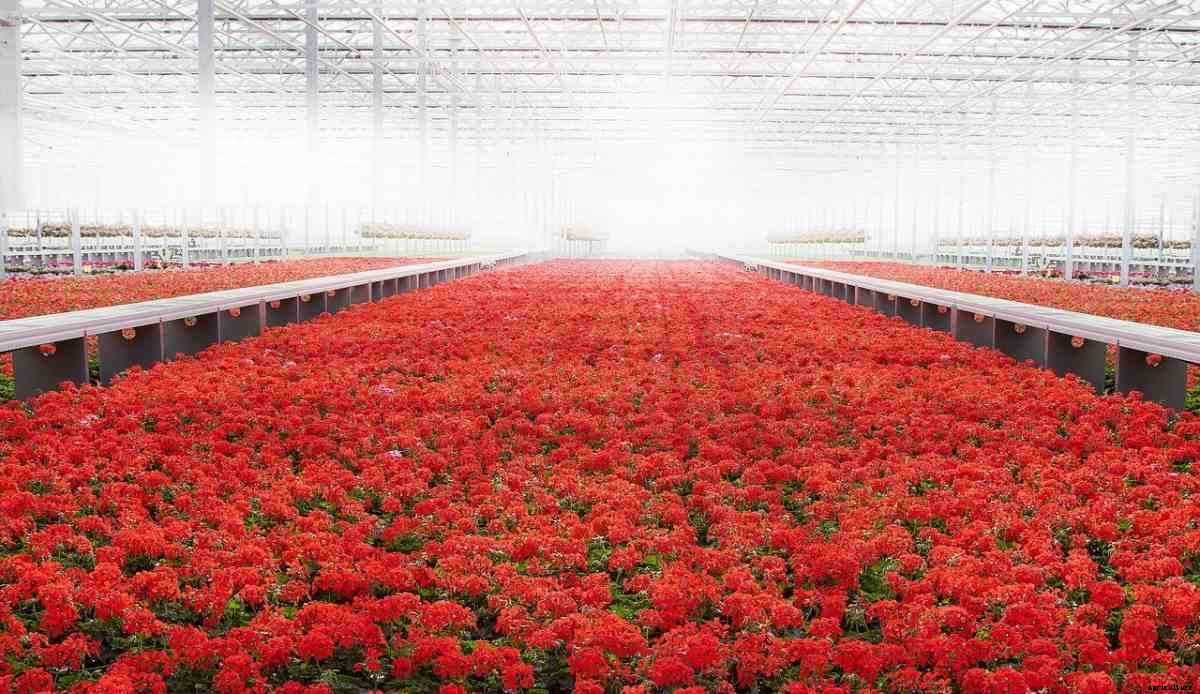
Greenhouse flower farming extends the productive season of the plants. It allows you to start gardening earlier in the spring and to keep flowers blooming longer in the fall. Heated greenhouses make a year-round growing season.
Greenhouse conditions that favor plant growth. Some potential disease problems include damping-off, root rots, powdery mildew, fungal leaf spots, and impatiens necrotic spot virus (INSV). Growing some resistant cultivars and following good cultural practices are the best means of controlling these problems. The common greenhouse insect pests are thrips, aphids, mites, and whiteflies. Other pests that can be encountered during cut flower production either under protection or outdoors include caterpillars and Japanese beetles. Some prevention and careful monitoring are the keys to insect and disease control. Also, weed control in and around the greenhouse will help reduce insect pests and disease problems.
The greenhouse system allows the unique opportunity to control the climate no matter what’s happening outside. In some areas, having better control means you can grow a wider range of plants, even if they never get to venture outdoors. Year-round greenhouse growers will require more complicated systems fitted with heating and cooling systems, ventilation, and lights. Though, you will see the same names appear in the gardening magazines year after year. These greenhouse flowers are varieties of Chrysanthemum, Pelargonium, Carnation, Impatiens, Fuchsia, Begonia, Cineraria, Primula, Streptocarpus, and Kalanchoe.
Some important flower plants growing in greenhouse are;
Abutilon (flowering maple) – Abutilon or flowering maple is a large genus of flowering plants in the mallow family. These are hardy evergreen shrubs that are not difficult to grow. Then, these shrubs have maple-like leaves, hence they are known by the common name Flowering Maple.
Acalypha – Acalypha is a genus of flowering plants that belongs to the Euphorbiaceae family. The common varieties for the greenhouse are Acalypha hispida or Red Hot Cat’s Tail and Acalypha wilkesiana also known as Copperleaf.
African lily (agapanthus) – It is the genus of flowering plants in the Amaryllidaceae family. African lily plant is one of the several names belonging to the variety Agapanthus africanus which originates from South Africa.
Amazon Lily – Amazon lily is a summer-flowering tropical bulb. Mounds of hosta-like, black-green leaves reach about 24 inches in height. Fragrant white color lily blossoms appear on top of tall flower stalks. Amazon lilies do best when grown in containers in a greenhouse system.
Chenille Plant – Chenille plant is an upright flowering shrub that grows 5 to 6 feet tall. Oval, green leaves are 6 to 8 inches long and then cover the stems.
Chinese Hibiscus – Chinese hibiscus plant is a tropical flowering plant that is very sensitive to cold. Green, glossy leaves have slightly ruffled edges. White, pink, red, yellow, and orange color blossoms offer summer color.
Flowers growing in containers are ideal for those with little or no garden space. Whatever container you select, drainage holes are essential. Without drainage, the soil will become waterlogged and plants can die. The holes need not be large, but there should be enough that excess water can drain out. If a pot or container has no holes, try drilling some yourself. The most important thing you can make sure of to ensure the container garden is successful is to use containers with sufficient drainage.
Easy Flowers to Grow in Pots are Geraniums, Petunias, Mandevillas, Hydrangeas, Chrysanthemums, Begonias, and Coral Bells, Impatiens, Sedums, and Coleus.
Finding the Perfect Location – Depending on which flowering plants you choose for an indoor garden, be sure you set them up for success. Sun-loving geraniums or purple hearts plants will thrive near a south-facing window that provides several hours of direct light each day. Take care to avoid any place that’s too drafty, and keep an eye on your plants to make sure they don’t become too leggy.
Make sure the container has a hole at the bottom to allow excess water to drain out. This will prevent water from stagnating around the plant’s roots and causing them to rot. One of the best parts of indoor plants is the ability to select the perfect container. The sky’s the limit on how you can enhance your home’s décor using whimsical containers or found treasures for growing flowering plants. Whatever containers you choose for growing flower plants, be sure the plant will have plenty of drainages. Most flowering plant species grow best when the soil can dry out between watering.
You may also check this: Cattle Feed Business Plan.
Water Requirement for Indoor Flower Farming
Generally, you should be more concerned with over-watering than under-watering; most houseplants are better off slightly dry than sopping wet. The goal is to provide your flower plants with enough water to keep the soil moist but not soggy (with succulents being a notable exception to this rule they need periodic soakings). Most flower plants need to be watered once or twice a week, and less during the winter months. An easy method to check if your plant needs a drink is to stick your finger 2 inches deep into the soil.
Watering flower gardens of any kind is important. Knowing how to water flower plants correctly begins with the basics, how much water they need to grow and thrive. A good general rule to follow for most flowers is 2 inches of water every 7 to 10 days. This is just for the growing season, as many flowers need less during the dormant part of the year. This will let you know how long the sprinklers need to be on for 1 or 2 inches of water to accumulate. Water your flower plants regularly. Unless you are experiencing rain daily, take the time to give water to flower plants. Although individual needs change based on humidity and the type of plant, it is common to add several cups of water to each plant by using a watering close to the soil to avoid disturbing the flowers or causing soil erosion.
Choose the Right Fertilizer for Flower plants
Use fertilizer to supply nutrients. Fertilize houseplants once a month when they’re growing or flowering. During the winter months when plants stay in a stagnant state, it’s acceptable to decrease. Remember that these are general rules, and specific plants require their unique fertilizer schedule or specific fertilizer type. Find the best time to fertilize your specific flowering plants. Fertilize the soil for annual plants, as well as any new planting, during bed preparation. Bulbs need fertilizing as soon as growth appears. Rose plants need fertilizing beginning in May but not after July.
Liquid kelp, seaweed, or fish-based fertilizers are a good choice for container-grown flower plants. By using any natural liquid fertilizer, follow label instructions for mixing rates and application instructions.
Best Plants for Indoor Flower Farming
Peace Lilies – Peace Lily can be one of the easiest plants to grow indoors. You need the right growing conditions though. These tropical flowers are part of the Spathiphyllum family and are recognizable by their dark green leaves and white color flowers. Peace lilies like a temperature level of 68 to 80 F and this will deliver optimal growth. The most common being aphids and mealybugs. Be sure to keep lilies in warm draught free areas. The ideal pH level would be from 5.6 to 6.5.
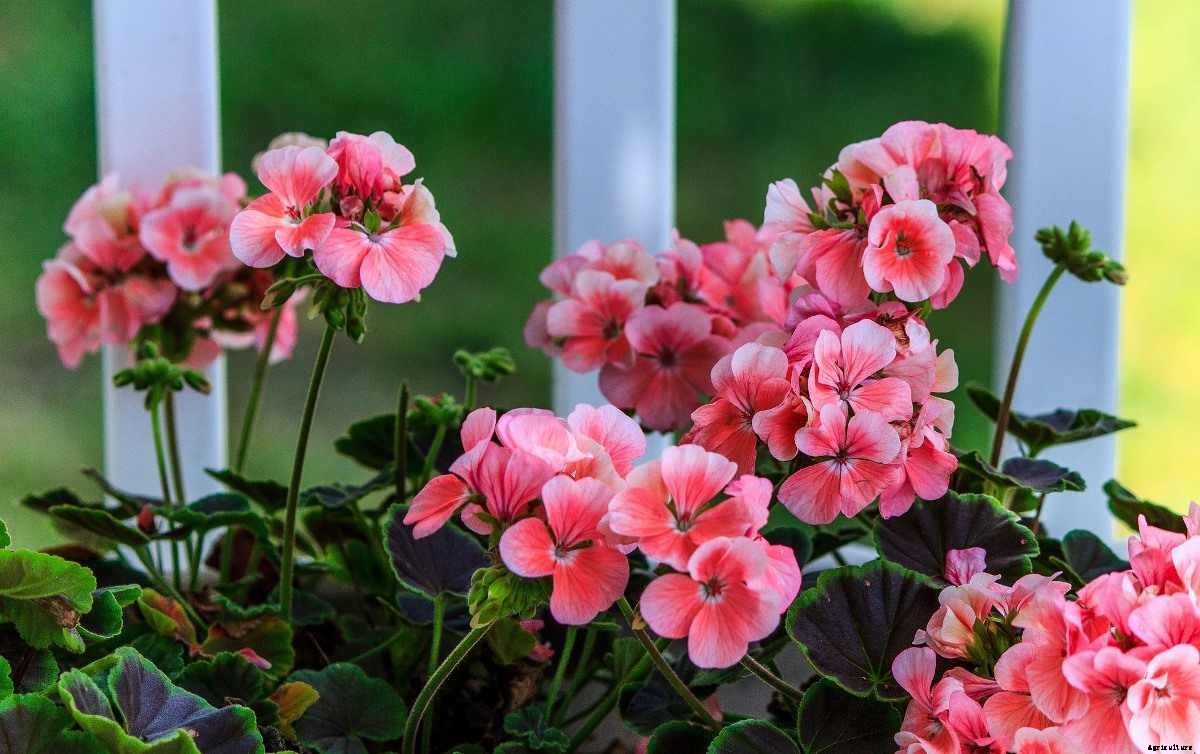
Geraniums – Potted geraniums are excellent indoor plants and grown throughout the year. Many new types are available includes vining and hanging basket cultivars.
Jasmine – To properly care for the Jasmine plant, place it in a bright area and make sure you’re watering it regularly.
Hibiscus – Hibiscus needs a bright and sunny location to grow. If you don’t have enough access to that inside home, consider investing in fluorescent lights that will help promote the plant’s growth. It thrives in tropical weather, so you may want to consider leaving it outside during the warmer months and only growing it indoors during the winter season.
Begonias – Most of the Begonias are easy to grow and good for beginners. Wax Begonia, Rieger Begonia, and Angel-Wing Begonia are among the most popular houseplants.
Roses – Almost any rose variety can thrive inside, as long as it is suited to the conditions you can provide. Most rose plants can be grown in a sunny corner or window location but several species work well with artificial light. Lack of sunlight, dry soil, and also dry air will cause roses to shed their leaves.
Lavender – A great aromatic plant, lavender can bloom fragrant purple flowers and is pretty simple to grow indoors. To keep lavender thriving, make sure it’s potted in fast-draining soil, and make sure it gets as much access to sunlight as it can.
Calendula – Calendula has yellow, orange, or gold color flowers that provide a peppery taste. It is used to color rice dishes instead of saffron. Calendula has a longer blooming season and this allowed it to be used in winter stews.
Chrysanthemums – Chrysanthemums come in a wide range of colors, usually white, yellow, or red. These are best planted in a window with lots of sunlight and they do well in most soils if they are well-drained.
African violet – African violet is one of the most satisfactory flowering indoor plants. African violet plants kept in good growing condition, flower almost always continuously. These are popular houseplants for good reason.
Orchids – Orchids are amongst the most popular indoor flowering plants. Most of their roots will be above the pot and will sprawl outside the container and even along the shelf surface. Your orchids will do well under normal room temperature levels with indirect light from an east or west window. During the short days in the winter season, they can even be moved to direct light or placed in a south window.
Common Pests for Indoor Flower Plants
The common pests of flowering plants are spider mites, fungus gnats, mealy bugs, whitefly, and aphids. The use of plant material for indoor decoration exposes them to all manner of garden pests like caterpillars, slugs, snails, and thrips, many of which thrive once the plants are moved back indoors. For this reason, plants that are being moved from decks, and patios, etc., to the home or office should be washed thoroughly with a spray of clear water.
Common Diseases for Indoor Flower Plants are Botrytis blight, Powdery mildew, Sooty mold, Root rot, Leaf spot, Fire blight, Blackspot, and Rust. The best cure is to remove affected plant parts and avoid splashing the plant when watering, and give more space for air circulation, or move infected plants to a drier place.
Lack of light
Symptoms
Solution
Too much light
Symptoms
Solution
Lack of humidity
Symptoms
Solution
Lack of fertilizer
Symptoms
Solution
Too much fertilizer
Symptoms
Solution


