
Welcome to Modern Agriculture!

Growing Calendula from Seed
Hello friends, we are here with a new topic called “growing Calendula from seed”. The scientific name of Calendula is Calendula officinalis and it is a member of the Asteraceae family. Calendula is also called Pot Marigold, English Marigold, or Poet’s Marigold is an Annual Flower. It is an annual plant and it self-seeds easily so the plant will grow on its once in the next season and it can survive the winter season in mild climates. Calendula is planted as a companion plant to many plants like tomatoes and potatoes to help deter insect pests and can be easily grown in the comfort of your home.
The lovely colorful flowers of this Calendula plant add a splash of bright color to the garden. Its edible flowers are mainly used to a distinct flavor to salads and other dishes. It is highly tolerant to cold weather and has been used as a container herb for a very long time. It can flower from spring right through summer and autumn season until plants get halted by frost in the winter season. It grows up to knee height depending on soil and variety. Also, it is easy to grow from seed and blooms long without the need to deadhead.
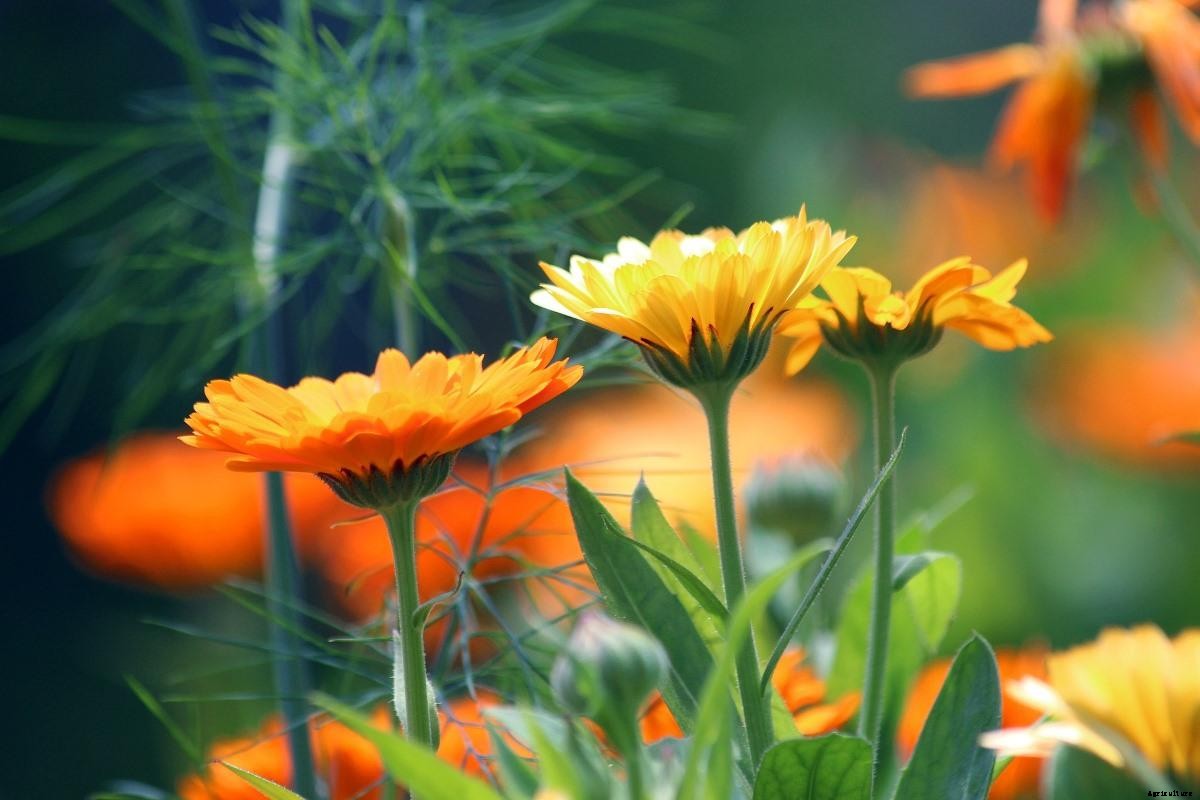
There are several varieties and Calendula cultivars, offering flowers of slightly different appearances. Some popular Calendulas include;
‘Touch of Red’ – It has dark red underneath and on the edges of each petal. Flowers feature red-tipped petals with shades of yellow and orange color.
‘Triangle Flashback’ – It has soft and apricot-pink color flowers.
‘Radio extra’ – It is a tall variety with bright orange, cactus-like blooms
‘Pink Surprise’ – It has ruffled gold and yellow color flowers
‘Touch of Red’ – Flowers with a mixture of orange and red color shades with red-tipped petals
‘Neon’ – Double-petaled flowers in bold colors
‘Greenheart Orange’ – Flowers with orange color petals surrounding lime-green centers.
‘Tangerine Cream’ – Double-petaled flowers with bi-color blooms of bright orange and cream
‘Bronzed Beauty’ – Cream and peach flowers that grow on tall stems
‘Citrus Cocktail’ – A compact, short plant with yellow and orange flowers; works well in containers
‘Sherbet Fizz’ – It has buff-colored flowers with deep red undersides petal tips
‘Dwarf Gem’ – A compact variety with double-petal blooms of orange, yellow color flowers
‘Fruit Twist’ – It has a mix of single, double, and semi-double flowers in yellow and orange color flowers
‘Art Shades’ Mix – Flowers have bright variations of yellow and orange, in single color or bicolor. They tolerate poor sites well.
‘Bonbon’ Series – It has extremely dense, pompom-like flowers, grow in shades of yellow and orange color. Look good in containers. Buy beautiful pots online.
‘Calypso’ Series – It has compact, dense plants great for container growing. Flowers have dark-colored centers and feature shades of orange and yellow color.
Are marigold and Calendula the same? The simple answer is No. Both plants are members of the sunflower or Asteraceae family. Usually, Marigold plants are members of the Tagetes genus includes at least 50 species while the Calendula plant is a smaller genus with 15 to 20 species.
Seeds – Calendula seeds are brown in color, curved, and slightly bumpy. Marigold seeds are straight black color seeds with white color, paintbrush-like tips.
Shape – Generally, Calendula petals are long and straight, and they can be orange, yellow, pink, or white. Marigold petals are more rectangular with rounded corners. They aren’t flat, but slightly wavy. Flower colors range from orange to yellow, red, mahogany, or cream.
Generally, Calendula plants mostly prefer full sun but will tolerate light shade in warmer regions. It is best planted in prepared garden beds or large containers filled with organic potting soil. Before planting, use a shovelful or two of well-aged manure or compost into the ground to improve soil conditions.
Calendula requires full sun or part shade. Calendula will not do well in the hot summer heat and prefers the cooler temperatures of the spring season and early fall season. Water the Calendula plants regularly until well established. Calendula is tolerant of ordinary soil, yet prefers optimal conditions that offer rich and nutritious organic soil. It does well naturalize in meadows and herb gardens, as well as in the flower border.
Calendula grows in most soil types and will even tolerate partial shade. The plants do best in sunny positions though, especially on well-drained soil. Sow the seahorse-like seeds in the autumn or spring season. Sowing them in autumn will give the Calendula plants a head-start and you’ll see flowers much earlier. Calendula seeds germinate best at between 15-25°C. Though, sow about 6 to 8 weeks before the first frost in modules filled about 1-part perlite mixed with 3 parts multi-purpose compost. Then, top dress with horticultural grit waters it in and keeps moist undercover in a bright place. The seeds must be sown 1.25cm (1/2”) deep.
You’ll see leaves emerge 6 to 15 days after sowing. With protection from both the cold and slugs the plants will overwinter well and you can plant them outside after the last frost in the spring season. If growing in a tray, you’ll probably want to plant them individually in modules before the winter season.
You can sow Calendula seeds in modules in the spring season. Use the same instructions above and sow 6 to 8 weeks before the last frost date if you’re starting them off inside or in a heated greenhouse. If your greenhouse is unheated, sow seeds after the last average frost date.
Calendula plant care in a container couldn’t be easier and keep the soil moderately moist. Generally, the plants do not need fertilizing, but a high phosphorus formula can encourage more blooms. Calendula plants don’t need deadheading, as their seed heads are quite ornamental. Pull off the Calendula seeds and save them in an envelope in a dark and dry location until the next season.
Use a natural product to ward off slugs and snails, which seem to find Calendula as tasty as we do. For minimizing pests like aphids, whiteflies, and cabbage loopers apply insecticidal soap sprays every few days. Therefore, these natural practices will preserve the flavor and safety of the Calendula flowers.
It is best to grow Calendula seeds indoors 6 to 8 weeks before the last spring frost in colder climate conditions. Fill about 2-inch peat pots with potting soil, leaving a half-inch of space between the potting soil’s surface and the top of the pot. Sow 2 Calendula seeds in each pot at a depth of about 1/4-inch. Light inhibits Calendula seed germination so be sure the seeds are completely covered with soil. Mist the soil until it feels very moist in the top about 1/2 inch, and then cover the pots by using a sheet of plastic wrap.
Set the peat pots near a large and sunny window with southern exposure. Make sure the location you choose receives at least 6 hours of bright, direct sunlight each day. Watch for the germination process in 10 to 14 days. Remove the weaker of the 2 Calendula seedlings from each pot if both seeds germinate. Then, discard the plastic wrap when the Calendula seeds germinate.
Transplanting Calendula Seedlings – Calendula seedlings are adaptable and establish quickly after transplant but they perform best if slowly acclimated to outdoor conditions, which is a process called hardening off. Slowly expose the seedlings to direct sun and wind after the first week of planting. After 2 weeks, the seedlings can be transplanted into a sunny garden bed with moderately fertile, fast-draining soil or into a large pot with drainage holes at the base.
Transplant Calendula seedlings approximately 16 inches apart to provide enough space for their mature spread. Be sure to plant the Calendula seedlings at the same depth they grew in their pots. Keep the soil moist during the first 2 weeks after transplant, then water whenever the soil feels mostly dry in the top inch.
In case if you miss this: Growing Eggplants from Seeds.
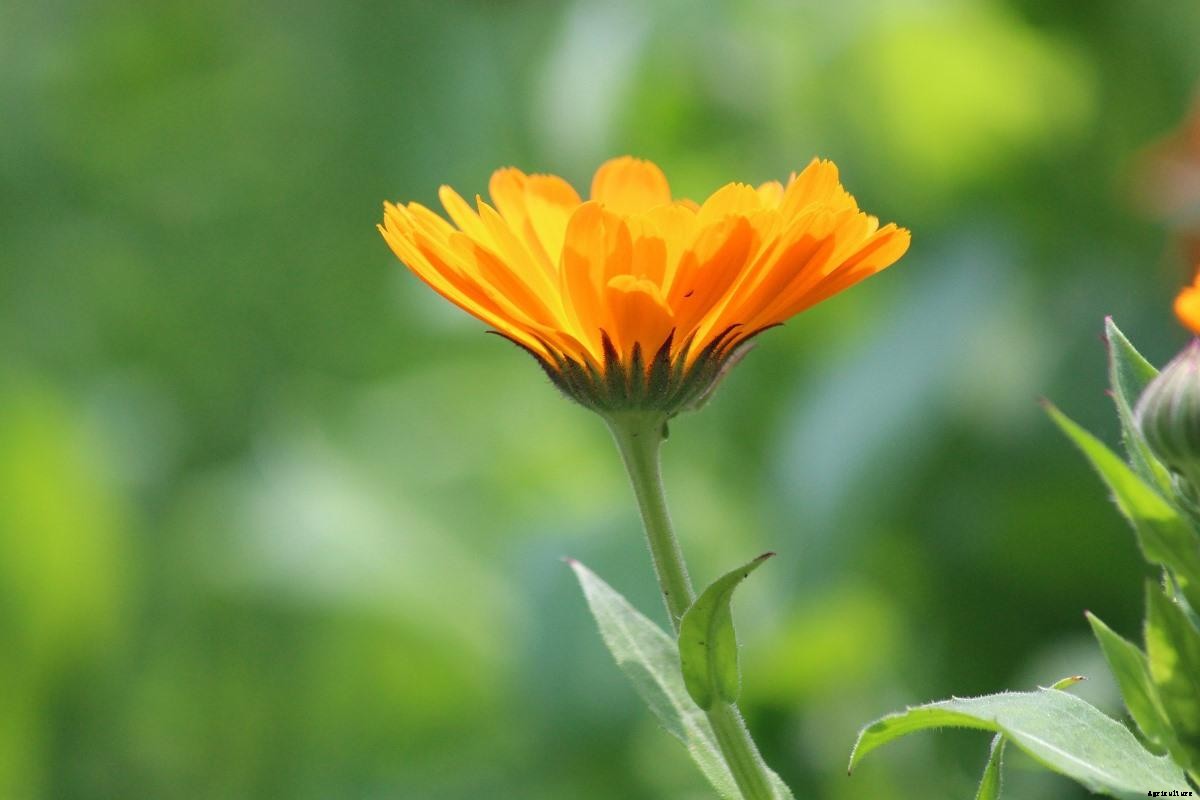
To promote Calendula flowering, stress the plant by reducing water intake after about 4 or 5 weeks. For 3 days, do not water your plant (or water very little if you have rapidly draining soil). After 3 days gradually increase water and you should see blooms after about 3 days.
A layer of garden compost spread in the garden before sowing Calendula seeds will encourage healthy growth, yet over-fertilizing will produce more leaves than flowers. Supplement mid-season with liquid seaweed or organic fertilizer spread at the plant base.
With fertile garden soil, the Calendula plant requires no additional feeding at all. Marginal soils may need feeding with a balanced water-soluble fertilizer, but over-feeding can make the plants leggy and spindly. Growing Calendula plants in containers require monthly feeding with diluted balanced fertilizer.
Spring mulch by using a layer of natural bark or hay around the plant base, may reduce weeds and keep the soil moist.
Insects and diseases are not a problem for Calendula plants. The Calendula flower can help deter insect pests, making it a good companion plant for vegetable gardens. One of the most common problems for growing Calendula is a tiny insect that likes the blooms as much as you do. Aphid feeding causes curled leaves and they produce honeydew which attracts ants. Aphids love to feed on the undersides of the plant leaves, if this Calendula problem is severe, treat the plants with insecticidal soap. Whiteflies are small white flies that hide and feed on the undersides of the plant leaves. Just as with aphids, these can be controlled by using a hard stream of water or application of insecticidal soap. Other pests that can cause Calendula issues include snails, slugs, and thrips but they tend to be a very minor threat.
Additional problems with growing Calendula include the fact that these plants may be susceptible to powdery mildew. This fungal disease causes white fungal patches on the plant leaves that easily spread to other plants. It is fostered by cool, wet weather. To manage powdery mildew disease, plant to allow for air circulation, and remove any infected plant parts. Calendula smut disease is another disease that can plague the plants and results in brown spotting. Alternaria leaf spot causes small red or purple color spots to appear. Apply a fungicide and practice good garden sanitation for fungal diseases. Aster yellows, caused by a phytoplasma rather than a bacterium or fungi, are another problem of Calendula. It causes plants to become stunted with yellow-green color leaves and flowers and eventual death. Remove and destroy any infected plants.
You may also check this: Growing Broccoli In Greenhouse.
To combat diseases in Calendula plants, practice good sanitation, allow sufficient space between plants, and apply fungicides. Crop rotation is also an important part of managing diseased Calendula plants. Then, remove and discard infected plants to slow the spread of the disease. In the case of aster yellows, keep the area around the Calendula plants weed-free and take steps to control them. Also, remove infected plants.
Some growers find the taste bitter, the flowers and leaves of Calendula can be used in salads and other recipes. Also, Calendula is a medicinal herb that has been used in topical ointments for cuts and scrapes.
Harvest Calendula when fully bloomed, using only the petals for consumption. Carefully collect Calendula flowers in the late morning, after the dew has dried. Pick flowers when they are fully open, and check because they come and go quickly. Though, turn them occasionally until they are papery dry, and then store them in canning jars until ready to use.
Does Calendula come back every year?
The Calendula flower is an annual plant that will readily reseed.
Will Calendula grow in shade?
Calendula is best planted in well-drained soil of loam, sand, and chalk within a neutral, acidic, or alkaline pH level balance. The plants are best positioned in an area of full sun or part shade.
How many hours of sun does Calendula need?
Grow Calendula in a spot with full sun means at least 6 to 8 hours of direct sun per day.
Why is my Calendula plant dying?
If Calendula plants die out due to hot summer weather conditions, cut them back hard and water. Then, they will start growing again when cooler weather returns. Plants can self-sow, so allow some to set seeds and remove plants after they are killed by heavy frost in the fall to avoid disease issues the following year.
How long does it take for Calendula to grow?
Calendula plants are easy to grow from seed and quickly grow to maturity in 6-8 weeks after sowing.


