
Welcome to Modern Agriculture!

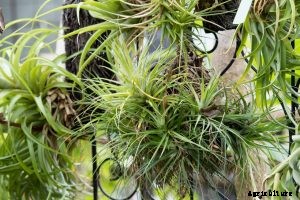 Tillandsia butzii or Butzii Air Plants are epiphytes that grow naturally in the forests of Latin America. These plants are known for their unique aesthetics and lifecycle.
Even though Butzii Air Plants can greatly improve the beauty of your home, they need your care and attention. In this article you will learn everything there is to know about Tillandsia butzii.
Tillandsia butzii is in the genus “Tillandsia”. Plants in this genus are also called “Air Plants”. For this reason, the Tillandsia butzii plant can also be called the “Butzii Air Plant”. Some important details to know about Butzii Air Plants can be found below.
Tillandsia butzii are native to Costa Rica and Mexico. These are special plants, as they are epiphytes. This means that instead of growing on the forest floor, they grow on the bark of trees. Some plant species in the Tillandsia genus can even grow on rocks!
Carl Christian Mez was the first person to describe Tillandsia butzii in 1935. Over the years, Butzii Air Plants are becoming more popular in places outside their natural habitats as ornamental plants.
You can surely identify Butzii Air Plants with their special and unique features below:
I am sure that now you can identify a Butzii Air Plant when you see one!
Butzii Air Plants are becoming more popular. Some common uses for these plants are:
Awesome uses, right? Now that you know the history, uses, and ways to identify Butzii Air Plants, you would surely want to grow one for yourself.
How do you care for your Butzii Air Plants? Follow the tips below!
The first step in caring for your Air Plant is to get the plant. You can purchase Air Plants from florist shops or buy from exotic plant websites. A possible alternative if you don’t want to buy is to ask someone who has Air Plants for their Air Plant pups after their Air Plant has a successful bloom.
Now you need to pay close attention to the way you hang your Tillandsia butzii. Remember that Air Plants are epiphytes. As epiphytes, you cannot plant your Butzii Air Plants in soil. The root of your Air Plants must be exposed to the air. If the roots of your Air Plant are not exposed to the air, your plants can develop root rot (read more about that later in this article).
Here are the recommended ways to hang your Butzii Air Plants:
Remember that you aim to expose the roots of your plants so that they can get as much air as possible. It would help a lot if you keep your air plants in a room with proper ventilation. Many Air Plant hobbyists install fans to aid with air circulation in the room.
Giving proper light to your Tillandsia butzii is important for their growth. Butzii Air Plants need indirect bright light. In their natural habitat, Butzii Air Plants are in tropical forests with bright sunlight. They, however, do not receive direct sunlight as the canopy of trees that they anchor on can prevent most rays of light from reaching them.
You should place your Air Plants close to a window. Their light requirements amount to about 4 hours of direct sunlight daily. They should receive indirect sunlight for the rest of the day. If you have no access to the sun, you can use fluorescent tubes.
Watering Air Plants is what distinguishes professional florists from new timers. Make sure that you pay close attention to the water needs of your Butzii Air Plants as watering them inappropriately can cause root rot.
Here are essential watering tips for Butzii Air Plants:
After soaking or misting your Butzii Air Plants, make sure that they become dry in less than four hours. You should shake off any excess water or place the plant close to a fan.
Air Plants need medium-dose fertilizer. You should fertilize your Butzii Air Plants twice a month. To feed your Air Plants, pour a teaspoon of fertilizer into a gallon of water and soak the Air Plant completely in the nutritious water for 10 minutes. Make sure that you shake off every excess water or fertilizer from the plant.
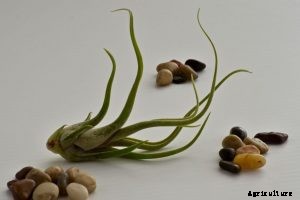 Like other living things, a time would come when your Air Plants will need to reproduce. When your Butzii Air Plant starts to blossom, you should know that it is time for propagation. In the wild, Air Plants pollinate themselves by wind, but as indoor plants, you will propagate them yourself.
You should use a cotton swab to collect pollen (the yellow dust in the flower ears) and rub it against the inner wall of the flower stigma (a depression in the middle of the flower). If you cannot pollinate the plants by yourself, install a fan in a room full of blooming Air Plants and leave the fan switched on for at least 12 hours (to help circulate pollen grains).
Successfully pollinated Butzii Air Plants will produce pups (little shoots growing from their roots). These pups are little Air Plants. Sadly, Butzii Air Plants will die after producing pups.
No one is perfect and we all face challenges. Here are some difficulties you can face when growing Butzii Air Plants:
Root rot is a very common problem for Butzii Air Plants. When the roots of your plants are becoming dark-brown and the leaves are withering, your plants may be suffering from root rots. Root rot is caused when too much moisture is trapped in the root of your Air Plants. To prevent root rot, do not overwater your plants. Also, make sure that your Air Plant is dry within four hours after watering.
If your Butzii Air Plants are developing pale leaves, it could be because of one of the three reasons stated below:
Your Air Plants should not have pale leaves as it spoils the beauty of the plant and could also indicate a dying plant.
Is the flower of your plant dying while no pup has been produced? It means that your plant does not have enough nutrients. Butzii Air Plants as well as other Air Plants need nutrients when blooming to produce pups. Even though reducing their fertilizer intake can increase the duration of your Butzii Air Plant blossom, it can also prevent your plant from producing pups before it dies.
You have indeed learned everything about Tillandsia butzii! Here’s an easy summary to remind you of the key takeaways of this article:
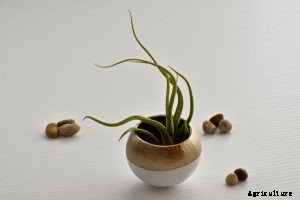 Tillandsia butzii can also be called Butzii Air Plants
As you can see, Tillandsia butzii plants are unique and awesome and you need this plant in your collection, don’t you think? Try growing Butzii Air Plants to improve your home aesthetics and gardening skills!


