
Welcome to Modern Agriculture!

Growing Organic Beetroot
hello friends, we are here with a new topic called ” Growing Organic Beetroot“. Beets are herbaceous biennial root vegetable plants belong to the Chenopodiaceae family grown for their edible root. Beetroot is a cool-season crop and also grow well in the cool temperatures of the spring and fall season. They do poorly in hot weather conditions. These plants are well suited to large or small home gardens since they need little room. They are grown for both the pickled roots and the young tops which are used as greens. In this article we also covered the below topics about how to plant organic Beetroot;
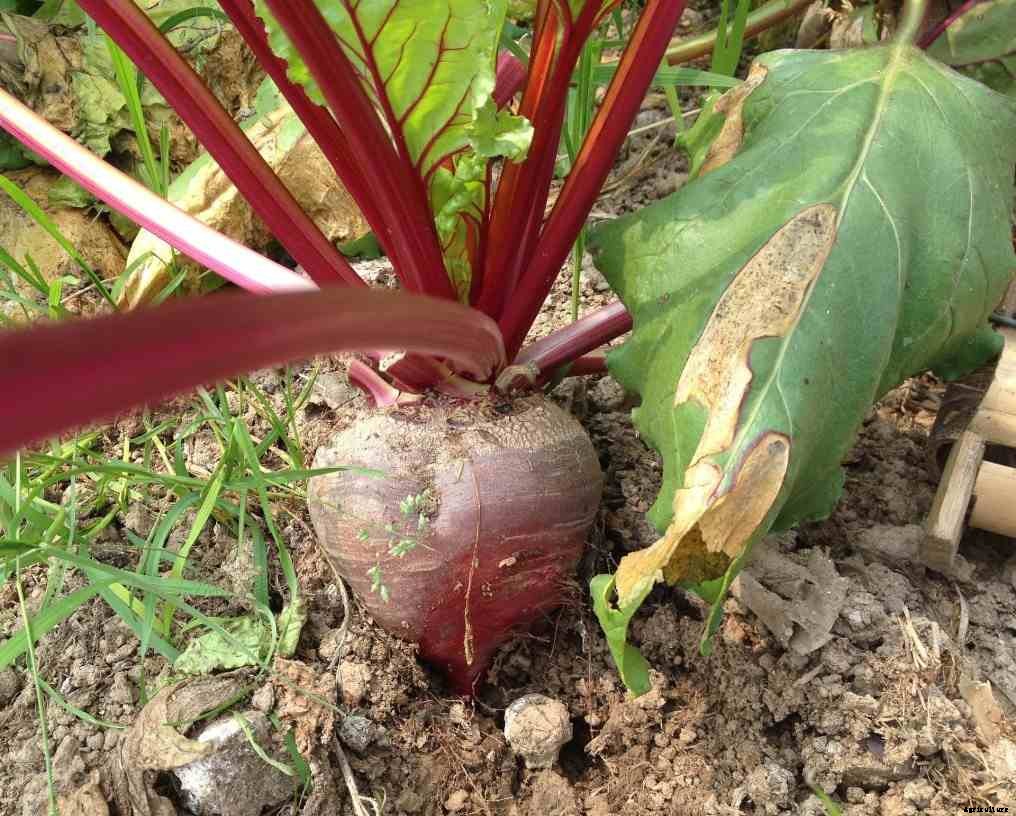
Beets are cold-hardy and grow year-round in areas with mild winter conditions. The plant leaves are oval, arranged alternately on the stem, and grow 20 to 40 cm in length. The roots are usually red.
Different Varieties of Beetroot
Beetroot varieties differ in root color, shape, and time to maturity.
Some of the varieties are Avalanche (white), Chioggia Guardsmark (red and white rings), Detroit Dark Red (red), Falcon (red), Merlin (red), Red Ace (red), Ruby Queen (red), Touchstone Gold (yellow), and Crosby (greens or roots), etc.
Some of the earliest maturing heirloom Beetroot varieties include;
Some of the hybrid Beet varieties include;
Some specialty Beet varieties grown for specific characteristics are;
Beetroot requires full sun and it requires 6 to 8 hours to grow healthy roots. Any less and roots will only grow to be small and the sunlight is vital for photosynthesis to occur.
Beetroot is planted from July – August. Beetroot is hardy to low temperature and also prefers a cool climate. Though Beetroot grows in warm weather, the development of color, texture, and sugar content, etc. of roots is the best under cool weather. An extreme low-temperature level of 4.5-10°C for 15 days will result in bolting. It needs abundant sunshine for the development of storage roots.
Beetroot farming is done through seeds. Seeds are sown at a depth of about 1.5 to 2 cm and a distance of 6 to 7 cm is kept between them. Each row should have a minimum distance of about 35 cm between them. Beetroot farming starts between mid of April and mid of July, however, might vary from place to place due to different climatic conditions prevailing in those places. Constant watering must be done for the effective and efficient cultivation of Beetroots. It takes around 15 days before the Beet seedlings will start to appear above ground. When the Beet seedlings reach a height of around 4 cm, thinning is required that means removal of weak seedlings and a distance of about 8 to 10 cm is to be maintained between each seedling. The plant at its maturity reaches a height of about 8 to 9 cm and takes around 2 months to do so.
Grown Without Synthetic Pesticides – Organic Beet seeds are formed without the use of synthetic pesticides and fungicides.
Certified Organic – Seeds are USDA Certified Organic, Non-GMO, and Open-Pollinated (except hybrid seeds). Remember that the crops grown from our seeds are of the highest quality.
Guaranteed to Germinate – Brand vegetable seeds are guaranteed to germinate. If they do not, just contact and replace them.
Beets are direct seeded and can be planted as soon as the soil is workable in the spring season. The soil must be prepared for planting by first removing any large rocks and stones and then working in 2–3 inches of compost or well-rotted manure. Plant one seeds every 2.5 cm at a depth of about 13 mm in rows spaced 30–40 cm apart. Keep the seedbed well-watered and seedlings should emerge in 5 to 17 days at temperatures between 10 and 24°C. When Beet seedlings have reached between 7 and 10 cm in height, thin to a final spacing of about 7–10 cm between plants. For a continuous harvest, plant Beet seeds every 2 to 3 weeks as long as the daytime temperature stays below 26.6°C. Most Beet plant varieties mature in 55 to 70 days.
The Beetroot is a cool-season, root vegetable that tolerates frosts and mild freezes. Seed germinates at soil temperature level between 4 and 32°C, optimally 10 to 29°C. Beetroot plants withstand cool growing conditions and the seed germinates at soil temperature levels below 50°F, planting can begin in late April. The Beetroot quality and color are obtained when the crop matures during cool temperatures and bright sunlight. Premature seed stalk initiation can occur if the plants are subjected to 2 to 3 weeks of temperatures below 7°C after they have several true leaves. Some Beet varieties initiate premature seed stalks more readily than others; many of the newer varieties are less sensitive to this problem.
Well-drained, sandy loam to silt loam soil is preferred for best plant growth and quality. Beetroot can also be grown on muck soil, but weed control is difficult. A soil with good structure is highly recommended because Beetroot responds favorably to aeration.
A Beet seed ball normally contains from 2 to 4 viable seeds, and more plants than seed balls may result, especially if conditions are favorable for germination. Larger seed balls have more seeds than do smaller seed balls. Beetroot plants are sometimes thinned for the fresh market.
Step 1) Find a planting location for the organic Beets that receive direct sunlight.
Step 2) Till organic compost into the garden. Carefully use compost made from organic plants and materials that weren’t sprayed with non-organic chemicals.
Step 3) Carefully apply an organic fertilizer to the soil a week before you plant the Beet seeds. Avoid fertilizers that are high in nitrogen, which can increase leaf growth while decreasing root growth in your Beets.
Step 4) Sow the Beet seeds about 2 inches apart in the spring when the soil temperature reaches between 4 and 32°C. Leave at least 12 inches between rows.
Step 5) Thin rows as plants develop and apply about 4 to 8 inches of mulch to help maintain soil moisture and limit weeds. Promote rapid plant growth by feeding every 3 weeks with a balanced organic fertilizer and seaweed extract. Pull weeds as they appear so they don’t compete with the Beets and then make them tough. Also, removing the weeds by hand eliminates the need for herbicides.
Step 6) After that, pile organic mulch in the garden around the Beet seedlings. As the Beetroots begin emerging from the ground, cover them with the mulch or with additional organic soil to protect them from the sun until the roots are ready to harvest.
Step 7) Then, remove leaves from Beet plants that show signs of pest infestation. For example, leaf miners leave lines in the Beet leaves. Spray a stream of water to remove any aphids you see on the Beetroot plants. These removal methods help you avoid pesticides.
Step 8) Pull out any plant debris that falls from the Beets throughout the growing season. This practice, along with the regular rotation of Beets and other plants, reduces the risk of downy mildew disease.
In case if you miss this: How To Grow Coriander Organically.
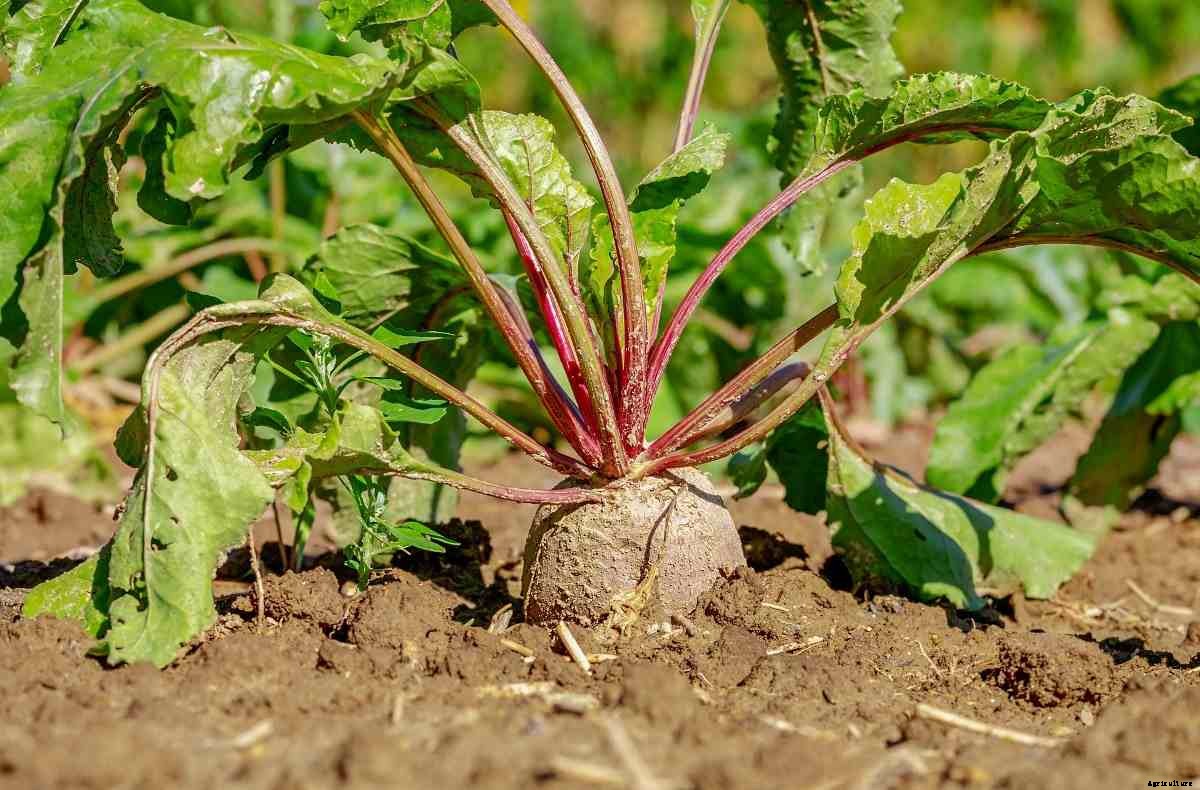
Water the Beet plants well weekly if it does not rain. Beetroot systems can reach about 36 inches or more if adequate soil moisture is available. Carefully check if your plants need to be watered, dig down into the soil with your fingers near your Beets crop. You want the soil at 3inches deep to be slightly moist. If it’s wet, hold off on watering. If it’s dry, give them a shallow soak. If you don’t get any rain, a light to moderate watering twice a week is enough.
Be careful not to wash away the soil around the Beets when watering the plant. This is important if you are growing them in raised rows. After that, find a simple overhead sprinkler does a good job of getting the ground wet without causing soil erosion. Leave it on Beet crop for about 10 minutes or so, and that’s long enough to give them the water they need. To help the soil retains moisture and to prevent erosion, you can use mulch around your Beetroot plants. Straw, grass clippings, or chopped-up leaves work well for mulch to plant growth. Then, it is best to wait until the Beet tops are a few inches tall before adding mulch.
Now the demand for ‘organic’ food and health concerns is increasing day by day. As a result, the application of chemical fertilizers has realized the need for the application of organic manure to meet the increasing requirements of plant growing. The use of organic fertilizers can increase the productivity and quality of Beetroot. But, the application of organic manures does not meet the nutrient demands of the crop during the initial phase of plant growth because of their slow release.
Organic fertilizer for growing Beets;
Beet Leaves Are Turning Yellow – If your leafy greens are turning yellow color, it can be a few different problems that you would need to address. One possible condition that can be causing Beet leaves to turn yellow color because of nutrient deficiency. Beet plants that don’t have enough sulfur can cause plant leaves to change from green to yellow color. Test your soil to check sulfur levels.
Or it could be that your Beet plants have a disease or you could be dealing with a simple case of pests. Pests and diseases go hand in hand as insects are the cause of plants getting infected with an illness. But that’s not to mean that all insects cause disease in plants. Some types of insects are beneficial to Beet plants.
Curly Top – If you’re dealing with infected Beet plants, the most likely cause of yellowed Beet leaves would be Curly Top. This disease is mainly caused by insects called leafhoppers. In addition to yellow leaves, your Beet plants will also have stunted growth and will eventually die. The leaves of Beet plants infected with Curly Top will start to curl in on it, with swollen roots. Then, the Beet bulb will have discoloration, and then the roots will become twisted.
There is no treatment for Curly Top. Once your Beet plants are infected, they will eventually die. But while they are alive, your healthy Beet plants are at risk of becoming infected too. The best course of action is to destroy infected Beet plants immediately upon diagnosis.
Beetroots are seldom bothered by pests or disease, but prevention is always the best measure. Choose Beet seed varieties that are resistant to pests and diseases, and plant Beets in a different spot each year to minimize the risk of contracting or spreading infections. Make sure to use drip irrigation and organic mulch to minimize the spread of plant disease via water droplets. If Beet plants have been eaten down to the soil, cutworms are usually the culprits. Sprinkle wood ash around the base of the Beet plants to prevent them.
Flea Beetles make tiny holes in Beet leaves, but healthy Beet plants will quickly outgrow the damage.
Aphids and thrips can deform Beet plant leaves, so spray them with a non-toxic, insecticidal soap. Silvery webs on the undersides of Beet leaves can be the work of spider mites; also this can be sprayed with insecticidal soap.
Rabbits eagerly eat Beet greens, and voles can attack Beets from below just as they form big roots. You can keep these and animal pests out of the garden with appropriate fencing.
Beet plant leaves also can get Cercospora leaf spot, a mild fungal disease made worse by poor plant nutrition and warm, humid weather. Cercospora leaf spot affected plant leaves develop small spots and cracked tan edges. To prevent this plant disease with good crop rotation practices, adequate thinning, and a high level of soil fertility. Once it has occurred, remove infected Beet leaves at once to prevent further spread.
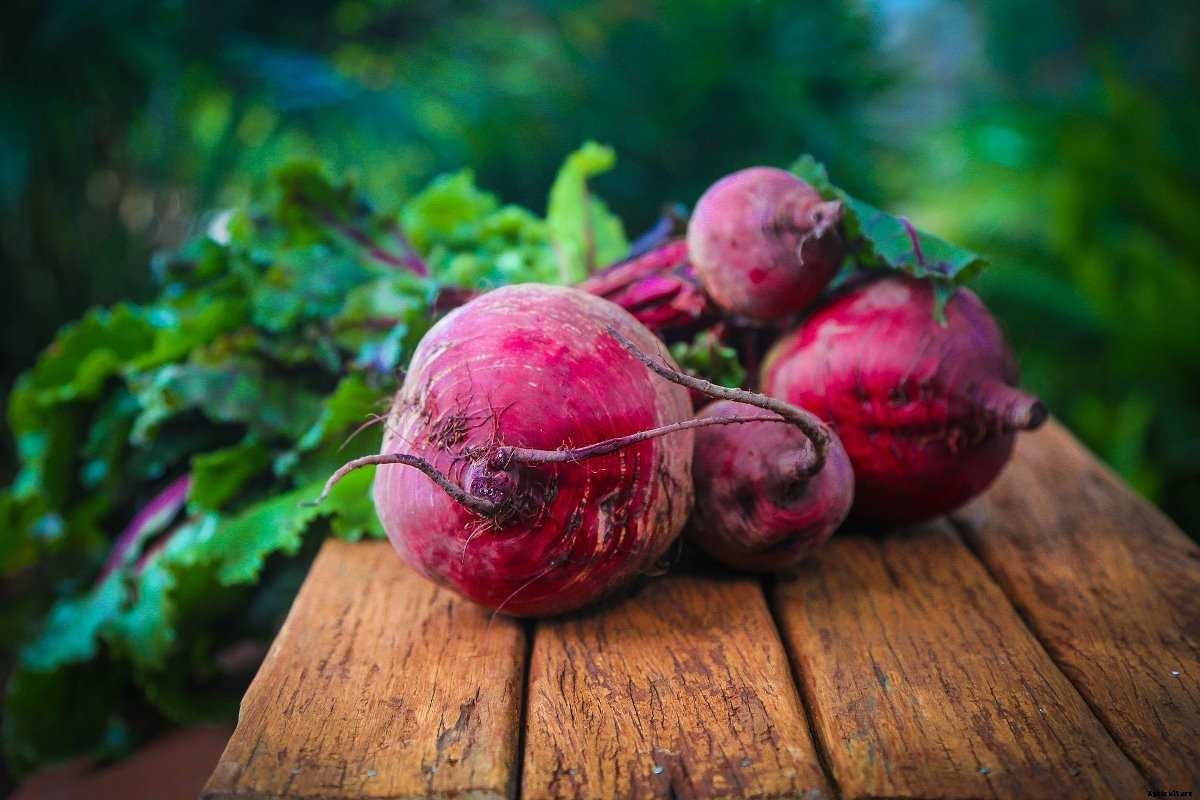
Generally, Beets take approximately 45 to 65 days to mature. Pick the greens anytime, but harvest the Beetroots when they are between 1 and 3 inches wide, for the greatest sweetness. Picking a leaf or two from each plant won’t compromise their root growth, but many gardeners prefer to wait until the Beet is ready to harvest to pick the inner leaves. Beet plant leaves taste best when they are about 6 inches long, but baby greens are wonderful in salads and bigger leaves still cook up nicely. Roots must be firm, smooth-skinned, and deep in color. Smaller, younger Beets can be so tender that peeling won’t be needed after they are cooked.


