
Welcome to Modern Agriculture!

Growing Peas in Greenhouse
Hello friends, we are here with the topic of growing peas in Greenhouse. Pea (Pisum sativum L.) is a commonly grown leguminous vegetable in the world and it belongs to the Fabaceae family. Peas can be grown also in the mild climate of the tropics. Pea is also called garden Pea. Pea is a cool-season crop grown throughout the world. Green Pea pods are used for vegetable purposes and dried Peas are used as a pulse. In this article we also discuss the below topics about growing Peas in the greenhouse;
Now, let us get into the detailes of growing peas in Greenhouse.
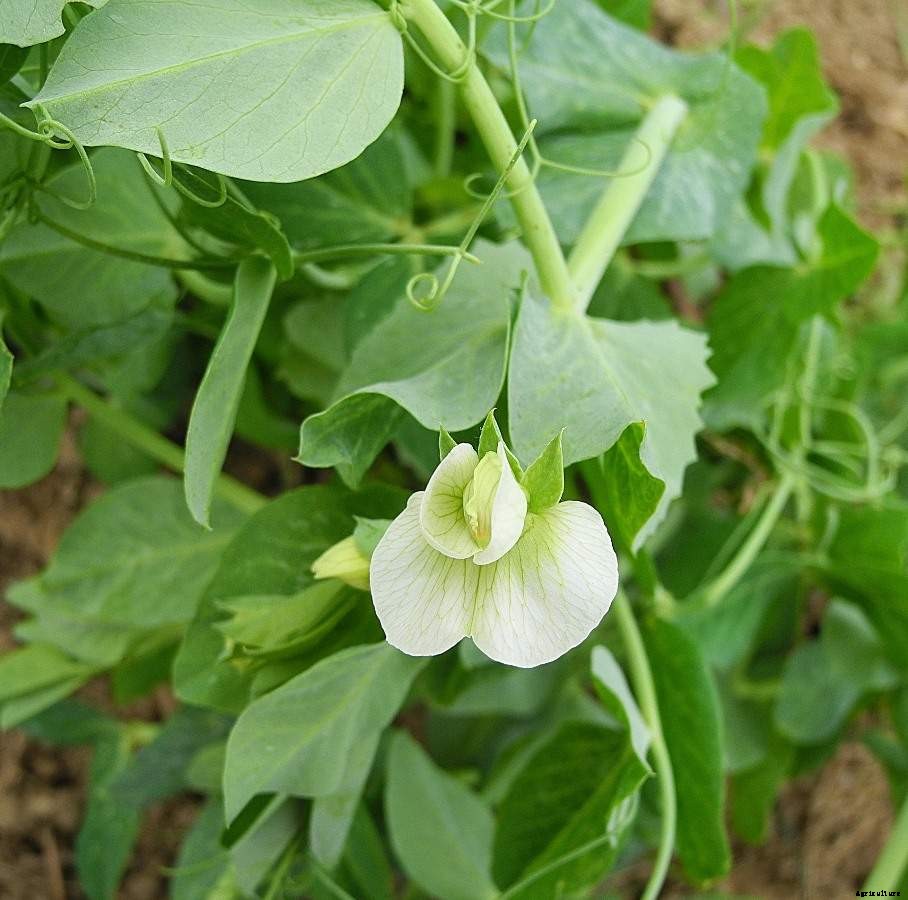
Growing Peas in a greenhouse will give fresh Peas all year round. Greenhouse vegetable plants growing faster and stronger compared to grown in a traditional garden. When it’s below freezing outside, passive solar collectors and small heaters can leave the interior of a greenhouse cool but perfectly loveable for most spring vegetable crops. In the heat of the summer, fans and other cooling units can protect some plants from the scorching heat of a southern climate.
Proper planning plays a very important role in the greenhouse system. You can sustain a very fruitful harvest at any time of the year with the help of a greenhouse. Check the space, the soil, the temperature, and water sources for greenhouse setup. If you sow Pea seeds direct into the ground, plant them 1 inch deep and relatively closely at about 1 inch apart, to make up for a higher loss rate.
Greenhouses with moisture regulators keep the air humid for plant growth. The main challenge of supplying high-quality vegetable plants all year round in greenhouse can be met by adopting one of two basic strategies are;
Pea plants are well suited to a greenhouse, as they are much more cold-tolerant than other vegetables. If you love Peas and have a greenhouse set-up, then this vegetable certainly deserves a place within it. The major field of Pea growing state in India is Uttar Pradesh. It alone produces about 49 % of Pea produced in India. Also, Uttar Pradesh, Himachal Pradesh, Punjab, Haryana, Karnataka, Rajasthan, Madhya Pradesh, Bihar, and Maharashtra are the major Pea producing states in India. Besides vegetable purposes, also it is grown as a forage crop for cattle and cover crop to prevent soil erosion but mainly for matured seed for human consumption.
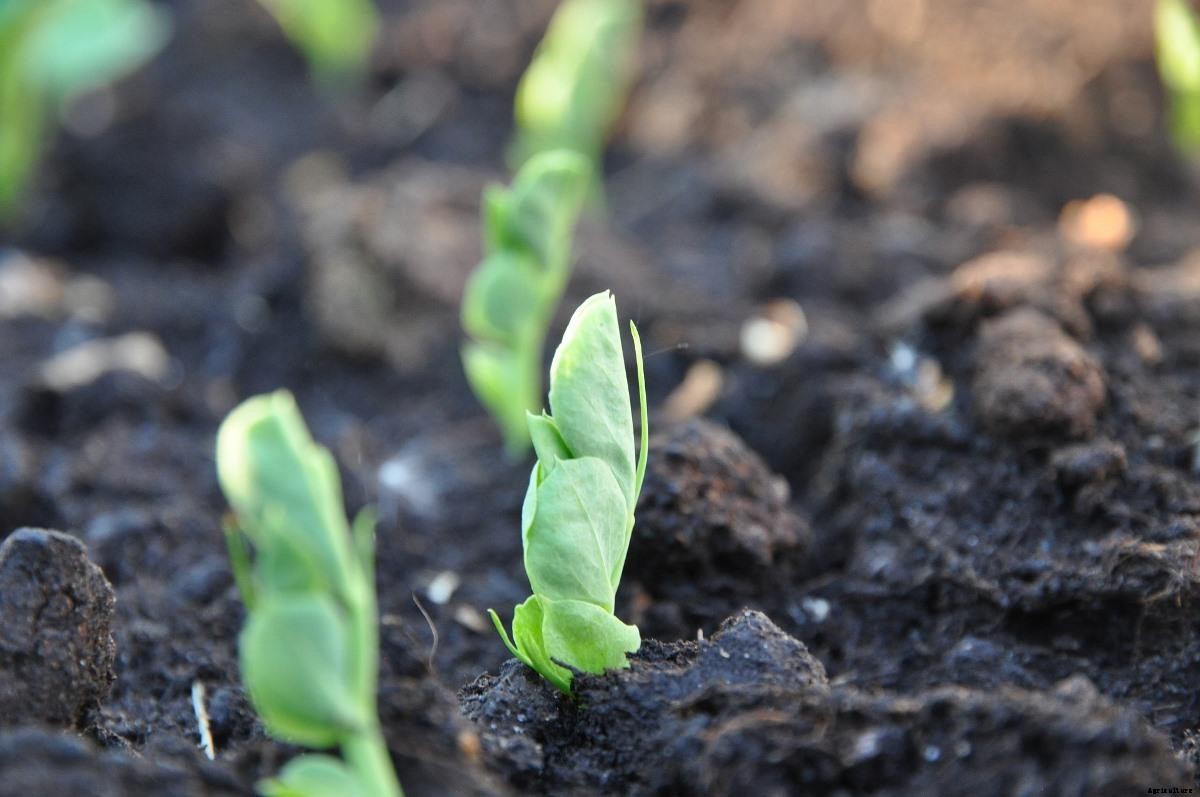
The ideal location for a greenhouse has high winter light intensity, moderate winter temperature levels, low humidity, and easy access to markets. The easy availability of existing utilities will help reduce establishment costs and affect ongoing fuel costs. And, be sure to leave sufficient room for future expansion and parking. Highways have made transporting greenhouse-grown vegetable plants easier, and also locating greenhouses near large population areas is also very important.
Greenhouses using native soil or a potted production system for vegetable production must be constructed on level sites with deep, well-drained soils. Sandy loams are best for growing Peas. A source of good-quality water is also important for growing Peas.
The greenhouse system allows a gardener the unique opportunity to control the climate no matter what’s happening outside. Many gardeners keep the chill off their plants with an unheated greenhouse system or cold frames, but this is the least flexible of greenhouse structures. Year-round greenhouse growers will require more complicated systems fitted with heating and cooling systems, ventilation that requires darkness to flower. Larger greenhouses can be divided internally to make climate zones, allowing different growing conditions within the same structure.
Heat
Greenhouse methods delivering the perfect temperature for your fruits, vegetables, leafy greens, and flowers have never been easier. As plants “breathe” CO2 and exert oxygen, also they produce heat. This heat buildup can have the effect of actually helping the growth of warmth-loving crops like Peas and can act as a natural heating source to insulate your plants. Shade coverings, sun-resistant poly, and good ventilation can all help lower the greenhouse’s internal temperature to keep plants at the right temperature for success.
Humidity
Humidity has a profound effect on the conditions within the greenhouse if left uncontrolled. Long left up to nature on outdoor fields and highly variable with rain or drought conditions, humidity now plays the main role in environmental controls within greenhouses. Some plants thrive in a slightly moist environment; the presence of too much moisture can encourage the growth of nasty moulds and even harbor diseases or pests. With a combination of proper ventilation and heat management, you can carefully control humidity in the greenhouse to make sure everything is right where it maximizing plant growth.
Sunlight
Generally, a greenhouse must get full sun, at least 6 hours per day, especially during the winter. Sunlight has long been well outside the control of growers operating in open fields under the bare sun, the ability to choose greenhouse covering to regulate sunlight levels. By utilizing tools like energy curtains, shade coverings, black-out curtains, and UV-filtering plastic coverings, growers can fine-tune their plants’ light diet with unparalleled levels of control.
The main benefits of growing peas in greenhouse are;
Of the many varieties, the two common varieties are snap and snow. Snap Peas have a crisp, rounded shell and these Peas harvested when the pod is full of mature Peas. Snow Pea varieties are grown for their tender, crunchy pod and are harvested when the Peas are just beginning to form. Both Pea varieties can be grown in a trailing or bush form and have those same growing requirements. The greenhouse system offers a stable growing environment for Pea plants and helps protect them from pests and insects. Some other varieties are;
PG 3 – It is a dwarf and early maturing Pea variety, ready to harvest in 135 days.
Punjab 88 – This is an early-season variety developed by PAU, Ludhiana. Pods are dark green and curved and ready to harvest in 100 days.
Matar Ageta 6 – Early season dwarf plant variety developed by PAU, Ludhiana. Seeds are smooth and of green color.
Field Pea 48 – It is an early maturing and semi-dwarf Pea variety. Ready to harvest in 135days and seeds are of light green color, bold, slightly wrinkled. It has good cooking quality.
AP 3 – It is an early maturing Pea variety. It is ready for first harvesting after 70 days of seed sowing if it is sown in the second week of October.
Matar Ageta-7 – It is an early Pea variety that is ready for harvesting in 65 to 70 days.
Punjab 89 – This variety is ready for first harvesting after 90 days of sowing. The seeds are sweet and the legumes give 55% seeds.
Mithi Fali – This variety is ready for first harvesting is done after 90 days of seed sowing. This Pea variety is rich in protein and sweetness.


