
Welcome to Modern Agriculture!

Today, we are discussing the Profitable Custard Apple farming techniques, cultivation of sugar apple, Sitaphal or Sitafal farming, planting methods, care, yield, and harvest.
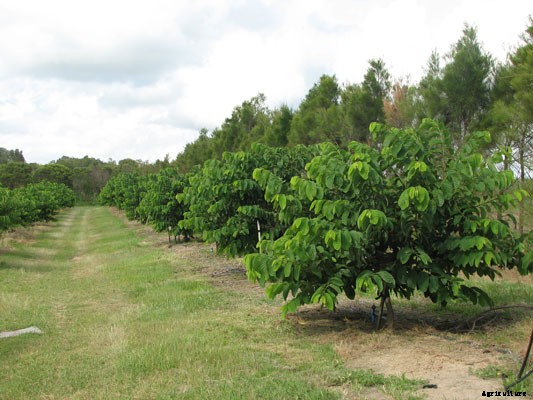
Custard apple (Annona squamosa ) also known as Sitaphal in India, is a delicious dry land fruit. The fruits are low in Saturated Fat, Cholesterol, and Sodium and high in Vitamin C, Manganese, Iron, and Potassium. Their nutritional value makes them ideal for maintaining optimum health.
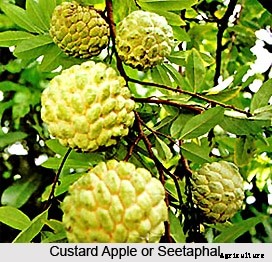
Custard apple (Sitaphal) flourishes best in the dry and hot climate. It requires light soil and is generally grown on the slope of hills. The plants are raised from seeds and bear fruit in about 3 to 4 years. The plant flowers from April to May and bears fruit between August and November. The major climatic factors limiting the commercial production of custard apples are temperature and humidity. Warm, well-protected, frost-free sites in districts receiving a predominantly summer rainfall are most suitable.
You may be interested to read:
Sharifa, Sitaphal (Hindi, Manipuri),
Katal (Assamese),
Sitapalam (Tamil),
Sita phalamu (Telegu).
Balanagar,
Arka sahan,
Barbados seedling,
Kakarlapahad,
British Guinea,
Mahaboobnagar,
Saharanpur local and Washington.
Before planting custard apples, it is important to understand the land and climate attributes they need to flourish. Custard apples grow best in sandy loam soils, but well-structured clay loams are also suitable. Although the tree’s main feeder roots are relatively shallow, at least 1 m of well-drained soil without heavy clay or rock is needed to avoid root rot and ensure good tree performance. Where the topsoil is less than 1 m deep, plant the trees on mounds. If possible, avoid soils that have previously grown these crops: tomato, potato, eggplant, capsicum, and ginger.
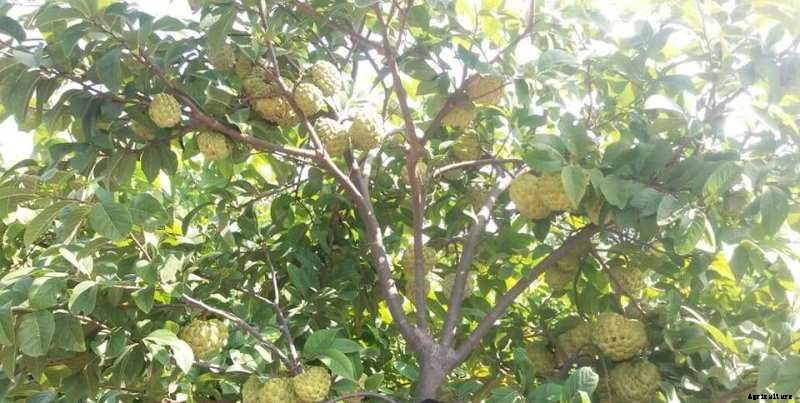
These crops are potential hosts of the disease bacterial wilt, which custard apple is also susceptible to. The disease threat is worst in poorly drained soils.
Don’t miss to read How To Grow Teff Grains.
Custard apple planting is done during the rainy season. The pits of 60x60x60 cm at spacing 4×4 m or 5×5 m or 6×6 m depending on soil type are dug prior to monsoon and filled with a good quality FYM(Farmyard Manure), single superphosphate, and neem or Karanj cake under dry conditions and with drip irrigation system planting at 6×4 meters has given good growth and better fruit setting.
If planting is done spacing of 5 X 5 meters then 400 plants will be required for one ha. i.e. for 5 acres, you will require 800 plants.
Grafts and budded plants. Vijaya Phyto Farms Pvt. Ltd. produces ‘ready-made’ (ready to bear plants) grafted custard apple planting material that is capable of producing commercial yield from II years of planting.
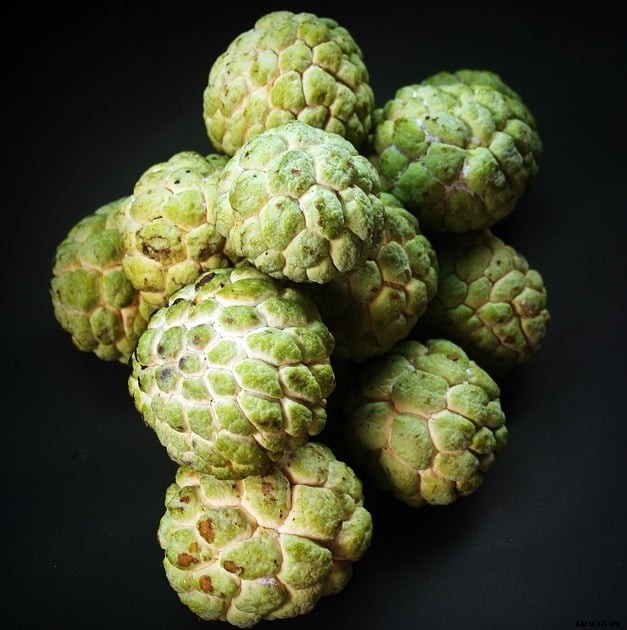
Uniform soil moisture throughout fruit set and fruit development ensures high yields and helps prevent fruit splitting. Irrigation is essential if high-quality fruit is to be grown. In areas with good summer rainfall, a water reserve of 5 megaliters per hectare of the orchard is necessary to maintain production in a dry year. As custard apples are sensitive to salt in irrigation water, water salinity should not exceed an electrical conductivity of 800 micro Siemens/centimeter (µS/cm). It is essential to irrigate plants during flowering and fruit development to achieve superior fruit quality (more edible pulp/segment). Drip irrigation is very useful in Custard Apple Farming.
It is uncommon to apply manures and fertilizers to custard apples but it shows a good response to fertilization in terms of vigor, yield, and quality. Fertilizer application can extend the longevity and check the decline of trees.
Don’t miss to read Goat Farming In India.
Training to a single stem when grafted or budded plants are grown. A little pruning is required to develop a good crown by timely removal of misplaced limbs to build a strong framework. It results in better yields over a long period of time.
Trees start yielding from 3rd year. Single crop(4-5 pickings) from August to October in South India and September to November in North India.
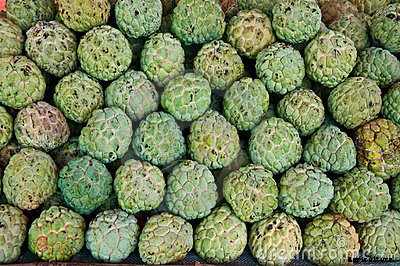
You can expect an average yield of 7 tonnes/ha. In high-density planting, the yield is 25 tonnes/ha. However, the yield of the Sitaphal crop depends on soil type, variety, water source, and other orchard management practices.
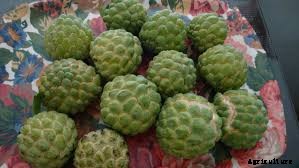
Custard Apple Farming or Sitaphal Farming is the best profitable crop with low investments and care.
In case if you are interested in this: How To Grow Strawberries in Greenhouse.


