
Welcome to Modern Agriculture!

Mushroom cultivation can sometimes be a long and arduous process, but thanks to the detailed instructions we have prepared, you can successfully grow any species without much difficulty. Check out the most complete list of all types of mushrooms that thrive in our area. Find out when is the ideal time to plant them, how to prepare the soil, how and how often to water and supplement them, and many more helpful tips.
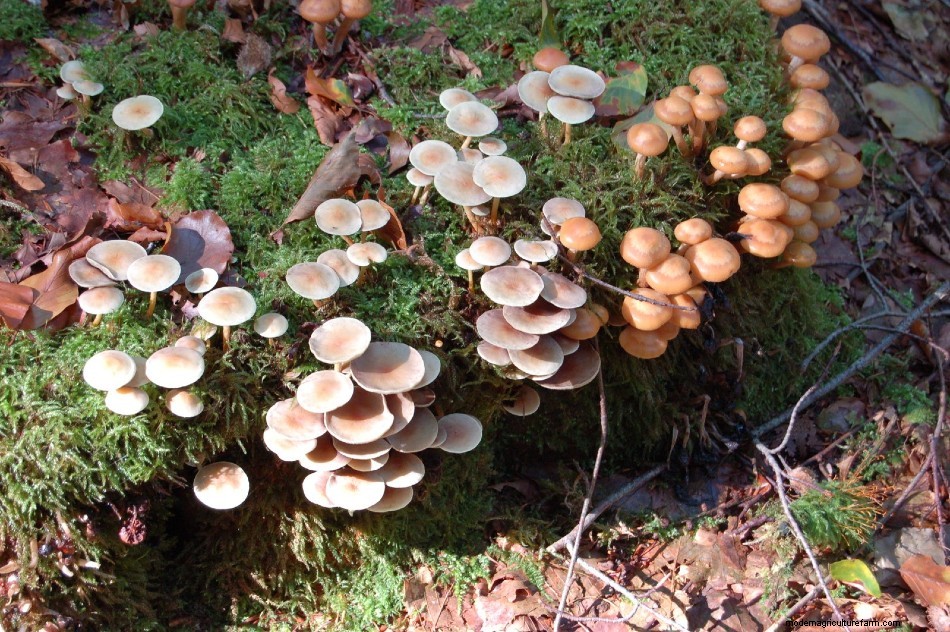
Because of their specialty, mushrooms do not belong to any group. They are on their own. Organisms without chlorophylls made up of one or more cells. Given that they do not have chloroplasts, we count them as heterotrophic organisms. It is an organism that consumes the necessary carbohydrates from organic matter for life.
They are also saprophytes because they feed on organic matter that remains behind the dead. Without the presence of fungi, organic substances of plant origin would not be able to decompose in nature. It is thought that without mushrooms, forests would be suffocated in waste. Fungi also belong to the group of parasites because they attack other plants, humans, and animals, but also fungi. They can absorb food from living or non-living organic matter through a network of thin hyphae.
The popularity of mushrooms has been around since the beginning of the 20th century when they are highly sought after because of their valuable nutritional properties. They contain almost all essential and non-essential amino acids, vitamins, minerals, carbohydrates, and a small amount of fat.
Mushrooms can live in community with other species, both of which benefit. Specifically, they retain water in the mycelium used by plants that, through the roots, take in organic matter from the water and are needed for the growth of fungi.
They can reproduce sexually and asexually, or by budding and spores. However, the simplest way is vegetative, that is, by separating the mycelium.
There are various types of fungi, and in addition to edible and poisonous ones, some are used for medicinal, hallucinogenic and psychoactive purposes. It is estimated that there are more than a million and a half species of fungi in the world, and only half of them are scientifically described.
Fungi can be grown in greenhouses and even in woods. However, the outside also brings more risks because the conditions cannot be affected as much as indoors.
To grow edible mushrooms, it is necessary to provide a finished and unvaccinated substrate and to satisfy the conditions of heat, humidity, and light. It is necessary to have space where mushrooms are grown regularly to be ventilated and harvested every two to three months.
When handling mushrooms, it is important to keep the tools and hands clean, and if you are planning to grow mushrooms on a tree, make sure it is healthy, without decay or signs of disease.
In addition to edible mushrooms, medicinal mushrooms such as Reishi, Shiitake, Cordyceps, and others are also in demand, and their price is even three times higher than Common Mushrooms and Oyster Mushrooms.
The natural habitat of mushrooms is forest and to grow mushrooms, we must have a garden or orchard that we do not treat with chemical preparations and do not fertilize with mineral fertilizers. Also, mushrooms can be grown in specially selected and prepared places enriched with organic matter. Fungi are propagated by mycelium or spores and this is exactly the opportunity we can use to grow mushrooms.
Common Mushrooms are the most commonly consumed and bought mushrooms, and it is these buying mushrooms that we can use to start growing Common Mushrooms in our garden or orchard.
Mushrooms in nature grow in symbiosis with woody plant species. Use trees and fruit trees to grow mushrooms. When choosing a mushroom growing site, choose well-developed trees or prepare the ground for mushroom growth yourself.
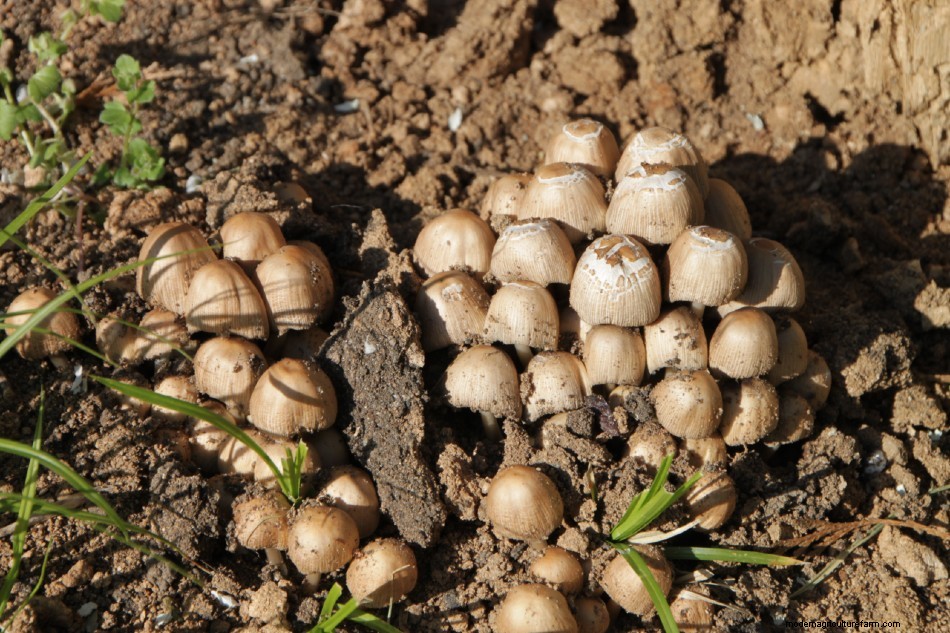
Keep away from traffic and other sources of poison. The place should be clear, dry, protected from strong winds and rich in organic matter. Fungi do not like fully sunburnt places, choose a spot under a tree with a well-developed canopy or set up a shading net.
The easiest way is to use shopping Common Mushrooms. Very often you will find specimens of mushrooms in the package that have some little compost and mycelium on the bottom of the handle. Instead of throwing such waste in the trash bin after pruning, use it. When buying, choose as fresh mushrooms as possible because of the ability to regenerate mycelium from the rest of the mushroom.
Bury the collected pieces as quickly as possible under the tree canopy. Lay the pieces of the handle with the rest of the mycelium individually, no deeper than 4 inches, cover with a layer of earth and dry leaves. Keep the pieces up to 6 inches apart. Pour with water that should not be cold. This process is time-consuming and takes a lot of patience. The advantage of this process is simplicity.
Alternatively, you can dig special trenches 12 inches deep and 16 inches wide and fill them with prepared material. The length of the trench is optional and depends on the space available. Put gravel at the bottom of the trench, pieces of bricks, pieces of shattered ceramic jars to serve as a drainage layer to drain excess water.
If we dig trenches during the fall, we can fill them with straw, dry grass, tiny twigs, leaves and cover them with a layer of earth. A trench-like this is ready to be sown during the spring.
Another way is to dig a trench in the spring and fill it with a ready-made mixture of straw, manure, a little lime, beech sawdust. The straw must be disinfected in hot water before being placed. We can also use dedicated mushroom substrates as a mushroom growing substrate. In this case, to speed up the process, we can perform mycelium seeding with inoculation material purchased from specialized manufacturers, or we can collect spores of the fungus ourselves and produce our mycelium seed material.
The success of the whole process depends on external conditions. The best place to grow mushrooms is to cover them with a layer of dried leaves. Under optimal conditions, after five days we can notice that the mycelium is expanding, and we can see that when we gently remove the leaves and soil. After 20 days, the mycelium will spread in the soil or prepared mixture.
The success of mushroom cultivation in the garden will be influenced by many parameters, the most significant being temperature and humidity. Mushrooms do not like high temperatures and temperature changes. Temperatures of 64 to 77 °F are optimal for their growth. They don’t like excess moisture, but they do like moderate humidity.
It should be noted that fungi derived from purpose-purchased mycelium will be more fertile.
You can read more about how to grow mushrooms commercially in our article.
So, don’t wait anymore, start your mushroom cultivation today.


