Welcome to Modern Agriculture!

If you are looking for an aromatic ornamental tree to grow in your home or garden, Laurus nobilis a.k.a. the bay tree is a great option.
Of all the aromatic plants in the world, the bay tree is one that should have a special place in every garden, not just for its culinary value, but also for its attractive evergreen foliage. This plant does not require much attention to thrive and with minimal care and attention, it will reward you with its glossy leaves.
Laurus nobilis is an aromatic tree with smooth leaves. Commonly known as the bay tree, or simply laurel, this plant is native to the Mediterranean region and is mainly used for seasoning in cooking. When the climate of the Mediterranean Basin was more humid, the laurel forests covered a wider area, but with the drying of the Mediterranean, the laurel forests disappeared. Another interesting fact about the bay tree is that its branches were commonly depicted in the classical Greco-Roman culture.
An important thing to remember, if you plan to grow Laurus nobilis is that although it is a common garden plant grown worldwide, its raw flowers and leaves can have poisonous effects on cats and dogs if ingested. The leaves of the bay tree contain essential oils and chemicals that cause digestive issues for your furry companions. It is also important to mention that, although bay leaves are commonly used in kitchens all around the world and are not toxic to humans, there are certain species with the name “laurel” or “bay” that may actually be poisonous and should be avoided such as the cherry laurel (Prunus laurocerasus) and Mountain laurel (Kalmia latifolia).
Watch Our Latest YouTube Video ...
View More and Subscribe Here
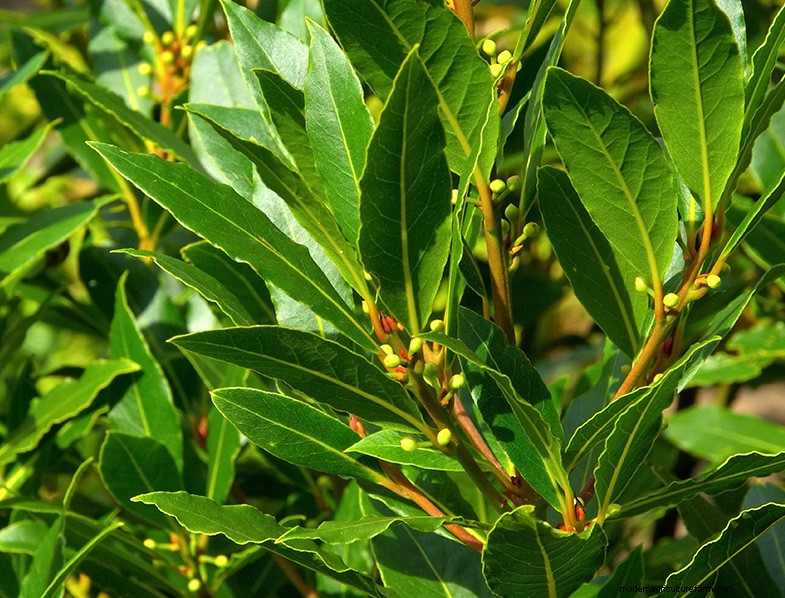 Laurus Nobilis
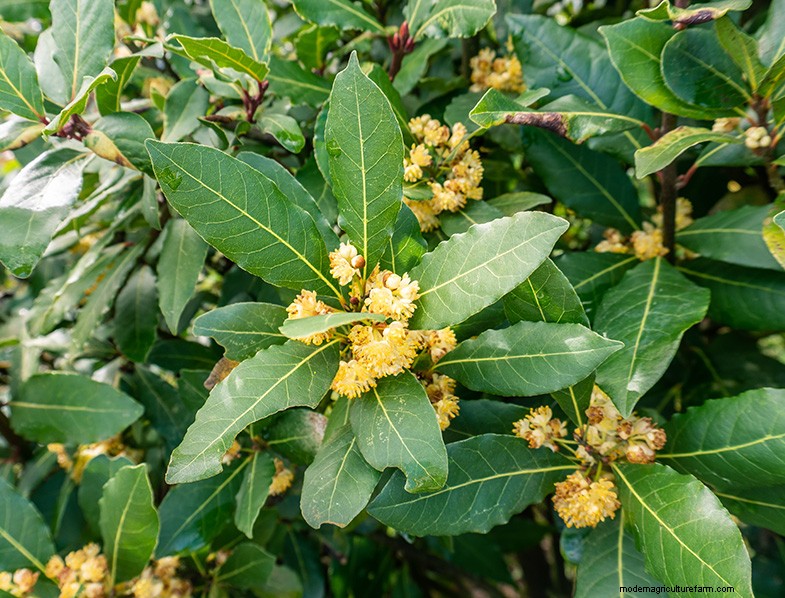 Laurus Nobilis
The Laurus nobilis is a delicate tree when young and it needs shelter and protection during the winter period. You need to ensure it with fertile, well-drained soil. You need to place it in an area where it can enjoy full sun, ideally near a south or west-facing wall, which will provide additional protection against cold winds and frost.
If you live in an area where during winter months the temperatures are cooler, you may have to consider growing it in a pot so you can move the tree indoors when the temperatures start to drop. Prune the tree in summer so that the plant rejuvenates in spring. The leaves can be harvested at any time of the year. You can use the Laurus leaves fresh or you can dry them and after that, you can store them in a paper bag.
As the bay is native to the Mediterranean it does best in full sun to partial shade. If you decide to plant the Laurus nobilis directly in your garden you need to know that the tree can cope with temperatures down to about -5ºC (23ºF) and if is not protected at all can suffer leaf damage. So, in order to ensure some protection, cover the plant with garden fleece in winter or if the plant is potted, then just move it indoors or to a more sheltered area.
Generally, the Laurus nobilis is fairly trouble-free. If during the winter period, the leaves get damaged by frost or wind you can solve this by just picking them up or trimming your plant in late spring to encourage growth. You can deal with yellow leaves which means that you need to apply a slow-release fertilizer in the spring.
Also, another problem may be the small pot. The plant may have developed quite a lot so be sure that you repot it every 2 to 3 years. A different cause of discoloured and distorted foliage could be the leaf suckers. These insects may attack the young Laurus nobilis’ foliage. If the damage is minor, you will only have to remove all affected leaves.
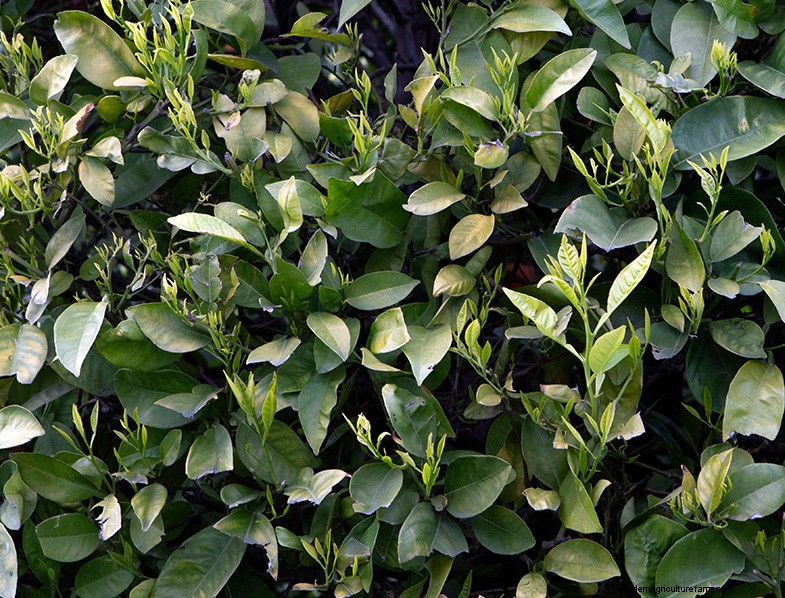 Laurus Nobilis
Before planting Laurus nobilis, improve the garden soil by digging in compost and grit, if your soil is heavy. Although the tree handles poor-quality soil, it fully develops if compost and aged manure are added in at planting.
After this step, you can plant the tree. Water it well and continue to water it constantly for a couple of weeks after planting to help the tree settle well. The best time to plant the tree is when the threat of frost is no longer an issue, meaning in late spring or early summer. If you want to choose the perfect spot for your Laurus nobilis, take into consideration that it needs around six or seven hours of sun a day, so be sure to pick a sunny place. When preparing the hole, be sure to make it as deep as it was in the original container of the plant.
Bestseller No. 2

Bestseller No. 3
Palm Beach Medicinal Herbs - Bay Laurel (Laurus nobilis) - Packet of 2 Seeds
Last update on 2025-11-14 / Affiliate links / Images from Amazon Product Advertising API
If you plant your Laurus nobilis in a pot, then use tree and shrub compost or soil-based compost with some additional grit added for drainage. Also, use a pot that has drainage holes in the bottom. Water the container-grown bay moderately as over-watering can cause root damage.
You can also add controlled-release fertiliser granules to the soil or a liquid feed every two weeks starting with late spring until late summer. During cold periods the plants’ roots grown in a pot may freeze so, in order to avoid that, just cover the pot with bubble wrap. Another tip is to raise off the base of the container by using special pot feet or bricks to allow the excess water to drain away and prevent frost from cracking the pot.
When it comes to watering, you need to keep Laurus nobilis’ soil moist, but take care not to overwater the plant because this frequently causes root rot. This kind of damage is irreversible. When planting your tree use well-drained soil and water it only when the top one to two inches of soil are dry.
Note that during summer months, the Laurus nobilis needs to be watered more frequently, as it is not drought tolerant. One tip regarding watering is that if you can, give the plant rainwater, as it is better for it. Once the bay tree planted directly in the ground is established, it does not need watering.
If you grow your bay in a pot, you will have to water it when the pot is dry. It is enough for your tree if you submerge the root ball under water for 5 minutes. Because during the winter months, the plant is in a resting stage and uses less energy it does not need to be watered as frequently as in the summer.
So, you can water the plant less, but make sure that the soil does not get dry between waterings. A new panted shrub in a pot will need more water for the first few weeks. During the plant’s active growing period, provide it with organic compost or a nitrogen-rich fertilizer once every two weeks for optimal growth. Nonetheless, in the long run, the bay tree prefers to be underwatered rather than overwatered.
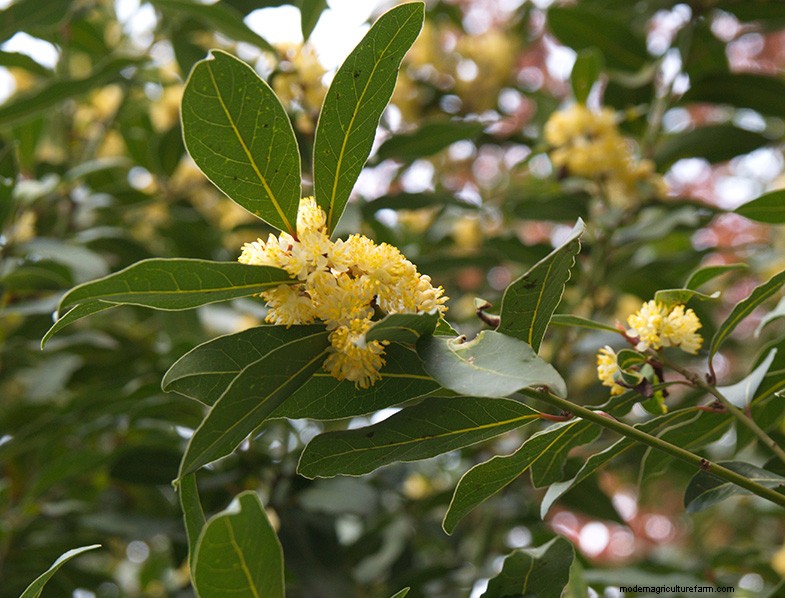 Laurus Nobilis
Laurus nobilis can be propagated through many techniques, some of them are faster, while others need more time to provide any result. In the following paragraphs, we will present different ways to propagate your bay tree.
The first method of propagation is through seeds. Laurus nobilis seeds need to be stratified before planting. With the stratification process, the seeds are broken so that they are able to germinate. In order to do so, you need to place the seeds in a plastic bag with peat moss and refrigerate them for two months. After that, you can plant the seeds by covering them with a thin layer of soil and making sure to keep them moist.
Another method of propagation is through cuttings which are best planted in a potting mix of perlite or peat moss and an equal amount of sand. The size of the cuttings should be about 15cm (6 in) long and should have at least 2 sets of leaves. You will need to apply powdered rooting compound to the base and lower stem after removing the bottom sted of leaves. It can take some time to root from cuttings, but generally, the roots may appear within four weeks.
The layering technique involves bending the stem of an existing plant to the ground and cutting it with a knife to expose the stem where it meets the soil. The exposed area needs to be covered with soil and held in place with the help of some stones or tied to a stake. Although it is a process that takes up to 12 months until producing shoots, the layering method works very well with Laurus nobilis.
Laurus nobilis can also be propagated by root division. This method is suitable for container plants and the best moment for this procedure is when your bay tree needs transplanting. Once you remove the plant from the pot, you can separate it into several sections.
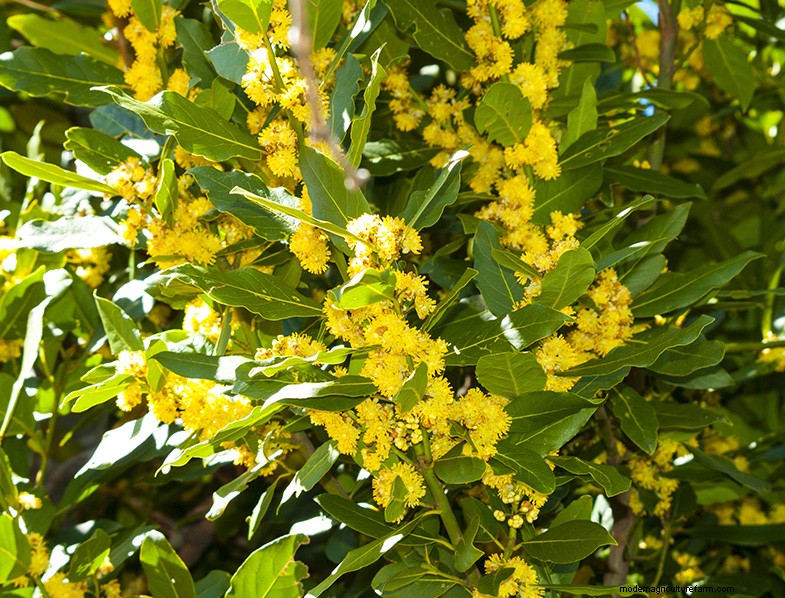 Laurus Nobilis
If you want to always have an incredible aromatic plant at hand that is very easy to grow and care for, then Laurus nobilis is a perfect option. You can plant this aromatic evergreen shrub in your garden if you live in a warm climate, or you can keep it in a pot in your kitchen.
There are many ways you can use the leaves of the bay tree in your favourite dishes. You can use the leaves fresh or dried and one thing that might convince you that it is an awesome aromatic plant is that you can store the dried leaves for up to one year.
When it comes to caring for the bay tree, the best part is that it will not require more attention than other plants that you might already have. Bay trees make perfect ornamental that will thrive without too much effort and when planted outdoors may grow up to 8 meters (315 in) in height.
You can grow Laurus nobilis as a small tree and prune it regularly, you can grow it in your herb garden, or you can plant it as a privacy hedge. This versatile shrub can even be shaped and pruned as a topiary thanks to its lush evergreen foliage.
Are you growing Laurus nobilis a.k.a. bay tree in your home or garden? Share your experience in the comments!
80