
Welcome to Modern Agriculture!

If you are looking for a culinary herb to grow in your home or garden, Levisticum officinale a.k.a. Lovage is a great option.
Levisticum officinale, commonly called lovage, is a perennial plant from the Levisticum genus in the family of Apiaceae. This showy perennial is a delicious condiment that is often grown in herb gardens for the celery-like flavour of its leaves, stems, roots and seeds.
It was cultivated for centuries in Europe as its leaves were and still are used as a herb, the roots as a vegetable and its seeds were also added to many recipes as a spice. Lovage is a very popular condiment in southern Europe but its native range is not very clear, as some sources state that it is a native plant of Europe and southwestern Asia, while others say that is native to only the eastern Mediterranean region in southeastern Europe and southwestern Asia.
Lovage is a versatile plant that will thrive in your herb garden and the best part about growing it is that you’ll get to enjoy its unique flavour that is a bit similar to celery but slightly sweeter and more robust. The scent of lovage also reminds of anise or fennel with a hint of citrus, and for many people, it is quite similar to parsley.
The young leaves of lovage are the most flavourful and can be added to a wide range of dishes, salads, soups, and stews. Lovage shoots can be blanched and eaten as vegetables, while the roots can also be cooked and added to all sorts of savoury dishes.
Watch Our Latest YouTube Video ...
View More and Subscribe Here
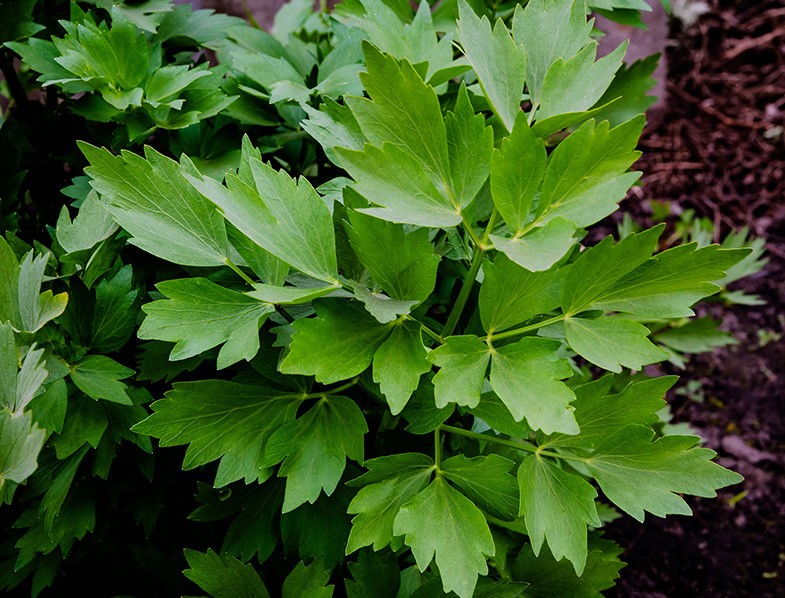 Levisticum Officinale
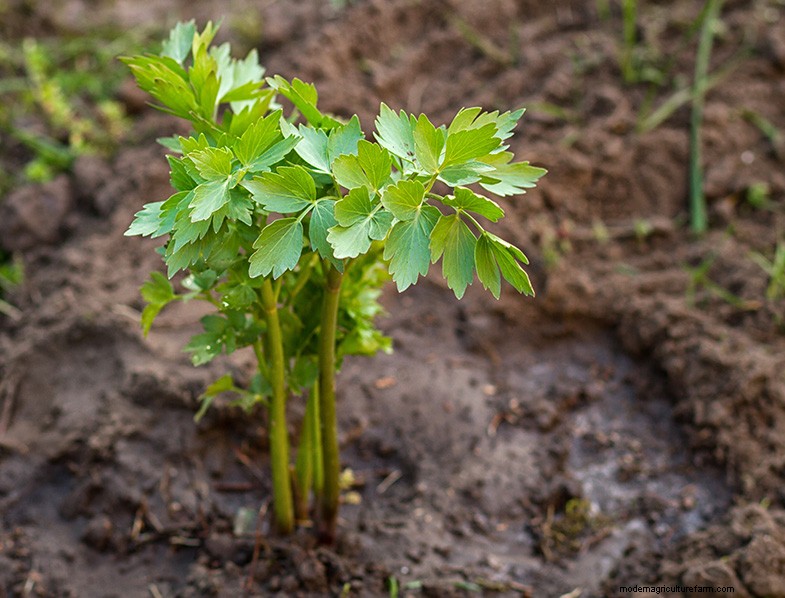 Levisticum Officinale
If you decide to add Levisticum officinale to your garden you need to know that it is not a hard plant to grow. So here are some tips for how you can create the best conditions for your lovage. The plant does not need any protection from the sun, but you will have to always keep the soil moist as it may alter its flavour and turn it bitter. You can harvest all the leaves when the plant is about a month old. If you consider growing lovage indoors you will have to take into consideration that at some point it may get too large to grow indoors permanently.
You don’t need to prune lovage, especially if you’re gathering the leaves constantly. But to keep the plant healthy, do not harvest more than half of its leaves at a time. If you want to keep the plant at a reasonable shape and size it helps to trim large parts of the plant. To do this, grab a sharp pruner or a well-sharpened knife and cut the stems around a spot past a leaf node.
If you do not harvest your lovage frequently, you will have to prune it at least once in the middle of the growing season. This helps to promote the circulation of the air and to remove any dead or shattered parts of your plant. If your Levisticum officinale starts to generate a flower stalk you can cut it. But if you like the plant to flower and set seed you will have to keep it.
Lovage is not the best companion plant. Although some gardeners believe that lovage can improves the health and flavour of other plants which grow nearby, in most situations, it is a highly competitive herb that can inhibit the growth of its neighbours by consuming a lot of nutrients.
Bestseller No. 1
Survival Garden Seeds - Lovage Seed for Planting - 1 Pack with Instructions to Plant and Grow Perennial Levisticum Officinale Culinary Herb in Your Home Vegetable Garden - Non-GMO Heirloom Variety
Bestseller No. 2
TKE Farms & Gardens - Lovage Seeds for Planting, 500 Mg, 140 Heirloom Seeds, Non-GMO, Packet Includes Instructions for Growing, Levisticum officinale, Qty 1
Last update on 2025-11-16 / Affiliate links / Images from Amazon Product Advertising API
This means there are no good neighbours for lovage, so you should always leave enough space between other plants in the bed, or simply grow lovage in a container to prevent it from affecting your other plants. plant lovage in a pot. Planting lovage in a herb bed is not the best option, as this plant tends to grow quite large and it can easily cover smaller herbs such as parsley and dill.
If you have plenty of space in your garden, you can plant lovage in the same area with chives, carrots, leaks, and borage, provided you plant them at a considerable distance. Its flowers are especially appealing to bees and also attract insect predators like hoverflies into your garden.
Levisticum officinale is naturally lucky to not be troubled very much by pests and diseases. But that does not mean it has immunity against any kind of harmful organisms or illnesses. You will have to watch out for a few things. Some pests that may attack your plant are aphids. Because the aphids suck the juices out of plants, the leaves may be stunted, yellowing, curling, or misshapen. Another pest is represented by the leaf miners which make tunnels into the leaves of plants.
When it comes to diseases, there are a couple that can cause some issues. If you notice any circular brown spots on the leaves and stems of your Levisticum officinale it could be the early blight. You will have to remove the infected branches and sprinkle your plants with a copper-based fungicide.
But leaf spots may be caused by a combination of different kinds of bacteria and fungi. Be sure not to leave this disease uncontrolled as the spots will join together and make the entire leaves turn yellow and drop.
The Levisticum officinale plant loves rich moisture but at the same time well-drained soil. It will enjoy a sunny position, even though it accepts some shade too. Gardeners usually grow it in the herb garden as a culinary herb and are sometimes grown for commercial purposes as a food flavouring. If you cut the entire plant from the base and only leave its roots in the soil, it will produce a new flush of young leaves.
Lovage will develop very well if planted in an area with full sun. This plant will thrive in full sun, but it won’t mind 2 to 4 hours of shade during the day, especially in warmer growing zones. Regarding the perfect growing conditions, the soil should be well-drained with a slightly acidic pH.
The soil should be sandy and loamy. You should also add a lot of organic matter when planting your lovage. Contradictory with other Mediterranean herbs, the Levisticum officinale loves rich earth. You will have to take care to keep the soil moist, but not wet as it can cause root rot. In order to retain the water it needs, you can help it by adding some leaf mould, peat moss, or grass clippings as mulch.
When planting, space your lovage 45 cm (18 in) apart. They will reach maturity 85-95 days after planting. You can grow Levisticum officinale in containers if you prefer to keep it indoors. And be sure to use a large pot as lovage has an extensive root system. The measures of the pot need to be a minimum of 30 cm (12 in) deep and wide.
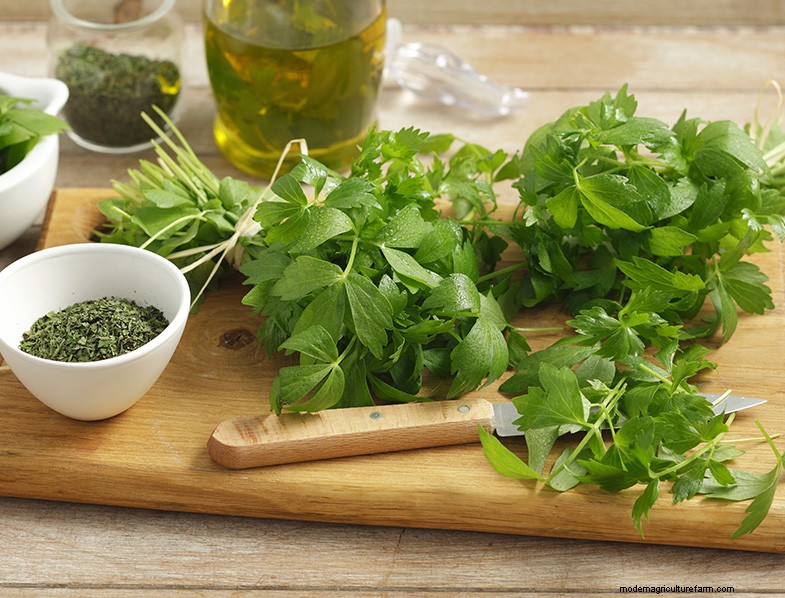 Levisticum Officinale
Levisticum officinale plants need water, but the watering quantity differs from season to season. For correct watering, first, you need to know the type of soil and type of soil drainage perfect for your plant. Watering is one of the primary aspects that need to be taken care of when it comes the Levisticum Officinale care.
Any caring gardener needs to know the volume of water needed for their plants. Watering should be in an equilibrated amount for the plant’s healthy growth and simulate its natural environment. The Levisticum Officinale watering needs are the following: in summer it requires plenty of watering while in winter only needs to be watered once a week.
With Levisticum officinale, you can add about one inch (2.5 cm) of water per week. You can water your lovage several times each week rather than weekly deep watering. If you forget to water your plant once in a while during cool winter months, there should not be any problem.
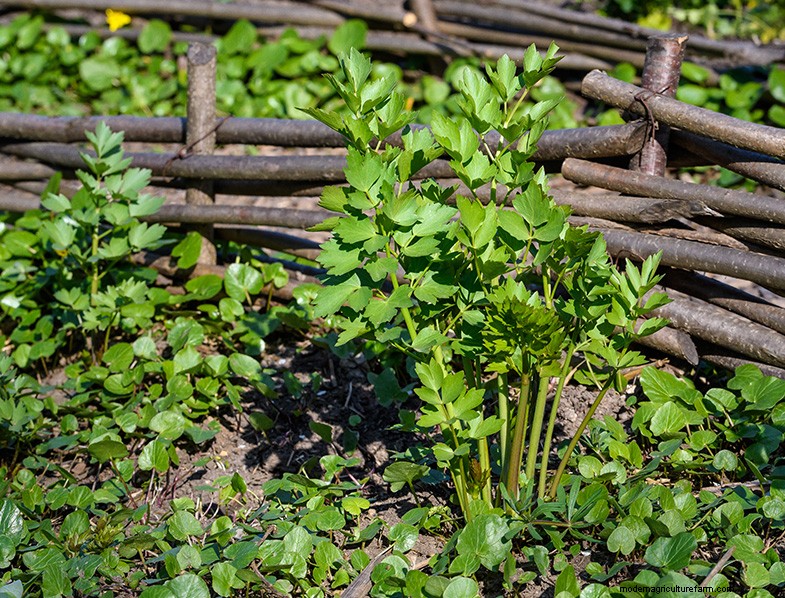 Levisticum Officinale
If you want to have more lovage plants here is what you need to know about propagating them. There are a few ways of doing it: by seed, through seedlings and transplants or by root division.
If you decide to propagate Levisticum officinale by the seed you will have to sow them in spring or early autumn if you live in a colder area. Sow the seeds once the soil temperatures are higher than 15°C (60°F). After you prepare the soil, just sprinkle the seeds and lightly cover them with sand. You can also start seeds indoors 5-6 weeks before the last frost. Keep the moisture, but do not waterlog the soil. The lovage seeds generally do not store well, so, use only new seeds that are under one year old.
If the preferred method is through seedlings and transplants you can plant your lovage in the garden after the seedlings have at least 2 sets of leaves and all risks of frost passed. Make sure that you use plenty of compost in your soil and dig a hole the size of the root ball. After that, insert your seedling, tamp the soil down and water it thoroughly.
The last method of propagation is through root division. In spring, after the plant is at least 30 cm (1ft) tall dig it up. To be sure that you do not break the root system, you will have to dig down about 30 cm (1ft) and as wide as the plant’s crown. The entire lovage root system is very long, but you do not need to get out the entire root ball. The plant will thrive with at least half of the entire structure.
Shake off the excess soil and gently divide the crown and roots into two sections with the help of a garden spade or a pair of trimmers. Remove the dead roots or branches from the plant and then replant the one half back where easy initially placed. And now you can plant the other half in a new spot.
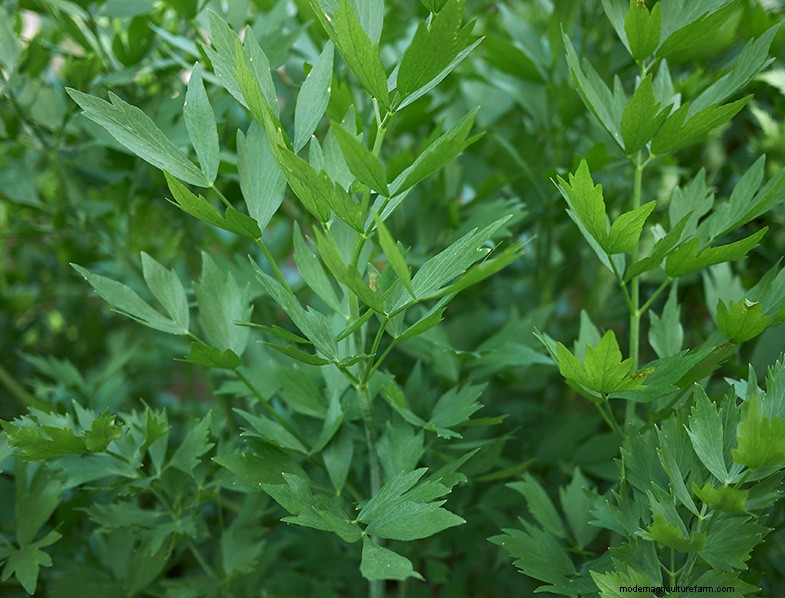 Levisticum Officinale
If you are searching for a plant that does not need constant care and maintenance Levisticum officinale is a perfect option. As long as you provide this culinary herb with plenty of direct sunlight and slightly moist and slightly acidic soil, it will surely thrive in your home or garden.
A very popular herb in Europe, Lovage is not very well-known on other continents, but its popularity is slowly growing as this versatile herb is finding its way into some modern-day home gardens and onto more and more fine-dining menus.
Lovage is an attractive green foliage plant that will also reward you with its flavourful leaves that can be used in your favourite recipes. Moreover, this herb will also attract beneficial insects that will help you and your garden to fight against some pests that are usually found in any garden. You do not have to prune it constantly, as probably you grow it to use its leaves as a herb. If you are not convinced of its interesting taste, just give it a try.
Are you growing Levisticum official a.k.a Lovage in your garden? Share your thoughts in the comments!
56


