Welcome to Modern Agriculture!

Like most people, when you picture banks and saving a rainy day fund, finance is the first thing that comes to mind. But did you know that there is something that you can bank and stash for the future that’s just as valuable – and arguably even more valuable – than money? It’s true! What is it? Seeds, of course!
Whether you’re an gardener, a prepper or homesteader who wants to make sure that you have access to food when the shelves at the supermarkets are empty, a conservationist who wants to preserve species of plants, you want to break free from Big Ag and their GMO foods, or you’re just looking for a new hobby, seed banking is something that you’re definitely going to want to learn about.
What exactly is a seed bank? What are the benefits of seed banking? How do you start one? To find the answers to these questions and more, keep on reading!
A seed bank “stores seeds to preserve genetic diversity; hence it is a type of gene bank.”
They provide a way to store the seeds of various types of native and heirloom plants, including fruits, vegetables, herbs, and flowers, so that they can be preserved and accessed in the future in the event that a major catastrophic event occurs; the damaging effects of geoengineering, war, extinction, or anything else that destroys seed supplies.
There are both national seed banks that are committed to storing the seeds of a nation’s or population’s wild species of plants, and there are community seed banks that are dedicated to preserving the seeds of regional and heirloom plants.
Industrial agriculture (Big Ag) has experimented with and developed collections of plants that contain minimal amounts of original genetic materials, which aren’t just less nutritious, but that are markedly more susceptible to pests and new types of diseases. Wild species of plants have evolved so that they’re naturally resistant to these issues, and they serve as an excellent way to back-up and revive the gene pool of plants.
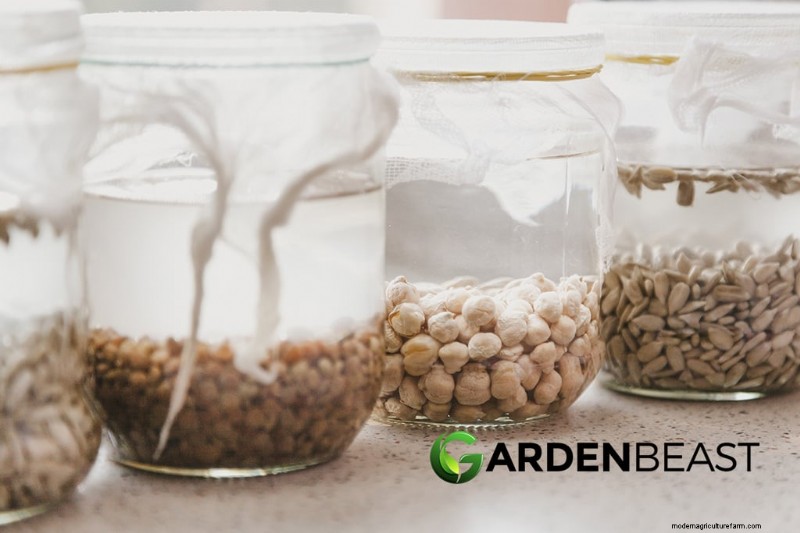 Do I Need to Soak Seeds Before Planting?
Furthermore, saving seeds is a great way to establish opportunities for regions that are experiencing challenges agriculturally, as well as impoverished farmers, when excess amounts of seeds are donated.
Seed bank facilities provide the ideal conditions for seed preservation. They’re stored at low temperature (about -20 degrees C) and humidity levels so that they can remain dormant until they are need to be planted.
Storing plants in their seed form is relatively simply, as they are small and require minimal amounts of space. As such, it is possible to store large quantities of various types of seeds.
There are more than 1,000 seed banks in varying sizes, types, and focus, around the world. Millennium Seed Bank, which is located in Sussex, England, and is coordinated and managed by the Royal Botanic Gardens, Kew, is the largest seed bank in the world.
It was established in 2000 and currently, it holds the seeds of nearly 40,000 species of plants, including fruits, vegetables, herbs, and trees. The Slavbard Global Seed Vault is another example of one of the biggest seed banks. It stores seeds from almost every country.
In addition to these international seed banks, there are also national, regional, and local or community seed banks that are activity involved in the preservation of native and heirloom seeds.
In recent years, seed banks have become increasingly popular – and increasingly important. But why are these banks so important? Here’s a look at some of the most notable reasons:
The most important reason to store seeds is to preserve the diversity of crops. Just like human beings and animals adapt to the conditions that they are exposed to so that they can survive, so too, do crops. Thanks to adaptive nature, there are several different types of the same species of plants. As such, the preservation of such diversity is critical.
Due to natural changes, but more largely due to geoengineering, the climate has experienced changes. While the stances on climate change, including the severity and causes, are largely debated, one thing is true: the climate has experienced some changes.
As you can imagine, crops can be affected by these changes, and if changes are severe enough, there is a chance that crops could go extinct. By storing seeds in seed banks, the risk of complete elimination of certain species of native and heirloom plants can be eliminated.
Natural disasters, such as tornadoes, hurricanes, floods, mudslides, blizzards, and wildfires, can strike at any time and leave catastrophic damage in their wake, including the total annihilation of crops.
In the event that a severe natural disaster or a collection of natural disasters occur, the seeds stored in a seed bank can come to the rescue, restoring crops that are wiped out. For instance, in 2004, a tsunami complete decimated rice paddies in Malaysia, and farmers were provided with seeds that were stored in international seed banks to restore the crops, which would have otherwise been gone forever.
 The Norway “Doomsday” Vault, where the world’s Seeds are kept safe
Fruits, veggies, herbs, grains, herbs, and trees can become stricken with contagious diseases, which can spread across and wipe out entire crops. When diseases ravage crops, leaving no trace of seeds that cultivators can use to start over again, seed banks can come to the rescue, providing farmers with the seeds that would be needed to start fresh.
Seeds that are kept in seed banks can be accessed by scientists and researchers who would like to examine them for a variety of reasons. For instance, scientists might study the seeds to develop methods to enhance crop production.
Big businesses in various industries can have been responsible for various types of man-made disasters that have caused severe damage to the climate, the landscape and crops growing on the land; Big Oil-related oil spills, for example.
War is another example of man-made disasters that can result in wreak havoc on climates and landscapes. When man-made disasters damage soil and climate, crops can be completely annihilated. Seed bank seeds can be used to replant any plants are damaged, ensuring that they aren’t completely wiped off the face of the earth.
In addition to the above-mentioned reasons that illustrate the importance of seed banking, another major benefit is that it’s a great way to bring communities together. When seed banking with a community, everyone who participates will supply and/or receive seeds. This helps to bring communities together and strengthens bonds between neighbors. It’s also a great way to establish gardens that fill of more diverse plants.
It’s also worth noting that seed banking can be a whole lot of fun. If you’ve ever collected and traded baseball cards, stickers, coins, and stamps, you know exactly what we mean; except with seed banking, you’re collecting and trading native and heirloom seeds, of course.
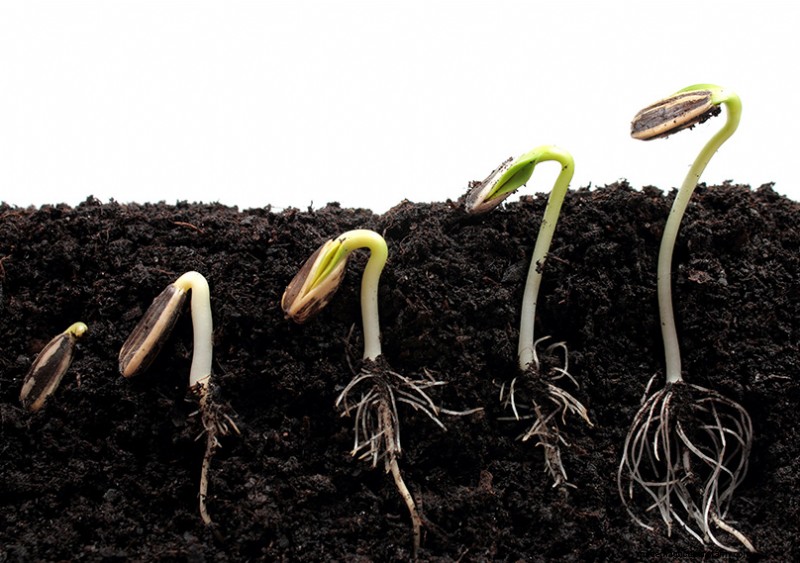 Sunflower seeds germinating
As mentioned, there are large international, national, and community seed banks throughout the world. While those seed banks can certainly be beneficial – and have proven to be (case in point, seed banks replenished the rice patty crops that were wiped out by a tsunami in 2004) – they aren’t always ideal.
The reason being that there are often stringent rules and regulations associated with these banks; for example, some banks may only store seeds that are related to certain types of crops, or they may only store seeds that can be accessed for particular reasons, such as research. Additionally, the average grower isn’t able to access the seeds that are stored in these large seed banks. It’s for these reasons that starting your own seed bank is a great idea.
By establishing your own, personal seed bank, you will be able to save the seeds of the plants that you love and that you find most valuable; plants that have successfully adapted and grow in your local region or that has features that you favor, such as the sweetest strawberries, the tartest raspberries, the crispiest apples, the hardiest broccoli, or the most fragrant roses. By establishing your own seed bank, you have the freedom to decide which plants you save the seeds from, and for what reasons.
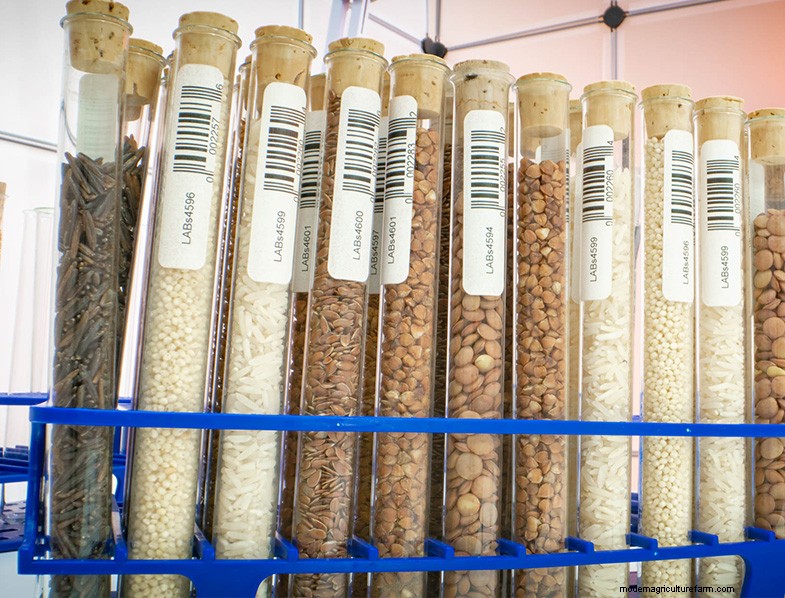 Seeds labeled & stored in test tubes
So, how do you start your own seed bank? Here’s a look at some simple tips that you can use to start up your own stockpile of seeds that you can store for any reason you like and for as long as you like, and that you can access whenever you’d like.
To start up your own seed bank, you need to gather the necessary supplies, which include:
Bestseller No. 1
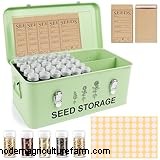
60 Slots Seed Storage Organizer, Metal Seed Saving Box with Lid and Safety Locks, Seed Bin Seed Storage Container with 20 Seed Envelopes and 20 Labels, 3 Compartments, Perfect for Flower Plants Garden
Bestseller No. 2
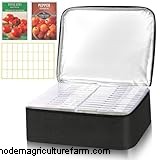
26 Slots Seed Storage Organizer Box with Insulated Bag That Holds 80-200 Seed Envelopes, Oxford Cloth Garden Seed Containers with Labels, Seed Packet Organizer for Plant, Flower ,Vegetable Seeds
Bestseller No. 3
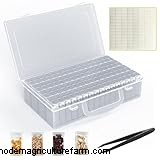
ARSUNOVO 64 Solts Seed Storage Box with 112Pcs Label Sticker and a Tweezers,Diamond Painting Organizer,Portable Bead Storage,Seed Organizer Use for Flower Seeds,Vegetable Seeds.
Last update on 2025-11-23 / Affiliate links / Images from Amazon Product Advertising API
What type of seeds you should gather and where you can acquire them? Let’s take a look.
You can save any type of seed from any kind of plant that you would like. This can include seeds that you love the flavor from, that are extremely aesthetically-pleasing and fragrant, and that are able to withstand harsh conditions, such as frosts, droughts, and downpours, for example. With that said, some of the most popular seeds to stockpile include the following:
Where can you get your seeds? Well, you can gather them from plants that you are already growing, or you can purchase them from a garden supply or botanical center, or from a farm. You could also connect with people in your local community to trade seeds with, or to barter with; provide them with a service or good in exchange for their seeds.
Once you’ve gathered your seeds and you have all of your supplies, you’re ready to start assembling your seed banks using the following tips:
Instead of storing the seeds in envelopes, you could store them in glass jars. Fill clean glass jars half-way with dried rice. Place seeds inside the jar, replace the cap, and tighten it. Use a marker to write the type of the seeds and the date that they were preserved on the caps or sides of the jars. Set in a cool, dark, dry place until they are ready to use.
As mentioned, the seeds in your seed bank must be stored in a cool, dark, dry location. If the conditions aren’t right, the sides can be rendered completely useless. A basement or a freezer would make a great location to store your seeds. Wherever you store them, you want to make sure that the remain as undisturbed as possible until they are ready to be used.
Starting a seed bank is an excellent idea. With the supply chain so severely strained as a result of government actions, and given the current state of the world, it could become even more strained, and with geoengineering and Big Ag crops on the rise, you never know if food supplies will run low. By preparing now with a seed bank, in the event that a serious issue does arise and food is in short supply, you’ll be able to sustain yourself. Plus, seed banking can just be a whole lot of fun.
76